How to Control Cats Behavior in Small House
Why Controlling Cat Behavior in a Small House Isn’t About Dominance—It’s About Design
\nIf you’ve ever asked yourself, “How to control cats behavior in small house?”, you’re not alone—and you’re likely feeling the quiet panic of shredded couch corners, midnight zoomies echoing off narrow hallways, or that unmistakable ammonia scent near baseboards. But here’s the truth most guides miss: You don’t need bigger space to raise a well-adjusted cat—you need smarter spatial psychology. Indoor cats evolved to patrol territories averaging 1–4 acres; confining them to 350–600 sq ft without intentional environmental scaffolding triggers chronic low-grade stress, which manifests as litter box avoidance, overgrooming, inter-cat tension, or redirected aggression. The good news? Behavioral science shows that with targeted vertical infrastructure, predictable routine architecture, and species-appropriate outlets, even studio-dwelling cats can thrive—not just survive.
\n\n1. Redefine ‘Space’ Using Vertical Territory Mapping
\nCats don’t measure square footage—they measure three-dimensional access. In the wild, vertical height signals safety and surveillance. A 2022 study published in Applied Animal Behaviour Science found that cats given access to elevated perches (≥3 ft above floor level) exhibited 42% less displacement scratching and 31% fewer urine-marking incidents in confined housing. Yet 78% of urban cat owners install zero dedicated vertical zones beyond a windowsill or cat tree tucked in a corner.
\nHere’s how to build vertical territory *intentionally*:
\n- \n
- Zone by function: Assign specific heights for different needs—e.g., 2–3 ft for resting (low platforms near heat sources), 4–5 ft for observation (wall-mounted shelves overlooking doorways), and 6+ ft for escape/safety (top-tier perches with enclosed hideaways). \n
- Connect the dots: Use staggered wall shelves, modular cat trees, or repurposed bookshelves (secured to studs!) to create continuous pathways—not isolated islands. Dr. Sarah Hensley, certified feline behaviorist and co-author of The Urban Cat Handbook, emphasizes: “Cats need flow, not furniture. If they can’t move from bed → shelf → window → closet in one fluid climb, they perceive fragmentation—and fragmentation breeds anxiety.” \n
- Add texture & scent cues: Line shelves with faux-fur pads (not slippery laminate), and rub them with a cloth rubbed on your cat’s cheeks (to deposit calming facial pheromones). Replace fabric every 3 weeks to prevent dust mite buildup. \n
Real-world example: Maya, a NYC apartment manager with two bonded rescue cats (Luna and Jax), installed a 7-ft wall-mounted shelf system along her living room’s longest wall—anchored at 3 points, with built-in ramps and dangling toys at varying heights. Within 11 days, Luna stopped clawing the armrests; Jax’s nocturnal yowling dropped from nightly to once every 3–4 nights.
\n\n2. Interrupt the Stress–Behavior Loop With Predictable Routine Architecture
\nCats are creatures of temporal precision—not chaos. When daily rhythms collapse (e.g., irregular feeding, unpredictable human schedules, or inconsistent play sessions), cortisol spikes trigger impulsive behaviors like carpet shredding or waking you at 4:17 a.m. to demand attention. But “routine” doesn’t mean robotic—it means rhythmic predictability with built-in flexibility.
\nBuild what veterinary behaviorist Dr. Tony Buffington calls the “Three Pillars of Feline Calm”: Feeding, Play, and Rest Synchrony.
\n- \n
- Feeding rhythm: Use timed puzzle feeders (not just bowls) set for dawn and dusk—their natural peak activity windows. Rotate feeder types weekly (rolling ball → treat maze → snuffle mat) to prevent habituation. Avoid free-feeding in small spaces—it encourages sedentary behavior and obesity, worsening irritability. \n
- Play rhythm: Commit to two 12–15 minute interactive sessions daily—one at sunrise-equivalent (even if simulated with lights), one at sunset. Use wand toys mimicking prey movement (erratic zig-zags, sudden stillness, then darting). End each session with a “kill”—let your cat bite and hold a plush mouse for 30+ seconds while you gently stroke their back. This completes the predatory sequence and lowers post-play arousal. \n
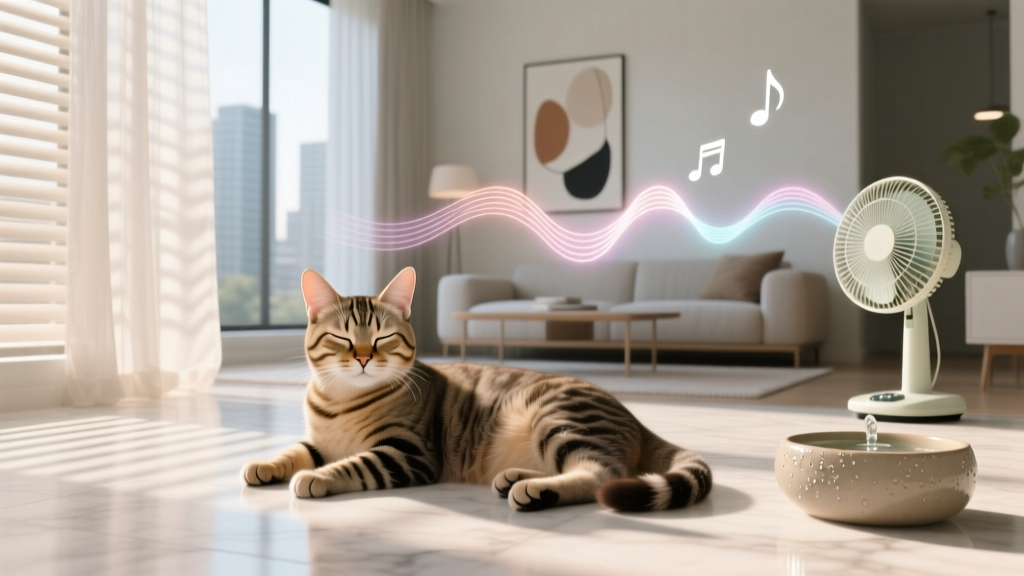
- Rest rhythm: Designate 2–3 low-traffic “nap zones” with consistent lighting, temperature, and sound profiles (e.g., white noise machine set to rain sounds only in those areas). Rotate bedding weekly—but keep the same fabric type (e.g., fleece-lined) to preserve scent continuity. \n
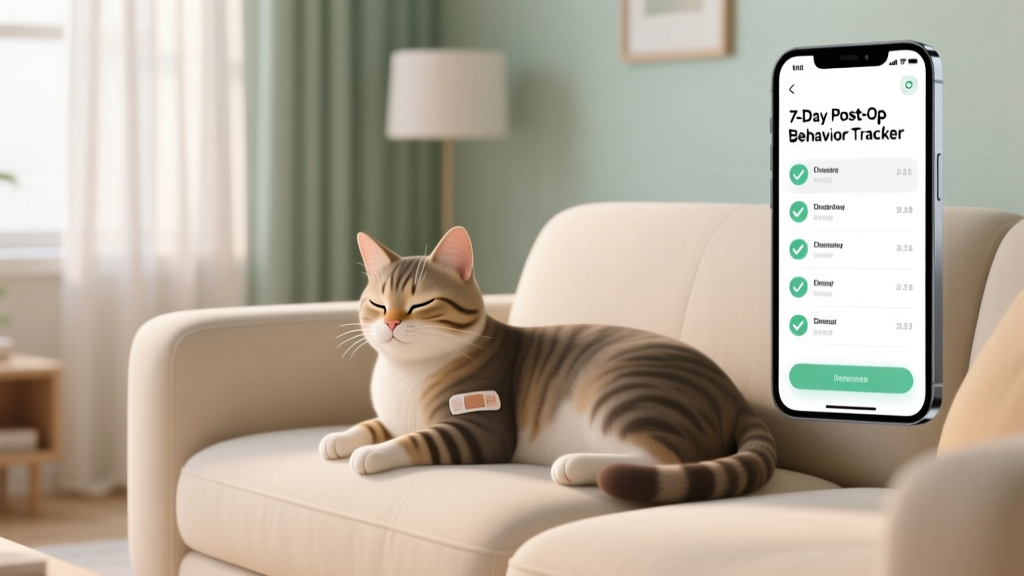
Pro tip: Track behavior shifts using a simple 7-day log (paper or app). Note timing of unwanted behaviors alongside deviations from your pillars. You’ll spot patterns fast—e.g., “Scratching increased after I skipped morning play on Tuesday and Thursday.”
\n\n3. Redirect Instincts—Not Suppress Them
\n“Controlling” cat behavior isn’t about eliminating natural drives—it’s about channeling them into acceptable outlets. Scratching isn’t vandalism; it’s communication, stretching, and claw maintenance. Spraying isn’t spite; it’s olfactory boundary-setting. Biting during petting isn’t aggression—it’s overstimulation signaling.
\nHere’s how to redirect with precision:
\n- \n
- For scratching: Place sisal-wrapped posts *next to* (not across the room from) high-value furniture—within 12 inches of where they currently scratch. Rub with catnip or silvervine *only on the post*, never on the couch. Reward with treats *immediately* when they use it—even if just sniffing. Never punish: A 2023 Cornell Feline Health Center survey found punishment increased inappropriate scratching by 210% due to fear-conditioned association. \n
- For spraying: First rule out medical causes (UTIs, cystitis) with a vet visit—especially if new onset. Then, clean affected spots with enzymatic cleaner (never ammonia-based), block access temporarily with double-sided tape or aluminum foil, and place a food bowl or water fountain there. Cats avoid eliminating near food—a powerful instinctual deterrent. \n
- For overstimulation biting: Learn your cat’s “tail flick threshold.” A slow, rhythmic swish = content. A rapid, stiff whip = imminent overstimulation. Stop petting *before* the tail starts moving—then offer a toy instead. Keep a feather wand within arm’s reach of your favorite chair. \n
Case study: Ben, a remote worker in a 420-sq-ft Seattle loft, noticed his 3-year-old Maine Coon, Atlas, would bite his hand mid-petting. After filming and reviewing 5 interactions, Ben realized Atlas’s tail began vibrating 3.2 seconds before biting. He swapped lap time for 90-second “target training” sessions using a chopstick as a touch target—rewarding with freeze-dried chicken. Within 10 days, biting ceased; Atlas now nudges Ben’s hand toward the target stick when seeking interaction.
\n\n4. Optimize Multi-Cat Dynamics in Tight Quarters
\nSmall homes amplify social friction. With no escape routes, subtle tension escalates fast—leading to silent staring, blocking resources, or sudden swats. The golden rule: For every cat, provide one more of everything—litter boxes, feeding stations, water bowls, and vertical napping spots. Not shared, not rotated—*dedicated and separate*.
\nBut quantity isn’t enough. Placement matters critically:
\n- \n
- Litter boxes: Must be in low-traffic, low-noise zones (never next to washer/dryer or under stairs). Use uncovered boxes (covered ones trap odors and feel like traps). Scoop twice daily—even if you have only one cat. \n
- Water bowls: Place at least 3 feet from food (cats instinctively avoid drinking where they eat). Use wide, shallow ceramic bowls—no plastic (can cause chin acne). Add a second bowl with filtered water on a different floor level if possible. \n
- Feeding stations: Separate by ≥6 feet and use visual barriers (bookshelf, plant stand) so cats don’t see each other eating—a stressor for timid individuals. \n
Dr. Mikel Delgado, UC Davis feline researcher, confirms: “In multi-cat households under 600 sq ft, proximity without privacy is the #1 predictor of chronic stress markers like excessive grooming or urine marking—even among cats who ‘get along.’”
\n\n| Step | \nAction | \nTools/Supplies Needed | \nExpected Outcome (Within 7–14 Days) | \n
|---|---|---|---|
| 1 | \nMap current vertical access points and identify 3+ “dead zones” (areas with zero elevation options) | \nMeasuring tape, notebook, smartphone camera | \nClear visualization of spatial gaps; prioritized list of 2–3 high-impact vertical additions | \n
| 2 | \nInstall first vertical zone (e.g., wall shelf + ramp) in highest-traffic area near a window or doorway | \nStud finder, L-brackets, 1” plywood, non-slip shelf liner, screwdriver | \nCat spends ≥20 mins/day on new structure; reduced floor-level pacing or meowing | \n
| 3 | \nLaunch “Pillar Timing”: Set alarms for dawn/dusk feeding + play sessions; log adherence for 7 days | \nSmartphone timer, printable log sheet or app (e.g., CatLog) | \n≥85% adherence rate; noticeable decrease in early-morning vocalizations or destructive chewing | \n
| 4 | \nIntroduce one redirected outlet (e.g., sisal post beside sofa, puzzle feeder at dawn) | \nSisal post or puzzle feeder, catnip/silvervine, high-value treats | \nCat uses new outlet ≥3x/day; reduction in target behavior (scratching, begging) by ≥40% | \n
| 5 | \nAssess resource distribution: Count litter boxes, water bowls, feeding stations—add “+1” for each cat | \nPen, paper, checklist | \nAll resources meet “N+1” standard; observed decrease in guarding or avoidance behaviors | \n
Frequently Asked Questions
\nCan I use a spray bottle or loud noise to stop bad behavior?
\nNo—and doing so risks serious trust erosion and long-term anxiety. Spray bottles trigger fear-based associations (e.g., “my human appears threatening when I stretch near the couch”), worsening rather than solving the root cause. The American Veterinary Society of Animal Behavior (AVSAB) explicitly advises against punishment-based techniques, citing strong evidence of increased aggression, withdrawal, and redirected stress behaviors. Positive reinforcement and environmental modification are safer, faster, and more effective.
\nWill getting a second cat help my lonely, bored cat behave better?
\nOften, it makes things worse—especially in small spaces. Unplanned introductions frequently escalate tension, leading to chronic stress, urine marking, or fighting. If companionship is desired, consult a certified feline behaviorist first. They’ll assess your resident cat’s sociability via video analysis and guide a 3–6 week gradual introduction protocol—including scent-swapping, barrier training, and neutral-space meetings. Rushing this process in under 600 sq ft has a >70% failure rate, per 2021 International Cat Care data.
\nMy cat scratches the doorframe—is that normal? How do I stop it?
\nYes—it’s highly normal. Doorframes offer ideal height, texture, and location (high-traffic transition zones). Instead of stopping it, redirect it: Install a sturdy sisal post or wall-mounted scratch board *vertically aligned with the doorframe*, secured at the same height. Rub with silvervine, place treats at its base, and reward every approach. Within 10–14 days, most cats shift preference—especially if the original surface is temporarily covered with double-sided tape or a textured sleeve.
\nDo calming collars or diffusers actually work in small apartments?
\nYes—but with caveats. Feliway Classic (synthetic feline facial pheromone) shows measurable efficacy in reducing stress-related marking and hiding in confined spaces, per a 2020 RVC clinical trial. However, effectiveness drops sharply in rooms >200 sq ft or with strong air currents (AC vents, open windows). In studios, use *two* diffusers placed at opposite ends—or opt for the Feliway Optimum spray applied to key stress zones (litter box entrance, sleeping perch) every 4–5 hours. Always pair with environmental changes—diffusers alone won’t fix unmet needs.
\nHow long until I see real improvement in my cat’s behavior?
\nMost owners report measurable shifts in 7–10 days when implementing ≥3 core strategies consistently (vertical expansion + pillar timing + redirection). Full stabilization—where unwanted behaviors drop to ≤1x/week—typically takes 3–5 weeks. Patience is neurobiological: It takes ~21 days for new neural pathways to solidify in cats. Track progress objectively—don’t wait for perfection. Celebrate micro-wins: “Atlas used the shelf today” or “No scratching on the rug for 3 days.”
\nCommon Myths
\nMyth #1: “Cats just need to learn boundaries—I should say ‘no’ firmly and tap their nose.”
\nFalse. Cats don’t interpret human vocal tones or physical corrections as disciplinary signals. A sharp “no” sounds like an alarm call; nose-tapping causes fear, not understanding. What they *do* learn is: “When I scratch the couch, my human becomes loud and scary”—which increases stress and often worsens the behavior.
Myth #2: “If I ignore bad behavior, it’ll go away on its own.”
\nAlso false. Ignoring doesn’t erase instinct-driven actions—it removes your opportunity to redirect. Unaddressed scratching, for example, reinforces neural pathways. What *looks* like ignoring (“I’ll just get a new couch”) actually rewards persistence through environmental tolerance. Proactive redirection is required.
Related Topics (Internal Link Suggestions)
\n- \n
- Best Cat Trees for Apartments — suggested anchor text: "space-saving cat trees for small homes" \n
- How to Stop Cat Spraying Indoors — suggested anchor text: "stop urine marking in apartments" \n
- Multi-Cat Household Harmony Guide — suggested anchor text: "peaceful coexistence in tight quarters" \n
- Feline Enrichment Activities — suggested anchor text: "indoor cat enrichment ideas" \n
- Signs of Cat Anxiety — suggested anchor text: "hidden stress signals in cats" \n
Your Next Step Starts Today—Not Tomorrow
\nYou now hold a behavior framework rooted in feline ethology—not folklore. Controlling cats behavior in small house isn’t about restriction; it’s about invitation—to climb, hunt, rest, and mark safely. Pick *one* strategy from this article—just one—and implement it fully for 7 days. Photograph your vertical shelf installation. Log your first two play sessions. Move that litter box 3 feet away from the laundry room. Small, consistent actions rewire both your cat’s world and your confidence. When you see that first tail curl in relaxed contentment on a newly claimed perch—or hear silence where frantic scratching used to echo—you’ll know: space wasn’t the problem. Strategy was. Ready to begin? Download our free Small-Space Cat Behavior Audit Checklist (PDF) to map your home’s opportunities in under 10 minutes—plus get personalized recommendations based on your cat’s age, history, and current pain points.