Why Cats Sit on the Piano Keys
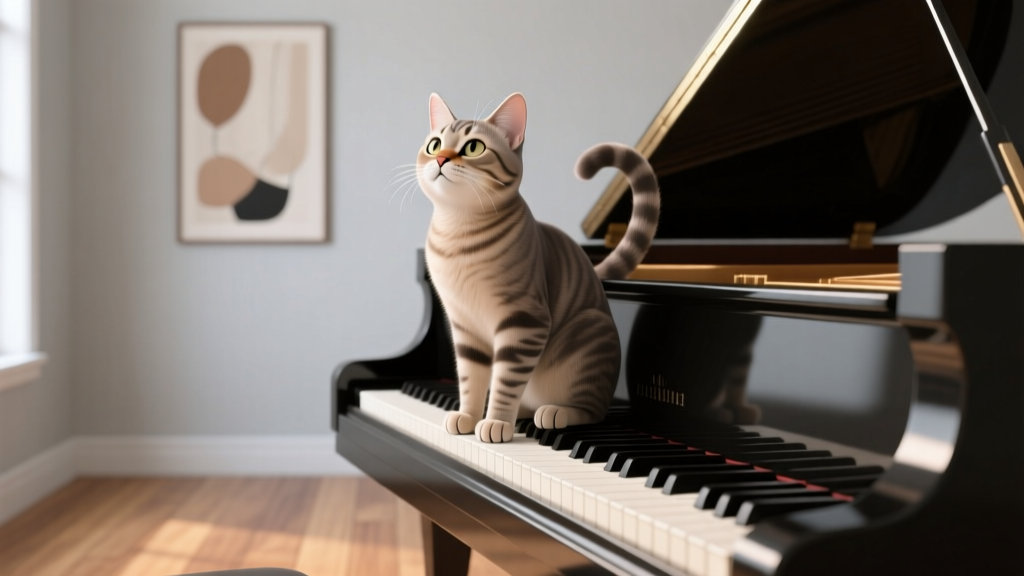
You sit down for a peaceful moment at the piano. Maybe you’re practicing a few scales, maybe you’re noodling through a song you love, maybe you’re just trying to remember what your left hand is supposed to be doing. And then—soft paws. A tail. A confident little body stepping directly onto the keys like they paid for the lesson.
Suddenly the room is filled with a dramatic cluster of notes that definitely wasn’t in the sheet music. Your cat looks up at you with that calm, innocent expression that says, “Yes, this is correct.” If you live with a cat, this scene probably feels less like a surprise and more like a recurring performance.
So why do cats do this? Are they trying to help? Are they annoyed? Do they actually enjoy the sound? The answer is more interesting (and more cat-logic) than most people expect.
1) The scientific (and evolutionary) “why” behind piano-key cats
Cats aren’t sitting on your piano because they’re plotting to ruin your hobby—at least, not usually. Most of the time, they’re responding to a set of cues that piano playing creates: attention, movement, warmth, sound, routine, and the irresistible presence of you.
From an evolutionary perspective, cats are specialists at noticing patterns and controlling resources. In the wild, paying attention to what “makes things happen” can mean the difference between eating and going hungry. In your home, the piano is a powerful “thing that makes things happen.” It changes your posture, your focus, your voice, your hands, your energy level, and the overall atmosphere in the room.
When cats insert themselves into that situation, they’re often doing one (or more) of these instinct-driven behaviors:
- Seeking social proximity: Domestic cats are flexible social animals. Many form strong bonds and prefer to be near their people—especially when their people are doing something absorbing.
- Resource control and “attention economics”: Your attention is valuable. When you’re focused on the keys, your cat may simply redirect that attention back where they prefer it—on them.
- Curiosity and sensory investigation: A piano is a fascinating object: it moves, it vibrates, it makes sounds, and it reacts instantly to touch.
- Preference for elevated, central spots: A piano bench, keyboard lid, or the keys themselves can be a perfect perch—high enough to feel safe, central enough to supervise.
- Scent and familiarity: The keys and the area around them smell like you (hands, skin oils, time spent). Cats gravitate toward your scent.
In short: your cat isn’t “being bad.” They’re being a cat in a room where something highly interesting is happening.
2) A detailed breakdown: different contexts, different motivations
Not all piano-sitting is the same. The context matters—and so does the individual cat.
The “You’re focused on something that isn’t me” sit
You begin playing, and within seconds your cat appears, steps between your hands, and settles right where your fingers need to go.
This is classic attention-redirection. Cats learn quickly: when I sit here, the music stops and the human looks at me. Even if you gently move them, you’re still engaging. And from your cat’s perspective, engagement is the reward.
The “Warm, comfy, perfect-sized platform” sit
Some pianos have warmth from sunlight nearby, electronics, or simply a cozy location. The bench might be padded. The keys are a stable, level surface—like a countertop with built-in sound effects.
This version is less about you and more about comfort plus opportunism. If your cat kneads a little or circles before settling, they’re treating it like a prime resting spot.
The “I’m curious about the noises” sit
Kittens and young cats especially may paw at keys, startle themselves, then return for another try. The immediate feedback is fascinating: paw down = sound up.
This is playful learning. Cats are natural experimenters. The piano is essentially a giant interactive toy—one you’re already demonstrating.
The “I’m a little unsure, so I’m inserting myself” sit
Sometimes the piano’s volume, vibrations, or sudden notes make a cat uneasy. Oddly, some cats will respond by getting closer, not farther away. They’re monitoring the “source” and anchoring themselves to you.
If your cat’s body is low, ears slightly sideways, tail tucked close, or they’re crouched rather than comfortably sprawled, they may be uncertain and seeking reassurance.
The “Routine time!” sit
If you play at predictable times, your cat may treat it like a daily event. They might show up before you even sit down, then hop onto the keys as if they’re clocking in for their shift.
Cats love routines because routines are predictable—and predictability feels safe.
3) What sitting on the keys can mean about your cat’s mood
Your cat’s body language will tell you whether the piano visit is affection, play, mild protest, or stress.
- Relaxed and social: Soft eyes, slow blinks, loose tail, purring, leaning into your hands. This is “I want to be with you.”
- Playful and energized: Dilated pupils, quick paw taps, tail flicking in a lively way, hopping on and off. This is “This thing reacts when I touch it!”
- Demanding attention: Direct stare, deliberate blocking, vocalizing, head-butting your wrists, escalating if ignored. This is “Stop doing that and pet me.”
- Overstimulated or annoyed: Fast, sharp tail flicks, tense shoulders, ears back, skin twitching, sudden swats. This is “I’m not enjoying this; give me space.”
- Anxious or uncertain: Crouching, wide eyes, ears sideways, hesitant movements, frequent scanning. This is “I’m not sure about this sound/energy, and I’m monitoring it.”
One helpful clue: if the behavior happens only when you play loudly or with sudden notes, it may be sound sensitivity rather than attention-seeking.
4) Related behaviors you might also notice
Piano-key sitting is part of a broader category of “I want to be where your focus is” behaviors. If your cat does this, you may also see:
- Keyboard blocking: Parking on your laptop or strolling across your mechanical keyboard mid-email.
- Book lounging: Sitting on the open page you’re trying to read (bonus points if they face you, not the book).
- Phone interference: Nuzzling your hand while you scroll, or biting the corner of your phone case.
- Zoom meeting cameos: Appearing precisely when your voice becomes animated.
- Instrument interest: Investigating guitar strings, curling up in instrument cases, pawing at moving drumsticks.
These are all variations of the same theme: your cat is tracking what matters to you, and they want to be included in the action—or redirect it.
5) When it’s normal… and when it might be a concern
Most of the time, sitting on the piano keys is normal, healthy, and honestly a little funny. But there are a few situations where it’s worth paying closer attention.
Normal (and common)
- Your cat approaches with relaxed body language and simply wants closeness.
- The behavior is occasional, playful, or tied to routine.
- Your cat can be gently redirected without stress.
Potential concerns
- Sudden new clinginess: If your previously independent cat suddenly becomes insistent about blocking you (piano, laptop, everything), consider stressors (new pet, schedule change, construction noise) or health issues that increase neediness.
- Signs of noise anxiety: If your cat hides, trembles, overgrooms, or shows aggression around piano sounds, they may be sound-sensitive or fearful.
- Compulsive or frantic behavior: Repetitive pacing, inability to settle, constant vocalization during playing could indicate stress rather than social interest.
- Safety risks: Jumping onto a closing lid, chewing electrical components on digital keyboards, or climbing inside the piano (yes, some cats try) are hazards that need management.
If you notice big behavior changes, persistent anxiety, or anything that looks like pain (stiff movement, reluctance to jump, irritability when touched), a vet check is a smart next step.
6) How to respond (without turning it into a bigger habit)
You have two goals that can absolutely coexist: respect your cat’s social needs, and keep your piano playable.
Create a “yes spot” near the piano
Give your cat an appealing alternative that still keeps them close to you. Try:
- A padded stool or cat bed next to the bench
- A perch on a nearby shelf or sturdy cat tree
- A folded blanket on the closed piano lid (if safe and stable)
Then reward the alternative: treats, gentle praise, or a few pets when they choose that spot. Cats repeat what works.
Teach a simple “place” cue
Cats can learn cues, especially when the reward is consistent. Lure them to the designated spot with a treat, say a cue like “mat,” and reward when they settle. Keep sessions short and upbeat.
Use timing to your advantage
If your cat reliably interrupts, try a quick play session before you practice—wand toy, chase game, a few minutes of active movement. Many cats sit on keys because they have unused energy and your moving hands look very interesting.
Manage attention carefully
If key-sitting is attention-driven, the biggest “reward” is often your reaction. If it’s safe, keep your response calm and boring:
- Gently lift and place them on the “yes spot”
- Avoid big laughs, scolding, or dramatic talking (it’s still attention)
- Reward when they stay off the keys
Make the keys less available during practice
Practical options include:
- Closing the lid between sessions (if your cat can’t get inside)
- Using a keyboard cover for digital pianos
- Setting up a nearby perch that’s even better than the keys
The goal isn’t to “punish” the behavior—it’s to make the desired behavior easier.
7) Fun facts (and a little research flavor) about cats and your piano
- Cats are excellent at associative learning: If sitting on keys reliably makes you stop playing and engage, your cat may repeat it with impressive consistency.
- Sound sensitivity varies by individual: Some cats are unfazed by loud noises; others are genetically and temperamentally more reactive. The same piano can be soothing background to one cat and suspicious thunder to another.
- Cats are drawn to “activity hotspots”: Many behaviorists see blocking behaviors most often where humans focus: laptops, books, craft tables… and instruments.
- Your hands are the star of the show: Fast-moving fingers can trigger predatory play instincts. To a cat, wiggly things invite investigation.
And yes—some cats do seem to enjoy certain tones or the vibrations from the soundboard. It’s not “music appreciation” in the human sense, but it can be sensory enrichment for a curious cat.
8) FAQ: Common questions about cats and piano keys
Do cats sit on piano keys because they like music?
Sometimes they like the experience of music—your presence, the routine, the vibrations, the attention. But most cats are responding to the situation more than the melody. If your cat relaxes and purrs near the piano, they may find it soothing; if they startle or flatten their ears, they’re likely not a fan of the sound.
Is my cat trying to get me to stop playing?
Possibly. If the behavior happens more with loud or energetic playing, your cat might be saying, “This is a bit much.” If it happens even when you’re quietly practicing and they look relaxed, it’s more likely social attention-seeking: “I want to be part of what you’re doing.”
Should I let my cat do it?
If it’s safe and you don’t mind occasional “help,” it can be a harmless way for your cat to bond with you. If you want uninterrupted practice, set up a nearby perch and reinforce that as the preferred spot. Consistency is what changes habits.
My cat bites or swats when I move them off the keys—what now?
That’s a sign the situation is stressful, overexciting, or your cat is guarding the spot. Avoid physical wrestling. Instead, use a treat lure or toss a treat onto the “yes spot” to guide them away. If swatting is frequent or intense, look for triggers: volume, sudden movements, or your cat being overstimulated.
Can I train my cat not to jump on the piano at all?
You can reduce it significantly, especially by giving a better alternative and rewarding it. Some cats will always be tempted, so think “management plus training” rather than expecting perfection. A cat who feels included is often less insistent.
Why does my cat only do this when guests are over and I play?
Guests change the social energy, and your cat may be seeking reassurance or trying to control the situation by inserting themselves into the center of it. It can also be a learned tactic: guests react, laugh, and talk—instant attention jackpot.
Closing thoughts: your cat isn’t sabotaging your music—they’re joining your world
When a cat sits on piano keys, it’s usually a mix of curiosity, comfort, and connection. Your cat has figured out that the piano is where your attention goes—and they’d like a share of it, please. With a little planning (a cozy perch, a pre-practice play session, calm redirection), you can protect your practice time while still meeting your cat’s social needs.
Does your cat have a signature “piano move”—the dramatic flop, the slow-motion key walk, the perfectly timed meow during a quiet passage? Share your funniest (or most bewildering) piano-cat stories with the Cat Lovers Base community at catloversbase.com. We’d love to hear how your cat critiques your technique.