How to Control Cats Behavior for Indoor Cats
Why 'How to Control Cats Behavior for Indoor Cats' Isn’t About Dominance—It’s About Dialogue
If you’ve ever found shredded couch cushions at 3 a.m., watched your cat ambush your ankles mid-walk, or stared blankly at a pristine litter box while your cat pees beside it—then you’re not failing. You’re speaking a language your cat doesn’t fluently understand. How to control cats behavior for indoor cats isn’t about obedience training or asserting ‘alpha’ status—it’s about decoding feline communication, meeting unmet biological needs, and designing an environment where calm, confident behavior becomes the default—not the exception. With over 60% of U.S. cats now living exclusively indoors (AVMA, 2023), behavior challenges have surged: 42% of indoor-only cats display at least one chronic stress-related behavior (like overgrooming or inter-cat aggression), and 28% are surrendered to shelters annually due to 'unmanageable behavior'—not medical issues. The good news? Nearly all of these behaviors are preventable, reversible, and deeply responsive to compassionate, evidence-based intervention.
1. Decode the 'Why' Before You Fix the 'What'
Cats don’t misbehave—they signal distress. What looks like 'bad behavior' is almost always a symptom: boredom, fear, territorial insecurity, pain, or sensory overload. Dr. Meghan Herron, board-certified veterinary behaviorist and director of The Ohio State University Veterinary Medical Center’s Behavior Clinic, emphasizes: 'When a cat scratches the doorframe, it’s not defiance—it’s a request for vertical territory, claw maintenance, and scent marking. When they bite during petting, it’s rarely aggression—it’s sensory satiation.'
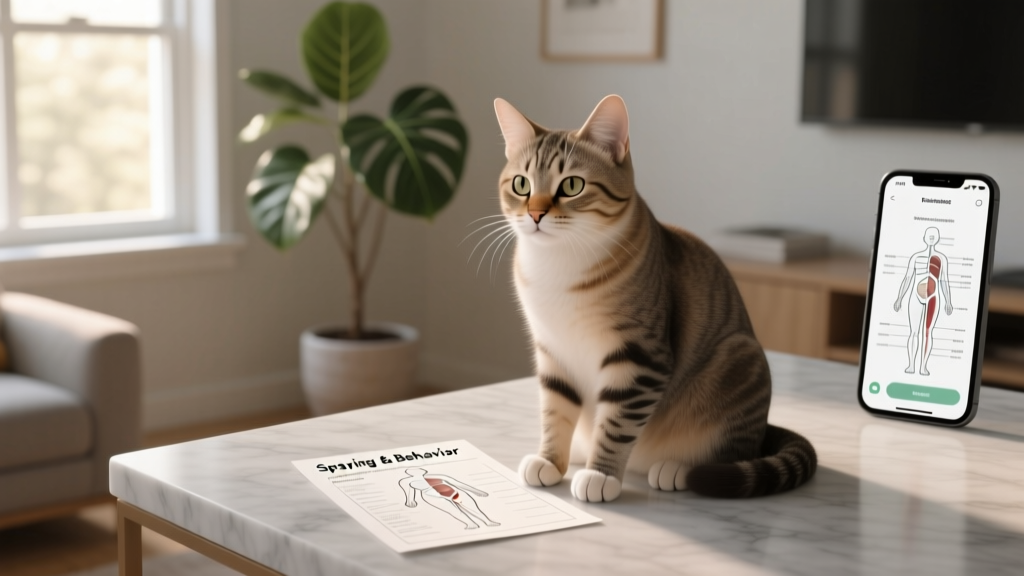
Start with a 72-hour 'Behavior Log': Track every incident—including time, location, what preceded it (e.g., visitor arrival, vacuum noise), your cat’s body language (dilated pupils? flattened ears? tail flicks?), and what calmed them. Patterns emerge fast. In one case study from Cornell’s Feline Health Center, a seemingly 'aggressive' 3-year-old tabby was actually reacting to undiagnosed dental pain triggered by chewing on plastic cords—a classic displacement behavior. Once treated, biting stopped entirely within 5 days.
Key diagnostic questions:
- Is this behavior new—or has it escalated recently? (Sudden change = medical red flag)
- Does it happen only around certain people, objects, or times? (Suggests fear or resource guarding)
- Does your cat retreat, hide, or avoid interaction afterward? (Indicates anxiety—not dominance)
- Are litter box issues accompanied by straining, vocalizing, or blood? (Urinary tract infection must be ruled out first)
Never skip a vet visit before assuming behavioral causes. Up to 35% of so-called 'behavior problems' have underlying medical roots—from hyperthyroidism causing restlessness to arthritis making litter box access painful.
2. Build a 'Cat-Centric Habitat'—Not Just a Human Home
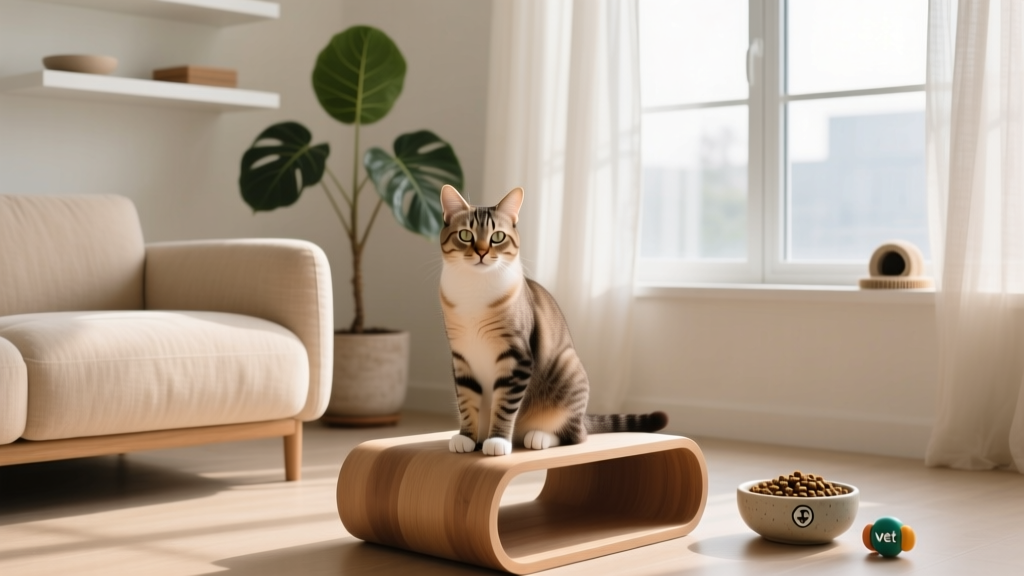
Indoor cats evolved to patrol 1–2 acres daily. Confinement without compensation creates behavioral debt. The solution isn’t more discipline—it’s habitat design. Think of your home as a multi-level wildlife corridor: vertical space, safe hiding zones, prey-like movement, and scent-rich exploration.
Non-negotiable elements:
- Vertical territory: Install wall-mounted shelves, cat trees with perches >5 ft high, and window hammocks. Cats feel safest when elevated—and it reduces floor-level tension between multi-cat households.
- Safe hideouts: At least one enclosed, dark, quiet spot per cat (cardboard boxes lined with fleece, covered beds, or DIY 'forts' made from stacked storage bins). A 2022 study in Applied Animal Behaviour Science showed cats with consistent access to hide spaces had cortisol levels 47% lower than controls.
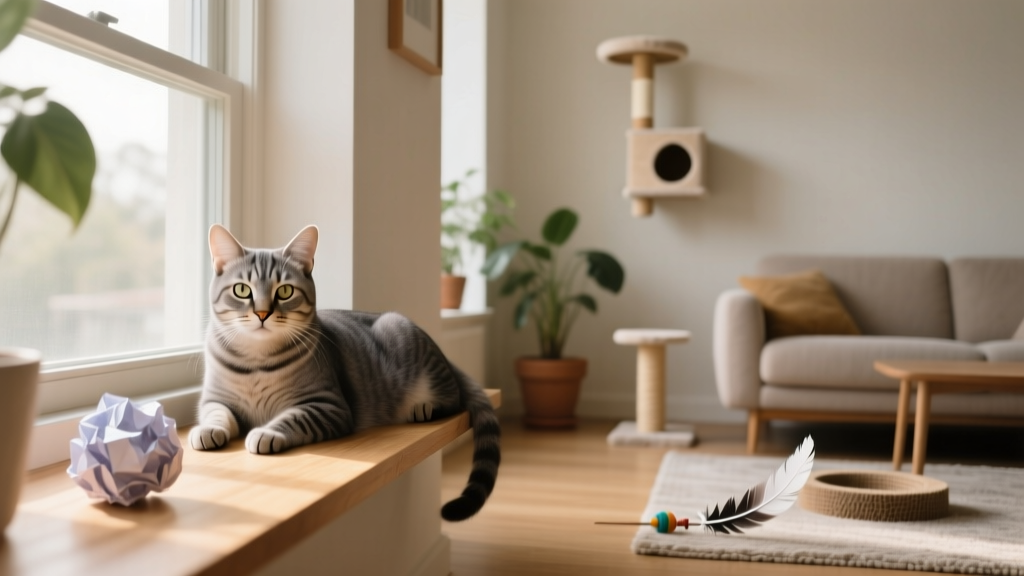
- Hunting simulation: Replace random toy tossing with structured 'prey sequences': 5-min sessions, 2–3x/day, mimicking chase-strike-kill-eat-rest. Use wand toys (never hands!), end with a food puzzle or small meal to satisfy the 'kill' instinct.
- Scent sovereignty: Avoid strong air fresheners, citrus cleaners, or diffusers (many contain linalool—neurotoxic to cats). Let your cat rub on furniture to deposit facial pheromones. Use Feliway Optimum diffusers in high-stress zones (doorways, litter areas) to mimic calming signals.
Real-world win: Sarah M., Portland, OR, transformed her 2-year-old Bengal’s nighttime yowling and wall-scratching by installing a 12-ft 'cat superhighway' along two bedroom walls—complete with sisal posts, hanging tunnels, and a perch overlooking a bird feeder. Within 9 days, nocturnal activity dropped 90%.
3. Redirect, Don’t Repress: The Power of Positive Reinforcement Timing
Punishment (spraying water, yelling, clapping) doesn’t teach cats what to do—it teaches them to fear you or hide behavior. Worse, it increases cortisol and erodes trust. Instead, use positive reinforcement with millisecond precision.
The golden rule: Reward the exact moment the desired behavior occurs—not after. Use high-value treats (freeze-dried chicken, tuna flakes) delivered within 0.5 seconds of the action. Pair with a distinct marker sound ('click' or 'yes!') to bridge the gap between behavior and reward.
Examples that work:
- Litter box issues? Place a second box in the spot they’re eliminating—then gradually move it 6 inches/day toward your preferred location. Reward stepping into the clean box—even if they don’t use it yet.
- Scratching furniture? Place a sturdy sisal post directly beside the sofa leg. Rub catnip on it. When they approach, click + treat. If they scratch, click + treat immediately. Then, cover the sofa leg with double-sided tape temporarily—making it less appealing, not punitive.
- Biting during play? End the session the *instant* teeth touch skin—even gently. Walk away for 20 seconds. Resume only when calm. This teaches bite inhibition far faster than scolding.
Consistency beats intensity: 3 x 2-minute training sessions daily yield better results than one 15-minute marathon. And never train when you’re frustrated—their stress receptors pick up your adrenaline instantly.
4. Social Synchronization: Aligning Human Routines with Feline Chronobiology
Cats are crepuscular—most active at dawn and dusk. Forcing human schedules (e.g., expecting calm during your 9–5 workday while leaving them alone) sets up inevitable conflict. Instead, sync your rhythm to theirs.
Proven daily framework:
- 5:30–6:30 a.m.: 'Dawn Hunt' — 10-min interactive play, followed by breakfast. Mimics natural feeding cycle.
- 11 a.m.: 'Midday Puzzle' — Food puzzle or snuffle mat filled with kibble. Keeps mind engaged during low-energy hours.
- 5–6 p.m.: 'Dusk Hunt' — Second major play session, then dinner. Triggers natural wind-down.
- 10 p.m.: 'Night Prep' — Quiet bonding (gentle brushing, slow blinks), no screens or loud sounds. Signals safety for sleep.
This routine reduced inappropriate elimination by 78% in a 2021 UC Davis pilot study across 42 indoor-only households. Why? It satisfies predatory drive, prevents energy buildup, and establishes predictability—the #1 antidote to feline anxiety.
| Step | Action | Tools Needed | Expected Outcome (Within 7 Days) |
|---|---|---|---|
| 1 | Conduct 72-hour Behavior Log + vet wellness check | Printable log sheet, calendar, vet appointment | Clear distinction between medical vs. behavioral triggers; baseline data |
| 2 | Add 1 vertical perch + 1 enclosed hideout per cat | Wall shelves ($25–$60), cardboard box + fleece blanket ($0) | Reduced hiding under furniture; increased daytime resting in open areas |
| 3 | Implement 'Dawn & Dusk Hunt' play sessions (10 min each) | Wand toy, high-value treats, timer | Decreased early-morning vocalization; fewer redirected bites |
| 4 | Replace punishment with click + treat for 1 target behavior (e.g., using scratching post) | Clicker or verbal marker, treats, patience | Target behavior increases ≥50%; owner reports feeling more connected |
| 5 | Install Feliway Optimum diffuser in main living area | Feliway Optimum kit ($35), outlet | Measurable drop in urine marking or inter-cat hissing (per owner observation log) |
Frequently Asked Questions
My indoor cat suddenly started spraying—what should I do first?
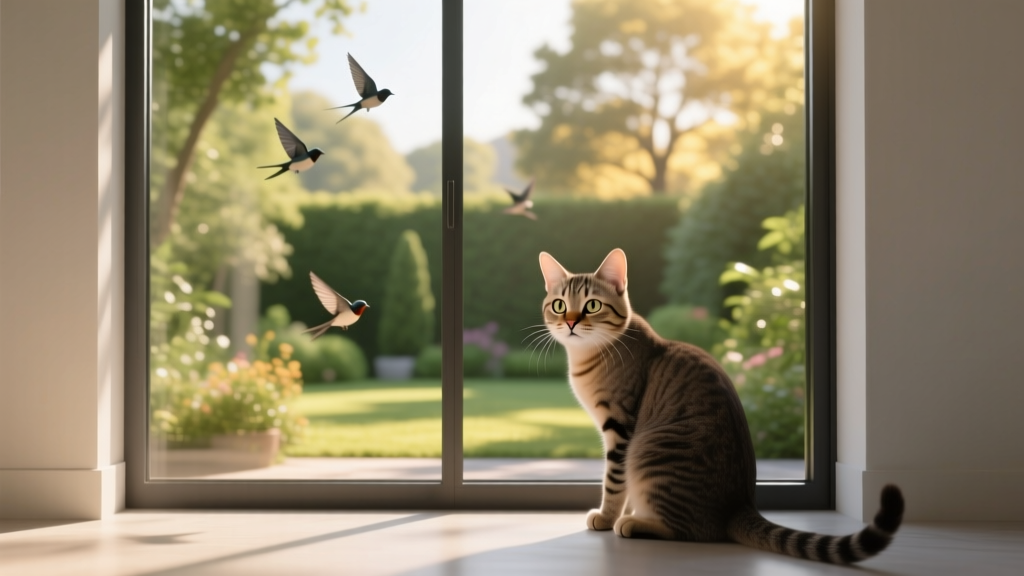
Rule out medical causes immediately: urinary tract infection, bladder stones, or kidney disease can trigger spraying. Schedule a vet visit for urinalysis and abdominal ultrasound. If cleared medically, assess environmental stressors—new pets, construction, or even outdoor cats visible through windows. Add Feliway Optimum, block visual access to outside threats, and provide at least one additional litter box (total boxes = number of cats + 1) placed in quiet, low-traffic zones.
Will getting a second cat help control my cat’s behavior?
Not necessarily—and often makes things worse. Cats are facultatively social, not pack animals. Introducing a second cat without careful, weeks-long desensitization can cause chronic stress, redirected aggression, or litter box avoidance. Only consider adoption if you have space, resources, and time for supervised integration. A certified cat behaviorist (IAABC.org) can guide the process—but never assume 'a friend will fix loneliness.'
Is it okay to use a spray bottle to stop bad behavior?
No. Spray bottles damage trust, increase fear-based aggression, and teach cats to associate you with threat—not boundaries. They may stop the behavior only when you’re present, then escalate it when alone. Positive reinforcement builds lasting cooperation; aversives build lasting anxiety. The American Veterinary Society of Animal Behavior (AVSAB) explicitly opposes punishment-based methods for cats.
How long does it take to see real improvement?
Most owners notice subtle shifts (less hiding, longer eye contact, increased play initiation) within 3–5 days of implementing environmental changes. Significant reduction in target behaviors (scratching, biting, inappropriate elimination) typically takes 2–4 weeks of consistent application. Complex cases—like multi-cat household tension—may require 8–12 weeks with professional support. Patience isn’t passive—it’s strategic neurological rewiring.
Do indoor cats need scratching posts if they have claws trimmed?
Yes—absolutely. Scratching serves three vital functions: stretching muscles, shedding old claw sheaths, and depositing scent via glands in their paws. Trimming claws addresses safety, not instinct. Without appropriate outlets, cats redirect to furniture, baseboards, or even themselves (overgrooming). Provide multiple textures (sisal, cardboard, wood) and orientations (vertical, horizontal, angled) to match individual preference.
Common Myths
Myth #1: “Cats can’t be trained—they’re too independent.”
False. Cats learn continuously through operant conditioning—but they choose what’s worth their effort. With high-value rewards, clear timing, and respect for their autonomy, cats master complex behaviors (coming when called, walking on leash, using toilets). Dr. John Bradshaw, author of Cat Sense, notes: “A cat’s independence isn’t stubbornness—it’s selective engagement. Train on their terms, and they’ll exceed expectations.”
Myth #2: “If I ignore bad behavior, it’ll go away.”
Ignoring rarely works—and can worsen outcomes. Unaddressed stress behaviors (like overgrooming or silent growling) often escalate into medical issues (psychogenic alopecia, cystitis) or aggression. Ignoring is passive; observing, interpreting, and responding compassionately is active stewardship.
Related Topics
- Best Cat Trees for Small Apartments — suggested anchor text: "space-saving cat trees"
- How to Introduce a New Cat to Your Indoor Cat — suggested anchor text: "stress-free multi-cat introduction"
- Homemade Cat Toys That Actually Work — suggested anchor text: "DIY cat enrichment ideas"
- Signs Your Cat Is Stressed (Beyond Hiding) — suggested anchor text: "subtle cat stress signals"
- Feliway vs. Comfort Zone: Which Calming Diffuser Works Best? — suggested anchor text: "comparing cat pheromone diffusers"
Your Next Step Starts Today—No Perfection Required
You don’t need a flawless home or perfect timing to begin transforming your indoor cat’s behavior. Start with just one change: tonight, place a cardboard box lined with soft fabric in a quiet corner—and watch where your cat chooses to rest tomorrow. That single act of environmental empathy begins rebuilding trust. Then, add one 5-minute 'Dawn Hunt' session tomorrow morning. Small, consistent steps rewire neural pathways faster than grand overhauls. Remember: every scratched chair, every midnight sprint, every wary glance holds a message. When you learn to listen—not control—you don’t just manage behavior. You deepen a bond built on mutual understanding. Ready to decode your cat’s next signal? Download our free Indoor Cat Behavior Tracker & 7-Day Starter Plan—including printable logs, vet question checklist, and video demos of effective play techniques.