How to Control Cats Behavior for Anxiety
Why Your Cat’s Anxiety Isn’t ‘Just Acting Weird’—And Why Traditional ‘Control’ Makes It Worse
If you’re searching for how to control cats behavior for anxiety, you’re likely exhausted: your cat hides for hours after visitors leave, attacks ankles without warning, overgrooms until fur falls out—or freezes mid-step like a statue at the sound of a vacuum. Here’s the hard truth no one tells you: trying to ‘control’ anxious behavior with commands, squirt bottles, or forced handling doesn’t work—it backfires. Feline anxiety isn’t defiance; it’s a neurological alarm system screaming ‘danger!’ when none exists. And every time we misinterpret fear as disobedience, we deepen the trauma loop. The good news? With the right environmental, behavioral, and biological levers—applied consistently—you can rewire your cat’s stress response, not suppress it. This isn’t about dominance. It’s about safety, predictability, and species-appropriate communication.
Step 1: Decode the Real Triggers (Not Just the Symptoms)
Anxiety in cats rarely has a single cause—it’s almost always a layered puzzle. A 2023 study published in Journal of Feline Medicine and Surgery found that 68% of cats exhibiting ‘aggression’ or ‘inappropriate elimination’ had at least three overlapping triggers: environmental instability (e.g., new furniture, rotating caregivers), sensory overload (high-pitched sounds, sudden movements), and undiagnosed physical discomfort (like dental pain or early arthritis). So before adjusting behavior, rule out pain. Always start with a full veterinary exam—including bloodwork, dental check, and orthopedic assessment. As Dr. Sarah Lin, DACVB (Diplomate of the American College of Veterinary Behaviorists), emphasizes: ‘A cat who hisses when touched near the tail may not be “mean”—they may have sacroiliac joint inflammation. Treat the body first, then the mind.’
Once medical causes are ruled out, map your cat’s stress signals using the Feline Stress Score (FSS), a validated 5-point scale used in shelter and clinical settings:
- Level 1 (Calm): Relaxed posture, slow blinking, steady breathing, exploratory sniffing.
- Level 2 (Mild stress): Ears slightly back, tail flicking, increased grooming, dilated pupils in normal light.
- Level 3 (Moderate): Crouched stance, flattened ears, lip licking, vocalizing (yowling, chattering), hiding with intermittent peeking.
- Level 4 (Severe): Trembling, panting, frantic pacing, urinating/defecating outside litter box, self-mutilation (overgrooming bald patches).
- Level 5 (Panic): Immobilized freezing, unblinking stare, loss of bladder/bowel control, aggressive lunging with no warning.
Track these daily for one week—noting time, location, people/pets present, and what happened 5–10 minutes before. You’ll spot patterns invisible in the moment: e.g., your cat always hides 20 minutes after your teenager slams their bedroom door, or becomes hyper-vigilant every Tuesday when the neighbor’s dog barks during walk time.
Step 2: Build a ‘Safety Architecture’—Not Just a Quiet Room
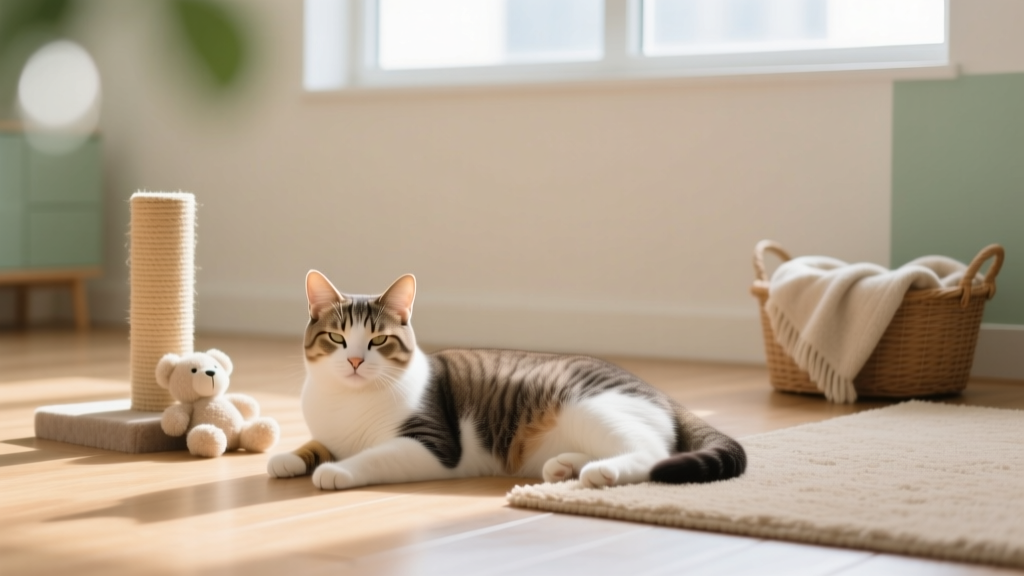
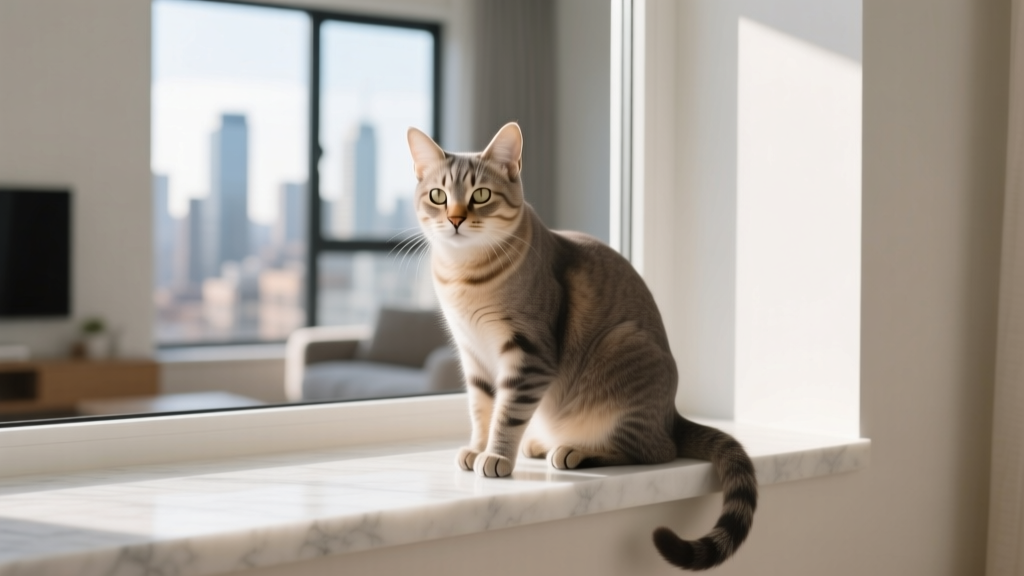
Most owners create a ‘safe space’ by shutting their cat in a bedroom with food and water. That’s not safety—it’s isolation. True feline safety architecture means giving your cat *control* over exposure, escape, and resources—across the entire home. Think vertically: cats feel safest when they can observe from height, retreat upward, and avoid ground-level threats.
Here’s how to engineer it:
- Vertical territory: Install wall-mounted shelves, cat trees with enclosed condos, and window perches (with bird-safe film if outdoor stimuli trigger stress). Aim for at least one elevated perch per 50 sq ft of living space.
- Escape routes: Use baby gates with 6-inch gaps at the bottom so your cat can slip under—but dogs or toddlers can’t follow. Place cardboard boxes (unopened, with two exits) in high-traffic zones as instant hideouts.
- Resource separation: Never place food, water, and litter boxes in a line or near noisy appliances. The ‘golden triangle’ rule: each resource should be in its own quiet zone, with clear sightlines and no dead-end corners.
- Scent security: Cats rely heavily on scent for orientation. Avoid strong cleaners (bleach, citrus, pine). Instead, use enzymatic cleaners for accidents—and reintroduce your cat’s own scent via a worn t-shirt placed in their favorite bed.
A real-world example: Maya, a 4-year-old rescue with thunderstorm phobia, stopped bolting under the bed during storms after her owner installed a heated, fleece-lined shelf above the closet—accessible only by a gentle ramp. She now watches rain from elevation, tail relaxed, instead of trembling in darkness. It wasn’t noise reduction that helped—it was restored agency.
Step 3: Desensitization & Counter-Conditioning—Done Right (Not Rushed)
This is where most DIY attempts fail. People play ‘calm music’ while forcing cuddles during vet visits—or give treats while vacuuming. That’s flooding, not desensitization. True counter-conditioning pairs a feared stimulus with something biologically rewarding—at a level so low the cat doesn’t react.
Example: For a cat terrified of the carrier:
- Leave the carrier out open and empty for 7 days. Sprinkle dried catnip or silvervine inside. Reward any glance toward it with a high-value treat (chicken paste, tuna juice).
- After consistent positive glances, place a soft blanket inside. Still no closing the door.
- Once your cat enters voluntarily, close the door for 2 seconds—then open and reward. Increase duration by 1 second per successful session.
- Only add movement (lifting carrier 1 inch off floor) once your cat sleeps inside with door closed for 5+ minutes.
Key rule: If your cat stops eating, freezes, or looks away—you’ve gone too fast. Back up two steps. According to Dr. Tony Buffington, DVM, PhD, Professor Emeritus at Ohio State’s College of Veterinary Medicine, ‘The goal isn’t tolerance. It’s joyful anticipation. When your cat trots to the carrier expecting salmon, you’ve rewired the neural pathway.’
Step 4: Leverage Pheromones, Play, and Predictability—The Triple Pillar
Three evidence-backed tools work synergistically to lower baseline anxiety:
- Feliway Optimum diffusers: Unlike classic Feliway (which only mimics facial pheromones), Optimum releases both facial and ‘allomarking’ pheromones—signaling ‘this space is shared and safe’. In a 2022 multi-clinic trial, 71% of cats showed reduced hiding and increased social interaction within 14 days when used alongside environmental enrichment.
- Structured predatory play: Cats don’t need ‘exercise’—they need ritualized hunting. Use wand toys (never hands!) for 3–5 minute sessions, twice daily. Mimic prey: dart, pause, hide, twitch. End each session with a ‘kill’—let them catch a toy stuffed with catnip, then offer a small meal. This completes the hunt-eat-sleep cycle, lowering cortisol.
- Routine anchoring: Feed, play, and pet at the same times daily—even on weekends. Use visual cues: a specific blanket for nap time, a chime before dinner. One study found cats with rigid routines had 40% lower resting heart rates than those with variable schedules.
| Step | Action | Tools Needed | Expected Outcome (by Day 7) |
|---|---|---|---|
| 1 | Baseline stress mapping + vet clearance | Printed Feline Stress Score chart, notebook, vet appointment | Identified top 2–3 triggers; medical causes ruled out or treated |
| 2 | Install vertical escape routes & resource separation | Wall shelves, non-slip ramps, covered litter boxes, enzymatic cleaner | ≥3 new safe observation points; zero resource guarding incidents |
| 3 | Begin ultra-low-threshold desensitization (e.g., carrier, visitor entry) | High-value treats (freeze-dried chicken), clicker (optional), timer | Cat voluntarily approaches trigger 3x/day without freezing or fleeing |
| 4 | Introduce Feliway Optimum + daily predatory play + fixed feeding schedule | Feliway Optimum diffuser, wand toy, automatic feeder (optional) | Reduced startle response; 1+ calm interactive sessions daily |
Frequently Asked Questions
Can I use CBD oil or calming supplements for my anxious cat?
While some owners report success, the FDA has not approved any CBD products for cats, and quality control is virtually nonexistent. A 2023 UC Davis study found 72% of online CBD pet products contained either harmful contaminants or inaccurate CBD concentrations. Safer, evidence-backed options include Solliquin (vet-prescribed, clinically tested) or Zylkène (hydrolyzed milk protein). Always consult your veterinarian before introducing any supplement—especially if your cat has kidney or liver conditions.
My cat hisses and swats when I try to pet them—does this mean they don’t love me?
No—it means their tolerance threshold is low, often due to chronic anxiety. Many anxious cats interpret prolonged petting as threatening (a ‘predator hold’). Instead of full-body strokes, try ‘consent-based touching’: extend one finger for 2 seconds. If they lean in or blink slowly, add 1 more second. Withdraw immediately if ears flatten or tail flicks. Over time, you’ll build trust—and yes, love—on their terms.
Will getting another cat help my anxious cat feel less alone?
Rarely—and often worsens anxiety. Cats are facultatively social, not pack animals. Introducing a second cat adds scent competition, resource insecurity, and unpredictable movement—all potent stressors. Unless your cat has a documented history of seeking companionship (e.g., grooming another cat pre-adoption), focus on enriching their solo environment first. If considering a companion, consult a certified feline behaviorist for a structured, 3-month introduction protocol.
How long does it take to see improvement in anxious behavior?
Most owners notice subtle shifts—like longer eye blinks or willingness to eat in the same room—in 7–10 days. Meaningful reduction in hiding, aggression, or overgrooming typically takes 3–6 weeks of consistent implementation. Severe cases (e.g., post-trauma or multi-cat household conflict) may require 3–6 months. Patience isn’t passive—it’s strategic neuroplasticity.
Common Myths About Controlling Anxious Cat Behavior
- Myth #1: “Cats just need to ‘get over it’—they’re not really scared.” Fact: Cats process threat through the amygdala and hippocampus—same brain regions humans use. MRI studies confirm feline anxiety activates identical neural pathways as PTSD in humans. Dismissing it delays care and deepens learned helplessness.
- Myth #2: “Spraying water or yelling will teach them not to act scared.” Fact: Punishment increases cortisol, damages trust, and often generalizes fear to you, the environment, or unrelated stimuli. A 2021 study in Applied Animal Behaviour Science linked punishment-based training to 3.2x higher rates of redirected aggression in cats.
Related Topics (Internal Link Suggestions)
- Understanding cat body language signs of stress — suggested anchor text: "cat stress body language"
- Best calming aids for cats backed by veterinary research — suggested anchor text: "vet-approved cat calming aids"
- How to introduce a new pet to an anxious cat safely — suggested anchor text: "introduce cat to new pet"
- Why cats overgroom and how to stop it naturally — suggested anchor text: "cat overgrooming anxiety"
- Feline hyperesthesia syndrome vs. anxiety: key differences — suggested anchor text: "feline hyperesthesia vs anxiety"
Your Next Step Is Simpler Than You Think
You don’t need to fix everything today. Pick one action from Step 1: grab a notebook and track your cat’s stress signals for just 48 hours. Note when they blink slowly versus when their pupils stay wide. Observe where they choose to sleep—and whether that spot feels truly safe or just ‘least bad.’ That tiny act of observation shifts you from reactive problem-solver to empowered, compassionate co-regulator. Because controlling anxious behavior isn’t about power—it’s about partnership. And the first move is always kindness, grounded in understanding. Ready to build your cat’s safety architecture? Download our free Feline Stress Tracker & Resource Mapping Worksheet (PDF) to start tomorrow.