How to Change Cat Behavior Vet Recommended
Why Your Cat’s Behavior Isn’t ‘Just Personality’ — And What Vets Really Do to Change It
If you’ve ever searched how to change cat behavior vet recommended, you’re not alone — and you’re already ahead of most pet owners. Unlike dogs, cats rarely receive formal behavior assessments before problems escalate, yet over 70% of feline behavior issues have an underlying medical or environmental trigger that can be resolved with veterinary guidance. The truth? Most so-called 'bad' behaviors — spraying, nighttime yowling, sudden aggression, or refusing the litter box — aren’t defiance. They’re distress signals. And when approached the way board-certified veterinary behaviorists do — with diagnostics first, empathy second, and training third — transformation isn’t just possible. It’s predictable.
In this guide, we break down the exact framework used by top-tier feline behavior clinics across North America and Europe: one that prioritizes welfare over compliance, physiology over punishment, and partnership over control. You’ll get actionable steps, real-world timelines, vet-verified tools, and — most importantly — clarity on when DIY strategies stop working and professional intervention becomes essential.
Step 1: Rule Out Medical Causes — The Non-Negotiable First Move
Before any behavior plan begins, your veterinarian must conduct a thorough medical workup. Why? Because cats are masters at masking pain and illness — and many 'behavioral' problems are actually symptoms. A 2022 study published in the Journal of Feline Medicine and Surgery found that 43% of cats referred for inappropriate urination had undiagnosed urinary tract disease, chronic kidney disease, or painful osteoarthritis — all of which made litter box use physically unbearable.
Dr. Sarah Lin, DACVB (Diplomate of the American College of Veterinary Behavior), explains: "I never start a behavior modification plan until I’ve ruled out pain, thyroid dysfunction, hypertension, dental disease, or neurological changes. A cat who hisses when touched isn’t ‘grumpy’ — they may have a hidden abscess or arthritic spine. Treating behavior without treating health is like mopping the floor while the faucet’s still running."
What your vet should check includes:
- A full physical exam with gentle orthopedic palpation (especially hips, spine, and jaw)
- Complete blood count (CBC), serum chemistry panel, and total T4 (for hyperthyroidism)
- Urinalysis + urine culture (to detect UTIs or crystals)
- Blood pressure measurement (hypertension is common in senior cats and causes disorientation/irritability)
- Dental x-rays if oral pain is suspected (many cats stop grooming or bite when teeth hurt)
If abnormalities are found, treatment comes first — and behavior often improves dramatically within days of addressing the root cause.
Step 2: Decode the Function — Not the Symptom
Veterinary behaviorists don’t ask, “How do I stop my cat from scratching the couch?” They ask, “What need is this behavior meeting — and how can we meet it more appropriately?” Every behavior serves a function: attention-seeking, escape/avoidance, resource guarding, sensory stimulation, or anxiety reduction.
Take litter box avoidance as an example. A 2023 Cornell Feline Health Center survey revealed that only 12% of owners correctly identified substrate aversion (e.g., dislike of scented litter or fine-grained clay) as the primary driver — while 68% assumed it was ‘spite’ or ‘revenge.’ In reality, cats avoid boxes due to:
- Pain association: If urinating caused burning (from cystitis), the box becomes a trauma site.
- Sensory overload: Boxes placed near washing machines or in high-traffic hallways feel unsafe.
- Substrate mismatch: Over 80% of cats prefer unscented, clumping, fine-grained litter — yet most commercial brands use coarse, perfumed alternatives.
So instead of covering the couch in double-sided tape, vets recommend functional replacement: Provide vertical scratching posts covered in natural sisal (not carpet), place them directly beside the couch, and reward calm interaction with treats and slow blinks. Within 10–14 days, most cats shift preference — because the behavior wasn’t ‘wrong,’ it was just misdirected.
Step 3: Build a Behavior Modification Protocol — The 3-Tiered Vet Framework
Veterinarians trained in behavior use a tiered system grounded in learning theory and feline ethology. Here’s how it works in practice:
- Environmental Management: Remove triggers and make desired choices easier than undesired ones (e.g., block access to off-limits countertops using motion-activated air sprays *only* during initial retraining — not as punishment).
- Classical Conditioning: Pair previously scary or stressful stimuli with high-value rewards (e.g., offer tuna paste every time the vacuum cleaner appears — even if turned off — to rebuild emotional associations).
- Operant Conditioning (Positive Reinforcement Only): Reward the *exact moment* the cat chooses the alternative behavior (e.g., treat the second their paws touch the scratching post — not after they finish).
Critical nuance: Timing matters more than frequency. A single perfectly timed reward is more effective than five poorly timed ones. And consistency beats intensity — 2 minutes of daily focused training yields better results than one chaotic 20-minute session per week.
Real-world case: Luna, a 4-year-old Siamese, began attacking her owner’s ankles at dawn. Her vet discovered mild hyperthyroidism (T4 = 5.8 μg/dL). After methimazole treatment, the attacks decreased by 60% in 10 days — but early-morning restlessness remained. The behaviorist added environmental enrichment: automatic food puzzles timed for 5:30 a.m., a window perch with bird feeder view, and 90 seconds of interactive play *before* bedtime. Within 18 days, the attacks ceased entirely.
Step 4: When to Escalate — Medication, Supplements & Specialist Referral
Not all behavior responds to environmental tweaks alone. For cats with severe anxiety, compulsive disorders (e.g., excessive licking leading to bald patches), or fear-based aggression, pharmacological support may be medically indicated — and it’s far more common than most owners realize.
According to the American Veterinary Medical Association (AVMA), SSRIs like fluoxetine (Reconcile®) and tricyclics like clomipramine are FDA-approved for feline anxiety and have been shown in clinical trials to improve response rates to behavior modification by 300–400% when used alongside environmental management.
But medication isn’t a ‘quick fix’ — it’s physiological scaffolding. As Dr. Lin notes: "We prescribe meds not to sedate cats, but to lower their baseline stress threshold so they can actually learn new responses. Think of it like lowering the volume on a panic alarm so the brain can finally hear the instruction manual."
Natural supplements like alpha-casozepine (Zylkène®) and L-theanine (Anxitane®) show moderate efficacy for mild-moderate cases — but only when dosed precisely (e.g., Zylkène requires 2–4 weeks of consistent administration at 15 mg/kg/day) and paired with behavioral support. Never combine supplements with prescription meds without veterinary supervision — some interactions can suppress respiration or cause serotonin syndrome.
| Step | Action | Tools/Products Needed | Expected Timeline for Noticeable Shift |
|---|---|---|---|
| 1. Medical Screening | Complete physical + diagnostics (bloodwork, urinalysis, BP) | Veterinary clinic visit; lab panel | 0–7 days (improvement if medical cause found) |
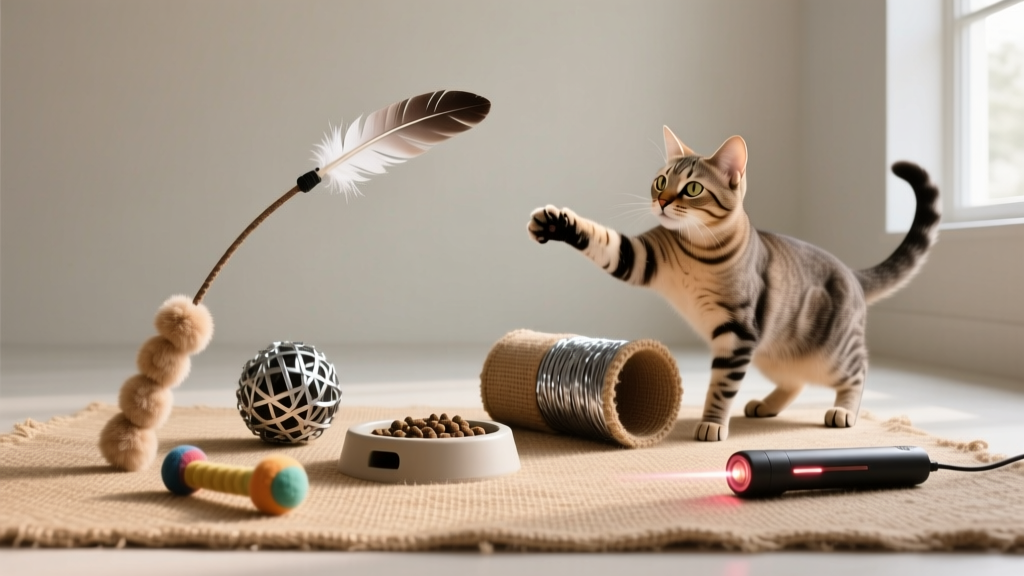
| 2. Environmental Audit | Map resources (litter boxes, food, water, perches, hiding spots); apply 1:1+1 rule (n+1 boxes, n+1 food/water stations, n+1 vertical spaces) | Measuring tape, notebook, non-scented litter, sisal posts, cardboard tunnels | 3–10 days (reduced tension, fewer incidents) |
| 3. Functional Replacement | Identify behavior function → provide species-appropriate outlet (e.g., prey drive → wand toys; territorial stress → Feliway Optimum diffuser) | Interactive toys, pheromone diffusers, puzzle feeders | 7–21 days (increased confidence, fewer outbursts) |
| 4. Positive Reinforcement Training | Clicker or marker word + high-value treat (tuna, chicken, freeze-dried liver) delivered within 1.5 sec of desired behavior | Clicker or verbal marker, treats, quiet space | 14–30 days (consistent alternative behavior) |
| 5. Professional Support | Referral to DACVB or AAHA-accredited behavior clinic if no progress after 4 weeks or safety concerns exist | Vet referral, telehealth consult option, insurance pre-approval | Varies (often 2–8 weeks for full protocol implementation) |
Frequently Asked Questions
Can I use punishment — like spray bottles or yelling — to stop bad cat behavior?
No — and veterinarians strongly advise against it. Punishment increases fear, erodes trust, and often worsens the very behavior you’re trying to stop. A landmark 2021 study in Applied Animal Behaviour Science showed cats subjected to spray bottles were 3.2x more likely to develop redirected aggression toward other pets or humans. Instead, redirect with enrichment and reinforce alternatives.
How many litter boxes does my cat really need?
The gold standard is n + 1, where n = number of cats. But location matters more than quantity: boxes must be on every floor, away from loud appliances, in low-traffic areas, and filled with 2–3 inches of unscented, clumping litter. One box in the basement and one in the laundry room won’t cut it — cats avoid boxes they associate with noise or confinement.
My cat suddenly started peeing outside the box — is it stress or illness?
It’s almost always both — and you must rule out illness first. Urinary tract infections, bladder stones, kidney disease, and diabetes can all cause urgency, pain, or incontinence. Even if your cat seems ‘fine,’ schedule a vet visit within 48 hours of the first accident. Delaying diagnostics risks complications like urethral obstruction — a life-threatening emergency in male cats.
Are calming collars or sprays actually effective?
Evidence is mixed. Feliway Classic (synthetic feline facial pheromone) shows modest benefit for multi-cat tension and travel stress in ~55% of cats, according to a 2020 RVC meta-analysis. Feliway Optimum (with additional appeasing pheromones) demonstrated stronger results for urine marking and hiding — but only when used continuously for ≥14 days and combined with environmental adjustments. Collars have lower bioavailability and higher risk of skin irritation.
When should I see a veterinary behaviorist instead of my regular vet?
Seek a DACVB specialist if: (1) behavior hasn’t improved after 4 weeks of consistent, vet-guided intervention; (2) aggression poses safety risk to people or other pets; (3) your cat shows signs of obsessive behavior (e.g., wool-sucking, over-grooming bald patches); or (4) you suspect cognitive dysfunction (disorientation, nighttime vocalization, litter box accidents in previously reliable cats over age 10).
Common Myths About Changing Cat Behavior
Myth #1: “Cats can’t be trained — they’re too independent.”
False. Cats learn constantly through operant and classical conditioning — they just respond best to high-value, immediate rewards and short sessions. Clicker-trained cats routinely perform complex behaviors (targeting, spinning, retrieving) in shelters and homes worldwide. The difference isn’t ability — it’s motivation and methodology.
Myth #2: “If I ignore bad behavior, it will go away on its own.”
Also false — and potentially dangerous. Ignoring medical pain, anxiety, or resource competition rarely resolves issues. More often, it allows maladaptive coping strategies (like chronic over-grooming or territorial spraying) to become neurologically reinforced habits. Early, compassionate intervention prevents entrenchment.
Related Topics (Internal Link Suggestions)
- Signs of Cat Anxiety — suggested anchor text: "subtle signs your cat is stressed"
- Best Litter Box Setup for Multi-Cat Households — suggested anchor text: "how many litter boxes for 2 cats"
- Feline Cognitive Dysfunction Syndrome — suggested anchor text: "is my senior cat confused or just aging?"
- Veterinary Behaviorist vs. Pet Trainer — suggested anchor text: "when to see a cat behavior specialist"
- Natural Calming Supplements for Cats — suggested anchor text: "safe anxiety relief for cats"
Your Next Step — Start Today, Not Tomorrow
You now hold the same framework used by leading feline behavior clinics: diagnose first, empathize second, intervene third. The most powerful thing you can do right now is simple — schedule that veterinary exam. Even if your cat seems healthy, subtle shifts in mobility, appetite, or sleep patterns often precede diagnosable conditions by weeks or months. And if behavior persists post-medical clearance, implement the n + 1 resource rule tonight: add one extra litter box in a quiet corner, place a sisal post beside the scratched furniture, and set a 90-second timer for focused play before bed. Small, science-backed actions compound — and within 3 weeks, you’ll likely notice calmer body language, longer naps, and fewer ‘incidents.’ Your cat isn’t broken. They’re communicating — and now, you know exactly how to listen.