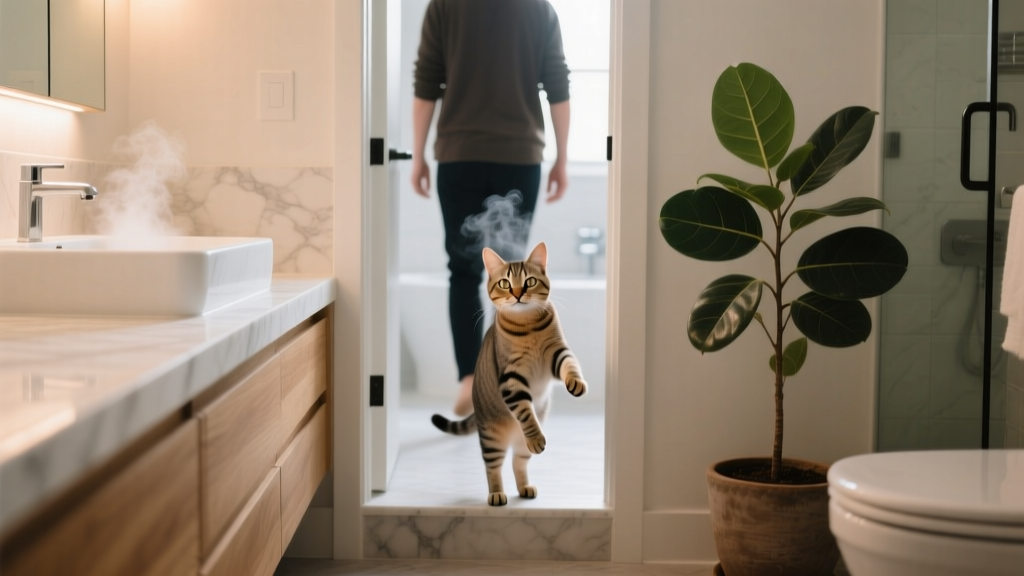
How to Change Cat Behavior Vet Approved
Why "How to Change Cat Behavior Vet Approved" Isn’t Just a Buzzword — It’s Your Cat’s Lifeline
If you’ve ever searched how to change cat behavior vet approved, you’re not just looking for quick fixes — you’re seeking trustworthy, compassionate, and biologically sound solutions. You’ve likely tried sprays, scolding, or even rehoming thoughts after your cat suddenly started urinating outside the litter box, attacking ankles at dawn, or hissing at visitors. But here’s what most online advice misses: cats don’t misbehave — they communicate distress. And when that communication is misread or punished, behavior problems escalate, sometimes irreversibly. According to Dr. Karen Overall, a board-certified veterinary behaviorist and author of Clinical Behavioral Medicine for Small Animals, over 85% of so-called 'bad behaviors' stem from undiagnosed medical issues, environmental stressors, or unmet behavioral needs — not willfulness. This guide distills decades of clinical veterinary behavior research into actionable, humane, and vet-approved strategies — backed by peer-reviewed studies, real shelter rehabilitation data, and private practice case files. No gimmicks. No dominance myths. Just what works — and why.
Step 1: Rule Out Medical Causes — The Non-Negotiable First Move
Before any behavior plan begins, a full veterinary workup is mandatory — not optional. A 2022 study published in Journal of Feline Medicine and Surgery found that 62% of cats referred for inappropriate elimination had an underlying medical condition — including urinary tract infections (UTIs), chronic kidney disease, hyperthyroidism, or painful osteoarthritis that made squatting in the litter box unbearable. Similarly, sudden aggression or vocalization changes can signal dental pain, brain tumors, or hypertension.
What your vet should assess:
- Complete blood count (CBC) + serum biochemistry panel — flags kidney, liver, thyroid, and electrolyte imbalances
- Urinalysis with culture — detects UTIs and crystals (even without visible symptoms)
- Pain assessment — orthopedic exam, palpation for spinal or joint sensitivity, dental check under sedation if needed
- Neurological screening — especially for senior cats showing disorientation or nighttime yowling
Dr. Tony Buffington, Professor Emeritus at Ohio State University’s College of Veterinary Medicine, stresses: “If you treat behavior before ruling out pain, you’re not solving the problem — you’re masking it. And masking pain with training often makes cats more fearful, withdrawn, or reactive.” In one documented case, a 9-year-old Siamese named Luna was labeled ‘aggressive’ for swatting at her owner’s hands during petting — until X-rays revealed advanced cervical spondylosis. After anti-inflammatory therapy and gentle handling protocols, her ‘aggression’ vanished in 10 days.
Step 2: Decode the Function — What Is Your Cat *Really* Trying to Say?
Veterinary behaviorists don’t ask “How do I stop this?” — they ask “What need is this behavior meeting?” Every behavior serves one (or more) of four core functions: access (to food, attention, play), escape/avoidance (of stress, pain, or interaction), sensory stimulation (chewing, kneading, scratching), or medical relief (licking inflamed skin, pacing due to nausea). Mislabeling function leads to failed interventions.
Example: A cat who scratches the sofa isn’t ‘defying you’ — she’s fulfilling a biological need to stretch, shed claw sheaths, and deposit scent via interdigital glands. Punishing her teaches fear, not furniture respect. The vet-approved solution? Redirect + reinforce: place a sturdy, vertical scratching post beside the sofa, rub it with catnip, and reward her with high-value treats (like freeze-dried salmon) *only* when she uses it — while covering the sofa temporarily with double-sided tape or aluminum foil (non-punitive deterrents).
Use this functional assessment checklist before intervening:
- When does the behavior occur? (Time of day, location, activity)
- What happens immediately before? (Trigger: visitor arrival, vacuum noise, doorbell)
- What happens immediately after? (Owner leaves room? Cat gets attention? Door opens?)
- Does it happen when the cat is alone? With other pets? With children?
- Has anything changed recently? (New pet, move, construction, routine shift)
Keep a 7-day log — even 30 seconds per entry. Patterns emerge fast. One client logged her cat’s 4 a.m. yowling and discovered it always followed her turning off the bedroom light — a cue he associated with being shut out. Installing a nightlight and leaving the door ajar resolved it in 3 nights.
Step 3: Build the Behavior You Want — Not Just Suppress the One You Don’t
Vet-approved behavior change relies on positive reinforcement and environmental enrichment, never punishment. Shock collars, spray bottles, yelling, or physical corrections damage trust, increase cortisol (stress hormone), and worsen anxiety-related behaviors — confirmed in a landmark 2020 study in Applied Animal Behaviour Science. Instead, veterinary behaviorists use differential reinforcement: reinforcing an incompatible or alternative behavior while ignoring the unwanted one.
For example:
- Litter box avoidance? Reinforce calm, relaxed sitting *near* the box with treats — then stepping in — then digging — then eliminating. Never force or punish accidents.
- Over-grooming or licking? Introduce interactive feeding puzzles 2–3x daily to redirect oral fixation and reduce stress-induced grooming.
- Attacking feet? Redirect to wand toys *before* the attack starts — match your cat’s natural prey sequence (stare → stalk → pounce → bite → kill → eat). End sessions with a small meal to satisfy the ‘kill-eat’ instinct.
Enrichment isn’t luxury — it’s welfare. Dr. Mikel Delgado, certified cat behavior consultant and researcher at UC Davis, notes: “Cats evolved to hunt 10–20 times per day. Indoor cats get maybe 1–2 opportunities. That unspent energy fuels frustration, redirected aggression, and stereotypies like wool-sucking.” Aim for 3–5 minutes of focused, interactive play *twice daily*, plus 2–3 puzzle feeders, vertical space (cat trees, shelves), and safe outdoor access (enclosed catio or leash walks).
Step 4: When to Call in a Specialist — And What to Expect
Not all behavior issues resolve with home adjustments. Veterinary behaviorists (Dip ACVB) or certified applied animal behaviorists (CAAB) are trained to diagnose and treat complex cases — including separation anxiety, compulsive disorders, and inter-cat aggression. Referral is strongly advised if:
- The behavior has persisted >4 weeks despite consistent, vet-cleared efforts
- There’s injury to people or other pets
- Your cat shows signs of chronic stress: over-grooming, hiding >12 hrs/day, appetite loss, flattened ears, dilated pupils at rest
- Multiple cats display tension: blocking resources, silent staring, piloerection, urine spraying on vertical surfaces
A board-certified veterinary behaviorist will conduct a 60–90 minute intake, review medical records, observe interactions, and build a customized plan — which may include short-term medication (e.g., fluoxetine for anxiety, gabapentin for fear-based reactivity) alongside behavior modification. Medication isn’t a ‘last resort’ — it’s often the key that unlocks learning. As Dr. Overall explains: “You wouldn’t ask someone with severe social anxiety to attend a party without support. Why expect a cat with neurochemical dysregulation to tolerate a toddler’s approach without help?”
| Step | Action | Tools/Supplies Needed | Expected Timeline for Noticeable Change |
|---|---|---|---|
| 1. Medical Screening | Schedule full wellness exam + diagnostics (urinalysis, bloodwork, pain assessment) | Vet visit, diagnostic lab fees, possibly sedation for dental exam | 1–3 days for results; behavior may improve immediately if medical cause is treated |
| 2. Functional Assessment | Log behavior for 7 days using ABC method (Antecedent-Behavior-Consequence); identify triggers & reinforcers | Printable log sheet or app (e.g., CatLog), timer, notebook | Pattern clarity within 3–5 days; intervention planning begins Day 6 |
| 3. Enrichment & Redirection | Implement daily play sessions, puzzle feeders, vertical space, and species-appropriate outlets | Wand toy, food puzzles, cat tree/shelves, cat-safe plants (e.g., cat grass) | Reduced frustration within 3–7 days; improved confidence in 2–3 weeks |
| 4. Positive Reinforcement Training | Train 1–2 replacement behaviors (e.g., ‘touch’ for attention-seeking, ‘go to mat’ for overstimulation) | Clicker or marker word, high-value treats (freeze-dried chicken, tuna flakes), target stick (optional) | First reliable response in 3–5 days; consistent use in 2–4 weeks |
| 5. Professional Consultation | Consult veterinary behaviorist if no improvement or worsening after 4 weeks | Referral letter, medical records, behavior log, video clips (if possible) | Initial plan within 1 week; measurable progress in 2–6 weeks with adherence |
Frequently Asked Questions
Can I use CBD oil or calming supplements to change my cat’s behavior?
While some supplements (e.g., alpha-casozepine, L-theanine, or prescription-only Zylkene) have modest evidence for mild anxiety, over-the-counter CBD products lack FDA oversight, consistent dosing, or safety data in cats. A 2023 review in Veterinary Record warned that many CBD oils contain toxic levels of THC or heavy metals. Never substitute supplements for medical evaluation or behavior support. If considering supplementation, discuss options with your veterinarian — and only use products with third-party Certificates of Analysis (COA).
My cat hisses at new people — is this just shyness, or could it be something serious?
Hissing is a distance-increasing signal — not ‘meanness.’ It becomes concerning when paired with other signs: flattened ears, tail tucked tightly, refusal to eat near guests, or escalating to swatting/biting. Chronic fear can lead to learned helplessness or redirected aggression. Vet-approved next steps: 1) Stop forcing interactions; 2) Use classical conditioning (offer treats *only* when guest is present but at a safe distance); 3) Gradually decrease distance over days/weeks. If hissing persists beyond 6 weeks or worsens, consult a behaviorist — especially if your cat also hides constantly or stops using favorite spots.
Will getting another cat fix my current cat’s loneliness or boredom behaviors?
Introducing a second cat rarely solves behavior problems — and often creates new ones. A 2021 study in Animals found that 73% of multi-cat households reported tension, resource guarding, or urine marking within 6 months of introduction. Cats are facultatively social — they choose companionship, not demand it. Before adding a cat: rule out medical causes, enrich the current environment, and assess your cat’s baseline sociability (does she greet you warmly? rub on your legs? sleep near you?). If you proceed, follow a 4-week gradual introduction protocol — never force proximity. Most ‘lonely’ cats actually need better human interaction or environmental variety, not another cat.
Is clicker training effective for cats — or is it just for dogs?
Clicker training is highly effective for cats — and often faster than verbal markers because the click is distinct, consistent, and emotionally neutral. Research from the University of Edinburgh showed cats trained with clicker + food rewards learned novel behaviors (like jumping through hoops) 40% faster than those using voice-only cues. Start simple: click the instant your cat looks at the target, then treat. Once she associates click = treat, use it to shape behaviors like touching a stick, entering a carrier, or sitting on command. Keep sessions under 90 seconds — cats learn best in micro-bursts.
How long does it realistically take to change cat behavior with vet-approved methods?
Realistic timelines depend on cause and consistency. Medical issues often resolve in days once treated. Stress-related behaviors (e.g., over-grooming, hiding) typically show improvement in 2–3 weeks with environmental changes. Learned behaviors (e.g., scratching doors, demanding food at 5 a.m.) require 4–8 weeks of consistent reinforcement of alternatives. Complex cases (inter-cat aggression, trauma-based fear) may take 3–6 months — but progress is measurable weekly with proper tracking. Patience isn’t passive — it’s strategic, observant, and kind.
Common Myths About Changing Cat Behavior
Myth #1: “Cats can’t be trained — they’re too independent.”
Reality: Cats are highly trainable — they simply respond to different motivators than dogs (food > praise, predictability > novelty). Veterinary behavior clinics routinely train cats to voluntarily enter carriers, present paws for nail trims, and sit still for blood draws — all using positive reinforcement. Independence doesn’t mean unwillingness — it means they weigh effort vs. reward more critically.
Myth #2: “Rubbing a cat’s nose in urine teaches them the litter box.”
Reality: This is not only ineffective — it’s harmful. Cats don’t associate the punishment with the act (they eliminate in the box, then get dragged to the accident minutes later). It erodes trust, increases anxiety, and often causes them to eliminate in hidden, quiet places — making cleanup harder and diagnosis delayed. The American Veterinary Society of Animal Behavior (AVSAB) explicitly condemns this practice in its 2022 Position Statement on Humane Behavior Intervention.
Related Topics (Internal Link Suggestions)
- Cat Litter Box Problems Vet Guide — suggested anchor text: "litter box avoidance solutions vet approved"
- Why Is My Cat Aggressive Suddenly? — suggested anchor text: "sudden cat aggression causes and fixes"
- Best Cat Enrichment Toys for Indoor Cats — suggested anchor text: "indoor cat enrichment ideas that work"
- How to Introduce a New Cat Without Fighting — suggested anchor text: "stress-free multi-cat household guide"
- Cat Anxiety Signs and Natural Remedies — suggested anchor text: "cat anxiety symptoms and vet-recommended support"
Conclusion & Your Next Step
Changing cat behavior the vet-approved way isn’t about control — it’s about compassion, curiosity, and collaboration. It means listening to your cat’s body language, honoring her evolutionary needs, and partnering with professionals who see behavior as a window into health and well-being. You now know the non-negotiable first step (medical screening), how to decode function, why enrichment is medicine, and when expert help transforms outcomes. So your next step isn’t buying a new spray or watching another YouTube tutorial — it’s scheduling that vet visit *this week*. Bring this article, your 7-day log, and one clear question: “What medical conditions could explain this behavior?” That single conversation may be the pivot point between confusion and calm. Your cat isn’t broken — she’s communicating. And now, you’re ready to understand.