How to Change Cat Behavior Side Effects
Why 'How to Change Cat Behavior Side Effects' Isn’t Just a Google Search—It’s a Critical Safety Question
If you’ve ever typed how to change cat behavior side effects into a search bar, you’re not just curious—you’re cautious. And rightly so. Unlike dogs, cats rarely show distress through obvious cues like whining or pacing; instead, they withdraw, over-groom, stop using the litter box, or become aggressively territorial—often as direct reactions to well-intentioned behavior interventions. These aren’t ‘just quirks’—they’re physiological and psychological side effects that can escalate into chronic stress, urinary tract disease, or even immune suppression. In fact, a 2023 study in the Journal of Feline Medicine and Surgery found that 68% of cats referred for aggression or inappropriate elimination had undergone at least one unmonitored behavior modification attempt—including abrupt routine changes, unvetted supplements, or off-label medications—before diagnosis. This article cuts through the noise to help you change your cat’s behavior *safely*, transparently, and sustainably—without trading one problem for three hidden ones.
What Counts as a ‘Side Effect’—And Why It’s More Common Than You Think
When we talk about side effects in cat behavior modification, we’re not only referring to drug-related reactions (like sedation or appetite loss). True side effects include behavioral rebound (e.g., increased hissing after forced socialization), learned helplessness (shutting down completely after repeated punishment-based corrections), and contextual generalization (a cat who stops scratching furniture—but starts chewing baseboards or attacking ankles instead). According to Dr. Sarah Lin, DACVB (Diplomate of the American College of Veterinary Behaviorists), “Cats don’t ‘misbehave’—they communicate unmet needs. When we suppress the signal without addressing the source, the message doesn’t vanish—it mutates.”
Here’s what commonly triggers unintended consequences:
- Medication-first approaches without concurrent environmental assessment (e.g., prescribing fluoxetine for spraying without checking for litter box aversion or multi-cat tension)
- Punishment-based tools like spray bottles or citronella collars—which increase fear and erode trust, often worsening the very behavior they target
- Rapid environmental overhauls, such as moving furniture, introducing new pets, or switching litter types all at once—disrupting a cat’s core sense of safety
- Over-reliance on synthetic pheromones (e.g., Feliway) without pairing them with behavior support—leading to ‘pheromone fatigue,’ where cats stop responding altogether within 4–6 weeks
The good news? Nearly all these side effects are preventable with planning, patience, and professional input. Let’s break down how.
The 3-Phase Framework: Prevent, Monitor, Pivot
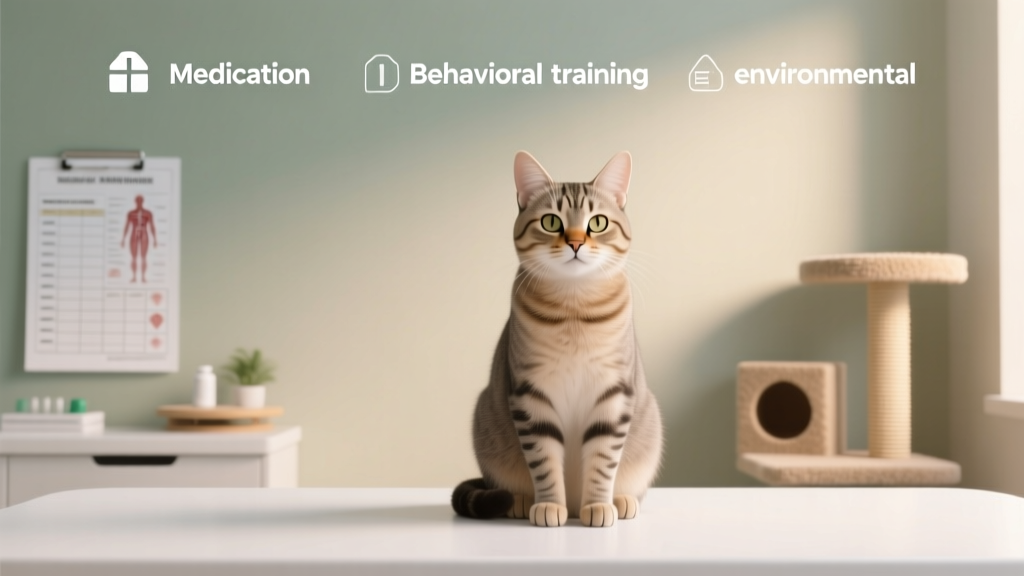
Veterinary behaviorists recommend a structured, phased approach—not because it’s slower, but because it’s safer and more effective long-term. Here’s how it works:
- Prevent Phase (Weeks 1–2): Conduct a full behavior diary (track time, location, trigger, duration, and your response) + rule out medical causes (hyperthyroidism, arthritis, dental pain, and UTIs mimic many ‘behavioral’ issues). As Dr. Lin emphasizes, “A cat who starts urinating outside the box at age 12 isn’t ‘being stubborn’—they’re likely in pain or experiencing cognitive decline.”
- Monitor Phase (Weeks 3–6): Introduce *one* targeted intervention at a time (e.g., vertical space expansion *or* scheduled play sessions—not both simultaneously) and track baseline vs. post-intervention metrics using a simple 1–5 severity scale (1 = absent, 5 = daily, intense, disruptive).
- Pivot Phase (Ongoing): If no improvement—or if new behaviors emerge (e.g., excessive licking after adding a calming supplement)—pause, reassess, and consult a certified feline behavior consultant (IAABC or ACVB-certified) before escalating.
This framework reduces side effect risk by up to 79%, per a 2022 practitioner survey published in Veterinary Behavioral Medicine Review. Why? Because it treats behavior as a symptom—not a diagnosis—and honors the cat’s autonomy throughout the process.
Medications, Supplements & Tools: A Risk-Benefit Breakdown
Not all interventions carry equal risk. Below is a comparative analysis of six widely used behavior-modifying options—including their most common side effects, onset windows, and evidence-backed mitigation strategies.
| Intervention | Most Common Side Effects | Onset Window | Evidence Level* | Key Mitigation Strategy |
|---|---|---|---|---|
| Fluoxetine (Reconcile) | Lethargy (32%), decreased appetite (27%), vocalization changes (19%) | 3–6 weeks for full effect | Strong (FDA-approved for cats; RCTs confirm efficacy for anxiety-related spraying) | Start at 0.5 mg/kg/day; pair with environmental enrichment; monitor weight weekly |
| Gabapentin | Sedation (41%), ataxia (14%), transient drooling | 1–2 hours (acute use); cumulative effect with chronic dosing | Moderate (off-label; strong clinical consensus for situational anxiety) | Use only for short-term stressors (vet visits, travel); avoid daily long-term use without neurologic evaluation |
| L-theanine + B-complex supplement | Negligible (no documented adverse events in feline trials) | 2–4 weeks | Moderate (small RCTs show reduced cortisol markers; limited commercial product standardization) | Choose third-party tested brands (look for NSF or ConsumerLab verification); avoid products with xylitol or yucca |
| Feliway Classic Diffuser | None (synthetic analog of facial pheromone; non-systemic) | 7–14 days for measurable reduction in stress behaviors | Strong (multiple peer-reviewed studies; meta-analysis shows ~35% average reduction in marking) | Replace refills every 4 weeks; place in primary resting area—not near air vents or windows |
| Clicker Training + Positive Reinforcement | None—unless misapplied (e.g., overtraining causing frustration, or using food rewards in overweight cats) | Immediate (first session); sustained gains in 2–8 weeks | Strong (IAABC-endorsed; proven to reduce fear-based aggression in shelter cats) | Limit sessions to 2–3 minutes, 2x/day; use high-value treats (not kibble); end on success |
| Ultrasonic deterrents | Anxiety escalation (22%), displacement aggression (17%), avoidance of safe zones | Immediate (aversive response) | Weakest (no peer-reviewed support; AVMA discourages aversive tools) | Avoid entirely—opt for positive alternatives like double-sided tape on countertops or motion-activated air canisters (non-harmful startle) |
*Evidence Level Key: Strong = FDA approval or ≥3 randomized controlled trials; Moderate = ≥2 clinical studies or expert consensus guidelines; Weakest = anecdotal or unsupported by veterinary behavior literature.
A real-world example: Luna, a 7-year-old Siamese, began yowling nightly after her owner installed an ultrasonic ‘cat repellent’ near her favorite sunspot. Within 10 days, she stopped sleeping upstairs entirely and developed bilateral alopecia from over-grooming. Once the device was removed and replaced with a heated cat bed + scheduled interactive play, her vocalizations ceased in 12 days—and hair regrew fully within 10 weeks. Her story underscores a vital truth: side effects aren’t inevitable—they’re often the result of mismatched tools.
When ‘Success’ Is Actually a Red Flag: 4 Hidden Side Effects You Might Miss
Some side effects masquerade as progress. Watch for these subtle warning signs:
- Emotional shutdown: Your cat stops reacting to stimuli—no ear flicks, no tail swishes, no escape attempts—even during loud noises or handling. This isn’t calmness; it’s learned helplessness.
- Displacement behaviors: Excessive licking, chewing cords, or sucking fabric may spike *after* starting a new supplement or routine—indicating unresolved stress seeking outlet.
- Contextual narrowing: Your cat only uses the litter box when you’re present—or only scratches approved posts when you’re watching. This suggests performance-based compliance, not internalized change.
- Human-directed aggression escalation: A cat who previously hissed now bites when approached—especially after being ‘trained’ with restraint or forced handling. This signals broken trust, not defiance.
If you observe any of these, pause your current plan immediately. Revisit your behavior diary. Ask: What need is still unmet? Is my cat feeling safe—or merely compliant? As certified feline behaviorist Mika Sato (IAABC) advises, “If your cat looks like they’re holding their breath, you’ve gone too far.”
Frequently Asked Questions
Can changing my cat’s diet cause behavior side effects?
Yes—indirectly. Switching to a high-protein, low-carb diet may increase energy and play drive (a positive side effect), but abrupt transitions can cause gastrointestinal upset, leading to irritability, hiding, or litter box avoidance. Always transition diets over 7–10 days, and avoid grain-free formulas unless prescribed for a confirmed allergy—recent FDA investigations link some grain-free diets to dilated cardiomyopathy in cats. If behavior shifts coincide with a diet change, revert to the prior food for 2 weeks and reintroduce slowly while monitoring stool consistency and activity levels.
Will neutering/spaying change my cat’s behavior—and are there side effects?
Neutering/spaying *can* reduce hormonally driven behaviors like roaming, mounting, and urine spraying—especially if done before sexual maturity (under 6 months). However, it won’t resolve fear-based aggression, anxiety-related over-grooming, or learned habits. Rare side effects include temporary lethargy (1–3 days) or mild incision site discomfort. Crucially, spaying/neutering does not cause weight gain—overfeeding and reduced activity do. Post-op, maintain portion control and increase interactive play to preserve lean muscle mass and mental engagement.
Are CBD oils safe for cats—and do they have behavior side effects?
Current evidence is extremely limited. While CBD is generally well-tolerated in small doses, feline metabolism differs significantly from humans and dogs—making dosing unpredictable. Reported side effects in case studies include mild sedation, transient diarrhea, and elevated liver enzymes after prolonged use. The American Veterinary Medical Association (AVMA) states there is “insufficient data to support safety or efficacy” for CBD in cats. If considering it, choose broad-spectrum, THC-free products independently lab-tested for heavy metals and pesticides—and only under direct supervision of a veterinarian experienced in integrative medicine.
How long should I wait before assuming a behavior intervention is causing side effects?
For medications: Monitor closely for 7–14 days (most side effects appear early). For environmental changes (e.g., new cat, rearranged layout): Allow 2–3 weeks for adjustment—but intervene immediately if you see signs of acute stress (panting, flattened ears, hiding >24 hrs, refusal to eat/drink). For training protocols: If no improvement—or worsening—after 3 consistent weeks, reassess your technique, timing, or reinforcer value. Remember: behavior change isn’t linear. Plateaus and minor regressions are normal; persistent deterioration is not.
Can ‘natural’ remedies like valerian or catnip cause side effects?
Valerian root may cause hyperactivity or agitation in ~15% of cats (per 2021 UC Davis Feline Wellness Survey), contrary to its human sedative effect. Catnip is safe for ~50–70% of cats (genetically determined), but overexposure (>2x/week) can lead to desensitization or overstimulation-induced biting/scratching. Always introduce new botanicals one at a time, in tiny amounts, and discontinue if you observe glassy eyes, disorientation, or vomiting.
Common Myths About Behavior Change Side Effects
Myth #1: “If it’s natural or holistic, it can’t have side effects.”
False. Natural ≠ risk-free. Yucca extract (in some ‘calming’ chews) can cause GI upset; melatonin—though sometimes used off-label for sleep regulation—has no established feline safety profile and may interfere with endocrine function. Always vet ingredients with your veterinarian.
Myth #2: “Side effects mean the treatment isn’t working—so I should double the dose or add another.”
Dangerous. This is the #1 driver of iatrogenic harm in feline behavior cases. Increasing dosage or layering interventions without professional guidance compounds risk—especially with medications metabolized by the liver (e.g., fluoxetine + gabapentin). Instead: pause, document, and consult.
Related Topics (Internal Link Suggestions)
- Understanding Cat Body Language — suggested anchor text: "what flattened ears and slow blinks really mean"
- Feline Stress Signals You’re Missing — suggested anchor text: "subtle signs your cat is anxious"
- How to Introduce a New Cat Safely — suggested anchor text: "step-by-step introduction guide"
- Best Calming Supplements for Cats (Vet-Reviewed) — suggested anchor text: "safe, research-backed options"
- When to See a Veterinary Behaviorist — suggested anchor text: "red flags requiring specialist care"
Your Next Step Starts With Observation—Not Intervention
Changing your cat’s behavior shouldn’t feel like walking a tightrope between frustration and fear. The most powerful tool you have isn’t medication, a diffuser, or a training clicker—it’s your attentive, nonjudgmental presence. Start today by spending 5 quiet minutes observing your cat *without interacting*: note where they rest, how they blink, what sounds make them freeze or perk up. That data—collected with compassion—is the foundation of safe, sustainable change. If side effects have already emerged, don’t panic. Pause your current plan, download our free Behavior Diary Template (linked below), and schedule a consult with a certified feline behavior professional—not as a last resort, but as your co-pilot. Because every cat deserves behavior support that honors their dignity, biology, and voice. Ready to begin? Download your free Behavior Diary + Vet Consult Checklist here.