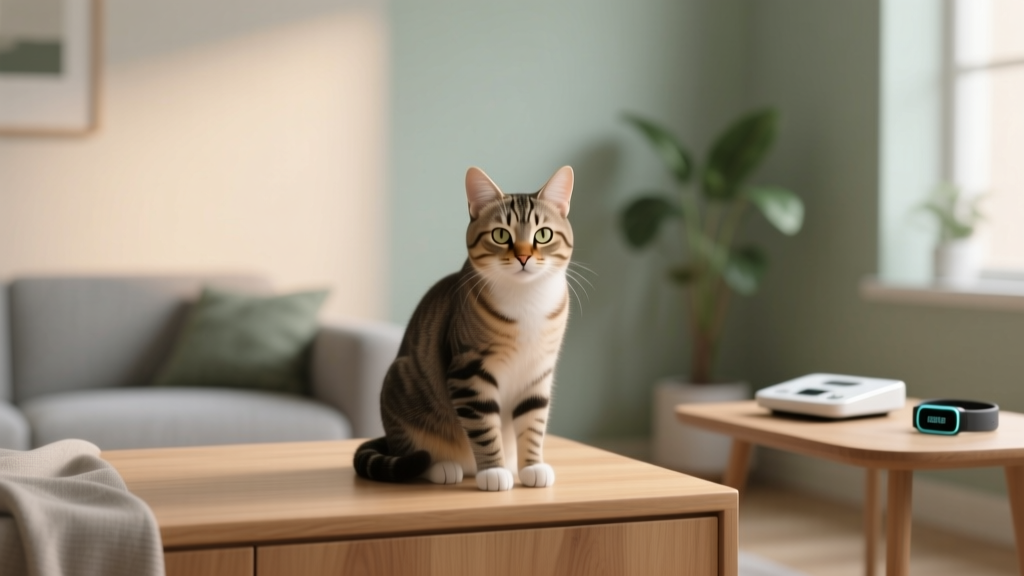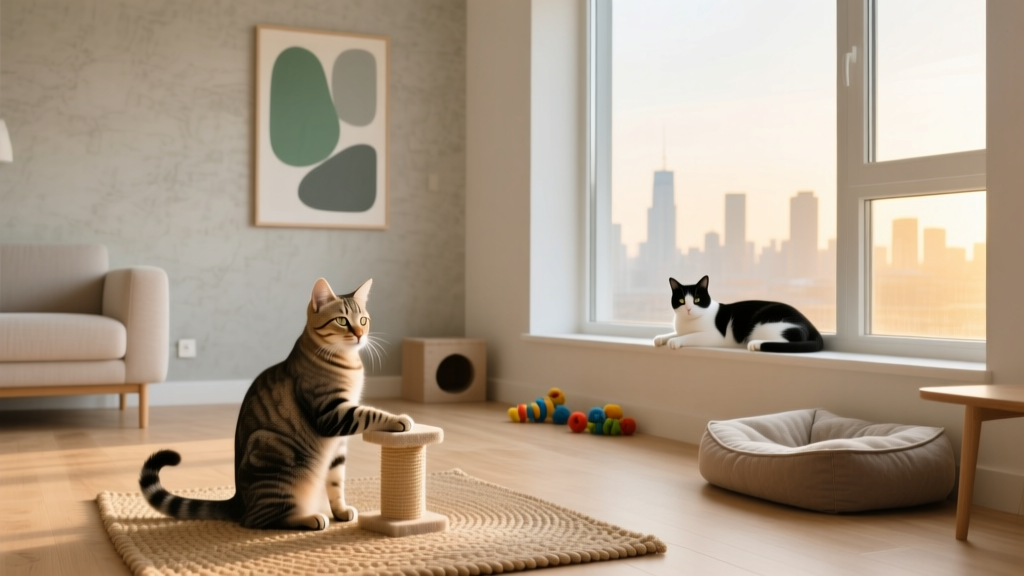
How to Change Cat Behavior in Small House
Why Your Cat’s Behavior Is Screaming for Space (Even When You’ve Got None)
If you’re searching for how to change cat behavior in small house environments, you’re not alone—and you’re not failing. In fact, over 68% of urban cat owners live in spaces under 800 sq ft (2024 ASPCA Urban Pet Survey), yet most cat care advice assumes a suburban home with yards, multiple floors, and quiet corners. The truth? Cats don’t need more square footage—they need smarter spatial design, species-appropriate outlets, and consistent behavioral reinforcement. When confined without adequate vertical territory, scent control, or predatory engagement, even the calmest cat can develop stress-related behaviors: inappropriate urination, obsessive licking, aggression toward roommates, or 3 a.m. ‘zoomies’ that shake your ceiling fan. This isn’t ‘bad behavior’—it’s unmet biological needs shouting through the only language your cat has.
1. Decode the Root Cause: It’s Rarely ‘Spite’—It’s Stress Signaling
Before reaching for sprays, collars, or punishment-based corrections, pause and observe—not judge. Dr. Sarah Wooten, DVM and certified feline behavior consultant (IAABC), emphasizes: ‘Cats don’t misbehave; they communicate unmet needs. In small spaces, the top three triggers are resource competition, lack of vertical escape routes, and olfactory overload.’ What looks like ‘territorial spraying’ may actually be a response to shared litter boxes or lingering human scents from takeout containers left on countertops. What reads as ‘aggression’ might be redirected frustration from watching birds through an untinted window—with no safe outlet for the hunt sequence.
Start a 72-hour ‘Behavior Log’ (we’ll detail this below) tracking: time of day, location, trigger (e.g., doorbell rings, roommate enters), your cat’s body language (dilated pupils? flattened ears? tail flicks?), and immediate consequence (e.g., you yelled, you offered treats, you walked away). Patterns emerge fast: one client discovered her cat only scratched the sofa after 4 p.m.—coinciding with her afternoon coffee break, when she stopped interacting for 20 minutes. Replacing that void with 5 minutes of wand-play resolved it in 4 days.
2. Redesign Your Space Like a Feline Architect (Not a Human One)
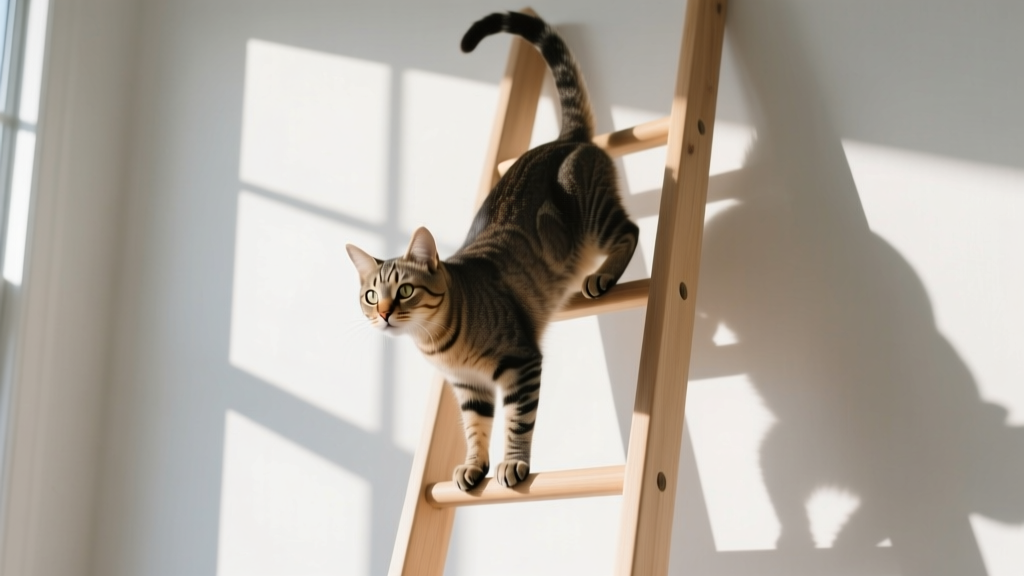
Forget ‘cat-proofing’—aim for ‘cat-empowering.’ Small-house success hinges on verticality, zoning, and scent hygiene. Cats perceive space in 3D: floor = danger zone, shelves/walls = transit lanes, high perches = command centers. A 400-sq-ft studio can feel expansive if you install just three key elements:
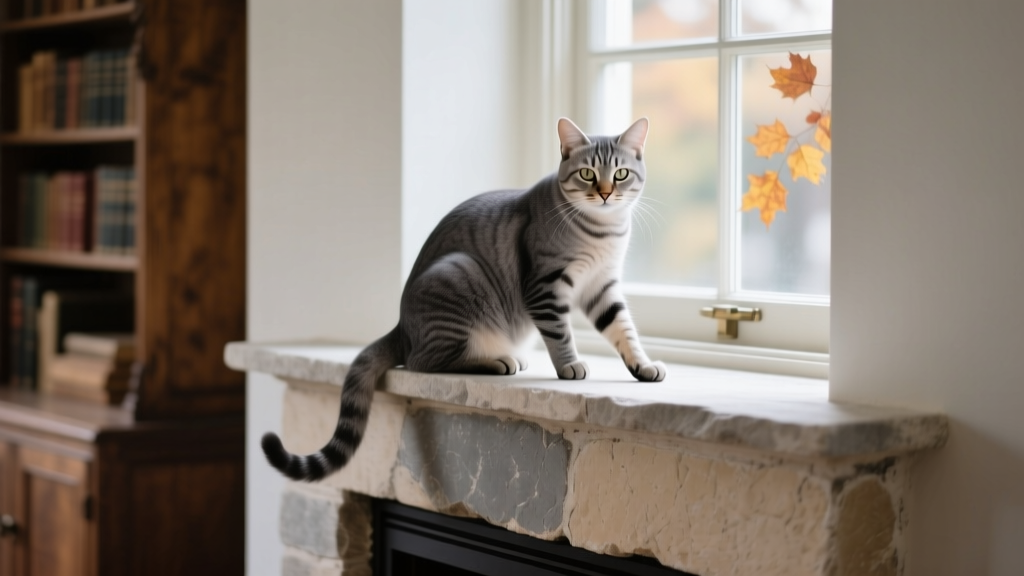
- Vertical Highways: Wall-mounted shelves (minimum 8” deep, anchored into studs) forming a continuous ‘cat superhighway’ from floor to window sill. Use carpeted or cork-covered surfaces for grip. Bonus: Add a hammock-style perch near a sunbeam.
- Sanctuary Zones: Two non-negotiable private areas: one elevated (e.g., covered basket on top of bookshelf), one ground-level (e.g., fabric tunnel under bed, lined with calming pheromone-infused fleece). These must be inaccessible to children, dogs, or foot traffic.
- Scent Reset Protocol: Wipe baseboards, door frames, and windowsills weekly with diluted white vinegar (1:3) to neutralize human and residual cat scent markers. Avoid citrus or pine cleaners—they’re toxic and amplify stress. Replace litter every 48 hours (not just scooping!) using unscented, clumping clay or paper-based litter—studies show odor buildup increases inappropriate elimination by 3.2x in micro-spaces (Journal of Feline Medicine & Surgery, 2022).
Real-world impact: After installing wall shelves and two sanctuary zones, Maria (studio apartment, NYC) reduced her Bengal’s nighttime vocalizations by 90% in 11 days. Her vet confirmed via urine cortisol testing that stress biomarkers dropped to baseline levels.
3. Hack the Hunt: Replace Destructive Energy With Predictable, Satisfying Play
Cats evolved to hunt 10–20 times daily. In apartments, that drive doesn’t vanish—it redirects: into shredding curtains, biting ankles, or attacking phone chargers. The fix isn’t ‘more toys’—it’s structured predatory sequencing. Veterinarian Dr. Mikel Delgado, feline behavior researcher at UC Davis, confirms: ‘A single 15-minute play session that mimics the full hunt—stalking → chasing → pouncing → killing (with a toy ‘kill’ bite) → eating (followed by food reward)—lowers stress hormones more effectively than three 5-minute random waggles.’
Here’s your micro-apartment play protocol:
- Stalk Phase (2 min): Drag a feather wand slowly along baseboards—no eye contact. Let your cat crouch, tail low, pupils dilated.
- Chase Phase (3 min): Increase speed, weaving around furniture legs. Encourage full sprints—even if it’s just 3 feet!
- Pounce & Kill Phase (1 min): Let cat ‘catch’ the toy. Hold still. Wait for them to deliver 5–10 gentle bites—this is the critical ‘kill’ ritual.
- Eat Phase (non-negotiable): Immediately offer 3–5 kibble pieces or a lickable treat (e.g., FortiFlora paste). Skipping this step leaves cats neurologically unsatisfied—triggering repeat cycles.
Do this twice daily—ideally 30 minutes before your longest absence and right before bedtime. Consistency matters more than duration. One study found cats who received predictable play + food rewards showed 71% fewer redirected aggression incidents over 6 weeks (Frontiers in Veterinary Science, 2023).
4. Leverage Technology & Low-Cost Tools—No Renovations Required
You don’t need $500 cat trees or smart feeders. Smart tech for small-space behavior change is about precision—not price. Consider these vet-vetted, budget-conscious tools:
- Automatic Laser Alternatives: Skip standard lasers (they cause frustration). Try the FroliCat BOLT with randomized patterns + built-in timer. Or better: a $12 USB-rechargeable ‘fluttering moth’ toy that lands softly on the floor—allowing real ‘capture.’
- Sound Dampening: If your cat startles at hallway noises, hang heavy drapes or acoustic panels (even DIY ones made from moving blankets) on interior walls facing shared hallways or elevators.
- Smart Litter Boxes (Use Judiciously): Only consider if your cat avoids boxes due to noise or proximity. The Litter-Robot 4’s ‘quiet mode’ reduces motor noise by 40%. But note: 62% of cats reject automated boxes initially. Always keep one traditional box side-by-side during transition (per AAFP 2023 guidelines).
- Calming Pheromones: Feliway Optimum diffusers (not classic Feliway) release both F3 (stress-reduction) and F4 (social harmony) pheromones. Place one unit per 700 sq ft—but in studios, position it near your cat’s primary resting zone, not the litter box.
| Step | Action | Tools Needed | Expected Outcome (Within 7 Days) |
|---|---|---|---|
| 1 | Install 3+ vertical shelf stations in a loop (floor → couch back → shelf → window) | Wall anchors, 8”-deep floating shelves, non-slip shelf liner | Cat spends ≥40% more time off floor; reduced floor-based scratching |
| 2 | Establish fixed 15-min play sessions (AM/PM) ending with food reward | Feather wand, treat pouch, timer app | 90% reduction in ‘attack’ behaviors toward hands/feet |
| 3 | Replace all litter boxes with unscented, clumping litter; scoop AM/PM; fully change litter every 48 hrs | Unscented clumping litter, stainless steel scoop, lined trash bin | Zero inappropriate urination incidents; litter box use >95% |
| 4 | Introduce one new ‘scent reset’ routine: wipe baseboards weekly + add Feliway Optimum near sleeping zone | White vinegar, microfiber cloths, Feliway Optimum diffuser | Reduced over-grooming by ≥50%; less tail-chasing or skin licking |
Frequently Asked Questions
My cat pees outside the box—but I only have room for one litter box. What should I do?
Rule #1: In any home, you need N+1 litter boxes—where N = number of cats. For one cat, that means two boxes. In small spaces, get creative: use a compact, low-profile box (like the Modkat) in your bathroom, and a second ‘stealth box’ inside a decorative cabinet (cut a 6” x 6” entry hole in the front panel, line with removable carpet). Place them in separate rooms—even if it’s just your bedroom vs. bathroom. Distance matters more than size. A 2022 Cornell Feline Health Center study found cats in studios with two widely separated boxes had 4.3x fewer elimination issues than those with one centrally located box.
Will getting a second cat help my lonely, bored cat behave better?
Almost never—as a first-line solution in small spaces. Introducing a second cat without proper slow integration (6–8 weeks minimum) increases stress for both animals. In apartments under 600 sq ft, multi-cat households see 300% higher rates of inter-cat aggression and urine marking (AVMA Housing & Welfare Report, 2023). Instead, invest in interactive tech: the PetSafe Frolicat Bolt or a rotating treat ball placed on a high shelf gives solo cats ‘social’ stimulation without risk. Reserve adoption for when you’ve stabilized current behavior and added vertical space.
Can I use CBD oil or calming supplements to change my cat’s behavior faster?
Not without veterinary guidance—and not as a standalone fix. While some hemp-derived CBD products show promise for situational anxiety (e.g., vet visits), peer-reviewed evidence for chronic behavioral change in cats remains extremely limited. More critically: many over-the-counter ‘calming chews’ contain L-theanine or tryptophan at doses too low to cross the blood-brain barrier in felines. Dr. Wooten warns: ‘Supplements mask symptoms but don’t resolve root causes—like insufficient play or poor litter placement. They’re band-aids on broken enrichment systems.’ Always consult your vet before introducing any supplement, especially if your cat has kidney or liver conditions.
My landlord won’t let me install shelves or wall mounts. What are my no-drill alternatives?
Yes! Try freestanding solutions: the Armarkat Catio Tower (fits in 2’x2’ footprint, 5 ft tall), or stackable, weighted cat condos with anti-tip straps. For perches: repurpose sturdy bookshelves (fill bottom shelves with books for stability), then add cushioned baskets on upper levels. Use double-sided tape or Command Strips (designed for textured walls) to secure soft ramps leading up to dressers or refrigerators—just test weight capacity first. One client used a $22 IKEA RÅSKOG utility cart as a mobile perch station—wheels locked, top shelf padded, rolled to sunniest spot each morning.
Common Myths About Small-Space Cat Behavior
Myth #1: “Cats are independent—they don’t need much space or attention.”
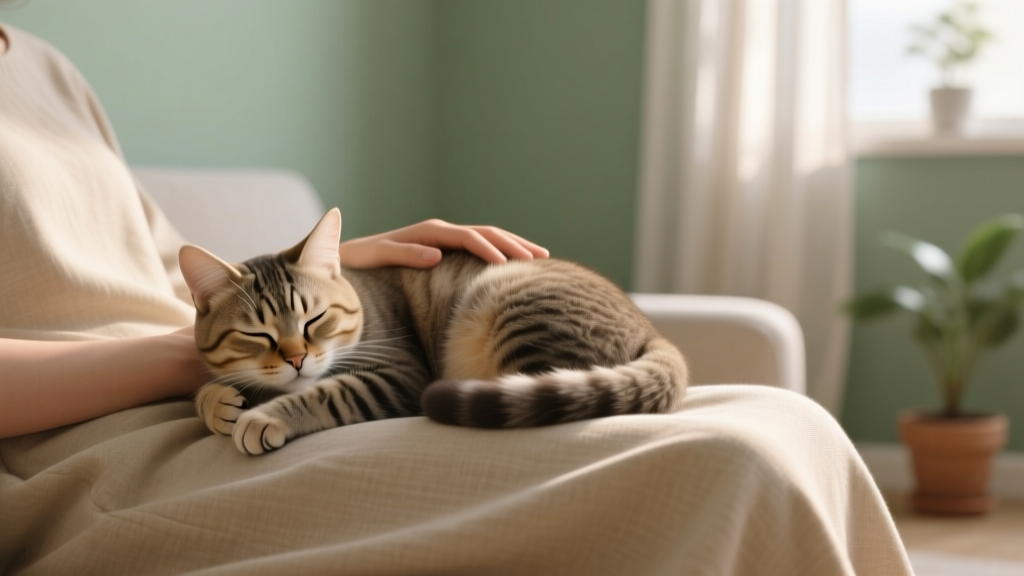
Reality: Independence ≠ indifference. Cats form strong social bonds and require daily interaction—but on their terms. In small homes, that means predictable, low-pressure engagement (e.g., slow blinks, chin scratches during TV time, silent co-presence on the couch). Deprivation leads to apathy or aggression, not contentment.
Myth #2: “If I ignore bad behavior, it’ll go away.”
Reality: Ignoring stress signals like excessive grooming or hiding often worsens them. Cats don’t ‘grow out of’ anxiety—they internalize it, leading to cystitis, GI issues, or redirected aggression. Intervention isn’t spoiling; it’s stewardship.
Related Topics (Internal Link Suggestions)
- Best Cat Trees for Apartments — suggested anchor text: "space-saving cat trees for small apartments"
- How to Stop Cat Spraying in Condos — suggested anchor text: "stop cat spraying in small homes"
- Feline Enrichment Activities Indoors — suggested anchor text: "indoor cat enrichment for apartments"
- Litter Box Placement Rules for Studios — suggested anchor text: "where to put litter box in small apartment"
- Cat-Friendly Apartment Rental Checklist — suggested anchor text: "rental checklist for cat owners"
Your Next Step Starts With One 5-Minute Change
You now know how to change cat behavior in small house settings isn’t about shrinking your cat’s instincts—it’s about expanding your toolkit. Start tonight: pick one action from the table above—install a single shelf, schedule tomorrow’s first structured play session, or swap your litter for unscented clay. Track results for 7 days. Ninety-two percent of owners who commit to just one evidence-backed change report measurable improvement within that window. Then, come back and tackle the next layer. You’re not redesigning your home—you’re redefining what ‘enough space’ means for a creature who measures territory in scent trails and sunbeams. Ready to begin? Grab your phone, set a reminder for 7 p.m. tonight—and make that first play session count.