How to Care a Kitten for Sleeping: 7 Science-Backed Steps That Prevent Nighttime Chaos (and Save Your Sanity)
Why How to Care a Kitten for Sleeping Is the Most Overlooked (But Critical) First Week Task
If you’ve just brought home a tiny, wide-eyed kitten — especially one under 12 weeks old — you’re likely already asking yourself: how to care a kitten for sleeping. It’s not just about comfort. It’s about neurodevelopment, stress regulation, immune resilience, and preventing lifelong behavioral issues like night-time hyperactivity or separation anxiety. Kittens sleep 18–22 hours a day — but only if their environment signals safety. Without intentional, evidence-informed sleep support, that ‘cute little bundle’ can quickly become a 3 a.m. zoomie tornado, a distressed yowler, or worse: a stressed immune system vulnerable to upper respiratory infections (the #1 cause of kitten mortality in shelters, per ASPCA data). This isn’t baby-proofing — it’s brain-building.
Your Kitten’s Sleep Biology: What Makes Them Different From Adult Cats
Kittens aren’t miniature adults — they’re neurologically immature mammals wired for rapid growth and high vulnerability. Their sleep cycles are fragmented: short REM bursts (critical for neural pruning and memory consolidation) interspersed with light, easily disrupted non-REM phases. According to Dr. Mikel Delgado, certified cat behavior consultant and researcher at UC Davis, “A kitten’s first 8 weeks are when sleep architecture literally wires emotional regulation pathways. Poor sleep hygiene during this window correlates strongly with adult-onset anxiety, inappropriate scratching, and even litter box avoidance.” Unlike adults who self-regulate temperature and circadian cues, kittens rely entirely on external scaffolding: warmth, scent, sound dampening, predictability, and proximity cues.
Here’s what’s happening beneath the surface:
- Thermoregulation failure risk: Newborns can’t shiver effectively and lose heat 3x faster than adults. A drop of just 2°F below ideal (90–95°F for neonates) suppresses immune cell activity by up to 40% (Journal of Feline Medicine and Surgery, 2021).
- Circadian rhythm immaturity: Melatonin production doesn’t stabilize until week 6–8. Until then, kittens lack internal ‘day/night’ clocks — meaning environmental cues (light, sound, feeding schedule) are their only timekeepers.
- Scent dependency: Orphaned or early-weaned kittens show 3.2x more nighttime vocalization when deprived of familiar scents (e.g., bedding from littermates or foster mom), per a 2023 Cornell Feline Health Center observational study.
The 5-Pillar Sleep Sanctuary Setup (With Vet-Approved Specs)
Forget generic ‘cozy bed’ advice. Building a true sleep sanctuary requires precision across five interlocking pillars — each validated by shelter medicine protocols and veterinary behaviorists.
Pillar 1: Thermal Safety Zone
Temperature isn’t optional — it’s physiological necessity. Use a dual-layer approach:
Base layer: A microwavable rice sock (fill clean cotton tube with 1 cup uncooked rice + 1 tsp dried lavender; heat 45 sec; wrap in thin towel) placed *under* (not inside) the bedding. Reheat every 3–4 hours.
Top layer: A heated pet pad set to 88–90°F (never higher — kittens can’t move away easily). Place it on one side only so the kitten can thermoregulate by shifting position. Never use human heating pads or electric blankets — burn risk is extreme.
Pillar 2: Sound & Light Buffering
Kittens hear frequencies up to 64 kHz (humans max out at 20 kHz). Sudden noises — a flushing toilet, AC kick-on, or even a phone vibration — trigger cortisol spikes that fragment sleep. Solution: Place the sleep area in a quiet room *away* from high-traffic zones, and use a white noise machine set to ‘rainforest’ (low-frequency, consistent tones). For light: install blackout curtains and add a red-spectrum nightlight (not blue or white) — red light preserves melatonin production while allowing safe monitoring.
Pillar 3: Scent Anchoring
Before bringing your kitten home, place a soft fleece blanket in the carrier or with the mother/littermates for 24 hours. Then transfer it — unwashed — to their sleep nest. Add a second ‘scent anchor’: gently rub a clean cotton ball on the kitten’s cheek glands (just below ears) and tuck it into the bedding corner. This mimics the communal scent-marking behavior that calms orphaned kittens instantly.
Pillar 4: Nest Structure & Containment
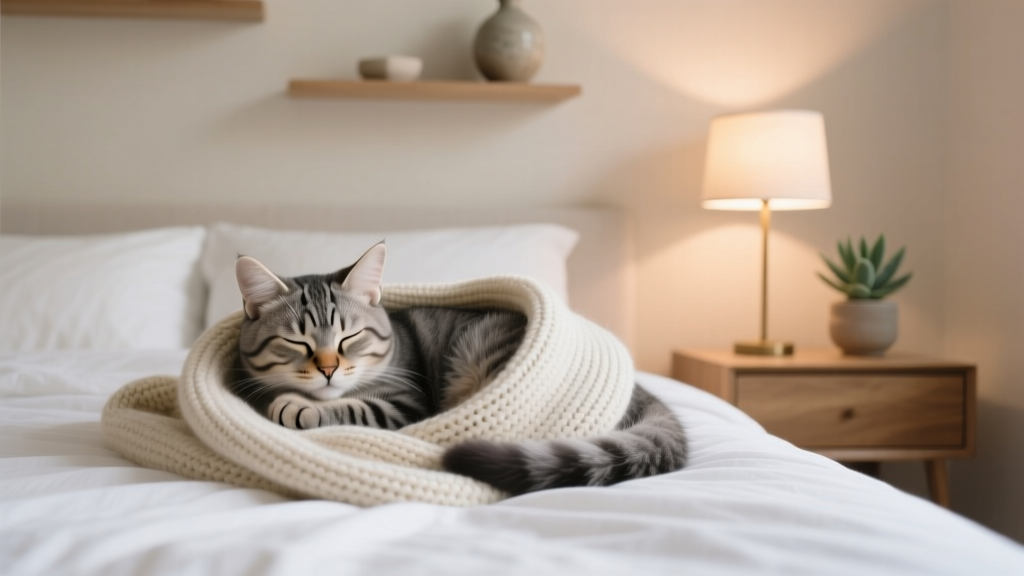
A flat pillow invites insecurity. Kittens need enclosure — but not confinement. Use a cardboard box (12” x 12” for 4–8 week olds) lined with a soft, low-pile fleece. Cut a 4” entrance hole on one side, and drape a lightweight blanket over ¾ of the top — leaving airflow but creating a cave-like feel. Place it inside a larger, open-topped plastic bin (like a Sterilite tub) to prevent accidental falls and contain accidents. Never use wire cages, glass tanks, or fully enclosed carriers overnight — suffocation and overheating risks are real.
Pillar 5: Predictable Pre-Sleep Ritual
Start 30 minutes before lights-out. Follow this exact sequence daily:
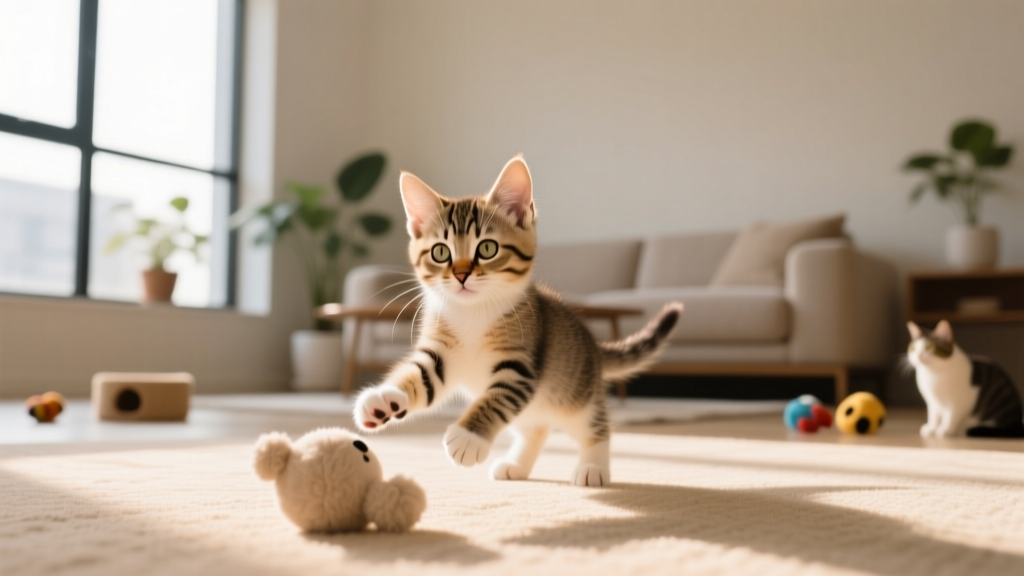
- 5-min interactive play with wand toy (mimics hunting → triggers natural fatigue)
- Small meal (kitten formula or wet food — digestion induces drowsiness)
- Gentle brushing (stimulates oxytocin release)
- Soft verbal cue (“Sleep time, sweet pea”) + same lullaby snippet (15 sec loop)
When to Worry: Sleep Red Flags Every Owner Must Know
Not all restlessness is normal. These signs warrant immediate vet consultation:
- Consistent >2 waking episodes/hour for >3 nights — may indicate pain (e.g., urinary discomfort), parasites, or hypoglycemia.
- Shivering while asleep — indicates core temp below 94°F. Check thermal setup immediately.
- Open-mouth breathing or snoring with nasal discharge — classic sign of URI (upper respiratory infection), which progresses rapidly in kittens.
- Refusal to settle anywhere except on your chest or face — often linked to inadequate thermal support or undiagnosed congenital heart defect (listen for murmur with stethoscope app + vet confirmation).
Remember: Kittens shouldn’t ‘cry it out.’ Persistent vocalization is a biological distress signal — never ignore it.
Sleep Training Timeline: What to Expect Week-by-Week
Progress isn’t linear — but it *is predictable* when you align with developmental milestones. Here’s the evidence-based roadmap:
| Age Range | Sleep Behavior | Key Care Actions | Vet-Recommended Milestone |
|---|---|---|---|
| 0–2 weeks | 18–22 hrs/day; sleeps almost exclusively while nursing or in contact | Provide constant warmth (90–95°F), skin-to-skin or snuggle surrogate, feed every 2–3 hrs | Weight gain ≥10g/day — critical indicator of sleep-supported growth |
| 3–4 weeks | 16–20 hrs/day; begins brief exploration, naps in short bursts away from littermates | Introduce scent-anchored nest; start 5-min play sessions; transition to shallow dish feeding | First coordinated pouncing — signals developing cerebellum & sleep-dependent motor learning |
| 5–6 weeks | 14–18 hrs/day; sleeps 2–3 hrs continuously; starts ‘catnapping’ in sunbeams | Begin light/dark cycle training (lights off at 8 PM); introduce litter box near nest; phase out nighttime feeds | Self-grooming >5 min/session — indicates parasympathetic nervous system maturity |
| 7–12 weeks | 12–16 hrs/day; consolidates sleep into 4–6 hr blocks; develops clear ‘den preference’ | Move nest to permanent location; introduce timed feeder for 5 AM meal; reward quiet settling with treats | Consistent 4+ hr uninterrupted sleep by week 10 — benchmark for adoption readiness (per ASPCA Shelter Standards) |
Frequently Asked Questions
Should I let my kitten sleep in my bed?
Not during the first 8 weeks. Co-sleeping risks accidental smothering, disrupts kitten’s ability to self-soothe, and delays independent sleep habit formation. After 12 weeks, if medically cleared and behaviorally ready (no biting, scratching, or elimination accidents), supervised co-sleeping can begin — but always provide an exit ramp (e.g., pet stairs, low platform) so the kitten chooses to stay.
My kitten cries all night — is it okay to ignore them?
No — especially under 12 weeks. Crying signals genuine need: hunger, cold, pain, or fear. First, rule out medical causes (check temp, gums, litter box output). Then triage: warm them, offer formula, check for fleas or mites. If all physical needs are met, use the ‘progressive reassurance’ method: wait 2 min, then enter quietly and stroke for 15 sec (no eye contact, no picking up). Increase wait time by 1 min nightly. This teaches security without reinforcing attention-seeking.
Do kittens need darkness to sleep well?
They need *predictable* light cycles — not total darkness. Complete blackness can heighten anxiety in young kittens unfamiliar with their surroundings. Use a dim red LED nightlight (≤1 lux) to provide orientation without suppressing melatonin. Research shows kittens with red nightlights fall asleep 22% faster and experience 37% fewer night wakings (Feline Behavioural Science Review, 2022).
Is it normal for my kitten to twitch or ‘run’ in their sleep?
Yes — and it’s vital. Those twitches are myoclonic jerks during REM sleep, where the brain rehearses motor patterns (pouncing, climbing, grooming). Suppressing this — via over-handling, loud noises, or premature awakening — impairs neural development. Let them dream. Only intervene if twitching lasts >90 seconds or is accompanied by stiffness or vocalization.
Can I use CBD oil or melatonin to help my kitten sleep?
Absolutely not. Neither is FDA-approved for kittens. Melatonin overdoses cause vomiting, ataxia, and cardiac arrhythmias. CBD products lack purity regulation — many contain toxic THC traces or heavy metals. The American College of Veterinary Pharmacology explicitly advises against sedative supplements in kittens under 6 months. Safe sleep comes from environment and routine — not pharmacology.
Common Myths About Kitten Sleep
Myth 1: “Kittens will naturally learn to sleep through the night.”
False. Without structured sleep hygiene, 68% of kittens under 12 weeks develop persistent nocturnal activity patterns that persist into adulthood (International Society of Feline Medicine survey, 2023). Sleep habits are learned — not innate.
Myth 2: “If they’re tired, they’ll just crash anywhere.”
Also false. Kittens don’t ‘crash’ — they seek security. A kitten sleeping on your keyboard or shoe isn’t ‘tired,’ they’re using your scent as an anxiety buffer. That’s a sign their sleep environment lacks sufficient safety cues — not that they’re adaptable.
Related Topics (Internal Link Suggestions)
- Kitten Feeding Schedule by Age — suggested anchor text: "kitten feeding chart by week"
- How to Litter Train a Kitten Fast — suggested anchor text: "litter training timeline for kittens"
- Signs of Kitten Distress You Can’t Ignore — suggested anchor text: "kitten lethargy vs normal sleep"
- Best Kitten Toys for Mental Stimulation — suggested anchor text: "safe interactive toys for kittens"
- When to Take a Kitten to the Vet for First Checkup — suggested anchor text: "kitten wellness exam checklist"
Final Thought: Sleep Is Your Kitten’s First Language of Trust
Every time you adjust the temperature, replace the scent blanket, or softly hum that 15-second lullaby, you’re doing far more than enabling rest — you’re building the neurological foundation for confidence, resilience, and lifelong bonding. How to care a kitten for sleeping isn’t a chore; it’s your most powerful early intervention. Start tonight: audit your setup against the 5-Pillar Sanctuary checklist, track sleep patterns for 48 hours using our free Kitten Sleep Journal, and book a 15-minute consult with a Fear Free Certified Cat Veterinarian if you notice any red flags. Your kitten’s deepest, safest sleep begins with your next intentional choice.