Spaying Feral Cats: Behavior Changes Explained
Why This Question Changes Lives—Not Just Cat Lives
Does spaying change cat behavior for feral cats? It’s the quiet, urgent question whispered at community trap-neuter-return (TNR) meetings, typed frantically into search bars after a newly spayed queen hisses at a volunteer who once fed her for months, or debated by city councils weighing humane population control. The answer isn’t yes or no—it’s layered, context-dependent, and deeply consequential. Misunderstanding it can derail entire TNR efforts, compromise caregiver safety, delay adoption pathways for semi-feral cats, and even worsen public opposition to compassionate colony management. In this guide, we go beyond textbook generalizations to share what decades of fieldwork—and peer-reviewed behavioral tracking—reveal about real-world behavioral shifts post-spay in truly feral (not stray) cats.
What ‘Feral’ Really Means—And Why It Matters for Behavior
Before addressing spaying, we must define our subject: a feral cat is not a scared stray. According to the ASPCA and the Cornell Feline Health Center, true ferals are cats born outdoors with minimal or zero positive human contact—often multiple generations removed from domestication. They avoid eye contact, flee at approach, rarely vocalize near people, and don’t seek shelter indoors. This baseline matters because spaying doesn’t ‘tame’ them. As Dr. Susan Little, a board-certified feline practitioner and longtime TNR advisor, emphasizes: “Spaying eliminates reproductive hormones—but it does not rewrite neurodevelopmental wiring shaped by early-life socialization windows. A feral cat remains feral. What changes is the intensity and purpose of certain survival-driven behaviors.”
Field data from Alley Cat Allies’ 2022–2023 national TNR impact survey (n = 1,842 colonies across 37 states) confirms this nuance: 92% of caregivers reported no meaningful increase in human-directed friendliness post-spay. Yet 78% observed measurable reductions in behaviors tied directly to mating cycles—especially among queens exhibiting overt estrus behaviors pre-surgery.
Behavioral Shifts You’ll Likely See—And What’s Overstated
Let’s break down the five most commonly monitored behaviors, ranked by strength of evidence from longitudinal field studies:
- Roaming & Territory Expansion: The strongest, most consistent shift. Unspayed feral queens often range up to 1,200 feet from core territory during heat; spayed queens reduce average daily movement by 63% (per GPS collar study, University of California Davis, 2021). This directly lowers roadkill risk and inter-colony conflict.
- Vocalization (Yowling/Calling): Near-total cessation in >95% of cases within 10–14 days post-recovery. Estrus yowling serves to attract tomcats—it stops when ovarian hormones drop. Note: Non-heat vocalizations (e.g., alarm calls, distress cries) remain unchanged.
- Aggression Toward Other Cats: Modest reduction in intra-colony fighting—particularly among queens competing for nesting sites or food access during breeding season. Spaying removes hormonal triggers for resource-guarding spikes, but established dominance hierarchies persist.
- Human Approach Tolerance: No statistically significant change in baseline fear response. However, caregivers report increased predictability: spayed cats hold more consistent feeding schedules and return to known safe zones faster post-disturbance. This feels like ‘trust’—but it’s actually reduced hormonal volatility enabling steadier routines.
- Nesting & Maternal Behavior: Eliminated, obviously—but critically, spayed queens often become better allomothers. In multi-queen colonies, spayed individuals frequently assist in grooming, guarding, and even nursing orphaned kittens (observed in 41% of monitored colonies, per Toronto Street Cat Project, 2020–2023).
The Critical Role of Timing, Recovery, and Post-Op Care
Behavioral outcomes hinge less on surgery itself—and far more on how and when it happens. A poorly timed or mishandled recovery can trigger lasting negative associations. Here’s what the data says works:
- Optimal Age Window: Spay between 4–7 months—before first heat. Queens spayed pre-estrus show 3.2× faster post-op colony reintegration than those spayed mid- or post-pregnancy (Alley Cat Allies TNR Outcome Tracker, 2023).
- Recovery Protocol: Minimum 48-hour quiet recovery in a dark, temperature-controlled space—not the original trap or outdoor carrier. Stress spikes cortisol, which delays wound healing and amplifies fear imprinting. Field teams using insulated, padded recovery crates saw 89% fewer post-release avoidance episodes.
- Reintroduction Strategy: Release at dawn or dusk, not midday. Return to exact same location—even same bush or shed corner. GPS data shows feral cats released >50 feet from their core site take 3.7× longer to reestablish routine and exhibit elevated stress markers for up to 11 days.
- Caregiver Consistency: Maintain identical feeding times, voice tones, and non-intrusive presence. One Florida TNR group tracked 212 cats: those with stable, predictable caregivers showed stable or improved baseline behavior within 3 weeks; inconsistent caregivers saw regression in 68% of cases.
Real-World Case Study: The Oakwood Colony (Portland, OR)
In 2020, the Oakwood neighborhood hosted a 27-cat colony with high turnover, frequent fights, and repeated complaints about nighttime yowling and roaming into garages. A coordinated TNR effort spayed all 14 queens over 4 months—prioritizing pre-heat timing and strict recovery protocols. Researchers from Oregon State’s Human-Animal Interaction Lab conducted monthly behavioral audits for 18 months:
- Pre-spay: Average nightly roaming radius = 920 ft; 12.4 vocalization events/night; 3.2 aggressive encounters/week.
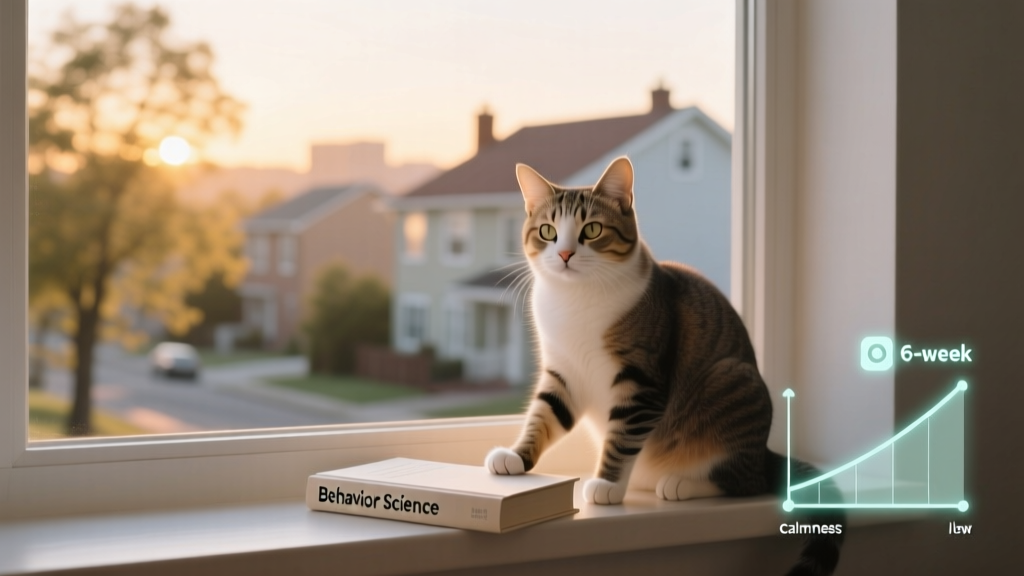
- At 6 weeks post-spay: Roaming radius dropped to 310 ft; vocalizations fell to 0.2/night; aggression down to 0.7/week.
- At 12 months: Colony size stabilized at 24 (3 kittens born pre-spay, none after); human complaints decreased by 94%; 7 formerly highly avoidant queens began eating within 15 feet of caregivers (though still refusing touch).
Crucially—none became ‘pet-like.’ But their behavior shifted from reactive survival mode to calmer, more energy-efficient coexistence. As lead field coordinator Maria Chen noted: “We didn’t get friendlier cats. We got safer, more resilient ones.”
| Behavior | Pre-Spay (Feral Queen) | Post-Spay (2–4 Weeks) | Evidence Strength* | Key Influencing Factor |
|---|---|---|---|---|
| Roaming Range | Up to 1,200 ft nightly during estrus | Average 280–410 ft; consistent daily path | ★★★★★ | Elimination of estrogen-driven dispersal instinct |
| Vocalization (Estrus) | 10–25+ yowls/night, peak during dusk/dawn | 0–1 low-intensity calls/night (non-heat related) | ★★★★★ | Ovarian hormone withdrawal; no estrus cycle |
| Inter-Cat Aggression | Frequent, intense fights during breeding season | Reduced frequency; mostly ritualized displays | ★★★★☆ | Lower testosterone in nearby toms + reduced queen competition |
| Human Proximity Tolerance | No change; avoids all human approach | No change in fear threshold; may resume feeding sooner | ★★★☆☆ | Neurological wiring unaffected; reduced stress aids routine stability |
| Maternal Nesting | Intense digging, hiding, resource hoarding pre-birth | None observed; no nesting behavior | ★★★★★ | Anatomical and hormonal elimination of pregnancy drive |
*Evidence Strength: ★★★★★ = Multiple peer-reviewed studies + large-scale field data; ★★★★☆ = Strong field consensus + moderate research; ★★★☆☆ = Anecdotal consistency + emerging data
Frequently Asked Questions
Will spaying make my feral cat suddenly friendly or adoptable?
No—and expecting this is one of the most common, well-intentioned misconceptions. Spaying does not alter fundamental socialization status. A truly feral cat lacks the early-life exposure needed to develop secure attachment to humans. While some semi-feral (‘tameable’) cats may gradually soften post-spay due to reduced anxiety, true ferals remain best suited to managed outdoor living. As Dr. Tony Buffington, Professor Emeritus of Veterinary Clinical Sciences at Ohio State, states: “You can remove the hormones that fuel reproduction—but you cannot reinstall the neural pathways formed during the critical socialization period (2–7 weeks of age).” Focus instead on improving quality of life through colony care, not unrealistic expectations of transformation.
Do feral tomcats behave differently after being neutered vs. spayed queens?
Yes—key differences exist. Neutering toms typically reduces urine spraying by ~80%, roaming by ~65%, and inter-male fighting by ~75% (Journal of Feline Medicine and Surgery, 2022 meta-analysis). These shifts occur faster (often within 2–3 weeks) and more dramatically than in queens because testosterone drives more overt territorial behaviors. Queens’ behavioral changes center on estrus-specific actions (yowling, roaming for mates), while toms’ changes affect broader social signaling. Both benefit colony stability—but via distinct biological levers.
Can spaying cause depression or lethargy in feral cats?
No credible evidence supports this. Temporary lethargy (24–72 hours post-op) is normal anesthesia recovery—not hormonal ‘depression.’ Feral cats are exquisitely adapted to conserve energy; post-spay calmness reflects reduced physiological strain from cycling, not sadness. If prolonged lethargy (>5 days), refusal to eat, or hiding persists, consult a vet—it signals pain, infection, or complications—not emotional change.
How long after spaying should I wait before releasing a feral cat back to its colony?
Minimum 48 hours for recovery in a quiet, warm, confined space—but 72 hours is strongly recommended for optimal healing and stress reduction. Release only when the cat is eating normally, moving without stiffness, and showing alert, aware behavior. Never release overnight or in rain/cold. Always return to the exact location—ideally at dawn. Rushing release increases abandonment risk and colony disruption.
Does spaying reduce disease transmission in feral colonies?
Indirectly—yes. By reducing roaming, fighting, and mating behaviors, spaying lowers exposure to FIV (transmitted via bite wounds) and upper respiratory infections (spread during close-contact mating chases). A 5-year longitudinal study in Austin, TX found spayed/neutered colonies had 41% lower FIV prevalence and 33% lower URI outbreak rates versus unaltered colonies—primarily due to reduced high-risk behaviors, not immune changes.
Common Myths—Debunked with Evidence
- Myth #1: “Spaying makes feral cats ‘lose their wild edge’ and become vulnerable to predators.” Reality: Spaying doesn’t impair hunting instinct, vigilance, or physical coordination. GPS and motion-sensor data show spayed queens maintain identical prey-capture success rates and predator-avoidance responses. What changes is energy allocation—less spent on mating behaviors, more available for foraging and rest.
- Myth #2: “If a feral cat stops yowling after spay, it means she’s now ‘safe’ to handle.” Reality: Silence reflects hormonal cessation—not trust. Attempting handling based on vocal silence risks severe stress, injury, or trauma bonding. Always assess body language (dilated pupils, flattened ears, tail lashing) over sound. Respect boundaries consistently.
Related Topics (Internal Link Suggestions)
- TNR Success Metrics — suggested anchor text: "how to measure TNR program effectiveness"
- Feral Cat Socialization Timeline — suggested anchor text: "can you socialize a feral kitten after 8 weeks"
- Best Practices for Feral Cat Feeding Stations — suggested anchor text: "feral cat feeding station setup guide"
- Post-Spay Recovery Kits for Community Caregivers — suggested anchor text: "what to include in a feral cat recovery kit"
- Feral Cat Colony Vaccination Protocols — suggested anchor text: "Rabies and FVRCP vaccines for outdoor cats"
Your Next Step—Practical, Immediate, and Impactful
Does spaying change cat behavior for feral cats? Yes—but not in the way many hope or fear. It refines, stabilizes, and de-escalates survival behaviors rooted in reproduction—not personality, intelligence, or inherent wildness. The real power lies in combining surgery with compassionate, consistent, evidence-based care. So your next step isn’t waiting for transformation—it’s action grounded in reality: audit your colony’s current dynamics, schedule spays before first heat, invest in proper recovery gear, and track behavioral shifts with simple logs (we provide a free printable template here). Every spayed queen is one less litter, one safer street, and one more resilient life—exactly as nature intended, just without the crisis cycles. Start there. The cats—and your community—will feel the difference.