Cat Tail Quiver: Excitement and Recognition Signal
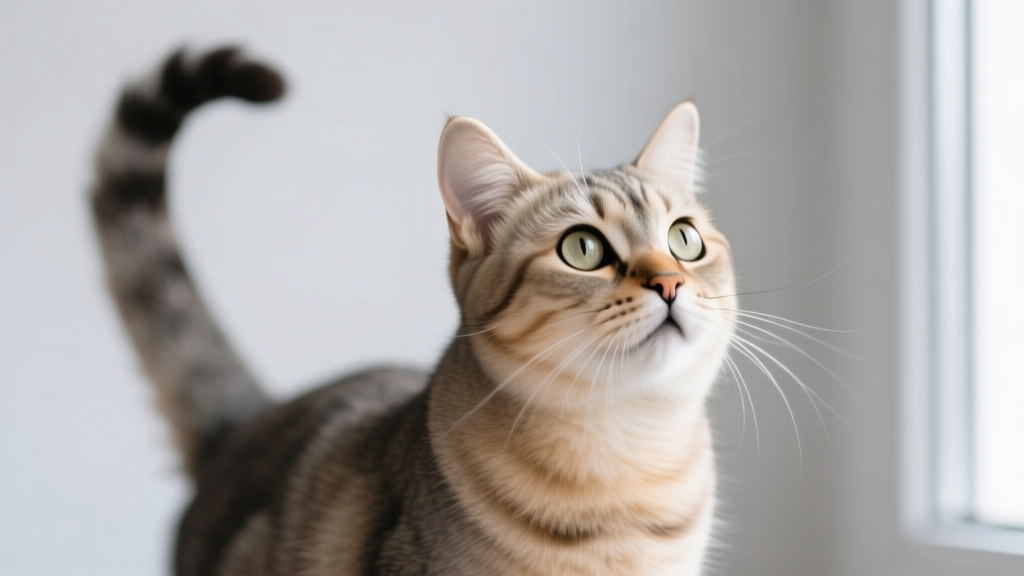
You walk through the front door and before you can even take your shoes off, your cat appears like a little furry concierge. They trot right up to you, tail held high like a flagpole… and then it happens: the tail starts to tremble or “quiver,” sometimes with the tip vibrating like a tiny motor. Maybe they’re rubbing their cheek on the table leg, maybe they’re weaving around your ankles, maybe they’re making that breathy little mrrp sound that feels like a greeting only you get.
If you’ve ever wondered, “Is my cat… shaking? Excited? About to spray?” you’re in excellent company. A quivering tail is one of those wonderfully confusing cat signals that can mean “I’m thrilled to see you,” “This is my favorite spot,” or (in certain cases) “I’m feeling a bit too hormonal for polite society.” The good news: most of the time, tail quivering is a positive, affectionate behavior—your cat’s version of waving frantically from across the room.
Why cats do it: a quick evolutionary and biological backstory
Cats are social in a very cat-specific way. Even though they’re solitary hunters, they still form close bonds—with other cats they trust and with humans they’ve decided are worth keeping. The tail is one of their most expressive tools for communicating those relationships.
In kittenhood, cats use body signals to maintain proximity and comfort: rubbing, kneading, purring, and “tail-up greetings.” As adults, many of these behaviors remain—especially in cats who feel safe and secure. A high, upright tail is a friendly signal in cat language. It’s the feline equivalent of walking up with an open posture and a smile.
The quiver seems to be linked to a surge of arousal in the nervous system—“arousal” in the scientific sense, meaning heightened emotion and activation. That can be excitement, anticipation, affectionate greeting, or territorial confidence. When the emotional volume gets turned up, the muscles at the base of the tail can tremble slightly. It’s a small physical overflow of big feelings.
There’s also a scent-communication layer in the background. Cats have scent glands on their cheeks, lips, and around the base of the tail. When your cat greets you with a tail-up, sometimes with quivering, they’re often also rubbing or bunting—depositing their scent and reinforcing social bonds. In nature, scent helps cats identify safe group members and familiar locations. In your home, it’s their way of saying, “You’re part of my world.”
What tail quivering looks like in real life (and the contexts that matter)
Not all tail quivers are created equal. Context is everything. Here are the most common scenarios cat owners recognize, and what’s likely going on.
1) The “I missed you!” greeting
What you see: Cat approaches with tail upright, then the tail vibrates, often at the tip or through the whole tail. They may rub against you, circle your legs, or roll over briefly.
What it usually means: High excitement and positive recognition. Your cat is delighted you’re here and is initiating friendly contact. This is especially common when you come home, wake up, or re-enter a room after being gone for a while.
2) The “pay attention to me, please” quiver
What you see: Tail up and quivering while your cat stands near you—maybe in front of the food bowl, by a closed door, or next to the toy drawer. They might chirp, trill, or gently tap you with a paw.
What it usually means: Anticipation. Your cat has learned that tail-up greetings get results. They’re emotionally revved up and asking for something: food, play, cuddles, access to a room, or a window perch.
3) The “I love this spot” quiver (territorial confidence)
What you see: Tail upright and trembling while your cat rubs on a sofa corner, doorframe, scratching post, or your legs. They may do a dramatic full-body rub with slow blinks.
What it usually means: Social marking and comfort. Your cat is reinforcing that this place (and these people) are part of their safe territory. Think of it as emotional interior decorating.
4) The “about to spray?” look-alike
What you see: Tail quivering while your cat backs up to a vertical surface (wall, door, furniture) with their rear end close to it. They may tread their back feet. Sometimes there’s a distinct posture: stiff body, tail straight up, and a focused look.
What it can mean: This one deserves careful attention. Tail quiver can accompany urine marking (spraying), especially in unneutered males, but also in stressed or territorial cats of any sex. The difference is whether urine is released and what posture your cat uses.
5) The “overstimulated excitement” quiver
What you see: Tail vibrates during play or petting. Your cat may be purring, but their skin might twitch, or they might suddenly grab your hand with their paws.
What it usually means: High arousal that can tip into overstimulation. It’s not necessarily negative, but it’s a sign your cat is very wound up—like a kid who’s having the best time right before a meltdown.
What tail quivering says about your cat’s mood
Most tail quivers fall under “positive social arousal.” In plain terms: your cat feels safe, connected, and emotionally excited.
- Affection and recognition: “You’re my person. I’m happy you’re here.”
- Confidence: “This is my home base. I’m comfortable enough to be expressive.”
- Anticipation: “Something good is about to happen—food, play, cuddles.”
- High arousal (mixed): “I’m excited, but I might need a break soon.”
Tail language is like punctuation. A quivering upright tail is usually an exclamation point. Combine it with relaxed ears, soft eyes, and friendly rubbing and you’ve got a happy message. Combine it with stiff posture, tension, and backing up to a wall, and it’s time to investigate further.
Related behaviors you might notice (the “whole greeting package”)
Cats rarely send just one signal at a time. Tail quivering often arrives with a few familiar companions:
- Tail straight up: A friendly approach signal—“I come in peace.”
- Trilling or chirping: Those little musical sounds many cats reserve for trusted companions.
- Bunting (head bumps): Scent marking + affection; your cat is “tagging” you as family.
- All-over body rubs: A full-body “hello” that also spreads scent.
- Kneading: Comfort behavior that can show up when your cat feels secure and happy.
- Slow blinking: The famous cat “I trust you” signal.
If you see the quiver plus these friendly behaviors, you can be pretty confident you’re witnessing a warm social moment, not a problem.
When tail quivering is normal vs. when it’s a concern
Normal (and often adorable):
- Happens when you come home, wake up, or speak to your cat in a friendly voice
- Occurs during rubbing, bunting, or relaxed social contact
- Your cat’s body looks loose and comfortable (no stiff legs, no pinned ears)
- No urine, no strong odor, no repeated targeting of walls or furniture corners
Potentially concerning:
- Suspected spraying: You find small amounts of urine on vertical surfaces, often with a strong smell, and you see the classic backing-up posture
- Sudden change: Your cat starts quivering in new contexts along with hiding, aggression, or anxiety
- Signs of pain or illness: Quivering accompanied by vocalizing, crouching, litter box issues, straining to urinate, or frequent small urinations (urgent—contact a vet)
- Compulsive or repetitive behavior: If it becomes constant and your cat seems unable to relax, stress may be involved
If you’re unsure whether it’s spraying, a quick practical clue is where the urine lands. Spraying typically hits vertical surfaces at tail height in small amounts. Normal peeing happens in a squat and leaves a puddle on horizontal surfaces (or ideally, in the litter box).
How to respond (and gently encourage the good kind of quiver)
If your cat is doing the happy greeting quiver, you’re being offered a social handshake. Here’s how to return it in cat-friendly ways:
- Pause and acknowledge: A calm “hi” voice, a slow blink, or a gentle hand offered for sniffing can reinforce the bond.
- Pet strategically: Many cats prefer cheek rubs, head scratches, and shoulder strokes during greetings. Save full-body petting for cats who clearly enjoy it.
- Reward the greeting: If you want more friendly hellos, reinforce them. A brief play session, a few treats, or a meal after a calm greeting can strengthen the habit.
- Watch for overstimulation: If the quiver happens during petting and your cat starts twitching, tail lashing, or grabbing, take a break. You can keep the interaction positive by stopping before your cat has to say “enough!” with teeth.
- If spraying is a possibility: Consider spay/neuter if not already done, add litter boxes (a common guideline is one per cat plus one extra), clean marked areas with an enzymatic cleaner, and reduce stress triggers (blocked windows, new pets, neighborhood cats outside).
A helpful mindset: your cat isn’t being “weird.” They’re being expressive. Tail quivering is often a sign that your cat’s emotional system is online, engaged, and socially connected to you.
Fun facts and research-flavored nuggets
- Tail-up is a social green light: Studies of cat social behavior note that tail-up postures are associated with friendly approaches and affiliative interactions—especially between familiar individuals.
- Cats mix signals like a playlist: Your cat’s message is rarely just the tail. Look at ears, eyes, body tension, and what your cat is doing with their feet (kneading? treading? bracing?).
- Some cats are “quiver specialists”: Individual differences are huge. One cat quivers daily like an enthusiastic host; another may never do it, even if they’re deeply attached.
- It can be a learned greeting ritual: Cats are excellent pattern learners. If quivering + greeting reliably gets attention, many cats will repeat it because it works.
FAQ: Cat tail quivering
Why does my cat’s tail quiver when they see me?
Most commonly, it’s excitement and recognition. Your cat is happy to see you and is signaling friendly intent—often paired with rubbing, trilling, and a relaxed body.
Is tail quivering the same as spraying?
Not necessarily. Spraying involves urine being released, usually onto vertical surfaces, with a specific backing-up posture. A happy quiver typically happens during greetings or rubbing with no urine involved.
My cat’s tail quivers while I pet them—what does that mean?
It can mean your cat is highly aroused (excited) and enjoying the interaction, but it can also be a sign they’re nearing overstimulation. If you notice skin twitching, tail swishing, or sudden grabbing, take a short break and switch to gentler head/cheek scratches.
Do female cats tail quiver too?
Yes. Tail quivering isn’t limited to males. Both males and females can quiver during greetings, excitement, or territorial confidence. Spraying is more common in unneutered males, but can occur in any cat under certain conditions.
Should I worry if my cat suddenly starts doing this a lot?
If it’s paired with positive greeting behaviors and no urine or stress signals, it’s usually just a new expressive habit. If it comes with marking, anxiety, aggression, hiding, or litter box changes, it’s worth checking for stressors and talking to your vet to rule out medical issues.
Can I encourage this behavior?
You can encourage the friendly greeting version by rewarding calm, tail-up approaches with attention, play, or treats. Just avoid accidentally reinforcing spraying or anxious behavior—focus on positive social moments, not wall-targeting postures.
That little tail quiver is often your cat’s way of saying, “You’re my favorite.” It’s a tiny shake packed with emotion—recognition, comfort, excitement, and the confidence that you belong together.
Has your cat developed a signature greeting—tail quiver included? Share your funniest or sweetest “welcome home” stories with the Cat Lovers Base community at catloversbase.com.