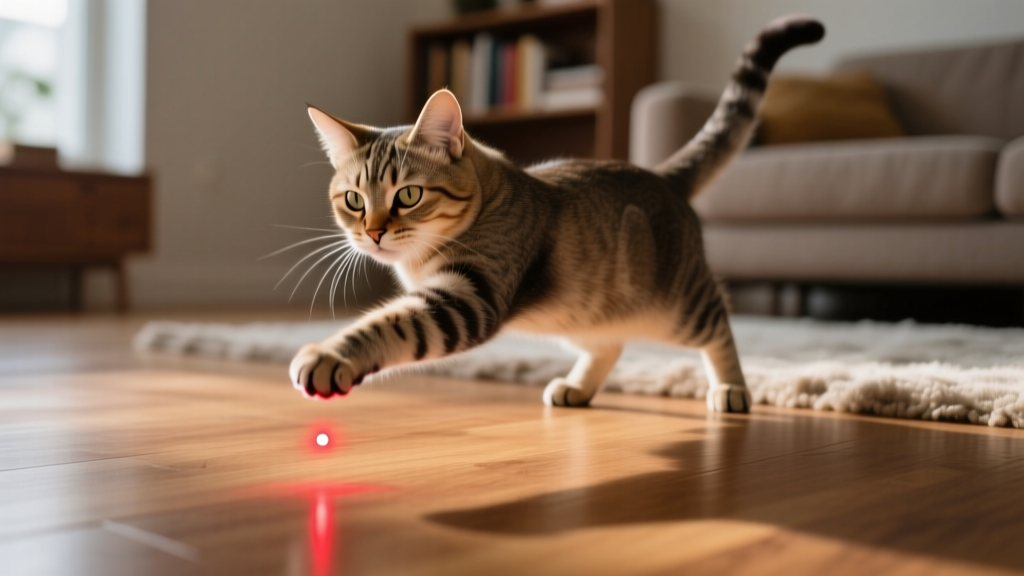
Cat Paw Swatting at the Laser Dot: Hunt Drive
You’re on the couch, laser pointer in hand, and your cat is suddenly a tiny athlete. The red dot skitters across the rug, and your cat launches after it—ears forward, eyes wide, tail flicking like a metronome. Then comes the signature move: rapid-fire paw swats, sometimes with a little hop, sometimes with a dramatic full-body pounce that somehow ends in a slide under the coffee table. If you’ve ever wondered, “Why is my cat so obsessed with this dot?” you’re watching a very old program run on very modern hardware: your cat’s hunting drive.
Laser play looks like pure entertainment (and it is), but it also taps into the same instincts that helped cats survive for thousands of years. Understanding what’s happening in your cat’s brain and body can make laser games more satisfying—and help you avoid a few common pitfalls that leave some cats frustrated rather than fulfilled.
Why Cats Swat the Laser Dot: The Evolutionary “Tiny Predator” Explanation
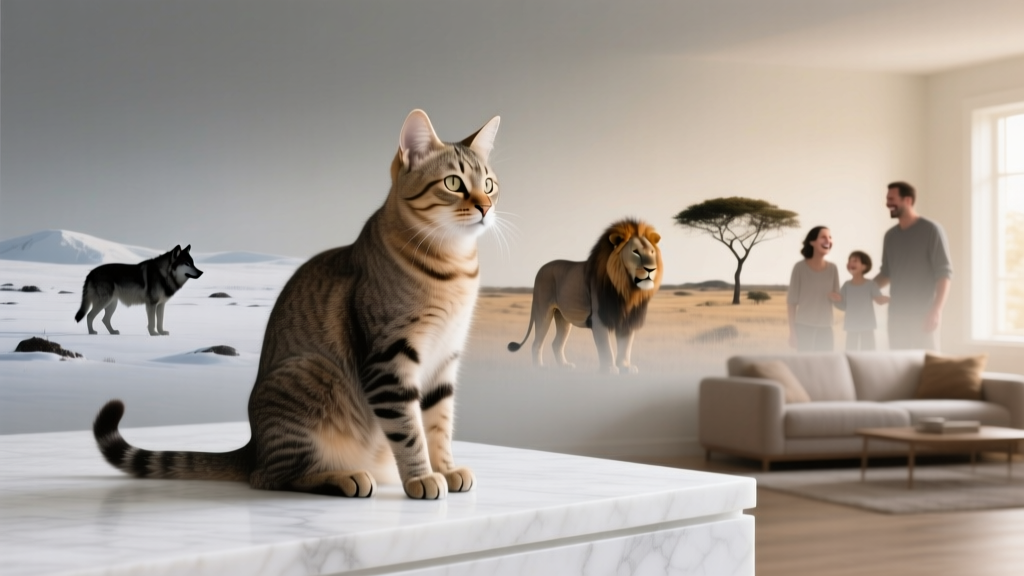
Domestic cats are descended from wildcats that hunted small, fast prey—mice, birds, lizards, insects. That prey doesn’t politely stand still. It darts, zigzags, freezes, then bolts again. Sound familiar? A laser dot mimics the movement patterns of prey remarkably well: quick acceleration, sudden direction changes, and unpredictable stops.
When your cat locks onto the dot, several built-in systems activate:
- Orienting response: Movement grabs a cat’s attention more than shape or color. The brain’s “track that!” circuitry fires fast.
- Predatory sequence: Cats often follow a chain: stalk → chase → pounce → grab → bite. The laser triggers the early steps strongly.
- Motor patterns and reflexes: Swatting is part practice, part test. Your cat is gauging distance, timing, and “catchability.”
- Dopamine and reward expectation: Chasing is intrinsically rewarding. Even before the “catch,” the pursuit itself can feel good.
Here’s the catch: real prey can be caught. A laser dot can’t. That difference matters—and explains why some cats love lasers forever, while others get overstimulated or a little cranky afterward.
What Paw Swatting Actually Is (and Why It’s So Satisfying)
Swatting is a cat’s multipurpose tool. It’s how they test, trap, and manipulate objects. With the laser dot, swatting often shows up in a few recognizable “styles,” each with its own context.
1) The Rapid Tap-Tap-Tap Swat
What you’ll see: Your cat stands over the dot and does quick, repetitive paw taps like they’re typing an angry email.
What it means: This is precision practice. Your cat is in “catch mode,” trying to pin the target. You’ll often see this when the dot moves slowly or pauses briefly.
2) The Pounce-and-Swat Combo
What you’ll see: A crouch, a wiggle, a leap—then swats as soon as paws hit the ground.
What it means: This is a full predatory sequence rehearsal. Your cat is highly engaged and using their whole body. It’s common in younger cats and athletic adults.
3) The One-Paw “Testing” Swat
What you’ll see: Your cat reaches out with a single paw—slowly, cautiously—like the dot might explode.
What it means: Curiosity with a side of caution. This often happens with timid cats, seniors, or cats who are still deciding if the “prey” is safe to engage.
4) The Swat-Then-Search Behavior
What you’ll see: Your cat swats, the dot disappears (or moves), and your cat immediately starts scanning the floor, looking behind furniture, checking corners.
What it means: Your cat believes the prey should be somewhere. This can be normal, but if it becomes intense or prolonged, it may signal frustration with the “never catch” aspect of laser play.
What Swatting the Laser Dot Reveals About Your Cat’s Mood
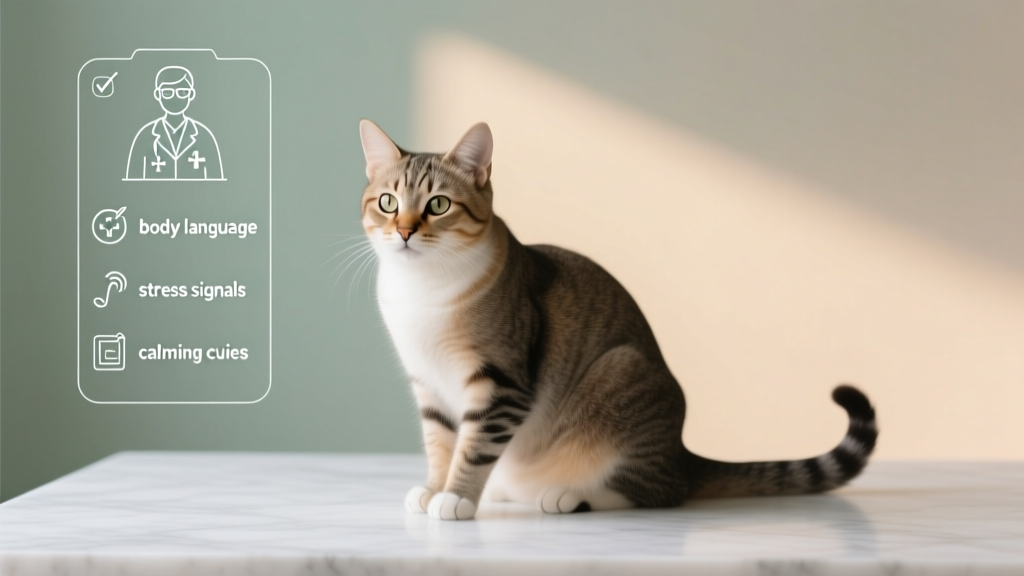
Your cat’s body language during laser play is a live mood report. Here’s how to read it:
- Happy, engaged hunter: Ears forward, smooth movements, focused eyes, playful pounces, quick recovery after misses.
- High arousal (borderline overstimulated): Tail lashing, frantic sprinting, panting, dilated pupils, difficulty disengaging.
- Frustrated: Sudden vocalizing, grabbing at the floor, looking at you repeatedly, agitation after the game ends.
- Uncertain or cautious: Low body posture, slow approach, ears swiveling, swatting from a distance, retreating and returning.
Most cats land in the “happy, engaged hunter” category—especially if the game ends with some kind of satisfying payoff. If your cat regularly looks keyed up or irritable afterward, that’s a clue to adjust how you use the laser.
Related Behaviors You Might Also Notice
Laser-dot swatting rarely lives alone. Cats who adore it often show other hunt-drive behaviors, including:
- Chattering at windows when birds are outside (predatory excitement).
- “Bunny kicks” when wrestling toys (a hind-leg tactic for subduing prey).
- Ambush play from behind doorways or furniture (stalking practice).
- Carrying toys around and yowling (some cats “announce” their catch).
- Nighttime zoomies (cats are crepuscular—dawn/dusk energy spikes are common).
If your cat seems especially laser-obsessed, it may simply mean they have a strong prey drive and need more outlets for stalking and chasing.
When Laser Swatting Is Normal… and When It Might Be a Concern
Normal: Most cats can enjoy laser play safely. It’s typically normal if your cat can stop when the game ends, returns to baseline quickly, and doesn’t seem distressed or compulsive afterward.
Potential concern: Laser play can become problematic for some cats—especially if it’s the main form of play or used in long, intense sessions.
- Post-play agitation: Your cat keeps searching for the dot for a long time, seems cranky, or vocalizes in frustration.
- Compulsive shadow/light chasing: Your cat begins fixating on reflections, shadows, or tiny light flecks even when no one is playing.
- Overexertion signs: Panting, drooling, limping, or refusing to stop (particularly in overweight cats or cats with heart/respiratory issues).
- Redirected aggression: In rare cases, a highly aroused cat may swat at another cat—or your ankles—after the game.
If you notice compulsive behaviors (obsessive scanning for lights, inability to settle, frequent fixation), talk to your veterinarian or a qualified cat behavior professional. Sometimes a small change in play style helps; sometimes stress reduction and enrichment plans are needed.
How to Respond (and How to Make Laser Play More Satisfying)
Laser pointers can be a fantastic tool—especially for cats who need movement, indoor cats with big energy, or shy cats who prefer distance. The key is to play in a way that respects the predatory sequence.
1) Keep Sessions Short and “Hunt-Like”
Aim for 5–10 minutes. Make the dot move like real prey: hide behind a chair leg, pause, creep, then dart. Constant frantic motion can push some cats into overdrive.
2) Let Your Cat “Catch” Something at the End
This is the biggest upgrade you can make. Near the end of the session:
- Guide the dot onto a physical toy (like a small mouse toy) and let your cat pounce on that.
- Or switch from laser to a wand toy for the final minute so they can grab and bite.
Think of it as closing the loop: chase → catch → bite.
3) Add a Food Reward (Especially for Food-Motivated Cats)
After the “catch,” offer a few treats or a small portion of a meal. This can help satisfy the natural pattern of hunt → eat → groom → sleep. Many cats will flop down contentedly afterward instead of searching for the missing dot.
4) Avoid Shining the Laser in Eyes (Yours or Theirs)
It sounds obvious, but in the excitement it can happen. Keep the dot on the floor and walls, not at face level.
5) Use the Laser Strategically
Laser play is great for:
- Jump-starting play in a bored cat
- Low-mobility play for humans (hello, rainy days)
- Building confidence in shy cats when paired with predictable “wins”
But it shouldn’t be the only play your cat gets. Balance it with toys they can physically catch.
Fun Facts and Research Notes About Laser Play
- Movement is the magic ingredient: Cats are strongly triggered by small, fast movement—more than specific colors or shapes. The laser dot works because it behaves like prey, not because it’s a dot.
- Some cats get “stuck” in search mode: Behavior professionals have reported cases where frequent laser play appears to contribute to obsessive light/shadow chasing in certain cats. Not every cat is vulnerable, but it’s a reason to end games with a tangible catch.
- Cats prefer predictable success: Many cats play longer and with less frustration when they get occasional “wins.” Even expert hunters don’t miss forever.
- Hunting is self-rewarding: The chase itself can be enjoyable, which is why cats will sometimes keep playing even without a physical capture—until the frustration threshold is reached.
FAQ: Cat Paw Swatting at the Laser Dot
Is it cruel to play with a laser pointer?
Not inherently. For many cats it’s a safe, enriching game. The problem comes when the cat never gets a satisfying ending. Make sure your cat “catches” a real toy at the end and consider adding a treat or meal to complete the hunt cycle.
Why does my cat meow or cry during laser play?
Often it’s excitement or frustration—especially if the dot moves too fast or disappears abruptly. Try slowing down the dot, adding pauses, and ending with a physical toy your cat can grab.
My cat keeps looking for the dot after I stop. Is that normal?
A little searching for a minute is common. If your cat searches intensely for a long time, seems agitated, or starts chasing reflections and shadows on their own, reduce laser sessions and switch to toys they can catch. If it persists, consult your vet or a behavior professional.
Why does my cat swat the dot but not chase it?
Some cats prefer close-range play, especially seniors or cautious cats. They may enjoy “fishing” with a paw more than sprinting. Try keeping the dot nearby, moving it slowly, or using a wand toy that allows gentle batting.
Can laser play cause aggression?
In some cats, very high arousal during chasing can spill over into redirected swats or nips—especially in multi-cat homes. Keep sessions short, avoid overly frantic movement, and end with a toy catch and a calm cooldown.
What’s the best alternative if my cat is obsessed with the laser?
Try a wand toy with a feather or fleece lure (so your cat can grab and bite), rolling balls, treat puzzles, or a “prey trail” of small toys hidden around the room. You can still use the laser occasionally—just pair it with real catches and variety.
Laser-dot swatting is your cat’s inner hunter coming out to play—quick reflexes, focused eyes, and that wonderfully dramatic pawwork. With a few simple tweaks, you can turn laser sessions into a more complete, satisfying “hunt” that leaves your cat happy instead of hyped up or frustrated.
Does your cat have a signature laser move—the Olympic pounce, the one-paw tap, the under-the-couch slide? Share your funniest (or most puzzling) laser-dot stories with the Cat Lovers Base community at catloversbase.com.