Cat Paw Swatting at Hanging Strings: Play Mode
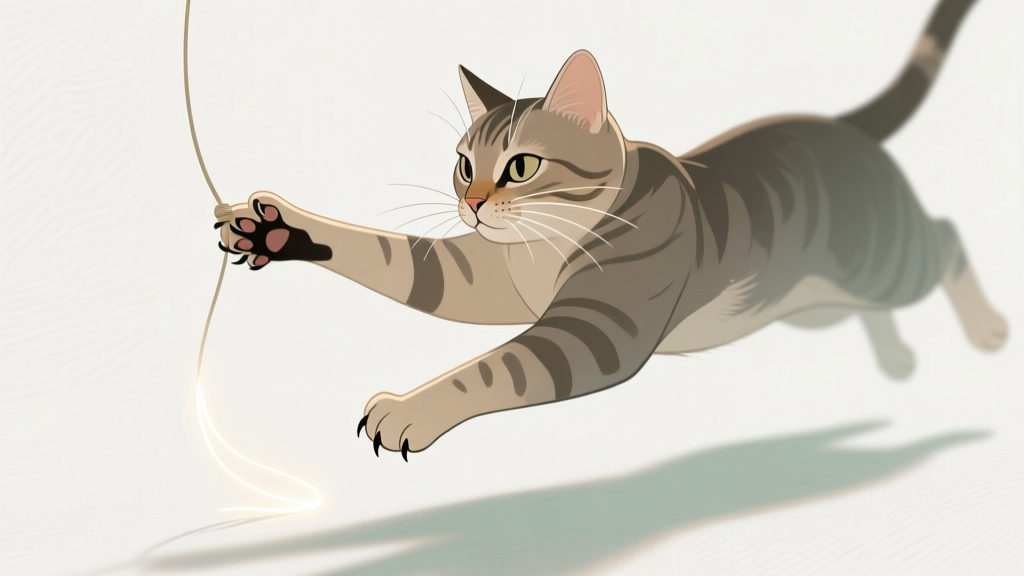
You’re tying your hoodie string, wrapping a gift, or letting your phone charger dangle for half a second—and suddenly your cat is there. Pupils slightly bigger, shoulders low, whiskers forward, one paw lifted like a tiny boxer warming up. Tap. Tap-tap. A quick swat, a hook, a triumphant yank. The “string” is now enemy, prey, and personal entertainment all at once.
If this sounds familiar, you’re in excellent company. Paw swatting at hanging strings is one of the most common “my cat is being weird” moments… and one of the most understandable from a cat’s point of view. It’s classic play mode: a practice run for hunting skills wrapped in a simple household object.
Why Cats Can’t Resist Dangly Things (Science + Evolution)
Cats are hardwired for motion. In the wild, a cat’s meals don’t sit politely on the floor waiting to be eaten. Prey moves—often in quick, darting bursts—and cats evolved to notice those small movements instantly.
Hanging strings mimic several prey cues at once:
- Erratic movement: A string twitches, swings, and changes direction unpredictably—very “mouse-like” in cat logic.
- Thin shape: Many prey animals (rodents’ tails, insects, small snakes) present as narrow, wiggly targets.
- Easy to “catch”: When a cat swats, the string often comes closer or wraps around a paw, creating a rewarding “I got it!” sensation.
- Hanging height: Dangling objects invite batting, which is a natural feline way of testing and controlling something without committing to a full pounce.
Even indoor cats with full food bowls have the same brain circuitry as their ancestors. Play is not “just for fun” in the feline world—it’s rehearsal. Kittens who play more develop better coordination, timing, and bite control. Adult cats keep those skills fresh because their nervous system still lights up when something moves like prey.
A Closer Look: The Many Flavors of String Swatting
Not all string play looks the same. Context matters, and it can tell you what your cat is practicing (or requesting) in that moment.
1) The “Ambush Swat” (Sneaky Hunter Mode)
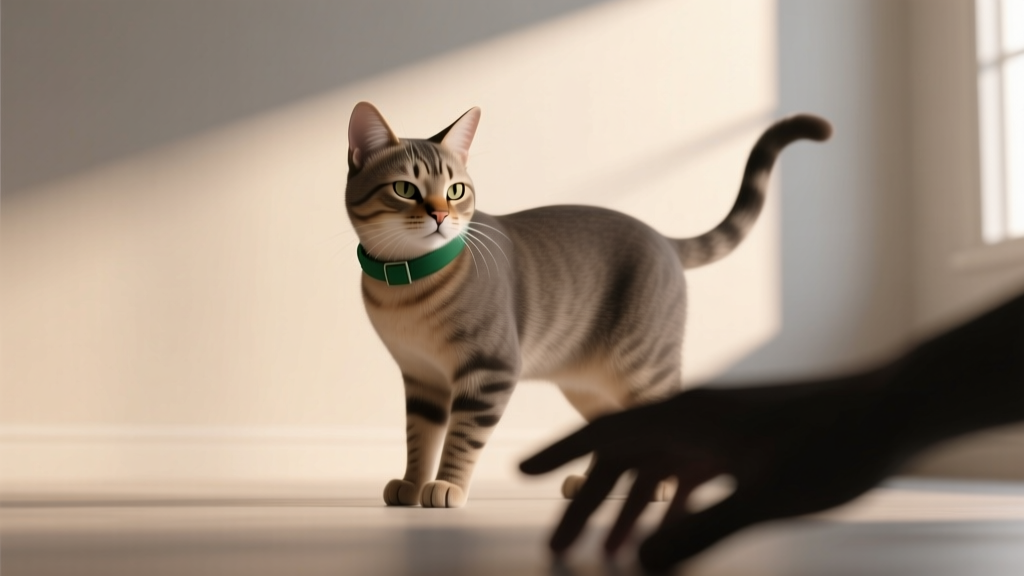
You walk past the curtain cord and your cat—who you swore was asleep—launches one paw from behind the couch. This is a miniature ambush sequence: hide, wait, strike. Cats love practicing surprise attacks because stalking is a huge part of their hunting style.
What it looks like: crouching, tail tip twitching, stillness followed by lightning-fast swats.
2) The “Boxer Combo” (Confidence + High Energy)
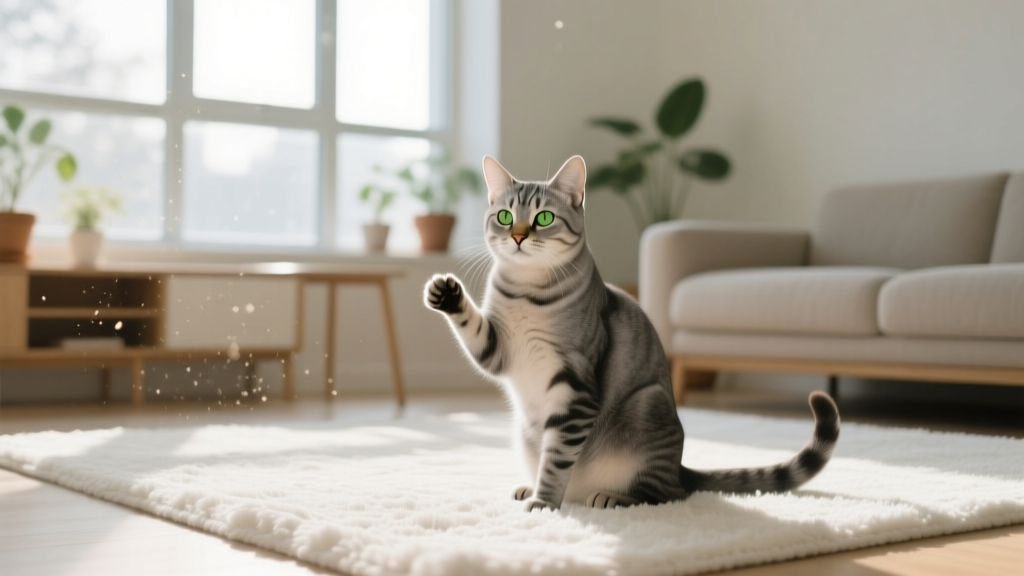
Some cats stand tall and swat repeatedly with alternating paws, as if they’re sparring with the string. This often happens when cats feel confident, playful, and social.
What it looks like: upright posture, rapid paw taps, quick re-centering, little hops.
3) The “Grab-and-Bunny-Kick” (Wrestling Practice)
If your cat hooks the string, pulls it in, then kicks with the back legs—welcome to wrestling school. Those hind-leg kicks are designed to disembowel prey in the wild. Dramatic? Yes. Normal? Also yes.
What it looks like: grabbing with front paws, rolling to the side, rapid back-leg kicks, sometimes a chomp.
4) The “Gentle Tap” (Curiosity + Low Arousal)
Not every swat is intense. Some cats do a slow, careful tap, like they’re testing whether the object is alive. This is investigative behavior—curious, cautious, and often adorable.
What it looks like: slow paw extension, brief touch, sniff, watching for movement.
5) The “Please Play With Me” Swat (Human-Directed Behavior)
If your cat only goes for strings when you’re holding them (shoelaces, hoodie strings, robe ties), this can be a social request: “Make it move. I want a game.” Cats learn what gets your attention, and dangling items are excellent at starting an interaction.
What it looks like: looking at you, then the string; meowing; returning to the string after you stop.
What It Says About Your Cat’s Mood and Feelings
Paw swatting is a window into your cat’s emotional state—especially when you watch the rest of the body.
- Loose body + playful hops: Your cat is relaxed and having fun.
- Whiskers forward + focused stare: Engaged, “hunting brain” activated.
- Pupils dilated: Higher arousal (could be excitement or overstimulation). Context matters.
- Tail up or gently swishing: Friendly excitement.
- Tail whipping hard + ears turning sideways: Overstimulation may be building; your cat may need a break.
- Growling while holding the string: Possessive play or mild resource guarding—common in some cats, especially if other pets approach.
Most of the time, string swatting means your cat feels safe enough to play. That’s a good sign. Play is a “luxury behavior”—cats don’t do it when they feel truly threatened.
Related Behaviors You Might Notice
If your cat loves hanging strings, you may also see:
- Chasing shadows or light reflections: Movement triggers hunting instincts (though light chasing can become compulsive in some cats).
- Pouncing on feet under blankets: The “prey under cover” effect is irresistible.
- Carrying stringy toys around while yowling: A victory lap, a call for attention, or a “look what I caught!” announcement.
- Chattering at birds through the window: Predatory excitement mixed with frustration.
- Playing more at dawn and dusk: Cats are crepuscular—naturally more active during these hours.
When String Swatting Is Normal… and When It’s a Concern
Normal: Your cat swats, grabs, kicks, and releases; pauses to reset; can be redirected to a toy; and stops when the game ends (even if they complain a little).
Potential concerns to watch for:
- Swallowing string or chewing frantically: This is the big one. String ingestion can cause serious intestinal injury. If your cat is actively trying to eat string, it’s time to remove access and switch to safer play.
- Sudden increase in frantic behavior: If a normally calm cat becomes restless, hyper-focused, or agitated, consider stress, boredom, or a medical issue contributing to increased arousal.
- Aggression that escalates quickly: If swatting turns into biting people, hissing, or redirected aggression, your cat may be getting overstimulated.
- Obsessive, hard-to-interrupt fixation: Especially with lights/shadows, but occasionally with strings too. If your cat can’t disengage, talk with your veterinarian or a qualified behavior professional.
- Pain signals: If your cat swats and then shakes a paw, limps, or avoids jumping, consider a paw/claw issue.
Important safety note: If you ever suspect your cat swallowed string, do not pull it if you see it in their mouth or coming from the rear. Contact a veterinarian immediately.
How to Respond (And Encourage Healthy Play)
You don’t need to shut down the behavior—you just want to channel it safely and make it enriching rather than risky.
Offer “Legal Strings” Instead of Household Hazards
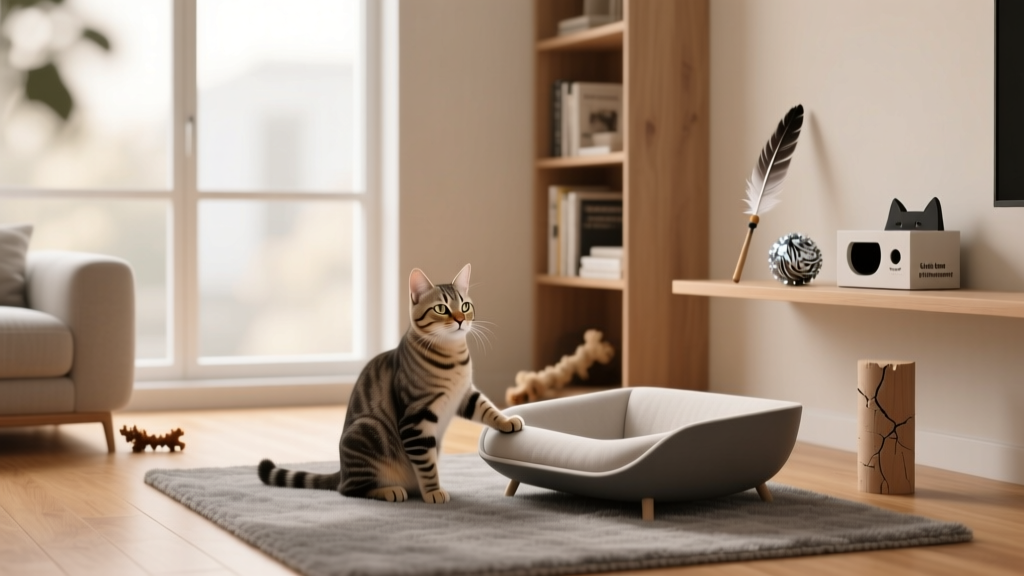
- Wand toys with sturdy cord (used with supervision) are perfect for swatting, chasing, and pouncing.
- Ribbon-style toys can be fun, but choose cat-safe, durable versions and put them away after play.
- Short, thick fabric streamers are generally safer than thin thread-like strings.
Play Like Prey (Your Cat Will Grade Your Performance)
To satisfy the hunting sequence, move the toy in a way that feels “alive”:
- Let it hide behind furniture edges, then peek out.
- Use short darts and pauses, not nonstop swinging.
- Allow a catch every so often—cats get frustrated if prey is always unbeatable.
Build a Mini Routine
Two to three short play sessions (5–10 minutes) often work better than one long session. Many cats love a play session before a meal—hunt, catch, eat, groom, nap is the cat’s dream schedule.
Teach Gentle Paws (Especially for String-Attackers Who Target You)
If your cat swats hoodie strings while you’re wearing them, redirect immediately to a wand toy. Keep your body still (movement makes you “prey”), and reward engagement with the toy. Over time, your cat learns: “Strings on humans are boring. Toy strings are amazing.”
Reduce Risky Access
- Put away sewing supplies, yarn, thread, and tinsel.
- Shorten or secure blind cords and curtain ties.
- Consider cord covers for chargers if your cat is a chewer.
Fun Facts and Research Nuggets
- Play is practice: Studies of animal behavior consistently link juvenile play to the development of adult survival skills. For cats, that includes coordination, timing, and bite inhibition.
- Cats “see” movement extremely well: Feline senses are tuned to detect quick motion, especially in low light—exactly the conditions when many small prey animals are active.
- Swatting is strategic: Cats often use paws to test safety. A quick paw tap lets them gather information without risking their face.
- Successful play lowers stress: Appropriate predatory play can help indoor cats burn energy and may reduce boredom-related behaviors (like nighttime zoomies or ambushing ankles).
FAQ: Cat Paw Swatting at Hanging Strings
Why does my cat prefer strings over expensive toys?
Strings move unpredictably and respond immediately to your cat’s actions, which feels like “real prey.” Many toys are too stiff, too big, or don’t mimic prey movement well. Try a wand toy with small, twitchy motions and frequent “hide and reveal” moments.
Is it okay to let my cat play with yarn or sewing thread?
Not unsupervised. Thin stringy items are a major ingestion hazard. If your cat loves that texture, use a supervised wand toy designed for cats and put it away afterward.
Why does my cat bite the string after swatting it?
That’s the natural hunt sequence: grab, bite, and “kill.” Biting is normal play behavior. The goal is to ensure the object is safe and not something your cat can swallow.
My cat growls while holding the string—should I stop the game?
Growling can mean “This is mine!” especially if other pets are nearby. It’s not automatically bad, but it’s a sign your cat is highly aroused. Give them space, avoid grabbing the toy from their mouth, and consider playing in a quieter room or using two toys if you have multiple cats.
Why does my cat swat my shoelaces when I’m trying to leave?
It’s movement plus attention plus timing. Your cat may be stimulated by the swinging lace and also learned that it delays you and creates interaction. Offer a quick wand-toy session before you get ready, or toss a kicker toy to redirect the energy.
When should I call the vet about string behavior?
Call promptly if you suspect string ingestion (vomiting, gagging, drooling, lethargy, constipation, string visible from mouth or rear), or if your cat suddenly becomes obsessively fixated and can’t be redirected. When in doubt, it’s worth a check-in.
Hanging strings are basically the cat version of a training simulator: easy targets that spark the hunt-and-pounce brain in an instant. With a few safety tweaks and some well-timed play sessions, you can turn “string swats” into healthy enrichment—and learn a lot about how your cat’s mind works along the way.
Does your cat have a signature swatting style—gentle tapper, ambush expert, or full-contact wrestler? Share your funniest and most telling string stories with the Cat Lovers Base community at catloversbase.com.