Cat Paw Reaching Into the Refrigerator: Cold Air Curiosity
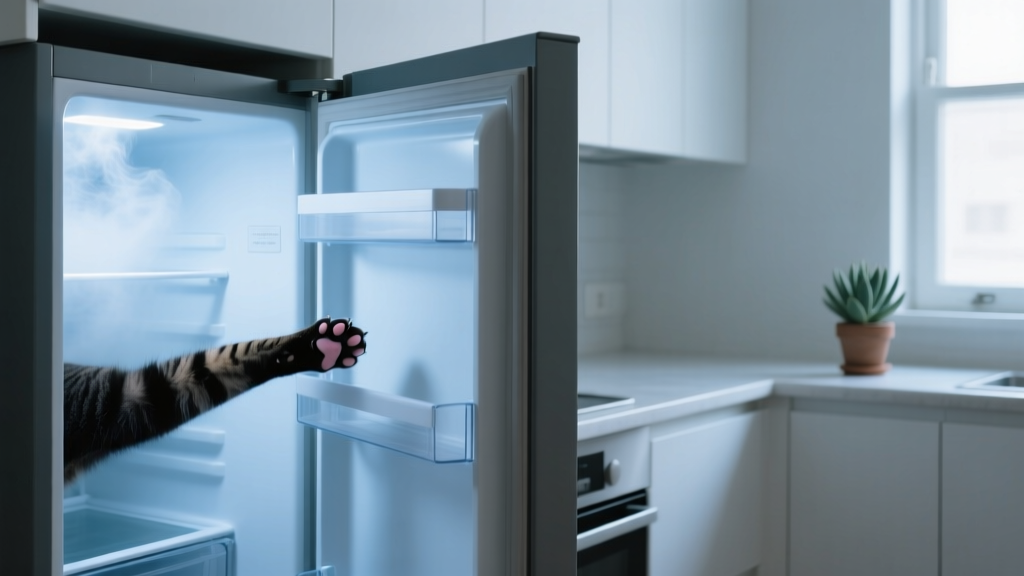
You crack open the refrigerator for a quick snack, and before you can even remember what you came for, a furry little paw slips in like a tiny thief. Not for the cheese. Not for the chicken. Just… the cold air. Your cat leans forward, whiskers fanned, eyes focused, paw gently “fishing” in the chill like there’s a secret world behind the crisper drawer.
If this sounds familiar, you’re in excellent company. Many cats become oddly fascinated with refrigerators—and the paw-reaching move is one of their most charming (and slightly meddlesome) routines. The good news: it’s usually normal, often playful, and very revealing about how your cat experiences the world.
Why Cats Reach Into the Fridge: The Scientific and Evolutionary Backstory
Cats are built to investigate. In the wild, small felines survive by noticing tiny changes: a rustle in grass, a new scent on the wind, a temperature shift near a shaded burrow. Your refrigerator offers a jackpot of interesting sensory information in one moment.
- Temperature novelty: Cats live in a world of warm couches, sun puddles, and human-heated homes. A sudden blast of cold air is unusual—and novelty triggers curiosity.
- Scent concentration: Refrigerators trap and preserve odors. Even sealed containers leak microscopic scent particles. To a cat’s nose, that can read like a buffet of clues.
- Hunting instincts: The paw is a feline multitool. Cats often “test” things with a paw before committing their face. In nature, that’s safer—poke first, then bite (or retreat).
- Learning and reward: If reaching into the fridge ever resulted in a tasty outcome (a treat, deli meat, a lick of yogurt, or even attention from you), the behavior gets reinforced.
So yes, your cat might be curious about food—but they’re also curious about the experience: the cold, the smells, the sounds, and your predictable routine around that big humming box.
Breaking Down the Behavior: Different Contexts (and What They Suggest)
“Paw in the fridge” isn’t one single behavior. The details matter. Here are common variations and what’s usually going on.
The Gentle Dip: “Just Checking the Weather”
Your cat reaches in slowly, taps the air once or twice, then pulls back and blinks. This often indicates pure sensory curiosity—like sticking your hand out a window to feel the breeze. Some cats repeat it because the cold sensation is interesting, not because they want anything specific.
The Hook-and-Grab: “Is There Something for Me?”
This is the paw that aims for specific items: dangling packaging, a plastic bag corner, the edge of a meat container. Cats are excellent at object play, and refrigerator items can resemble prey-like targets (crinkly, slippery, moveable). Food motivation can be part of it, but the pawing itself may be more about “can I make it move?” than “I’m starving.”
The Full-Body Lean: “I’m Investigating a Cave”
If your cat braces their back feet and leans in—nose first, whiskers forward—they’re treating the fridge like a mini territory exploration. Dark shelves + hidden corners + mysterious smells = prime feline interest. This is especially common in cats who like boxes, cabinets, closets, and open drawers.
The Repeat Offender at Specific Times: “I’ve Learned Your Patterns”
If it happens at the exact time you usually feed your cat, it may be routine-based anticipation. Cats are brilliant schedule-keepers. The refrigerator door becomes a cue: “Food could happen now.” Even if you’re grabbing your own drink, the cat’s brain may shout, “Dinner ceremony!”
The “Cold Paw” After Drinking: “That Felt Weird, Do It Again”
Some cats will drink water, then paw at cold surfaces or air. That’s normal sensory exploration. Cats often investigate textures and temperatures with their paws because paw pads are sensitive and give fast feedback.
What It Says About Your Cat’s Mood and Feelings
Think of the refrigerator paw as a little emotional snapshot. Here’s what the body language often reveals:
- Curiosity and confidence: Tail up, relaxed ears, slow movements, and a soft face suggest your cat feels safe and comfortable in the kitchen.
- Playfulness: Quick paw taps, bouncy posture, dilated pupils (in good lighting), or a sideways hop after you close the door can point to play energy.
- Food anticipation: Meowing, circling your legs, staring at specific shelves, or running to the feeding area right afterward often means the fridge is linked to meals in your cat’s mind.
- Mild frustration or persistence: Repeated pawing, vocalizing, or trying to block the door from closing can mean “I really want something,” which could be food-related—or just “I want access.”
Most importantly: a cat who feels secure will investigate openly. A cat who feels anxious tends to hover, startle easily, or retreat quickly. Your cat’s fridge habit can actually be a sign that they trust you and feel at home.
Related Quirky Behaviors You Might Notice
If your cat is a refrigerator paw-er, you may also see:
- Cabinet and drawer inspections: Same “new space” curiosity, especially if they’ve found treats there once.
- Trash can reconnaissance: Smells + potential “prey” (crinkly packaging) + rewarding discoveries.
- Countertop patrol: Elevated spaces provide better viewing and can become part of food-seeking routines.
- Pawing at water bowls: A common way to test depth, movement, and safety before drinking.
- Following you during food prep: Cats love predictable rituals—and your kitchen routine is a daily storyline.
When It’s Normal (Most of the Time) vs. When It Might Be a Concern
In healthy cats, reaching into the fridge is typically harmless curiosity. Still, a few situations deserve extra attention.
Usually Normal
- Occasional pawing when the door opens
- Relaxed body language
- Playful interest without distress
- Stops when the door closes or when redirected
Potential Concern Signs
- Obsessive behavior: Constant attempts to access the fridge, agitation, or inability to disengage could indicate anxiety, understimulation, or compulsive tendencies.
- Sudden increase in food-seeking: If your cat is raiding the fridge (or trying hard to) and also begging more, losing weight, drinking more, or acting ravenous, talk to your vet. Conditions like hyperthyroidism or diabetes can increase hunger.
- Pica or dangerous chewing: If your cat is trying to chew plastic packaging, twist ties, or rubbery seals, that can become a safety issue.
- Door-dashing into the fridge: Some cats attempt to climb inside (especially big, confident climbers). That’s a “manage the environment now” moment for safety.
If you notice health changes (weight loss, increased thirst, vomiting, appetite spikes), treat the fridge behavior as a clue—not the whole story—and schedule a veterinary check.
How to Respond: Encourage the Cute, Prevent the Chaos
You don’t need to “correct” curiosity. You just want to keep your cat safe and your groceries intact.
1) Reward calm behavior, not fridge diving
If your cat gets treats every time the fridge opens, they’ll train you beautifully. Instead, ask for a simple behavior like sitting on a mat a few feet away. Then reward that. You’ll still have a fun ritual—just a safer one.
2) Create an approved “kitchen observation post”
A sturdy cat perch or a chair near (but not blocking) your work area gives your cat a job: supervising. Many cats paw at the fridge because they want involvement. Give them a designated place to be included.
3) Add sensory enrichment elsewhere
If the fridge is your cat’s most exciting daily event, the rest of the day may be a bit dull. Try:
- Food puzzles or treat balls
- Short interactive play sessions (wand toys, chase games)
- Sniffing games: hide treats in paper bags or cardboard boxes
4) Practice safe management
- Don’t leave the fridge door open “just because it’s funny.” Cats can jump in quickly.
- Store tempting items in sealed containers.
- Keep plastic bags, strings, and meat packaging out of reach.
5) If your cat loves cold, offer a safe alternative
Some cats genuinely enjoy cool sensations. You can offer a cooling mat in warm months, or add a few ice cubes to a water fountain (if your cat likes it). Keep it optional—cats prefer control over their environment.
Fun Facts and Research-Adjacent Nuggets
- Cat paws are sensory tools: Paw pads contain nerve endings that help cats evaluate texture and temperature quickly. That “air tap” is information-gathering.
- Cats are routine detectives: They don’t just learn “fridge equals food.” They learn the sequence: you stand up, you walk to the kitchen, the door opens, a sound happens, something tasty might follow.
- Whiskers help with spacing: When a cat leans into the fridge, whiskers provide feedback about tight spaces and objects nearby—like built-in measuring tape.
- Cold air carries scent differently: Cooler air can feel “sharper” to some cats because the scent landscape changes as the door opens and air moves.
FAQ: Cat Paw Reaching Into the Refrigerator
Why does my cat only do this with the fridge and not other doors?
The fridge is a sensory event: cold air, strong smells, and a reliable chance of food. A closet door doesn’t usually provide that combination, so it’s less rewarding.
Is my cat hungry if they paw into the refrigerator?
Not always. Many cats do it out of curiosity or habit. If it’s paired with persistent begging, weight changes, or increased appetite overall, consider a vet check to rule out medical causes.
Should I let my cat sniff the fridge when I open it?
Brief sniffing is usually fine if your cat stays on the floor and isn’t trying to jump in or grab unsafe items. If your cat gets underfoot or escalates, redirect to a perch or mat and reward that calmer choice.
How do I stop my cat from getting in the way when I’m cooking?
Give them an acceptable “job” nearby: a designated chair or cat tree, a small scatter of treats on a snuffle mat, or a puzzle feeder that only appears during cooking. You’re replacing the behavior, not just blocking it.
My cat tries to climb into the fridge. Is that dangerous?
Yes. Even a quick hop inside can lead to injury, knocked items, or accidental closing. Keep the door open for the shortest time possible, and consider training a stationing behavior (sit on a mat) before you open the door.
Does this mean my cat is unusually smart?
It means your cat is a normal cat with a strong curiosity streak—and probably excellent observational skills. Cats who do this are often the ones who notice patterns quickly and enjoy interactive routines with their humans.
Your cat’s refrigerator paw isn’t just a silly trick—it’s a peek into how their mind works: curious, sensory-driven, and always alert to patterns that might lead to something interesting (or tasty). With a little management and a lot of empathy, you can keep the behavior safe while enjoying the personality behind it.
Has your cat developed a signature “fridge move” (the stealth paw, the full-body lean, the dramatic meow)? Share your stories and photos with the Cat Lovers Base community at catloversbase.com—we’d love to hear what your kitchen supervisor is up to.