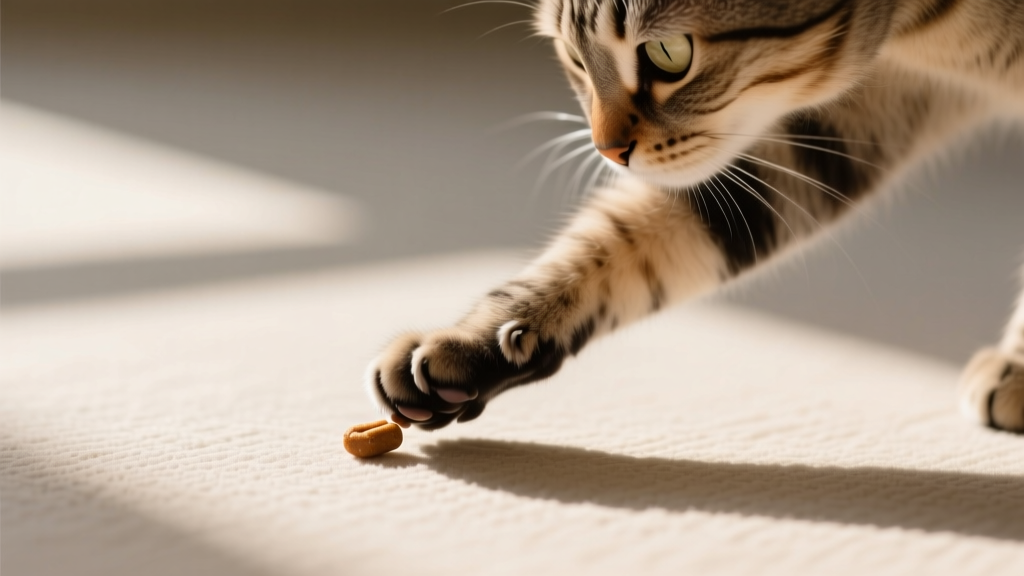
Cat Paw Reaching for Treats: Trained or Instinctive?
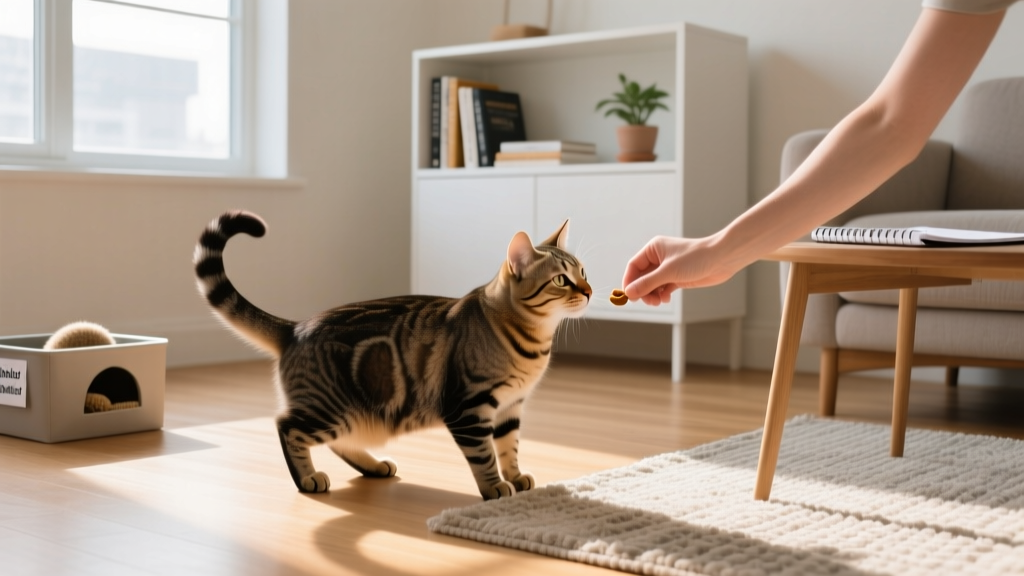
You’re standing in the kitchen with a treat bag that crinkles like cat currency. Your cat appears out of nowhere—quiet as a shadow—then sits with exaggerated patience. You hold the treat just a little higher (because it’s adorable), and suddenly: tap tap. A soft paw reaches up and hooks the air, sometimes landing on your fingers with surprising precision. Maybe there’s a gentle “grabby hand” motion. Maybe it’s a full-on paw slap that says, “Excuse you, I ordered snacks.”
If you’ve ever wondered, “Did I train this… or is my cat just being a tiny furry opportunist?” you’re in excellent company. That paw-reaching behavior is a mix of instinct, learning, and your cat’s very real talent for shaping you.
Why Cats Reach with Their Paws: The Instinctive Roots
Cats are predators built for close-range hunting. While dogs often use their mouths more directly (because many were selected for grabbing and carrying), cats are specialists in precision. Their paws are sensory tools as much as they are weapons—packed with nerve endings, whisker-like sensitivity in the toes, and retractable claws for control.
In the wild, pawing serves a few key purposes:
- Testing and controlling prey: A cautious paw tap can check if something is safe—or alive. This is why you’ll sometimes see cats “play” with a toy or bug before committing.
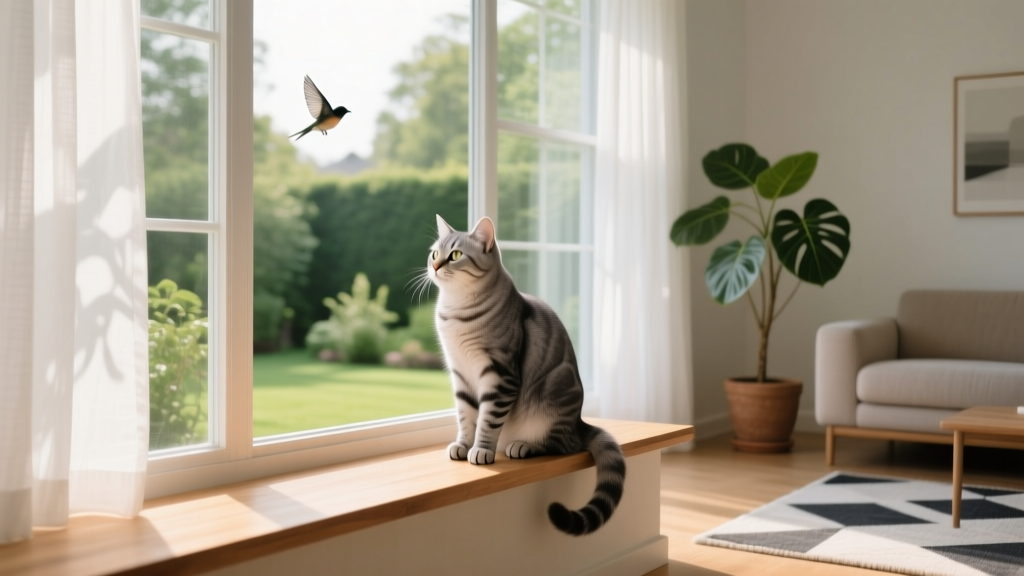
- Fishing behaviors: Some cats naturally scoop at water or moving objects. There’s a reason “fishing cats” exist as a wild species, and domestic cats still carry that paw-swipe wiring.
- Problem-solving and exploration: Cats often use their paws like hands. If something is behind a crack, under a door, or inside a bag, the paw is the go-to tool for retrieval.
So when your cat reaches for a treat, they’re not inventing a new trick out of nowhere. They’re applying an ancient feline strategy: “If I can touch it, I can control it.”
Instinct Meets Learning: How Treat-Reaching Gets “Trained”
Even when a behavior starts instinctively, it can become stronger through reinforcement. In cat behavior terms, this is simple: if pawing makes the treat appear, pawing becomes more likely next time. You don’t even have to be intentionally training. Most of us accidentally reward the cutest behaviors on the planet.
Here’s what often happens:
- Cat reaches out because the treat is close and interesting.
- You laugh, say “Aww,” and hand over the treat.
- Your cat’s brain quietly records: Paw = snack.
- Next time, the paw comes out sooner. Eventually, it becomes their signature move.
So… trained or instinctive? It’s both. The paw-reaching is instinct. The timing, persistence, and “politeness level” are often learned.
A Detailed Breakdown: Different Contexts You Might See
1) The Gentle Tap (Polite Request)
This is the soft paw touch—sometimes without claws—aimed at your hand, the treat bag, or your wrist. Many cats use this as a low-conflict way to ask for something. It’s the feline equivalent of clearing your throat politely.
Common scenario: You’re on the couch. Your cat climbs beside you, sniffs the treat pouch, then lightly taps your hand once like, “Yes, that one. Now.”
2) The Hook-and-Grab (I Can Take That)
Some cats reach and curl their toes, trying to pull the treat closer. This often shows up in cats who are confident, food-motivated, or simply very practiced. It’s also common if you’ve made treat time into a little game.
Common scenario: You hold a treat just out of reach; your cat does a slow-motion paw scoop and tries to reel it in like a tiny fisherman.
3) The Swat (Impatient or Overstimulated)
A faster, more forceful paw swipe may happen when your cat is frustrated or highly aroused (excited). This isn’t “bad,” but it does suggest a higher emotional intensity. If claws appear, it’s information: your cat’s impulse control is slipping.
Common scenario: You’re opening a new treat bag. Your cat has been waiting. The bag won’t open fast enough. Swat.
4) The Two-Paw Reach (Full Commitment)
When cats stand up and reach with both paws, it often means the reward is very high value. It can also be a learned behavior from interactive play (like “catching” toys or batting at dangling objects).
Common scenario: You’re holding a lickable treat tube. Your cat rises like a meerkat, both paws up, ready to stabilize the prize.
5) The “Air Paw” (Anticipation and Habit)
Sometimes cats reach even before you present the treat clearly—almost like they’re rehearsing. That’s habit plus anticipation. Your cat’s predicting the sequence and offering the behavior that has worked before.
What Paw-Reaching Says About Your Cat’s Mood
Cat body language is a full-body story, not just a paw. Here’s what to look for:
- Relaxed paw reach + soft face + upright tail: Happy, confident, socially comfortable. Your cat expects good things from you.
- Wide eyes + quick movements + vocalizing: High arousal/excitement. Not necessarily negative, but your cat may get grabby.
- Ears slightly back + tense body + repeated swats: Frustration. Your cat wants the reward faster or dislikes how it’s being offered.
- Claws out + biting at the hand: Overarousal or poor treat-delivery mechanics (the treat is too close to fingers, or the game has escalated).
The sweetest interpretation? For many cats, pawing is a socially flexible way to interact. Cats don’t have hands, but they do have paws—and they’ll use them to communicate with the creatures who control the pantry.
Related Behaviors You Might Also Notice
- Pawing at cabinets or the treat drawer: Location-based learning: “Food lives here.”
- Touching your face or arm to wake you: Attention-seeking or a morning routine that has been reinforced.
- Reaching under doors: Curiosity, play drive, or social seeking (especially if they hear you on the other side).
- “Biscuit making” (kneading): Comfort behavior, often linked to nursing instincts and relaxation.
- Batting treats across the floor before eating: Prey-play sequence showing up in snack form.
When Paw-Reaching Is Normal—and When to Be Concerned
Normal: Most paw-reaching is harmless, cute, and a sign your cat is engaged. It often indicates confidence and curiosity, especially when the body remains loose and the claws stay tucked.
Potential concerns:
- Sudden increase in food-seeking behavior: If your cat becomes unusually frantic about food, steals more, or seems never satisfied, consider a vet check. Increased appetite can be linked to medical issues (like thyroid problems in older cats) or stress.
- Pawing paired with aggression: If reaching escalates into biting, growling, or repeated hard swats, your cat may be overstimulated, frustrated, or guarding resources.
- Paw sensitivity or avoidance: If your cat reaches less, flinches, licks paws frequently, or seems uncomfortable bearing weight, think pain: nail issues, injuries, arthritis, or litter-related irritation.
- Compulsive pawing: Rare, but if the behavior seems repetitive and “stuck” (pacing, vocalizing, pawing in a distressed way), it can signal anxiety or cognitive changes—especially in seniors.
If something feels “off,” trust that instinct. A quick video of the behavior can help your vet or behavior professional assess what’s going on.
How to Respond (and Encourage It the Smart Way)
If you love the paw reach and want to keep it adorable rather than painful, your response matters.
Reward calm, gentle paws
When your cat reaches softly with claws in, deliver the treat immediately. If your cat swats hard or uses claws, pause for a moment and reset. This teaches: gentle gets paid.
Use a predictable hand position
Hold treats on an open palm or between two fingers in a way that keeps your fingertips safe. Many accidental nips happen because the cat can’t tell treat from hand during high excitement.
Teach an alternative cue
If pawing becomes too intense, teach “sit” or “touch” (nose-to-finger) as the treat behavior. Cats learn quickly when rewards are consistent and sessions are short.
Add enrichment so treats aren’t the only “hunt”
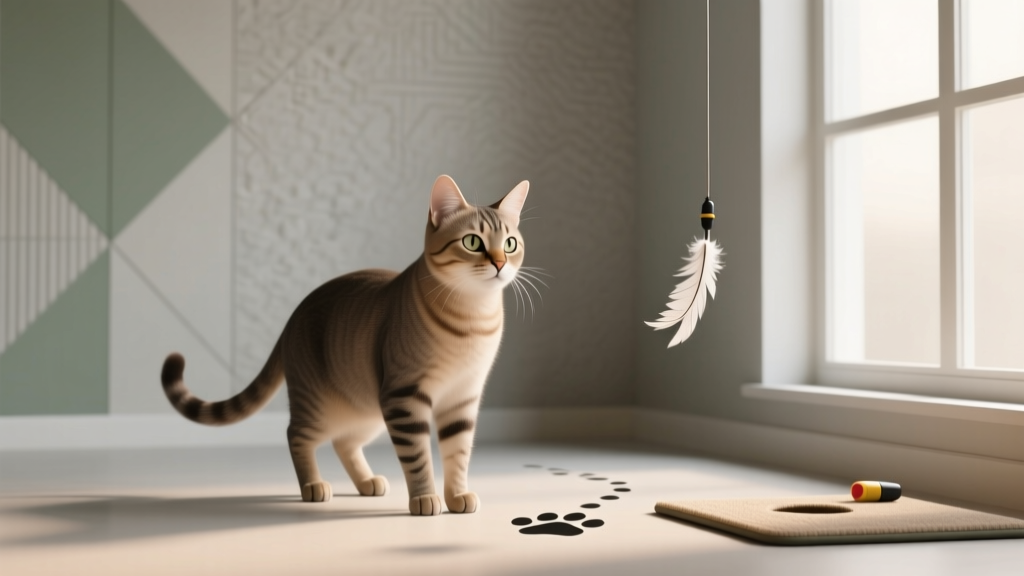
Food puzzles, treat balls, or scattering a few kibbles for a mini “foraging session” can satisfy the paw-and-hunt drive in a healthy way.
Don’t tease with the treat just out of reach (unless your cat enjoys it)
For some cats, that turns into fun training. For others, it creates frustration and swatting. Watch your cat’s body language: relaxed curiosity is fine; tension and rapid slaps mean it’s not fun anymore.
Fun Facts and Research-Flavored Nuggets
- Cats often show paw preference: Many cats are “left-pawed” or “right-pawed,” similar to human handedness. You might notice your cat consistently reaches with the same paw for treats.
- Paws are information gatherers: Cats have sensitive paw pads that help them detect texture and movement—useful when manipulating objects (or snagging a treat from your hand).
- Cats learn by consequences, fast: If a behavior reliably works, cats repeat it. This is why one accidental reward can create a long-term habit—especially with food involved.
FAQ: Cat Paw Reaching for Treats
Is my cat “asking” with their paw, or trying to steal?
Sometimes both. A gentle tap is often a request. A hook-and-grab is more “I can take that.” Neither is unusual—cats are opportunistic hunters. The difference is mainly intensity and whether claws come out.
Why does my cat reach for the treat, then smack it away?
That’s a mini prey sequence. Your cat may be testing movement, turning the treat into a “catch,” or simply playing before eating. This is especially common with crunchy treats that skitter across the floor.
How do I stop the clawing when my cat paws at my hand?
Reward only gentle paws, keep treats on an open palm, and pause if claws appear. You can also redirect to a “sit” or “nose touch” cue. If your cat is extremely excited, use smaller treats and slower delivery to keep arousal down.
Does paw-reaching mean my cat trusts me?
Often, yes. Reaching involves coming close and interacting directly. A cat who feels safe around you is more likely to use social, playful behaviors—especially if they’ve learned you respond kindly.
My cat only reaches for treats with me, not other people. Why?
Because you’re part of the routine. Cats are excellent at person-specific learning: who gives treats, who plays, who responds to paw taps. You may also have a specific way of holding treats that invites pawing.
Should I teach my cat to “shake paws” if they already reach?
If your cat enjoys training, absolutely. Paw-reaching is a great foundation for “high five” or “shake.” Keep sessions brief, reward gently, and stop before your cat gets overstimulated.
That little paw reaching up for a treat isn’t just a cute trick—it’s your cat’s instincts, learning ability, and relationship with you all rolled into one tiny gesture. Pay attention to the style of the paw, the rest of the body language, and how your responses shape what happens next. You’ll end up with better manners, safer treat time, and an even stronger bond.
Does your cat tap politely, hook your hand like a pro, or go full snack-gremlin when the bag crinkles? Share your cat’s treat-time stories (and the funniest paw moves) with the Cat Lovers Base community at catloversbase.com.