Cat Paw Pushing the Toy Under the Sofa: Retrieval
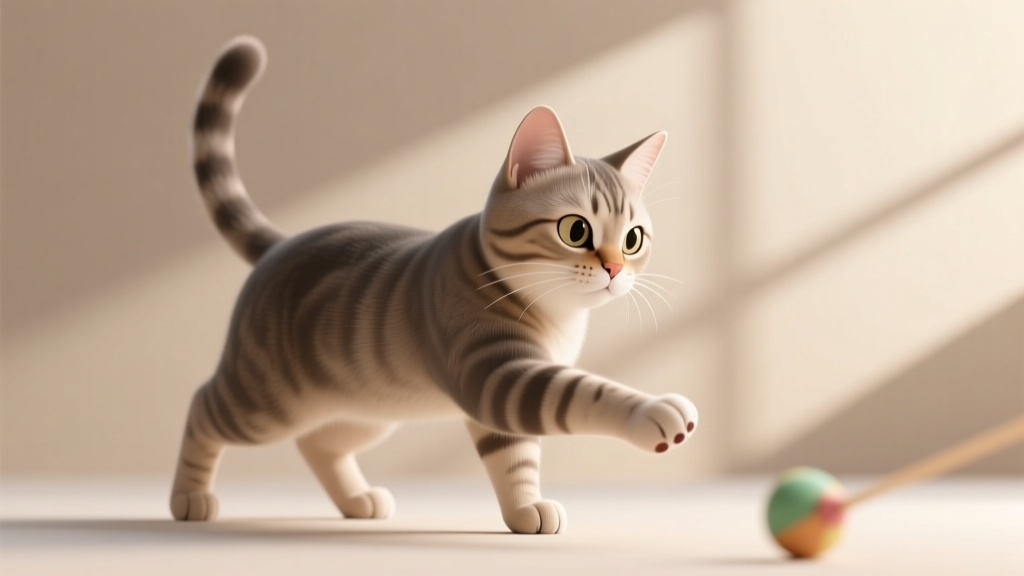
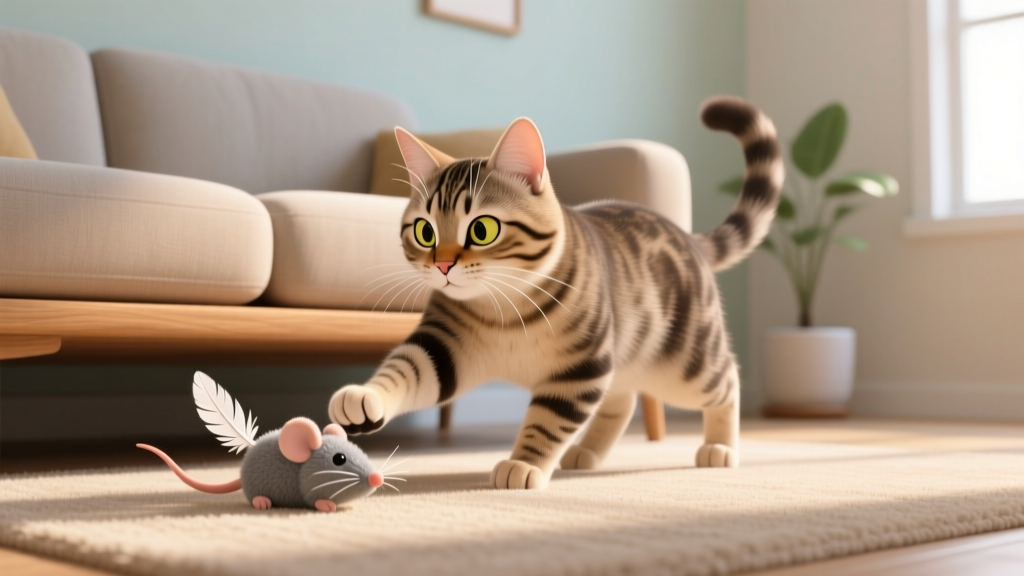
You bought the “perfect” toy: a little mouse, a jingly ball, a feather-on-a-string. Your cat launches into full hunter mode—stalking, pouncing, bunny-kicking like a tiny lion. Then, at the exact moment you’re thinking, “Yes! Enrichment achieved!”… your cat hooks the toy with one paw and deliberately shoves it under the sofa.
Silence. A dramatic pause. Then the real show begins: whiskers forward, pupils wide, head tilted as if your cat is calculating the physics of furniture. A paw snakes into the dark gap, scrabbling around. Sometimes your cat chirps in frustration. Sometimes they flop down and stare at the sofa like it personally offended them. And sometimes they march over to you—clearly expecting you, their large, hairless assistant, to fix the situation.
If this sounds familiar, you’re not alone. Pushing toys under furniture and then “retrieving” them (or demanding you retrieve them) is one of the most common, wonderfully confusing cat behaviors. It’s also surprisingly meaningful once you look at it through a cat’s eyes.
Why Cats Do This: A Quick Evolutionary and Scientific Explanation
Cats are mesopredators—small-to-medium hunters evolved to catch prey that hides, darts, and disappears. In the wild, a mouse doesn’t roll nicely across open floor and stop for a neat pounce. It bolts under roots, into holes, behind rocks, and into burrows. Your living room has the modern version of all that: couches, beds, cabinets, and radiators.
When your cat pushes a toy under the sofa, they’re often reenacting a sequence that looks like this:
- Capture: Pounce, bite, pin with paws.
- Prey escapes: (In real life) it wriggles loose and flees into cover.
- Investigate and extract: Reach in, feel around, use sensitive paws and whiskers to locate it.
- Repeat: The hunt is rewarding partly because it’s not instantly “done.”
There’s also a brain-chemistry angle. Predatory play activates the same motivational systems used for hunting: anticipation, pursuit, and problem-solving. For many cats, the process is more satisfying than the “win.” A toy disappearing under the sofa extends the game—like adding an extra level to a puzzle.
And let’s give those paws some credit: a cat’s forepaws are incredibly dexterous. They’re built for grappling and manipulating, not just walking. Sliding a toy into a narrow gap and fishing it back out can be deeply satisfying—especially for cats who love “busy work” games.
What’s Actually Happening: A Breakdown of the Behavior in Different Contexts
Not all “toy under the sofa” moments mean the same thing. Context matters. Here are the most common scenarios cat owners recognize:
1) The “Prey Ran Into a Burrow” Scenario
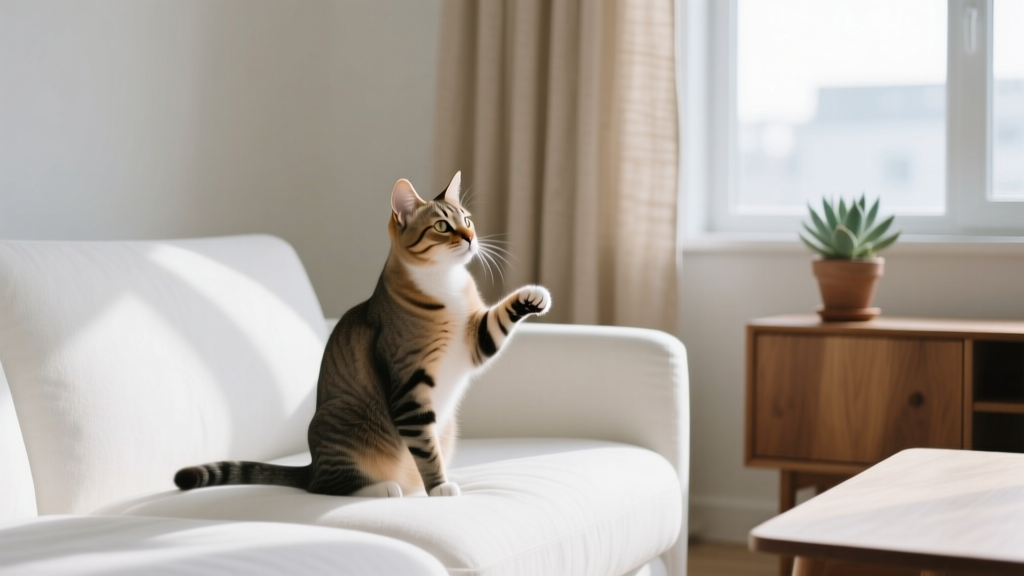
Your cat is fully engaged—low body, twitchy tail tip, focused stare. They pounce, then the toy slips under furniture. Instead of losing interest, your cat immediately switches to extraction mode: paw probing, shoulders hunched, whiskers forward, sometimes shifting side to side to improve the angle.
What it means: This is classic hunting play. Your cat is mentally stimulated and enjoying the challenge.
2) The “I Meant to Do That” Scenario
Some cats purposely bat the toy toward the furniture gap. You’ll see them position the toy, then give a precise shove as if they’re setting up a trap. They may even pause and watch it disappear, then begin the retrieval ritual.
What it means: Your cat is creating a more realistic hunt. They’re adding difficulty and novelty to keep the game exciting.
3) The “This Is Mine Now” Stash Attempt
A cat carries a toy (often a favorite) and drops it near or under furniture. They may paw it into the shadows and then leave, only to return later. Some cats do this with socks, hair ties (not recommended), or small plush toys.
What it means: This can be a form of caching—hiding a valued object in a “safe” spot. In multi-pet homes, it can also be about keeping resources away from competitors.
4) The “I’m Overstimulated, So I’m Redirecting” Scenario
Play gets intense. Your cat’s pupils dilate, their movements become more frantic, and they start making quicker swats. Suddenly—shove! The toy is gone. Your cat may sit back, lick their lips, groom, or look away.
What it means: The disappearing toy provides a break in stimulation. Think of it as your cat pressing “pause” to regulate their arousal.
5) The “Human, Fetch It” Training Session
Your cat stares at the couch gap, then looks at you. Back at the couch. Back at you. Maybe a meow. Maybe a chirp. If you retrieve it, congratulations: you’ve been recruited.
What it means: Cats learn patterns fast. If “toy goes under sofa → human retrieves → play continues,” many cats will intentionally repeat the sequence because it works.
What This Behavior Says About Your Cat’s Mood and Feelings
Most of the time, this behavior points to positive emotional states:
- Engaged and curious: Your cat is interested in the environment and enjoys problem-solving.
- Playful confidence: A cat who feels safe will often play in the open and interact with noisy, moving toys.
- Predatory satisfaction: The “hunt” sequence is being fulfilled: stalk → chase → catch → manipulate.
- Seeking interaction: If your cat recruits you to retrieve the toy, it can be social play—your cat’s version of “your turn.”
But there are a few emotional nuances to watch for:
- Frustration: Repeated paw-scrabbling, vocalizing, and agitation may mean your cat can’t complete the sequence and is getting stressed.
- Anxiety or resource-guarding: If the toy-stashing happens alongside tension with other pets (blocking, staring, swatting), the “hiding” may be about control rather than fun.
Related Behaviors You Might Also Notice
If your cat loves pushing toys under the sofa, you may see other “hunter-brain” habits:
- Batting toys down hallways: Long open spaces mimic pursuit.
- Dropping toys in water bowls: Some cats experiment with objects and movement; others may be “disabling” prey.
- Playing in the bathtub: Smooth surfaces change how objects slide—like a new terrain.
- Chirping or chattering: Excitement and frustration can blend when “prey” is just out of reach.
- Nighttime “toy soccer”: Many cats are crepuscular (most active at dawn/dusk), so toy games can peak when humans are trying to sleep.
When It’s Normal (and When It Might Be a Concern)
Normal: Occasional toy loss under furniture is extremely common—especially with lightweight balls, springs, and small plush mice. If your cat remains playful, eats normally, and can be redirected, it’s usually just enrichment in action.
Potential concern:
- Obsessive, prolonged fixation: If your cat spends long stretches unable to disengage, seems distressed, or repeatedly injures claws/paws trying to reach under furniture, it’s worth adjusting the play setup.
- Sudden change in play style: A cat who used to play gently but now plays frantically—or stops playing entirely—could be dealing with stress, pain, or environmental changes.
- Ingesting unsafe “toys”: If your cat pushes string, ribbon, hair ties, foam, or small parts under furniture and later chews/ingests them, that’s a safety issue. Linear objects (string, yarn) are especially dangerous if swallowed.
- Mobility or pain signals: If reaching under the sofa is followed by limping, shaking paws, or avoiding jumping, consult your veterinarian to rule out arthritis, nail bed pain, or injury.
How to Respond (and How to Encourage the Good Kind of “Retrieval”)
You don’t need to stop the behavior—just shape it so it stays fun and safe.
1) Make Retrieval Possible
- Use a “fishing” toy: Wand toys with a short, sturdy lure can be guided away from furniture gaps.
- Try larger toys: Balls that are too big to fit under the sofa reduce constant losses.
- Block the gap (selectively): If under-sofa play becomes frustrating, use draft blockers or foam pipes. Consider leaving one controlled “tunnel spot” open for supervised puzzle-style play.
2) Turn It Into a Brain Game
- Provide legal “burrows”: Cardboard boxes with holes, paper bags (handles removed), or cat tunnels give your cat the hidden-prey experience without the furniture black hole.
- Use treat balls or puzzle toys: These satisfy the pawing and problem-solving urge.
3) Join as the Helpful Teammate (Without Becoming the Full-Time Staff)
- Retrieve occasionally: If your cat is asking for help, doing it sometimes can be a sweet interactive ritual.
- But don’t reinforce frustration: If your cat is getting worked up, pause play, offer a calm reset (toss a different toy away from the sofa, or switch to a slower wand movement).
4) End Play Like a Successful Hunt
Many cats do better when play finishes with a “catch.” Let your cat grab the toy, hold it, and perform a few satisfying bunny-kicks (if safe). Then offer a small meal or treat. This completes the predatory sequence and can reduce the urge to keep escalating the game under the sofa.
Fun Facts and Research-Adjacent Nuggets
- Cats use their paws like hands: Compared to many animals, cats rely heavily on tactile information from their paw pads. That under-sofa paw “fishing” is sensory exploration as much as it is play.
- Novelty boosts play: Studies and behavior observations consistently show cats respond strongly to novelty—new movement patterns, new textures, new hiding spots. A toy that suddenly “vanishes” becomes novel again.
- Play is practice: Even well-fed cats retain strong predatory play drives. Hunting behavior is not only about hunger; it’s about instinct, mental stimulation, and skill rehearsal.
- You can accidentally create rituals: Cats are excellent at learning cause-and-effect. If the under-sofa routine reliably produces your attention, it can become a favorite “game” even more than the toy itself.
FAQ
Why does my cat keep pushing the toy under the sofa on purpose?
Many cats intentionally create a “burrow” situation because it makes the toy behave more like real prey—hidden, harder to reach, and more interesting. It adds challenge and keeps the hunt going.
Is my cat trying to hide the toy from me or other pets?
Sometimes, yes. If your cat carries toys to hidden places or becomes tense when other pets approach, it may be resource hiding. In a calm, single-cat home, it’s more often just part of the hunting game.
Should I always retrieve the toy for my cat?
No. Retrieving occasionally can be a fun bonding moment, but if you do it every time, your cat may learn a “summon the human” routine. Consider rotating in larger toys or blocking the gap if it becomes constant.
My cat gets frustrated and yowls when the toy goes under the couch—what should I do?
Pause the game and reset. Offer a different toy in an open area, or use a wand toy you can control. If frustration is frequent, block the sofa gap and provide a tunnel/box setup where your cat can successfully “win.”
Does this mean my cat is bored?
Not necessarily. It often means your cat is engaged enough to invent new challenges. That said, if under-sofa play is your cat’s only form of stimulation, adding daily interactive play sessions and puzzle feeders can help.
Are there any safety risks with toys under furniture?
Yes. Small parts, strings, ribbons, hair ties, and anything that can be chewed apart and swallowed should be avoided. Also watch for snagged claws or repeated hard paw-scraping that could cause injury.
That toy-under-the-sofa moment can be annoying (especially when you’re trying to relax), but it’s also a tiny window into your cat’s hunting instincts, problem-solving skills, and their very firm belief that you are part of the household ecosystem.
Have a cat who invents even stranger “retrieval” games—like dropping toys behind the fridge or playing soccer at 2 a.m.? Share your stories (and your cat’s most dramatic under-sofa stares) with the Cat Lovers Base community at catloversbase.com.