Cat Paw Pushing the Cabinet Door: Curiosity Drive
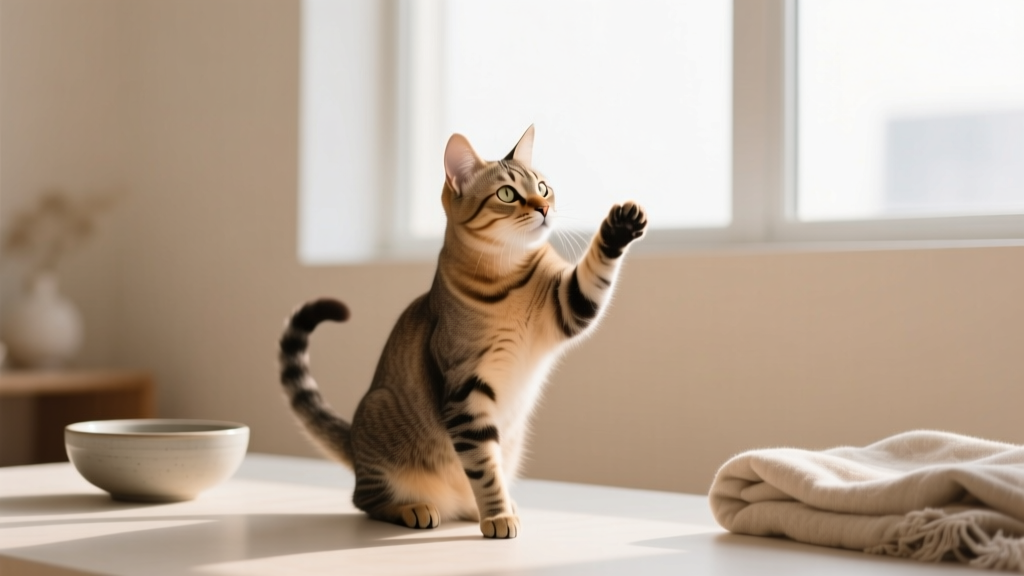
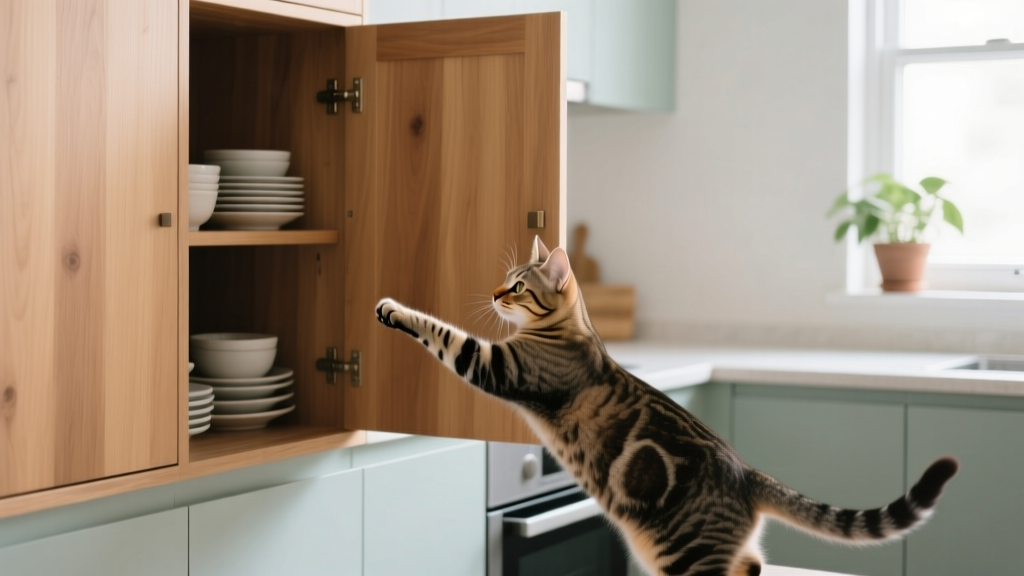
You’re in the kitchen making coffee, and you hear it: tap… tap… scrape… You turn around and there’s your cat—sitting like a tiny, furry locksmith—hooking a paw under the cabinet door and pushing it open a half inch. Then another half inch. Then, with complete confidence, they peer into the darkness like they’re about to uncover a centuries-old secret. Sometimes they close it again and repeat the whole performance, as if the cabinet is an interactive exhibit built just for them.
If you’ve ever wondered, “Why is my cat obsessed with cabinet doors?” you’re not alone. This behavior is incredibly common, and it’s a perfect window into the feline brain: curiosity, hunting instincts, a love of puzzles, and a surprisingly strong need to control their environment—all bundled into one paw-powered routine.
The scientific (and evolutionary) reason cats push cabinet doors
Cats are natural investigators. In the wild, a small, dark opening could mean:
- Prey (a mouse hiding under something)
- Shelter (a safe den)
- Territory (a boundary to check and re-check)
- Resources (food smells, water, warmth)
Even though your kitchen cabinet mostly contains pasta and mismatched lids, your cat’s brain doesn’t categorize it as “boring human storage.” It reads as “potential opportunity.” Cats are also wired to be neophilic—they’re drawn to novelty, especially when it’s paired with a controllable action (like pushing something that moves).
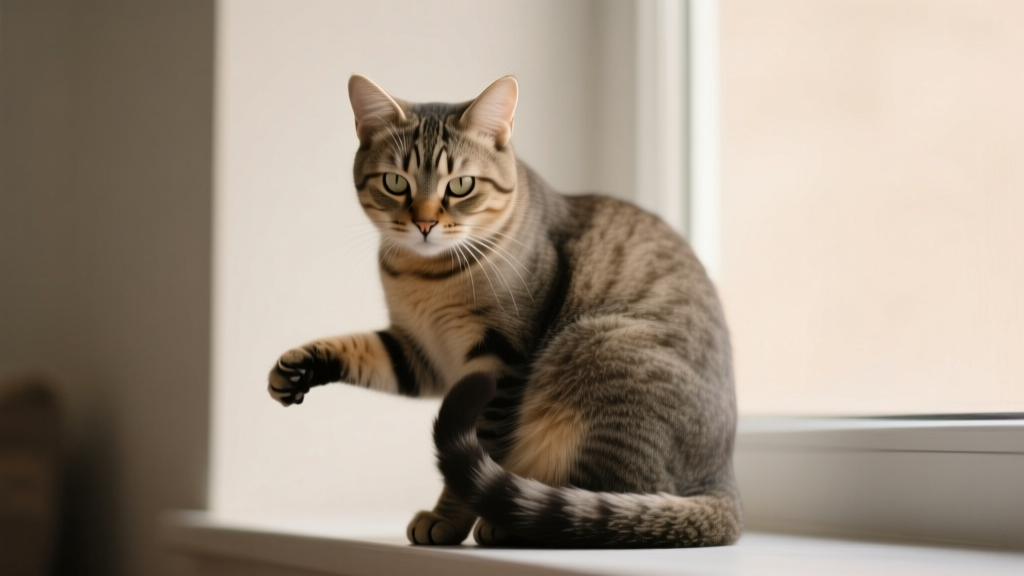
There’s also a practical anatomy angle: cats have sensitive paws and semi-retractable claws designed for gripping, testing, and manipulating. A cabinet door is basically a giant lever with a satisfying mechanical payoff. Push the right spot, and the world changes. To a cat, that’s powerful and fascinating.
Finally, there’s learning. If the cabinet has ever led to something rewarding—extra smells, a hidden crumb, your attention, or a cozy cave-like space—your cat’s brain tags the behavior as “worth repeating.” Cats don’t repeat behaviors because they’re “being naughty.” They repeat them because the behavior worked.
What’s actually happening: a breakdown of cabinet-door pawing in different contexts
Not all cabinet-pushers are doing it for the same reason. Here are the most common “versions” of the behavior, with recognizable scenarios.
1) The “I heard something” investigator
Your cat is calm, ears swiveling like satellite dishes. They pause, then gently push the door as if they’re listening for a response. This can happen if they hear:
- a pipe tick
- the refrigerator humming
- a bug skittering
- something shifting inside the cabinet
Because cats hunt with their ears as much as their eyes, cabinets become acoustic mystery boxes.
2) The snack-seeking strategist
If treats, kibble, or anything fragrant (tuna, freeze-dried chicken, catnip) lives in a cabinet, your cat may be running a simple experiment: “Can I get it open?” Some cats learn quickly that a paw hook under the door or a push at the right angle makes progress.
You might notice this version intensifies right before mealtimes, or when you’re cooking. The cabinet door is less “toy” and more “vending machine.”
3) The boredom buster
This one is common in smart, energetic cats and indoor-only cats who don’t have enough interactive stimulation. Cabinet doors are fun because they:
- move
- make noise
- create changing gaps of light
- invite repetition
Some cats will open, close, open, close like they’re playing percussion. If your cat does this mostly in the evening, it may be a self-invented game.
4) The comfort-cave creator
Cats love enclosed spaces. A cabinet can mimic a den: dark, enclosed, and protected on multiple sides. Your cat may be testing the door because they want to:
- climb inside
- sleep on the soft grocery bag you forgot existed
- hide during loud events (vacuum, guests, fireworks)
5) The attention engineer
If every time your cat paws the cabinet you laugh, talk to them, or get up to investigate, the behavior can become a reliable attention button. Cats are excellent at learning what gets humans moving.
This doesn’t mean your cat is “manipulative” in a villainous way. It means they’ve discovered a predictable social tool. Cats repeat what works—especially if it comes with eye contact, conversation, or a mini-chase away from the cabinet.
What cabinet-door pushing says about your cat’s mood and feelings
Your cat’s body language tells you whether this is relaxed curiosity or something else. Here’s a quick “translation guide.”
- Relaxed curiosity: tail neutral or gently swishing, ears forward, movements slow and deliberate, sniffing the crack. This is the classic “scientist cat” vibe.
- Playful/aroused: quick paw taps, sudden bursts of energy, pouncing at the door, dilated pupils, tail flicking. The cabinet has become prey-like.
- Frustrated or demanding: repeated hard pawing, vocalizing, staring at you then the cabinet, escalating intensity. Often linked to food or attention.
- Anxious/looking for safety: low posture, scanning the room, retreating and returning, wanting inside the cabinet. This can happen during stress or changes in the household.
Most of the time, cabinet-door pushing is a healthy sign: your cat feels confident enough to explore. Curiosity is a positive welfare indicator in many animals. A cat who investigates is a cat who feels secure.
Related quirky behaviors you might notice
If your cat is a cabinet-door enthusiast, you may also see:
- Drawer testing: tugging drawers open with a paw or nose
- Door-handle obsession: jumping and batting handles (some cats learn to open lever handles)
- Knocking things off counters: gravity experiments, attention seeking, or play
- Toilet-lid flipping: curiosity + moving object + water interest
- “Inventory checks”: inspecting bags, boxes, closets, and any new item brought home
These all share the same theme: cats enjoy creating change in their environment and learning what happens.
When cabinet-door pushing is normal… and when it might be a concern
Normal: Your cat paws a cabinet occasionally, shows relaxed body language, stops easily when redirected, and isn’t injuring themselves or damaging anything important.
Potential concern:
- Compulsive repetition: If your cat seems unable to stop, does it for long stretches, or appears “stuck” in the behavior even when distracted, it may be stress-related or compulsive.
- Sudden new obsession: A cat who never did this before and suddenly starts intensely pawing cabinets could be responding to anxiety, a change in routine, or even hearing/smelling something new (including pests).
- Signs of discomfort: vocalizing in distress, hiding more, appetite changes, aggression, or restlessness alongside the behavior warrant a closer look.
- Risk of poisoning or injury: If your cat is trying to access cleaning products, sharp objects, plastic bags, or human food that’s unsafe for cats, the behavior becomes a safety issue.
If you’re seeing major behavior changes or signs of stress, a vet check is a smart first step (pain and illness can change behavior), followed by a consult with a qualified cat behavior professional if needed.
How to respond (and how to encourage it safely)
You don’t have to shut down your cat’s curiosity. You just want to guide it into safe, satisfying outlets.
1) Cat-proof the “danger cabinets”
Use childproof latches on cabinets with:
- cleaners, detergents, dishwasher pods
- medications and vitamins
- trash or compost
- sharp tools or breakables
This prevents accidental poisoning and also reduces the “reward” of getting into forbidden zones.
2) Provide a legal “investigation cabinet”
If your cat loves cabinets, consider giving them a safe version of the experience:
- clear one low cabinet and store only cat-safe items
- add a small bed or folded towel
- rotate safe novelty items (paper bag, cardboard, a crinkly toy)
This meets the den instinct and keeps them out of trouble.
3) Turn the curiosity into enrichment
Replace cabinet-door entertainment with puzzles that are designed for cats:
- treat puzzles and snuffle mats
- foraging toys (bat to release kibble)
- clicker training (teach “touch” or “leave it”)
A curious cat often thrives with a “job.” Even five minutes of training can reduce kitchen mischief later.
4) Don’t accidentally reinforce the wrong moments
If the cabinet pawing is attention-driven, try this pattern:
- When they paw the cabinet: stay neutral, minimal reaction
- When they switch to a desired behavior (sit, look at you calmly, go to a mat): reward with attention or a treat
Your cat learns, “Calm behavior makes my human engage.”
5) Meet the “hunting sequence” needs daily
A short daily play routine helps a lot: stalk → chase → pounce → “catch.” Wand toys are perfect for this. End with a small snack to complete the cycle. Cats who get a satisfying hunt are less likely to invent chaotic kitchen games.
Fun facts and research-flavored nuggets
- Cats are excellent problem solvers when motivated. Food, novelty, and attention are powerful motivators, and cats can learn cause-and-effect quickly when the “device” (like a cabinet door) gives immediate feedback.
- Your cat’s paws are sensory tools. Cats have sensitive nerve endings in their paws, helping them “feel” vibrations and textures. Pawing a door isn’t just moving it—it’s also gathering information.
- Small dark spaces are instinctively appealing. Enclosed areas can reduce stress by giving cats control over exposure. That’s one reason cats love boxes, carriers (when introduced kindly), and yes—cabinets.
- Curiosity is often a sign of confidence. Many behaviorists view exploration as a positive indicator that a cat feels safe enough to engage with their environment.
FAQ: Cat paw pushing the cabinet door
Why does my cat keep opening cabinets at night?
Nighttime is peak activity for many cats (they’re naturally crepuscular—most active at dawn and dusk). If your cat is under-stimulated during the day, they may “create entertainment” at night. Add an evening play session and consider feeding part of dinner in a puzzle feeder to reduce nocturnal kitchen concerts.
Is my cat trying to tell me they’re hungry?
Sometimes, yes—especially if the food or treats are stored in that cabinet. Look for timing (right before meals) and demanding body language (meowing, leading you to the cabinet). If it’s hunger-driven, structured meal routines and puzzle feeding can help.
Should I stop my cat from doing this?
If the cabinet is safe and the behavior isn’t obsessive or destructive, it’s usually fine. Curiosity is healthy. The better approach is to block access to dangerous cabinets and provide acceptable alternatives that satisfy the same instincts.
My cat gets into cleaning supplies—what’s the best solution?
Use childproof cabinet latches immediately and move hazardous products to a secure location. Even “natural” cleaners can irritate a cat’s mouth, stomach, or lungs. Safety first, then redirect your cat’s curiosity to a safe cabinet or enrichment toys.
Why does my cat open the cabinet and then just stare inside?
They may be listening, smelling, or simply enjoying the “mystery.” Cats gather information slowly and thoroughly. That quiet stare is often your cat processing sensory input—like a little detective reviewing clues.
Can this be a sign of anxiety?
It can be, especially if the behavior increases during stressful events (visitors, construction noise, new pets) or your cat is seeking hiding spaces more than usual. If you also notice appetite changes, over-grooming, aggression, or persistent restlessness, talk to your vet and consider a behavior consult.
Cabinet-door pushing may look like mischief, but it’s often your cat’s curiosity drive in action—an instinctive blend of hunting, exploring, and “I wonder what happens if I do this.” With a little cat-proofing and some enrichment, you can keep the fun while protecting your cat (and your pantry) from unintended chaos.
Does your cat have a signature cabinet they always target—or a special technique for getting it open? Share your funniest, weirdest cabinet stories with the Cat Lovers Base community at catloversbase.com.