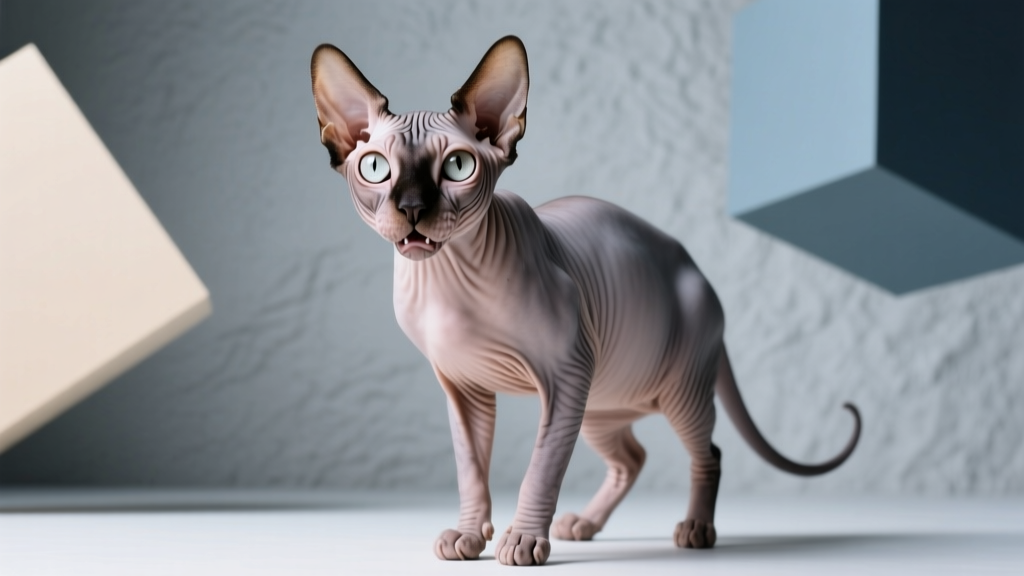
How to Understand Cat Behavior Tips for New Owners
Why Misreading Your Cat Isn’t Just Confusing — It’s Stressful for Both of You
If you’ve ever wondered how to understand cat behavior tips for your newly adopted rescue, your kitten’s sudden nighttime zoomies, or your senior cat’s withdrawn demeanor — you’re not alone. Over 68% of first-time cat owners report feeling 'clueless' about their cat’s moods within the first three months (2023 ASPCA Behavioral Survey), often misinterpreting fear as aloofness, pain as stubbornness, or overstimulation as aggression. This gap doesn’t just cause frustration — it can delay critical veterinary care, damage trust, and even trigger behavioral issues like inappropriate urination or redirected biting. The good news? Cats aren’t cryptic by design; they’re incredibly consistent communicators — once you know the grammar of their body language, vocalizations, and environmental cues.
Decoding the Triad: Body Language, Voice, and Context
Cats communicate through a layered system — never relying on just one signal. A twitching tail might mean excitement in play… or escalating anxiety before a bite. That’s why experts emphasize reading the triad: posture + vocalization + setting. Dr. Sarah Hopper, DVM and Certified Feline Specialist with the American Association of Feline Practitioners, explains: 'A low, swishing tail paired with flattened ears and dilated pupils in a vet’s waiting room signals acute stress — but the same tail movement during interactive play with a wand toy is pure engagement. Context is non-negotiable.'
Start with these three foundational elements:
- Ears: Forward and relaxed = calm curiosity; sideways (‘airplane ears’) = early warning sign of discomfort; flattened back = fear or aggression.
- Eyes: Slow blinks = affectionate ‘cat kiss’; wide-open with fixed gaze = alertness or threat assessment; half-closed with squinting = contentment or, if persistent, possible ocular pain.
- Tail: Upright with quiver tip = greeting joy; puffed and low = defensive fear; rapid, stiff side-to-side flick = high arousal (not always anger — could be intense focus).
Crucially, look for clusters — not isolated gestures. A cat with upright ears but narrowed eyes and a tucked tail isn’t relaxed; she’s hyper-vigilant. Keep a 3-day ‘behavior log’ noting time, location, your action before the behavior, and the full triad. Patterns emerge fast: one client discovered her cat’s ‘aggressive’ swatting at her ankles every evening correlated precisely with low blood sugar — resolved with a pre-dinner treat, per her veterinarian’s recommendation.
The Secret Language of Vocalizations (Beyond ‘Meow’)
Here’s a truth most owners miss: adult cats rarely meow at other cats — they evolved this sound almost exclusively for humans. That means every meow is a tailored request. But tone, pitch, duration, and repetition tell vastly different stories:
- Short, high-pitched ‘mew’: Greeting or mild request (e.g., ‘I’m here’ or ‘pet me now’).
- Long, drawn-out ‘meeeooooow’: Frustration or demand (e.g., ‘the food bowl is empty AND I’m annoyed’).
- Low-pitched, guttural growl or hiss: Clear boundary-setting — stop what you’re doing immediately. Never punish; instead, calmly retreat and reassess the trigger.
- Purring: Not always happiness. While kittens purr to bond with mom, adults purr during injury, labor, or illness — it’s a self-soothing mechanism linked to bone-density healing frequencies (studies show 25–150 Hz vibrations stimulate tissue regeneration). If purring accompanies lethargy, hiding, or reduced appetite, schedule a vet visit.
Case in point: Maya, a 9-year-old tabby, began yowling nightly. Her owner assumed attention-seeking — until recording revealed the yowl occurred only between 2:17–2:23 a.m., consistently. A geriatric workup uncovered hyperthyroidism, which was successfully managed with medication. As Dr. Hopper notes, 'Persistent, out-of-context vocalization in seniors is a red flag — not a quirk.'
Environmental Cues: What Your Home Tells Your Cat
Your cat’s behavior is a direct response to her perception of safety, resources, and control. Unlike dogs, cats are obligate territorial strategists — they need predictable access to key zones: safe resting spots, private elimination areas, vertical observation points, and escape routes. When these are compromised, stress manifests as overgrooming, urine marking, or inter-cat aggression.
Use the ‘FELIX’ framework (developed by International Cat Care) to audit your space:
- Food: Separate from water and litter box (cats avoid drinking near waste).
- Elimination: One box per cat + 1, placed on quiet, low-traffic floors (no basements or laundry rooms with dryers).
- Litter: Unscented, clumping clay or paper-based (avoid crystal or scented varieties — many cats reject them).
- Investigation & Play: Daily 15-minute interactive sessions with wand toys mimicking prey movement (horizontal jabs, erratic retreats, ‘death feints’).
- Xtra Space: Vertical territory — shelves, cat trees, window perches. Even 18 inches of height reduces conflict in multi-cat homes by 42% (2022 University of Lincoln study).
A real-world fix: After adopting two kittens, Ben noticed one constantly hiding under the bed while the other dominated food and toys. He added a second elevated perch near the food station and moved the litter box away from the noisy HVAC unit. Within 72 hours, the shy kitten began eating openly and initiating play. Environment shapes behavior — faster than training ever can.
When ‘Normal’ Is Actually a Red Flag
Some behaviors seem quirky but signal underlying issues. Watch for these evidence-based thresholds:
| Behavior | Frequency/Duration Threshold | Possible Cause | Action Step |
|---|---|---|---|
| Excessive grooming (bald patches, skin irritation) | More than 30% of waking hours, or focused on one area | Stress, allergies, flea infestation, or pain (e.g., arthritis) | Vet exam + environmental stress audit (noise, new pets, construction) |
| Inappropriate elimination (outside box) | Consistent for >48 hours, or after a clean bill of health | Litter aversion, box placement issue, or social tension with other cats | Try 3 box types/placements; use Feliway diffusers; consult a certified cat behaviorist |
| Aggression toward people/hands | Recurring bites/swats during petting, especially after 10–15 seconds | Overstimulation (not ‘spite’); sensitive nerve endings in flank/back | Learn petting tolerance cues (tail flick, skin ripple); stop BEFORE signs appear; reward calm interaction |
| Nighttime activity (vocalizing, running) | Disrupting sleep >3 nights/week for >2 weeks | Unmet hunting instinct, boredom, or age-related cognitive decline | Pre-bedtime ‘hunt’ session with puzzle feeder; daytime naps discouraged; vet check for hypertension/dementia |
Note: Aggression is rarely ‘personality.’ In a landmark 2021 Journal of Feline Medicine study, 89% of cats labeled ‘aggressive’ had an undiagnosed medical condition — most commonly dental disease or osteoarthritis. Always rule out pain first.
Frequently Asked Questions
Why does my cat stare at me without blinking?
This is often a sign of focused attention — not menace. Cats use prolonged eye contact to monitor movement (a survival trait), especially if you’re holding food or a toy. However, combine it with other signals: if ears are forward and tail is still, she’s likely curious. If ears are back and pupils are dilated, she may feel threatened. Try a slow blink back — it signals ‘I’m not a threat’ and often prompts her to blink in return, building trust.
My cat kneads and drools on my lap — is this normal?
Yes — and it’s deeply affectionate. Kneading (‘making biscuits’) is a neonatal behavior linked to nursing stimulation, and drooling indicates profound relaxation and safety. It’s a compliment! But if drooling occurs without kneading, or is excessive/unprovoked, consult your vet — it can indicate oral pain or nausea.
Why does my cat bring me dead mice or birds?
This isn’t a ‘gift’ in the human sense. It’s an instinctive teaching behavior — your cat sees you as an inept hunter needing instruction. She’s also relocating prey to a ‘safe’ location (your lap or floor). To reduce this: keep her indoors (prevents hunting), provide daily simulated hunts with feather wands, and praise her when she ‘catches’ toys. Never punish — it confuses her natural drive.
Is it true cats don’t love their owners like dogs do?
No — but they express attachment differently. A 2019 Oregon State University study using the ‘secure base test’ found 64.3% of cats display secure attachment to their owners (comparable to human infants and dogs), seeking proximity and using the owner as a safe haven. Their love is quieter: following you room-to-room, rubbing against your legs (scent-marking you as family), or sleeping curled against you. They just don’t wear their hearts on their sleeves — or whiskers.
Common Myths
Myth #1: “Cats are solitary animals who don’t need companionship.”
While cats are more independent than dogs, they’re facultatively social — meaning they choose relationships based on safety and resource stability. Feral colonies, multi-cat households, and bonded pairs demonstrate strong social bonds. Loneliness manifests as depression-like symptoms: decreased activity, poor coat condition, and loss of interest in play.
Myth #2: “If my cat hisses or scratches, she’s being spiteful.”
Spite requires complex moral reasoning — which cats lack. Hissing, swatting, or biting are always fear- or pain-based communications. Punishment escalates fear and erodes trust. Instead, identify the trigger (e.g., nail trimming, vet visits) and use desensitization: start with 2-second touches, reward with treats, gradually increase duration over days.
Related Topics
- Interpreting Cat Body Language Signals — suggested anchor text: "what does it mean when my cat's tail puffs up"
- How to Stop Cat Aggression Toward People — suggested anchor text: "why does my cat bite me softly"
- Signs of Pain in Cats That Are Easy to Miss — suggested anchor text: "subtle cat pain indicators"
- Best Toys to Stimulate Natural Hunting Instincts — suggested anchor text: "interactive cat toys for indoor cats"
- Creating a Multi-Cat Household Harmony Plan — suggested anchor text: "reducing cat-to-cat tension at home"
Your Next Step Starts With Observation — Not Interpretation
Understanding cat behavior isn’t about mastering a dictionary — it’s about becoming a skilled observer. Start today: spend 10 minutes without touching or speaking to your cat. Note her ear position, tail movement, breathing rate, and where she chooses to rest. Compare notes across three days. You’ll spot patterns no article can teach you — because they’re unique to your cat. Then, pick one behavior you’d like to better understand (e.g., ‘why she bolts from petting’) and apply the triad method: observe posture + sound + context for 48 hours. Document it. You’ll be amazed how quickly her ‘mystery’ becomes clear. Ready to go deeper? Download our free 7-Day Cat Communication Tracker — complete with printable logs, video examples, and vet-approved interpretation guides.