Cat Paw Pushing the Ball Across the Floor: Play
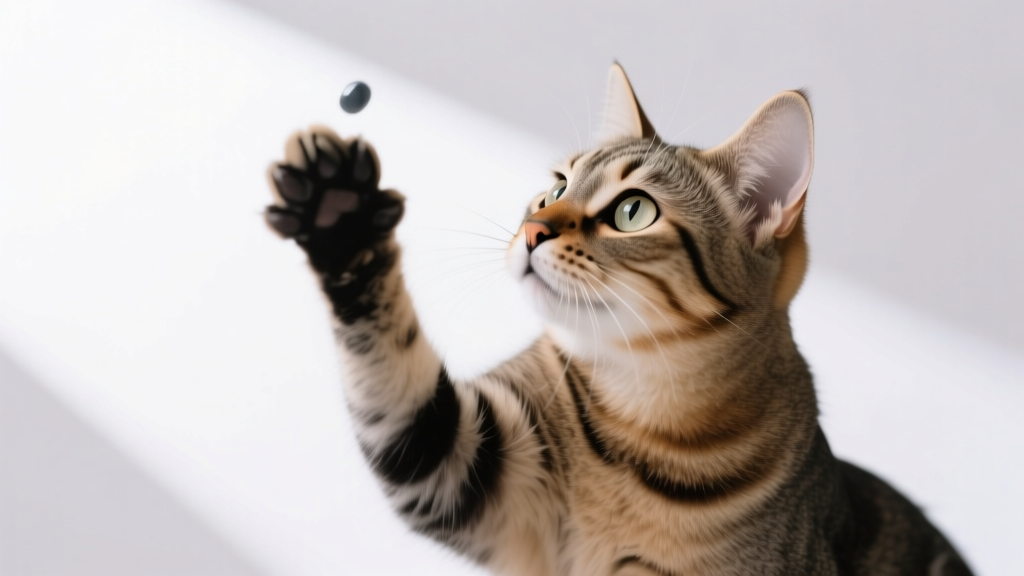
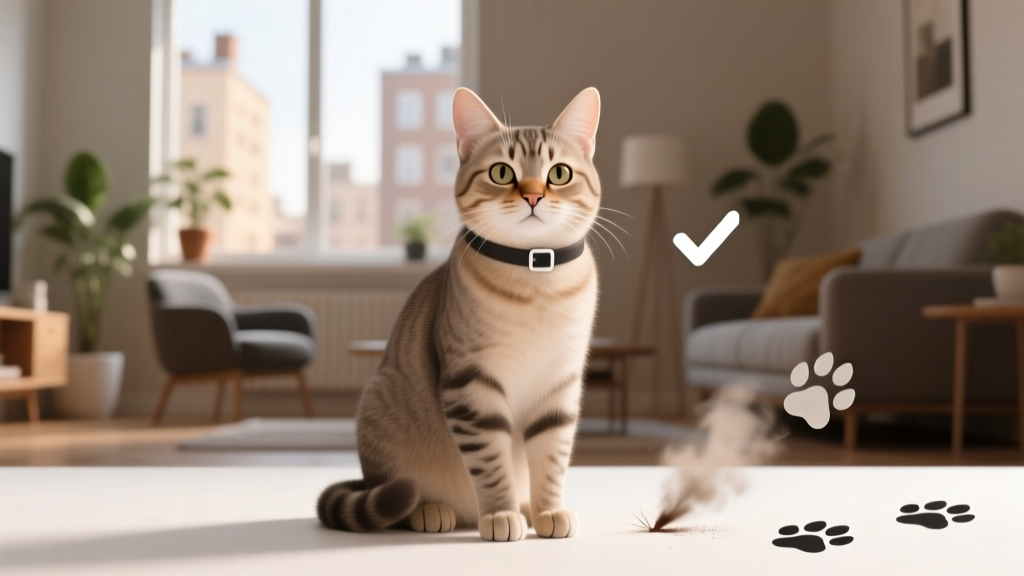
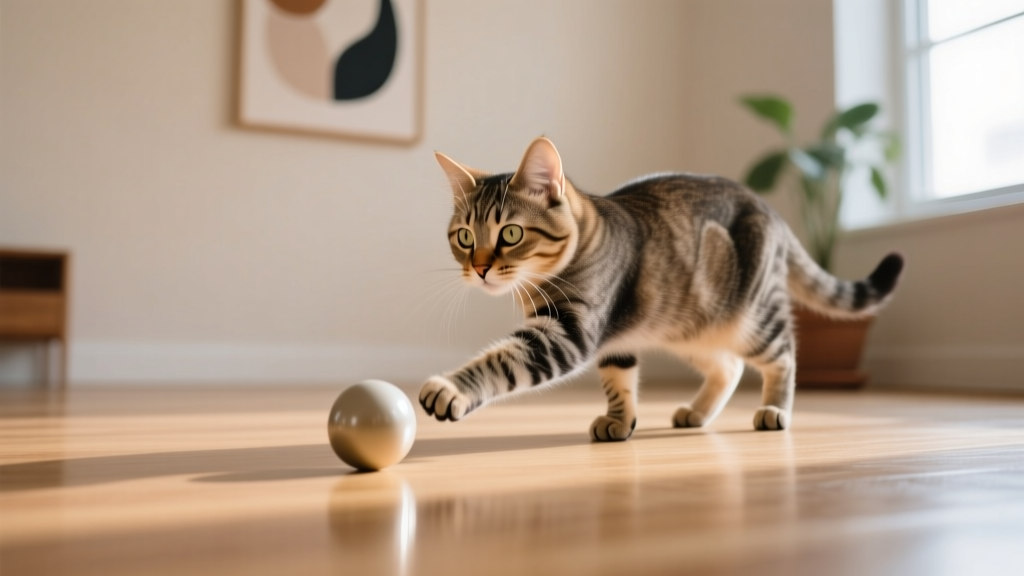
You’re on the couch, half-watching a show, when you hear it: tap… tap… skitterrrrr. You glance over and there’s your cat—laser-focused—nudging a little ball across the hardwood like they’re practicing for the feline Olympics. They pause. Stare. Then give it another perfectly measured shove so it zips under the coffee table. Now they’re belly-low, tail twitching, creeping after it as if it’s a tiny, dangerous beast.
If you’ve ever wondered why your cat does this (and why it’s oddly mesmerizing to watch), you’re looking at one of the most classic, healthy expressions of feline play. It’s adorable, yes—but it’s also deeply rooted in how cats are built to hunt, think, and feel safe in their environment.
Why Cats Push Balls: The Evolutionary Backstory
Even the most pampered house cat is a small predator wearing a plush coat. Cats evolved as solitary hunters who survive by noticing small movements, stalking, pouncing, and delivering precise paw strikes. That little ball rolling across the floor taps into the same circuitry that would help a wild cat catch a mouse darting through grass.
Here’s what paw-pushing a ball mimics in “real life” hunting terms:
- Testing prey: Many cats will bat or tap prey to gauge its movement and reduce risk. A mouse can bite; a ball can’t, but the instinct remains.
- Triggering movement: Cats are movement-oriented hunters. When they nudge the ball and it rolls, it “comes alive.”
- Practice hunting sequences: Stalk → pounce → bat → chase. Play lets them rehearse these behaviors in a safe way.
- Developing coordination: Kittens refine balance and timing through play. Adults keep those skills sharp.
In short: your cat isn’t “randomly playing.” They’re running a mini hunting simulation—complete with strategy, patience, and dramatic pauses for effect.
A Breakdown of the Behavior: Different Contexts You Might See
“Paw pushing the ball across the floor” can look simple, but cats do it in a bunch of distinct styles. The details can tell you what kind of play your cat is in the mood for.
1) The Gentle Tap-and-Watch
Your cat lightly touches the ball, then freezes to observe how it rolls. This is the analytical hunter. They’re studying movement and cause-and-effect. Some cats repeat this for ages because the anticipation is part of the fun.
2) The Full-Speed Soccer Match
Some cats go all in—rapid-fire swats, sprinting after the ball, ricocheting it off furniture like they’re aiming for a goal. This is high-arousal play and often happens during “zoomie hours” (commonly dawn and dusk), when feline energy naturally spikes.
3) The Under-the-Furniture Strategy
Your cat deliberately bats the ball under the couch, then reaches in to “fish” for it. This isn’t always an accident. For many cats, it’s the best part: the ball becomes hidden prey. The uncertainty—Where did it go? Will it move again?—creates a thrilling hunt puzzle.
4) The One-Paw Precision Move
Some cats use a single paw like a tiny hand, pushing the ball in controlled steps. This can be a sign of confidence and comfort. It’s also common in cats that enjoy problem-solving and object manipulation.
5) The “Carry, Drop, Bat” Routine
A few cats pick the ball up in their mouth, drop it, then bat it again. That’s a multi-sensory play style—combining mouth, paws, and movement. It can resemble how cats handle prey and can also be a sign your cat really enjoys interactive games.
What It Means About Your Cat’s Mood and Feelings
This behavior is most often a green flag: a relaxed cat is willing to play. But the nuances matter.
- Curious and mentally engaged: Slow, deliberate paw pushes with lots of staring indicate your cat is in “thinking mode.”
- Happy and energized: Fast batting, chasing, and bouncy body language typically means your cat is feeling good and safe enough to burn energy.
- Seeking connection: If your cat pushes the ball toward you, pauses, and looks at you, that’s often a social invitation—basically “your turn.”
- Self-soothing or stress release: Gentle repetitive play can help some cats regulate emotions, especially in multi-cat households or after a change (new furniture, visitors, schedule shifts).
- Bored or under-stimulated: If ball play is constant and frantic—especially with meowing, restlessness, or pestering—you may be seeing unmet enrichment needs.
Play is emotional communication. A cat who plays is showing you they have enough security and bandwidth to “waste energy” on practice hunting.
Related Behaviors You Might Also Notice
Ball-pushing rarely travels alone. If your cat does this, you might also see:
- The sideways crab-walk hop: A playful “I’m fierce!” display, common in kittens and spirited adults.
- Chirping or trilling while chasing: A hunting excitement sound, often heard when tracking fast movement.
- Butt wiggles before a pounce: Aiming behavior—your cat is calibrating distance and timing.
- Pouncing on shadows or dust specks: Movement triggers play, even if the “target” is imaginary.
- Bringing toys into a room with you: Some cats relocate “prey” to a safe area or to recruit you as a play partner.
When It’s Normal vs. When It Might Be a Concern
Most of the time, paw-pushing a ball is healthy, normal play. Still, there are a few situations where it’s worth paying closer attention.
Completely Normal
- Play happens in bursts (a few minutes to 20 minutes), then your cat rests.
- Your cat’s body looks loose and bouncy, ears mostly forward, tail expressive but not rigid.
- Your cat can be redirected to other toys or activities.
- Appetite, litter box habits, and sleep seem normal.
Potential Concerns
- Obsessive play that’s hard to interrupt: If your cat seems unable to settle, especially at night, consider boredom, stress, or a need for more structured play.
- Sudden change in play style: A cat who used to play but stops (or becomes unusually frantic) may be experiencing pain, anxiety, or illness.
- Slipping, falling, or hesitating to move: Could indicate arthritis, injury, or traction problems on slick floors.
- Chewing or eating pieces of toys: If your cat bites off parts of balls or soft toys and swallows them, that’s a safety issue—switch to sturdier toys and talk to your vet.
- Vocalizing in distress or aggression signals: Flattened ears, growling, stiff posture, dilated pupils that stay wide—these can mean over-arousal or fear.
If anything feels “off,” trust your instincts. Cats are masters of subtlety, and behavior changes can be early clues that something needs attention.
How to Respond (and How to Encourage Healthy Play)
You don’t need to be a cat toy engineer to support this behavior. A few small tweaks can make play safer, more satisfying, and more enriching.
Choose Better “Ball” Experiences
- Try different textures: Some cats love crinkle balls; others prefer felt, foam, or rubbery bounce.
- Use motion-friendly options: Balls with a slight rattle or irregular bounce can mimic prey movement.
- Go bigger if your cat is a chewer: A ball that can’t fit in the mouth reduces choking and chewing risks.
Create a “Play Zone” That Works
- Add traction: If you have slick floors, place a runner rug so your cat can sprint and pivot without wiping out.
- Open a safe lane: Clear breakables and let your cat have a hallway “runway.”
- Use furniture strategically: Cardboard boxes or tunnels make the ball game more hunt-like (and more fun).
Join In—The Way Cats Prefer
Some cats want you to participate, but not by grabbing them or hovering. Try this:
- Gently roll the ball away from your cat (like “prey escaping”).
- Pause frequently—cats love the suspense.
- End play on a “win.” Let your cat trap the ball, then offer a small treat or a meal to complete the hunt cycle: hunt → catch → eat → groom → sleep.
Rotate Toys to Keep Them “Alive”
If the ball is always available, it can become background noise. Put it away for a few days, then reintroduce it. Many cats react as if it’s brand new.
Fun Facts and Research Tidbits
- Cats are wired to respond to small, erratic movement. That’s why a rolling ball can be more exciting than a stationary toy.
- Play is practice, not just entertainment. Studies of animal behavior consistently show play helps refine motor skills and problem-solving—especially in young animals.
- Your cat’s paws are sensory tools. They contain sensitive receptors that help cats “read” objects through touch, not just sight.
- Dawn and dusk play has a biological reason. Cats are crepuscular hunters by nature, often most active at those times.
FAQ
1) Why does my cat push the ball and then stare at it?
That pause is part of the hunting sequence. Your cat is watching for movement, predicting where the ball will go, and building anticipation. For many cats, the “wait” is as rewarding as the chase.
2) My cat only plays with the ball at night. Is that normal?
It can be. Cats often get a natural energy surge in the evening or early morning. If the nighttime play is disruptive, add an intense play session in the evening followed by a meal to encourage sleep afterward.
3) Why does my cat always knock the ball under the couch?
Because it turns the game into a hunt puzzle. Hidden “prey” is exciting. If it becomes frustrating (for you or your cat), block the deepest areas with a draft stopper or provide a toy that can’t fit under furniture.
4) Does ball play mean my cat is bored?
Not necessarily—ball play is normal enrichment. But if your cat seems restless, plays compulsively, or demands constant attention, boredom may be part of the picture. Increase structured play, add climbing spaces, and rotate toys.
5) Should I worry if my cat growls while playing with a ball?
Some cats growl when they’re very excited or “possessive” of a toy, especially in multi-pet homes. Watch the body language: loose posture is fine; stiff posture, pinned ears, and intense guarding may mean your cat feels insecure. Provide separate play spaces if needed.
6) What’s the best type of ball for cats?
The safest choice is a sturdy, appropriately sized ball that can’t be swallowed or easily shredded. Many cats love lightweight balls that roll easily, but chewers do better with tougher materials and larger sizes.
One Last Thought
When your cat paw-pushes a ball across the floor, you’re watching instinct meet imagination—hunting skills turned into a living-room sport. It’s one of the clearest signs your cat feels safe enough to play, curious enough to explore, and energetic enough to share their world with you (even if their “world” currently includes a ball wedged under the TV stand).
Does your cat have a signature move—soccer star, couch-diving hunter, or slow-motion strategist? Share your funniest ball-chasing stories with the Cat Lovers Base community at catloversbase.com.