Cat Paw Bumping the Treat Drawer: Demand Behavior
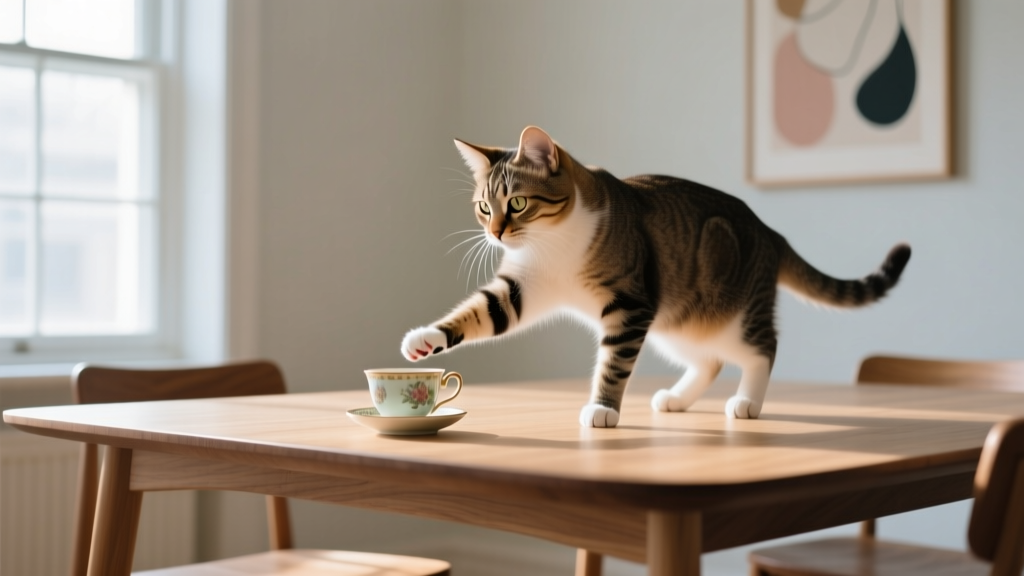
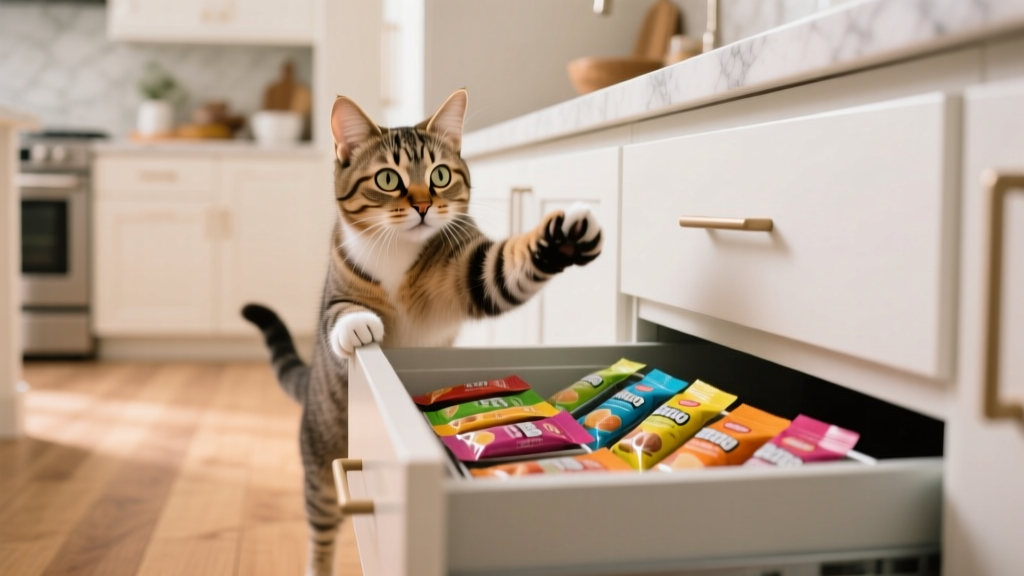
You’re in the kitchen, minding your own business, when you hear it: thunk… thunk… thunk. You turn around and there’s your cat, sitting like a tiny supervisor in front of the treat drawer. One paw reaches out, taps the cabinet, then retracts with perfect innocence. Tap. Pause. Tap again. Your cat looks at you. Looks at the drawer. Looks back at you, as if to say, “We both know what lives in there.”
If this sounds familiar, you’re not alone. Paw bumping (or pawing, tapping, knocking) at the treat drawer is one of the most common “demand behaviors” cat guardians report—and it’s a fascinating mix of instinct, learning, and bold feline communication. The good news: it’s usually normal, even endearing. The tricky part: it’s also extremely effective, and cats are nothing if not excellent at repeating what works.
Why Cats Do This: The Science and the “Cat Logic”
Cats aren’t trying to be rude (most of the time). Paw bumping is a form of goal-directed behavior: your cat has learned that a certain action leads to a certain outcome—treats, attention, or both.
From a behavioral science perspective, it’s often driven by operant conditioning. Translation: behaviors that get rewarded tend to happen more. If, even once, you opened the drawer after your cat tapped it—and your cat got a treat or even a big reaction (“Oh my gosh, are you hungry?”)—your cat’s brain stored that as a successful strategy.
There’s also an evolutionary angle. Cats are natural problem-solvers built for hunting: observe, approach, manipulate with paws, and repeat. Those nimble paws aren’t just for making biscuits—they’re for testing objects, pulling prey closer, and exploring. A cabinet door is basically a giant interactive puzzle in your cat’s world. Your cat may be thinking:
- “Food comes from here.” (Location memory is strong in cats.)
- “My human responds when I do this.” (Social learning in action.)
- “I can influence my environment.” (Control feels good—yes, even for cats.)
And don’t underestimate routine. Cats are brilliant at time-based patterns. If treats usually happen after dinner, at 9 p.m., or when you make tea, your cat may be running a scheduled reminder system—complete with tactile sound effects.
A Detailed Breakdown: Different Contexts, Different Meanings
Not all paw bumps are the same. The details—timing, intensity, body posture—help you interpret what’s happening.
1) The Polite Tap
What it looks like: One soft tap, a pause, a glance at you. No claws. Quiet body language.
What it often means: “Hey, just checking if treats are available.” This is the cat equivalent of clearing one’s throat politely.
2) The Rhythmic Knock (a.k.a. The Metronome)
What it looks like: Tap-tap-tap at regular intervals. Your cat may sit very still between taps, like a tiny percussionist.
What it often means: “I’m persistent, and I have time.” This usually shows a cat who has learned that repeated requests eventually work—especially if you sometimes give in.
3) The Escalation Tap (Claws Included)
What it looks like: Pawing turns into scraping, hooks under the drawer edge, or attempts to open it.
What it often means: Higher arousal: excitement, impatience, or a stronger history of success. It can also mean your cat is under-stimulated and has chosen the drawer as today’s project.
4) The “You Forgot Something” Tap at a Specific Time
What it looks like: Paw bumping starts at the same time every day, often paired with staring or leading you to the kitchen.
What it often means: Routine-based expectation. Cats are excellent at learning household schedules—sometimes better than we are.
5) The Performative Tap (Audience Required)
What it looks like: Your cat only taps when you’re watching. If you leave the room, the tapping stops.
What it often means: This is communication, not just exploration. Your cat wants you involved—either for treats, attention, or the fun of making you respond.
What It Says About Your Cat’s Mood and Feelings
Paw bumping the treat drawer is usually a sign of a cat who feels comfortable enough to make requests. That’s not a small thing. In many cases it reflects:
- Confidence: Your cat isn’t hiding. They’re making a point.
- Anticipation and excitement: Treats are highly motivating. The kitchen becomes a “reward zone.”
- Trust: Your cat believes you’ll respond, and that the interaction is safe.
- Mild frustration: Especially if the tapping escalates. This doesn’t mean your cat is angry—it means they’re emotionally invested.
Watch the whole cat, not just the paw. A relaxed tail, neutral ears, and soft body indicate calm asking. A twitching tail, pinned ears, or sudden darting may point to over-arousal or stress.
Related Behaviors You Might Also Notice
Cats often build a “menu” of demand behaviors. If paw bumping works, you may see a whole repertoire develop:
- Sitting by the treat drawer like a statue (silent pressure)
- Meowing that gets louder or more specific (some cats develop a “treat voice”)
- Following you closely into the kitchen and weaving around your legs
- Staring at the cabinet, then at you (the classic “I’m not saying anything, I’m just looking” move)
- Leading behavior: walking a few steps, looking back, walking again
- Counter-jumping near the treat area (especially if treats are stored up high)
These are all ways cats test which communication channel gets the fastest response.
When Paw Bumping Is Normal (and When to Pay Attention)
Usually normal:
- Your cat does it briefly, mainly around treat times
- The behavior is playful, light, and stops when you redirect
- Your cat’s appetite, weight, and energy are otherwise normal
- No signs of anxiety (hiding, over-grooming, aggression)
Potential concern:
- Sudden increase in food-seeking behavior along with weight loss, ravenous hunger, or restlessness (possible medical issues like hyperthyroidism, diabetes, parasites—worth a vet check)
- Compulsive or frantic pawing that seems difficult to interrupt, especially if paired with pacing or vocal distress
- Resource guarding or aggression around the food area
- Destructive scratching that’s new and intense (may signal stress, boredom, or unmet needs)
If you’re ever thinking, “This feels different from my cat,” trust that instinct and consult your veterinarian first, especially if hunger and behavior changes show up together.
How to Respond (Without Creating a Tiny Treat Tyrant)
You have two goals: keep communication friendly and prevent accidental training of constant demands. You can do both.
1) Put Treats on a Predictable Schedule
If treats are always random, your cat will keep “checking.” If treats happen after dinner or after playtime, your cat can relax into a pattern. Consistency reduces repeated asking.
2) Reward Calm, Not Knocking
If you give treats while your cat is tapping, you’re reinforcing the tapping. Instead:
- Wait for a brief pause (even 2–3 seconds of quiet)
- Then reward calmly
This teaches: “Stillness works.” It’s subtle, but powerful.
3) Teach an Alternative Request
If your cat loves communicating, give them a more convenient option. Ideas:
- Sit on a mat in the kitchen for treats
- Touch a target (like a spoon or your hand) instead of the drawer
- Ring a bell only if you’re truly ready to commit to training (bells can become… enthusiastic)
4) Add Enrichment Before Treat Time
Some drawer-tapping is less “I’m starving” and more “I need something to do.” Try:
- 5–10 minutes of interactive play (wand toy, chase, pounce)
- A small food puzzle or treat ball
- Scatter feeding (a few pieces tossed across the floor for foraging)
5) Manage the Environment If Needed
If the cabinet is getting scratched, protect it while you train new habits:
- Use a clear protective film on the cabinet front
- Move treats to a less “knockable” location temporarily
- Provide a nearby scratching post or pad to redirect the paw energy
6) Keep Your Response Low-Drama
Cats can find big reactions rewarding. If you laugh, scold, or narrate an entire speech about how “we just had treats,” your cat may interpret that as attention payoff. Aim for calm, brief responses and reward the behavior you want more of.
Fun Facts and Research Tidbits
- Cats are excellent at learning human routines. Studies on animal cognition show many species (cats included) pick up on time-based patterns and environmental cues—like the sound of a drawer or the clink of a treat jar.
- “Demand behavior” isn’t just about food. Cats use learned gestures to request play, door-opening, and attention. The treat drawer just happens to be a very reliable “request station.”
- Paws are information tools. Cats often prefer paw exploration for novel objects because it’s safer than putting their face close—useful for a cautious predator who still wants to investigate.
- Intermittent rewards make behavior stronger. If you only give in sometimes, the tapping can become more persistent—similar to how variable rewards keep humans pulling slot machine levers. (Cats would absolutely run casinos if they had thumbs.)
FAQ
Why does my cat paw at the treat drawer and then look at me?
Your cat is combining an action (tapping the “treat location”) with social communication (eye contact). It’s a clear, learned request: “I want the thing that comes from here, and I want you to make it happen.”
Is my cat being “dominant” or trying to boss me around?
Usually no. This is better understood as reinforced communication, not dominance. Your cat has learned that certain behaviors influence you, and they’re using that knowledge efficiently.
How do I stop the pawing without ignoring my cat?
Shift what you reward. Don’t reward pawing; reward a pause or a calmer alternative like sitting on a mat. You can still be responsive—just be responsive to the behavior you want to see more often.
My cat does this constantly. Are they actually hungry?
Maybe, but constant food-seeking can also be boredom, habit, or anxiety. Check meal portions and treat intake first. If the behavior is new or extreme—especially with weight loss, increased thirst, or restlessness—schedule a veterinary check.
Should I ever encourage paw bumping because it’s cute?
You can, as long as you’re okay with it becoming a regular routine. If you love it, consider putting it on cue (for example, only “treat taps” after playtime). That way it stays a fun ritual rather than an all-day demand.
Why does my cat paw the drawer even when it’s empty?
Cats rely on location memory and habit. If treats used to come from that spot, your cat may keep trying. Also, the drawer itself can become a “trigger” for excitement—like how walking near a coffee shop can make you crave coffee.
If your cat has a signature treat-drawer routine—gentle taps, dramatic knocking, or a full kitchen concert—share your story with the Cat Lovers Base community at catloversbase.com. The only thing better than understanding cat behavior is comparing notes with other people who are also being trained by a small furry genius.