Cat Loafing Position: What It Reveals About Mood
You’re walking past your cat and there it is again: the perfect little “bread loaf.” Paws tucked neatly underneath, tail wrapped close (or hidden entirely), eyes half-lidded like they’re judging your productivity from a cozy cloud. You pause because it’s adorable… but also because it feels like your cat is saying something. Are they content? Guarded? Cold? Plotting?
The loafing position is one of those classic cat postures that looks simple but can mean a variety of things depending on the details. Think of it as your cat’s version of a comfy “idle mode”—and if you learn to read the fine print (ears, eyes, location, and timing), you’ll get a surprisingly clear picture of your cat’s mood.
Why Cats Loaf: The Science and the Survival Story
Loafing—tucking paws beneath the body and resting in a compact shape—has deep roots in feline evolution. Cats are both predators and potential prey. Even our couch-loving housecats carry the same instincts as their wild relatives, and their bodies are built to balance comfort with readiness.
Here’s what loafing does for a cat from a biological and survival standpoint:
- Conserves heat: Tucking paws under reduces exposed surface area. It’s a smart way to stay warm, especially on cool floors or near breezy windows.
- Protects vulnerable parts: Paws and belly are relatively sensitive and important. Folding in can feel safer.
- Creates a “ready to move” posture: Unlike full-on sprawled sleeping, a loaf can shift into action quickly. Your cat can go from loaf to sprint in a heartbeat if needed (for example: a sudden noise, a rival cat outside, or you opening a treat bag).
- Saves energy while staying alert: Cats nap and rest frequently, but they also monitor their environment. Loafing supports calm vigilance.
So loafing isn’t just cute. It’s a strategic, energy-efficient way to rest while keeping options open.
The Many Types of Loaf (And Where You’ll See Them)
Not all loaves are created equal. The key to understanding your cat’s mood is to look at the “extras” that come with the loaf: head position, eyes, ears, tail, muscle tension, and location.
1) The Classic Relaxed Loaf
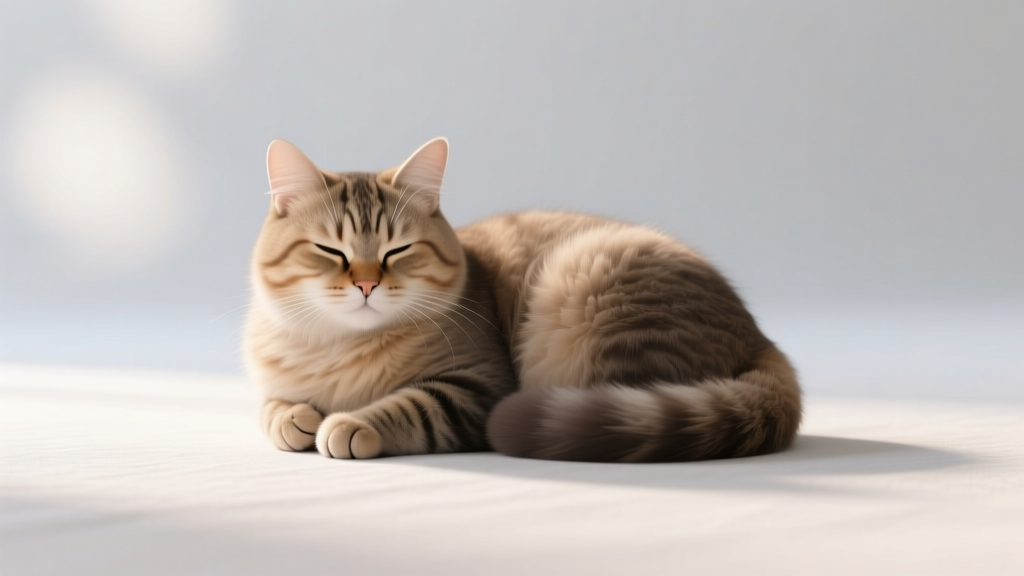
What it looks like: Paws fully tucked, body soft and rounded, whiskers neutral, ears forward or gently angled, eyes half-closed or slow blinking.
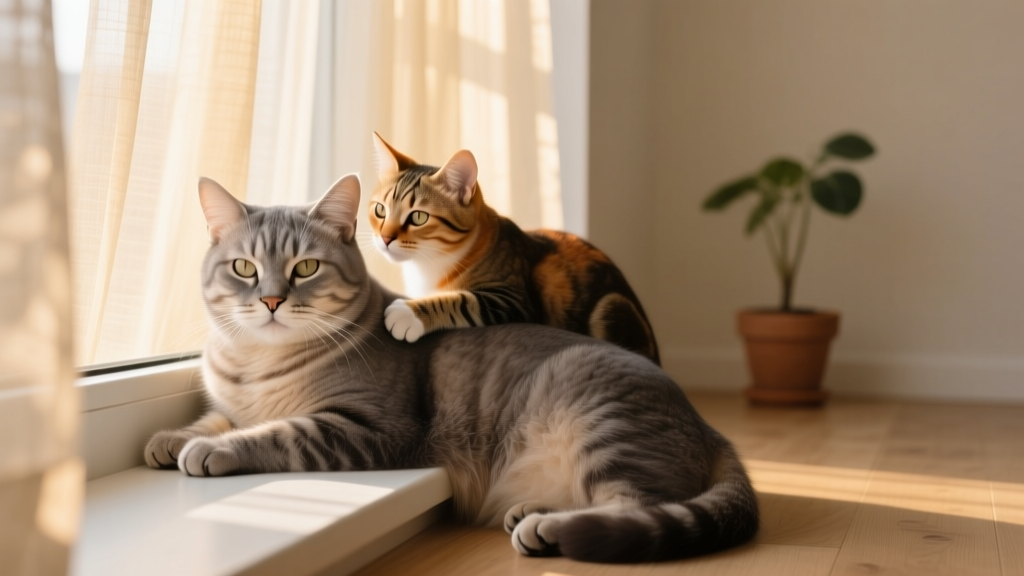
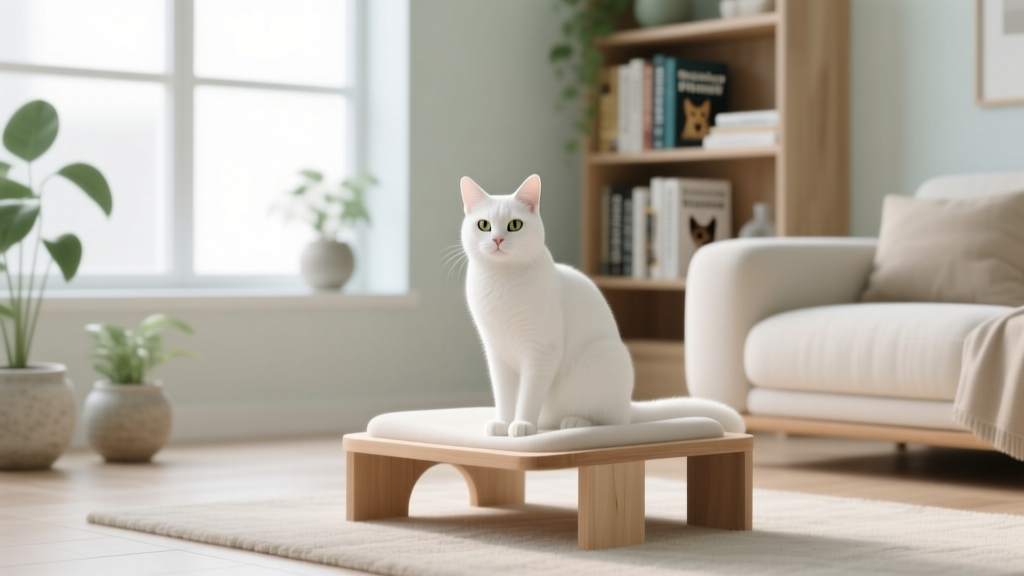
Where it happens: Favorite chair, sunny patch, your bed, a familiar cat tree platform.
What’s going on: This is the “I’m safe here” loaf. Your cat is comfortable, settled, and mildly alert in a relaxed way—like someone lounging with a book they may or may not actually read.
2) The Tight “Meatloaf”
What it looks like: Super compact, paws tucked hard, shoulders slightly raised, tail wrapped tight, eyes open wider, ears swiveling frequently.
Where it happens: In the middle of a room, near a doorway, near unfamiliar visitors, or during household changes (moving furniture, new pet, loud repairs).
What’s going on: This can be a guarded loaf. The cat is still resting, but there’s tension—more “I’m staying put, but I’m ready” than “I’m melting into the couch.”
3) The One-Paw-Out “Half-Loaf”
What it looks like: One paw (or both) slightly visible, as if your cat couldn’t commit to the full tuck.
Where it happens: Near play areas, when you’re cooking, before meals, when birds are at the window.
What’s going on: This often signals interest or anticipation. Your cat is comfortable but “on standby.” It’s the feline equivalent of having your shoes on because you might leave soon.
4) The Window-Guard Loaf
What it looks like: Loafed up high, head moving in tiny tracking motions, ears rotating like radar dishes.
Where it happens: Window sills, cat trees, the back of the sofa—any lookout spot.
What’s going on: This is “monitoring duty.” Your cat is entertained, alert, and engaged. Not stressed necessarily—more like they’re watching their favorite reality show: Squirrel TV.
5) The “Heat-Seeking” Loaf
What it looks like: Deep tuck, body pressed against warm surfaces, sometimes with paws hidden and eyes fully closed.
Where it happens: On laptops, near radiators, on warm laundry, sunbeams.
What’s going on: Comfort and thermoregulation. This loaf is more about coziness than vigilance.
What Loafing Says About Your Cat’s Mood
Loafing is generally a positive sign: your cat feels safe enough to settle. The emotional “flavor,” though, depends on body language details.
- Contentment: Soft body, slow blinks, relaxed ears. This is a cat who’s comfortable in their environment and with you.
- Calm vigilance: Eyes open but not wide, ears occasionally swiveling, head turning smoothly. Your cat is relaxed but curious.
- Uncertainty or mild stress: Tighter posture, fewer blinks, ears angled sideways, tail wrapped rigidly. Something in the environment may feel unpredictable.
- Anticipation/excitement: Half-loaf with a paw out, more frequent head movements, focused gaze (often toward the kitchen or toy basket).
- Seeking warmth and security: Deep tuck, eyes closed, tucked in a snug spot. This can be “I’m cozy” or “I want to be left alone right now.”
One of the most useful questions you can ask is: Does the loaf look “soft” or “compressed”? Soft loaf usually means emotional ease. Compressed loaf can mean your cat is bracing—sometimes subtle, but real.
Related Behaviors You Might Notice
Loafing rarely happens in isolation. Watch for these companion signals:
- Slow blinking: Often pairs with a relaxed loaf and signals friendliness and comfort.
- Tail tip movement: A gently twitching tail tip can mean interest; a thumpy tail can mean irritation.
- Ear swivels: Normal in window-guard loafing; more rapid swiveling can mean heightened alertness.
- Kneading before loafing: A “settling ritual” that suggests comfort and positive associations with the spot.
- Purring: Usually contentment, but remember cats can also purr when self-soothing (for example, during stress or discomfort). Context matters.
- Sudden grooming: Some cats groom to relax; others do it as a displacement behavior when unsure.
When Loafing Is Normal… and When It Might Be a Concern
Most loafing is perfectly normal and a sign your cat feels secure. Still, there are situations where loafing can be worth a closer look.
Normal loafing signs
- Cat alternates loafing with other normal behaviors: playing, grooming, exploring, eating.
- Loafing happens in favorite spots and during typical rest times.
- Body language looks loose and calm.
Potential concern signs
- “Loafing” with a hunched look: Back arched higher than usual, head lower, tense shoulders. This can signal pain.
- Reluctance to move: If your cat stays loafed and seems stiff, hides more, or reacts when touched.
- Change in appetite or litter box habits: A cat may sit in a tight loaf when nauseous, constipated, or uncomfortable.
- Breathing changes: Open-mouth breathing, rapid breathing, or visible effort is urgent—contact a vet promptly.
- Loafing in unusual places: Like the litter box, near water bowls only, or isolated corners when they usually socialize.
If you’re unsure, take a quick video of the posture and behavior (including walking, if possible). Subtle changes can be easier for a veterinarian to assess with visual context.
How to Respond (and Encourage the Good Kind of Loaf)
If your cat is loafing, you don’t need to “do” anything—often the best response is simply respecting that moment. But you can support loafing as a healthy comfort behavior.
- Offer warm, safe resting spots: A fleece blanket, a heated cat bed (low, pet-safe setting), or a sunny perch can invite relaxed loafing.
- Protect the loaf from interruptions: If your cat is loafed and calm, avoid sudden grabs or forced cuddles. Let them choose contact.
- Use slow blinks: If your cat’s eyes are half-closed, try a slow blink and look away. Many cats “blink back,” reinforcing trust.
- Support choice and control: Cats loaf more comfortably when they feel they can leave. Make sure resting areas have multiple exit routes (especially in multi-pet homes).
- Lower stress during changes: Visitors, renovations, and new pets can turn soft loafs into tight loafs. Provide quiet zones, familiar scents, and predictable routines.
- Reward calm proximity: If your cat loafs near you, you can softly praise them or gently toss a treat nearby. It builds positive associations without demanding interaction.
Fun Facts and Research-Inspired Nuggets
- The loaf is an energy strategy: Cats naturally cycle between short bursts of activity and longer rest. Loafing helps them rest without fully “checking out.”
- Body compactness is a temperature trick: Many animals tuck limbs in to conserve warmth. Your cat is basically doing a living version of “bundling up.”
- Loafing can be social: Some cats loaf near their favorite person as a low-pressure way to share space. It’s companionship without commitment—very cat.
- The “perfect loaf” varies by personality: Confident cats are more likely to loaf in open areas; cautious cats prefer loafing with back coverage (against furniture or in semi-enclosed spots).
FAQ: Common Questions About Cat Loafing
Is loafing the same as sleeping?
Not always. Loafing can be a light-rest posture where your cat is relaxed but still aware of what’s going on. If their eyes are fully closed and their body is very loose, they may drift into sleep—but many cats loaf while “half listening” to everything.
Why does my cat loaf with one paw out?
Often it’s anticipation or mild readiness—your cat is comfortable but interested in something (food, play, window activity). It can also be a temperature choice: one paw out may help them regulate warmth.
My cat loafs near me but doesn’t want to be petted. Is that normal?
Completely normal. Loafing nearby can be a sign of trust and social bonding. Some cats prefer “together time” without touch. Try slow blinking or speaking softly instead of reaching in.
Why does my cat loaf in the middle of the hallway?
Hallways are high-traffic “information highways.” Some cats loaf there to monitor the household, control territory, or simply because it’s a cool surface. If it’s new behavior paired with guarding or tension, consider stress or environmental changes.
Can loafing mean my cat is sick?
Loafing alone usually isn’t a red flag. But a tight, hunched loaf combined with hiding, reduced appetite, litter box changes, or sensitivity to touch can indicate discomfort. When in doubt, check with your veterinarian—cats are experts at subtlety.
Why does my cat loaf on my laptop or clean laundry?
Warmth, soft texture, and your scent. Your laptop is a heated pad with bonus “you smell like my person” comfort. Laundry is similar—plus it’s an excellent way to redecorate your outfits with fur.
Next time you spot that perfect loaf, take a second to read the whole picture: soft or tense, eyes slow or sharp, ears relaxed or scanning, location cozy or strategic. It’s one of the simplest ways to get better at understanding how your cat feels without them saying a word.
Have a champion loafer at home—or a cat who makes the weirdest “half-loaf, half-sphinx” combo you’ve ever seen? Share your cat’s loafing stories (and what you’ve learned from them) over at catloversbase.com. We’d love to hear about your household’s most talented little bread bun.