Cat Ear Swivel Radar: Independent Ear Movement Meaning
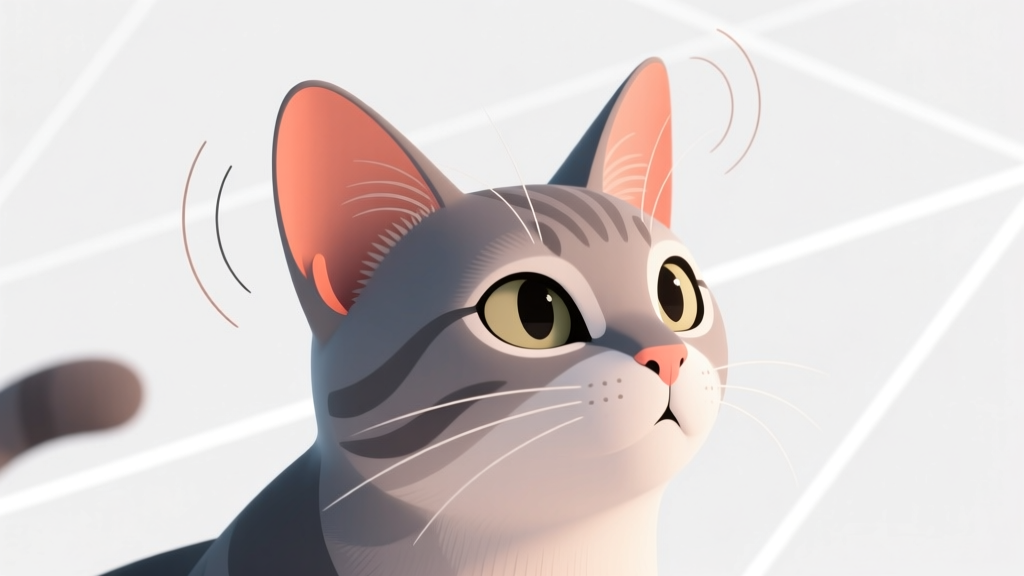
You’re on the couch, the house is “quiet,” and your cat is loafed up like a buttery croissant. Then it happens: one ear rotates toward the hallway, the other ear swivels toward the window. Your cat’s eyes stay half-closed, but their ears are working overtime—two little satellite dishes tracking invisible drama.
If you’ve ever wondered, “Is my cat annoyed? Curious? Hearing ghosts?” you’re not alone. Independent ear movement is one of the most normal, useful, and strangely adorable feline behaviors—and it’s packed with information about what your cat is sensing and how they’re feeling.
Why Cats Do the “Ear Swivel Radar” (Science + Evolution)
Cats are small predators who also evolved as potential prey. That combination creates an animal that’s exquisitely tuned to sound. Long before your cat ever had a cozy bed or a treat puzzle, their survival depended on catching tiny auditory details: a mouse rustling in grass, a bird fluttering, or a larger animal approaching.
Here’s the cool part: a cat’s outer ear (the pinna) isn’t just a passive flap. It’s a mobile sound funnel controlled by a whole team of muscles—around 30 muscles per ear. Those muscles allow each ear to rotate and tilt with impressive range, helping your cat pinpoint sound direction and distance. By moving each ear independently, your cat can “sample” two different sound sources at once, compare timing and volume differences, and build a clearer mental map of what’s happening around them.
In human terms, it’s like having two independent microphones that can turn toward different speakers in a crowded room—while your face stays pointed at your snacks.
What Ear Swiveling Looks Like in Different Contexts
Not all ear swivels mean the same thing. The context—what else is happening in your cat’s body, face, and environment—matters. Here are the most common scenarios cat owners recognize.
1) “I’m resting… but I’m on duty.”
Scenario: Your cat is napping on the sofa. The ears occasionally rotate, like they’re scanning, while the body stays loose.
What it means: This is relaxed alertness. Cats often doze in a state that’s not fully “off.” Ear swiveling here is normal monitoring—your cat feels safe enough to rest but still wants updates on household news (fridge doors, footfalls, the suspicious sound of a treat bag).
2) The “Two-Channel” Listen: one ear on you, one ear on the world
Scenario: You’re talking on the phone, and your cat’s left ear aims at you while the right ear keeps tracking the window.
What it means: Your cat is splitting attention. They may be curious about your voice while also tracking environmental sounds. This is especially common in social cats who want to stay connected but also don’t want to miss anything.
3) The hunting or play “lock-on”
Scenario: Your cat is stalking a wand toy. The ears swivel, then suddenly both point forward as the body tightens.
What it means: Ear swiveling can be part of targeting. Your cat is gathering sound information—tiny squeaks, the swish of feathers, your hand movement—then committing to a direction once the “prey” is located.
4) The “What was THAT?” startle scan
Scenario: A pot clinks in the kitchen, or a door closes. Your cat’s ears snap around quickly, possibly in different directions, and the head follows a second later.
What it means: Quick ear rotation is a startle-orientation response. It’s your cat’s rapid threat/interest assessment system. If your cat then relaxes and resumes what they were doing, it was simply information gathering.
5) The social tension ear swivel
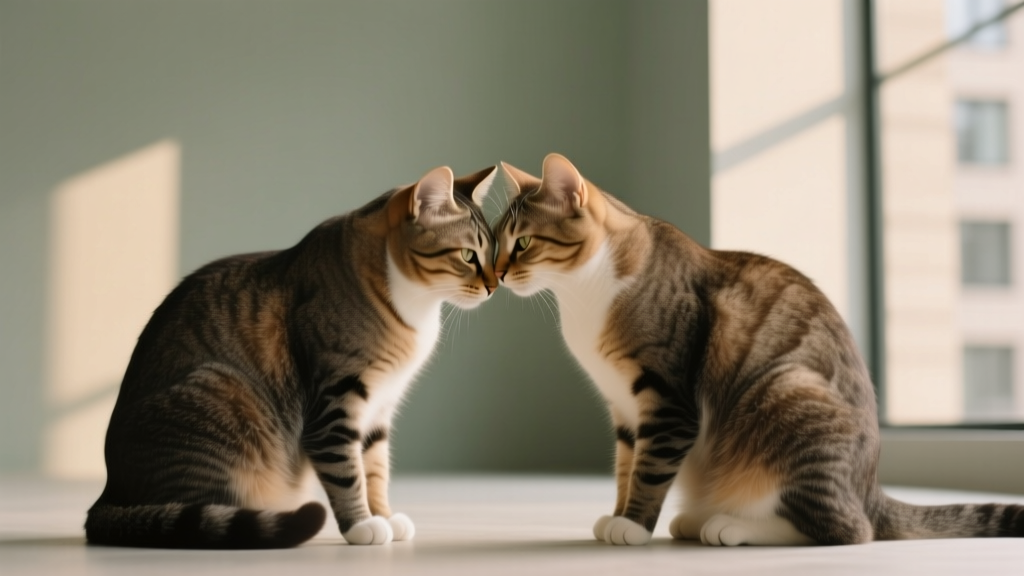
Scenario: Another cat walks into the room. Your cat’s ears rotate outward or slightly back while their eyes stay on the other cat.
What it means: This can signal uncertainty or mild defensiveness. Your cat is monitoring the other cat and the environment at the same time. Watch the rest of the body for clues: stiff posture, tail flicking, or blocking access to resources (like doorways).
What Independent Ear Movement Says About Mood and Feelings
Ears are part of your cat’s emotional dashboard. Independent movement is often a neutral-to-curious sign—your cat is engaged with their environment. To translate it more accurately, pair ear movement with these cues:
- Relaxed mood: Ears gently rotating, soft eyes, loose whiskers, body sprawled or loafed without tension.
- Curious/engaged: Ears actively tracking sounds, head tilts, whiskers slightly forward, your cat may approach or “chirp.”
- Annoyed/overstimulated: One ear keeps flicking back toward you (or a noise), tail tip twitching, skin rippling, your cat may abruptly get up and leave.
- Anxious or defensive: Ears angled sideways (“airplane ears”) or pinned back, pupils dilated, body low, weight shifted for escape.
- Highly focused (prey mode): Ears forward and steady after swiveling, body very still, eyes locked, butt wiggle may appear.
Think of ear swivels as your cat saying: “I’m collecting data.” Their final ear position—and the rest of their body—reveals whether that data feels safe, exciting, or stressful.
Related Behaviors You Might Also Notice
Ear swiveling rarely happens alone. Many cats run a whole “sensory checklist” at the same time:
- Whisker shifts: Whiskers forward = interest/hunting; whiskers pulled back = uncertainty or stress.
- Pupil changes: Narrow pupils can mean focus; big pupils can mean excitement or fear (context matters).
- Tail language: Slow, relaxed tail = calm; fast flicks = irritation; puffed tail = fear or arousal.
- Head turning after ear movement: Ears often “find” the sound first, then the head turns to confirm.
- Chirps/trills: Often appear when a cat hears prey-like sounds or sees birds outside.
- Freeze-and-listen posture: A sudden stillness with ears rotating—classic feline processing mode.
When Ear Swiveling Is Normal vs. When to Worry
Most of the time, independent ear movement is a sign of a healthy, attentive cat. Still, ear behavior can sometimes hint at discomfort or medical issues. Here’s a helpful split:
Normal ear swiveling
- Ears rotate smoothly in response to sounds.
- Your cat returns to resting, grooming, or play afterward.
- No signs of pain: no yelping, head shaking, or sudden sensitivity around the ears.
- No persistent odor, discharge, or redness visible in the ear.
Potential concerns (consider a vet check)
- Frequent ear flicking with head shaking: Could suggest ear mites, infection, or irritation.
- One ear consistently held differently: A droop or unusual angle can indicate pain or neurological issues.
- Scratching at the ears until the skin is irritated: Common with itching from parasites or allergies.
- Loss of balance, circling, or head tilt: Can point to inner ear problems and needs prompt evaluation.
- Sudden sound sensitivity or startle responses: Sometimes related to pain or hearing changes.
If something feels “off” compared to your cat’s usual ear habits, it’s worth getting it checked. Cats are masters of acting fine—until they aren’t.
How to Respond (and Encourage Healthy, Happy Ear Radar)
Your cat’s ear swivels are basically free communication. You can use them to make daily life smoother and strengthen trust.
1) Follow the ears to discover what matters to your cat
If your cat’s ear keeps turning toward the hallway, go investigate. Maybe the HVAC vent is whistling, the washing machine is thumping, or a neighborhood cat is outside the door. Identifying triggers can reduce stress—especially for sound-sensitive cats.
2) Respect the “I’m listening” moment
If your cat is swiveling ears rapidly and their body looks tense, don’t immediately scoop them up or push cuddles. Give space. A cat who feels trapped while on alert can escalate from “monitoring” to “panic” quickly.
3) Provide enrichment that uses sound
- Crinkle tunnels (in moderation—some cats find them too intense).
- Treat puzzles that make soft noise when moved.
- Wand toys with subtle rustling sounds.
- “Bird TV” at a window perch—your cat’s ears will track chirps like a pro.
4) Create calm zones for noise breaks
If your home is loud (kids, dogs, street noise), give your cat a quiet retreat: a covered bed, a closet shelf, or a cat tree in a back room. Ear swiveling is normal, but constant high-alert listening can be tiring for anxious cats.
5) Use ear cues to time training and play
When your cat’s ears are forward and mobile—curious but not tense—that’s a great time for gentle training (targeting, coming when called) or a play session. When ears are pinned back, it’s not teachable-moment time.
Fun Facts and Research-Flavored Nuggets
- Each ear can rotate dramatically to funnel sound more effectively. That mobility is part of why cats are such efficient hunters.
- Sound localization is a feline superpower: Cats can detect high-frequency sounds that humans can’t, which helps explain why they react to “nothing.” Often, it’s not nothing—it’s just not in our range.
- Ears often move before the eyes do: Auditory tracking can be faster than visual orientation, especially in low light.
- Independent ear movement can reduce risk: A cat can monitor potential threats behind them while keeping their face oriented toward a target or escape route.
FAQ: Cat Ear Swivel Radar
1) Why does my cat move one ear at a time?
Because each ear can be controlled separately. Your cat is comparing sound input from two directions, which helps them pinpoint where something is happening—and decide if it matters.
2) Does ear swiveling mean my cat is annoyed?
Not necessarily. Gentle swiveling usually means curiosity or relaxed monitoring. Annoyance is more likely if you see tail flicking, tense posture, skin twitching, or ears angled back in a stiff, “airplane” position.
3) My cat’s ears swivel while they sleep. Are they waking up?
Not always. Cats can rest lightly while still tracking sounds. If the body stays loose and breathing is calm, they’re probably just doing normal background monitoring.
4) Why do my cat’s ears swivel toward me when I’m not talking?
You still make sound—breathing, shifting, tapping a screen. Also, cats learn your patterns. Your cat may be listening for cues that predict something important, like you standing up (possible food) or opening a drawer (definitely food).
5) Is it normal if my cat’s ears are always moving?
In a busy environment, yes—some cats are more sound-aware than others. If it’s paired with stress signs (hiding, reduced appetite, over-grooming), consider ways to reduce noise and increase safe hiding spots, and talk to your vet if you’re concerned.
6) Should I clean my cat’s ears if they keep flicking them?
If you notice discharge, odor, redness, or frequent scratching/head shaking, schedule a vet visit first. Over-cleaning or using the wrong products can make irritation worse. Your vet can confirm whether it’s wax buildup, mites, infection, or allergies.
Your cat’s independent ear movement isn’t just a quirky trick—it’s a real-time window into how they navigate their world. The more you notice those swivels (and what’s happening around them), the better you’ll get at reading your cat’s comfort level, curiosity, and needs.
Seen your cat’s “ear radar” do something especially funny—like tracking a snack bag from three rooms away, or swiveling at absolutely nothing (that you can hear, anyway)? Share your story with other cat people over on catloversbase.com—we love comparing notes on the mysterious genius of cats.