Cat Doorway Waiting: Separation Behavior Pattern
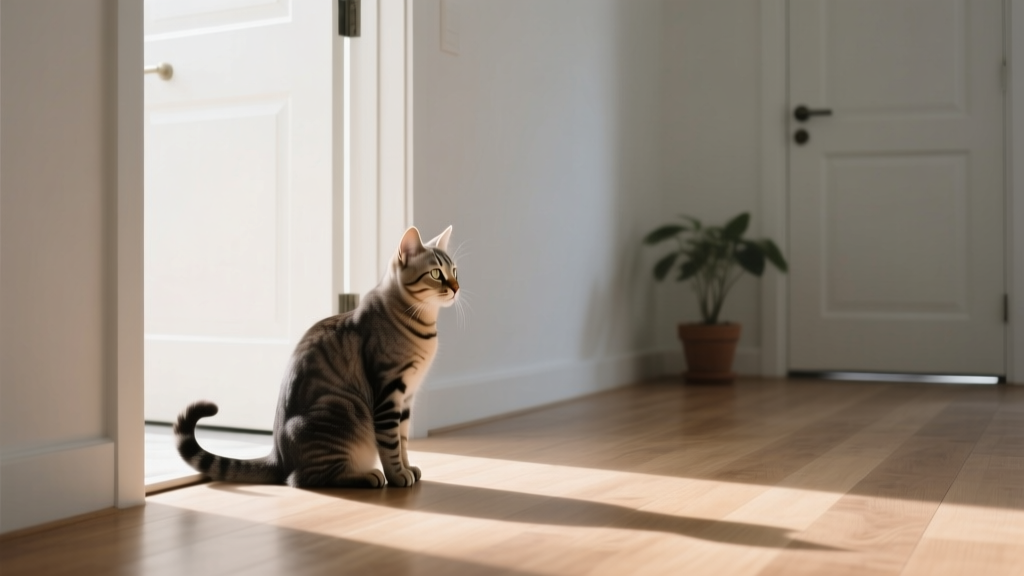
You head to the bathroom for 30 seconds. You come back out and there they are: your cat, parked like a fuzzy bouncer right in the doorway, blinking slowly as if to say, “Oh good, you made it.” Or maybe you’ve noticed a more dramatic version: you grab your keys, step into the hall, and your cat appears at the threshold with a tiny meow that sounds suspiciously like a protest letter.
Doorway waiting is one of those behaviors that feels equal parts hilarious and heartfelt. It can look like loyalty, nosiness, control-freak energy, or a cat simply enjoying the best real estate in the house. Often it’s a mix. And yes—sometimes it can hint at separation stress. The good news: once you understand why cats do it, the behavior becomes a useful little window into your cat’s emotional world.
Why Cats Wait in Doorways: The Science and Evolution Behind the Quirk
Cats are both predators and prey in evolutionary terms. That “in-between” status shaped a brain that loves two things: control of space and predictable access to safety.
Doorways are strategic. In the wild (and in a living room), thresholds are “funnels” where movement is predictable. If you want to keep tabs on what’s happening in your territory, a doorway is the ideal monitoring post. Your cat can watch you, listen for household sounds, and decide whether to approach, retreat, or pounce on an unsuspecting sock.
Cats are also routine-driven. Many cats build mental schedules around their people: wake-up time, coffee time, laptop time, “you’re late for dinner” time. When you disappear behind a door, it breaks the pattern. Doorway waiting can be your cat’s attempt to restore predictability: “If I position myself here, I can track when you come back and what happens next.”
And then there’s social attachment. Despite the “independent” stereotype, cats commonly form strong bonds with humans. Some cats show attachment through proximity—following, supervising, and waiting. A doorway can become a compromise: close enough to feel connected, far enough to feel in control.
What Doorway Waiting Looks Like in Different Contexts
Not all doorway waiting is the same. The details—body posture, timing, and location—tell you what’s driving it.
1) Bathroom Bodyguard Mode
You shut the bathroom door. Your cat sits outside like a tiny security guard. This often stems from social monitoring and curiosity. Bathrooms are also scent-rich spaces (water, soap, you), and many cats find them fascinating. If your cat paws under the door or vocalizes, they may be asking for access—or simply checking that their favorite human hasn’t vanished into the void.
2) The “I’m Not Following You” Follow
Your cat trails you down the hall, then stops exactly in the doorway while you enter the next room. This can be a cat’s way of staying connected without committing to full participation. Think of it as a feline version of hovering: “I’m here if something interesting happens.”
3) Pre-Departure Positioning by the Front Door
Some cats learn your leaving cues (keys, shoes, jacket) and plant themselves at the threshold. The vibe can range from mildly curious to deeply worried. If your cat becomes clingy only when you’re leaving, it may reflect anticipatory separation stress—they’re reacting to the pattern that predicts you’ll be gone.
4) Bedroom Threshold “Shift Change”
You go to bed; your cat sits in the doorway like they’re guarding the night watch. This can be protective behavior, territorial oversight, or simply a preference: doorways offer an escape route and a wide view. Many cats feel safest when they can see both the room and the exit.
5) Multi-Cat Politics: Doorways as Border Control
In homes with multiple cats, doorway waiting can turn into resource guarding or subtle bullying. One cat may block the path of another, not with outright aggression, but with a stare, a stiff posture, or “casual” loafing that just happens to be in the exact spot the other cat needs to pass through.
What Doorway Waiting Can Mean About Your Cat’s Mood
Doorway waiting is like a mood ring—if you know what to look for.
- Relaxed and affectionate: Soft body, slow blinks, loose tail, sitting or lying on one hip. Your cat is comfortable and simply wants closeness.
- Curious and engaged: Ears forward, head tilts, alert posture. They’re gathering information: “What’s happening in there?”
- Conflicted or cautious: Half-in/half-out stance, ears swiveling, tail tucked near the body. They want to be near you but also want an easy escape route.
- Frustrated: Meowing, pawing under the door, scratching, pacing. This can be a request for access, attention, or reassurance.
- Stressed or hyper-attached: Persistent monitoring, distress vocalizations when you close doors, or intense clinginess that spikes around departure cues. This may signal a separation-related pattern.
One quick clue: if your cat can relax in the doorway (sitting, grooming, dozing), it’s usually normal. If they can’t settle and seem agitated, it’s worth paying closer attention.
Related Behaviors You Might Also Notice
Doorway waiting rarely travels alone. Cats often combine it with other “where are you going?” habits:
- Shadowing: Following you from room to room like a tiny, quiet escort.
- Checking rounds: Entering a room after you, sniffing, then leaving—like they’re verifying everything is in order.
- Vocal roll call: Calling for you when you’re out of sight, then acting nonchalant when you appear.
- Door-scratching: Especially when a door blocks access to you or a preferred space.
- Blocking behavior: Standing in doorways when you’re trying to move—sometimes an attention bid, sometimes a cat-to-cat control tactic.
- “Greeting rituals”: Meeting you at the door when you come home, sometimes with chirps, head bumps, or flopping dramatically at your feet.
Normal vs. Concerning: When Doorway Waiting Might Be a Red Flag
In most homes, doorway waiting is completely normal. It can even be a sign your cat feels secure enough to be calmly present. But there are situations where it may suggest stress, conflict, or a health issue.
Generally Normal
- Your cat waits quietly and relaxes.
- The behavior is predictable (certain times/places) and doesn’t escalate.
- Your cat otherwise eats, plays, sleeps, and uses the litter box normally.
Potentially Concerning
- Signs of separation distress: Loud, persistent vocalizing when you close a door or leave; increased clinginess; destructive scratching at exit points; refusal to eat when you’re gone.
- Sudden behavior change: A cat who never cared before now panics at closed doors. Sudden clinginess can sometimes be linked to discomfort or illness—worth a vet check.
- Inter-cat tension: One cat consistently blocks doorways, and the other starts avoiding rooms, missing the litter box, or acting fearful.
- Compulsive patterns: Pacing at thresholds, repetitive meowing, inability to settle.
If you’re seeing stress signals plus appetite changes, litter box issues, or aggression, start with a veterinarian to rule out medical causes, then consider a qualified cat behavior professional.
How to Respond (and When to Encourage It)
Doorway waiting can be a sweet bonding ritual—if it’s calm. If it’s fueled by stress, your goal is to increase your cat’s sense of security and independence.
If It’s Calm and Cute
- Acknowledge softly: A gentle “hi,” a slow blink, or a brief pet can reinforce a positive, secure connection.
- Reward relaxed behavior: If your cat sits quietly at the doorway, toss a treat away from the threshold occasionally. This prevents “doorway = only place good things happen.”
- Create cozy observation spots: A cat tree near a hallway or a bed with a view gives your cat alternatives to blocking traffic.
If Your Cat Seems Anxious When Separated
- Practice micro-absences: Step behind a door for a second, return before your cat escalates, and calmly reward. Gradually increase duration. The message: “I leave, I come back, and it’s no big deal.”
- Decouple departure cues: Pick up keys or put on shoes at random times without leaving. This helps reduce the “uh-oh” reaction.
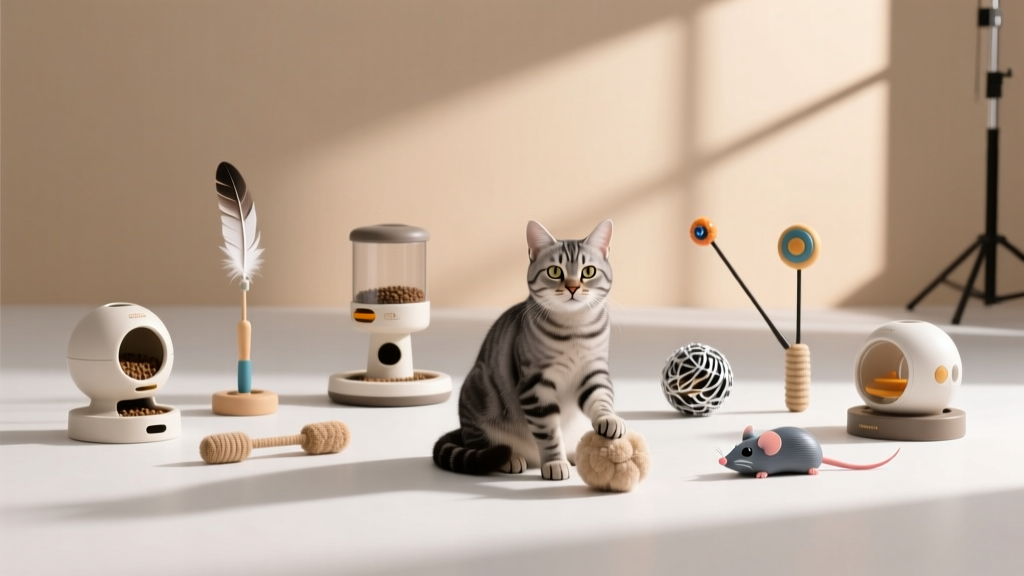
- Give a predictable enrichment routine: Puzzle feeders, a treat hunt, or a favorite lickable treat can become a “you go away, I do my activity” pattern.
- Use scent and sound comfort: Leaving out a worn shirt and using calm background sound can help some cats settle.
If Doorways Are Becoming a Battlefield (Multi-Cat Homes)
- Increase resources: More litter boxes, feeding stations, resting spots, and vertical spaces reduce competition.
- Interrupt blocking gently: Use a toy toss or treat scatter to move the “door monitor” away without scolding (scolding usually adds tension).
- Watch the body language: Staring, stiff posture, and silent standoffs are meaningful. If one cat is consistently controlling access, consider a structured reintroduction plan with a behavior professional.
Fun Facts and Research-Flavored Nuggets
- Cats build “maps” of your routine. They’re excellent at pattern learning, which is why they often appear before you even reach the door—your sequence of movements tells them what’s next.
- Thresholds are natural ambush points. Even indoor cats retain the instinct to watch narrow passageways where “prey” (or humans) pass through.
- Attachment in cats is real. Studies on cat-human bonding suggest many cats form secure attachments and use their humans as a source of comfort—doorway waiting can be a low-key version of “checking in.”
- Doorway drama can be self-rewarding. If waiting at the door reliably results in attention, access, or excitement, the behavior becomes a strong habit—sometimes even when you’d rather carry laundry without a chaperone.
FAQ: Cat Doorway Waiting
Why does my cat sit outside the bathroom door?
Common reasons include curiosity, social attachment, and routine monitoring. Bathrooms also contain strong, familiar scents. If your cat is calm, it’s usually normal. If they’re frantic or destructive, consider gradual desensitization to closed doors and provide an enrichment activity before you step in.
Is my cat being protective when they wait in the doorway?
Sometimes. Cats do engage in social monitoring and may position themselves where they can see you and the environment. It’s often less “bodyguard” and more “I like to know what’s happening and keep my options open.”
My cat blocks the doorway and won’t let my other cat pass. What should I do?
This can be subtle resource guarding. Add more vertical space and duplicate key resources (litter boxes, food, beds). Redirect the blocker with treats or play, and watch for stress in the other cat. If the dynamic persists or escalates, a behavior consult can help prevent a bigger conflict.
Does doorway waiting mean my cat has separation anxiety?
Not by itself. Many cats wait in doorways because it’s a great vantage point. Concern rises if the behavior comes with distress vocalizing, destructive scratching, appetite changes when you’re gone, or panic around departure cues.
Should I ignore my cat when they wait at the door?
If the behavior is calm, a brief acknowledgment is fine. If it’s anxious or escalating, avoid accidentally rewarding frantic meowing or scratching—wait for a moment of quiet, then reward that calm. You’re teaching, “Relaxation gets results.”
My cat started doing this suddenly. Could it be medical?
Yes—sudden clinginess or increased monitoring can sometimes correlate with pain, sensory changes, or discomfort. If the change is abrupt or paired with appetite/litter box changes, schedule a vet visit.
Doorway waiting can be your cat’s way of saying, “You’re my favorite part of the territory,” or “I’m not sure where you went, and I’d like that to stop.” Either way, it’s communication—and you can respond in ways that build confidence, reduce stress, and deepen trust.
Does your cat stand guard outside doors, supervise every hallway trip, or hold tiny, dramatic vigils by the front entrance? Share your funniest (or sweetest) doorway-waiting stories with the Cat Lovers Base community at catloversbase.com.