Cat Chirping at Squirrels: Frustrated Hunting Vocalization
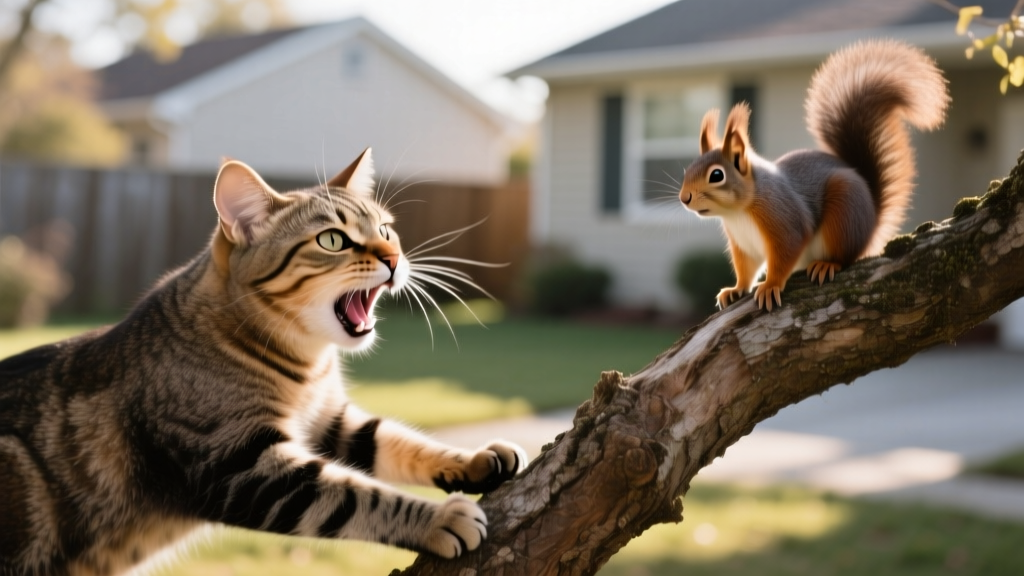
You’re sipping coffee, your cat is perched on the windowsill like a tiny, whiskered gargoyle… and then it starts. A rapid-fire ch-ch-ch sound. Or a squeaky little chirp. Maybe the jaw trembles. The tail flicks like a metronome. Outside, a squirrel struts along the fence like it owns the place, totally unaware it’s being “commentated on” by the world’s smallest predator.
If you’ve ever wondered, “Is my cat excited? Angry? Trying to communicate with the squirrel?”—you’re not alone. Cat chirping at squirrels (and birds, bunnies, even a bug on the window) is one of those quirky behaviors that’s equal parts adorable and mysterious. It’s also deeply rooted in hunting instincts, frustration, and feline emotion regulation.
The science-y, evolutionary reason cats chirp at prey
Domestic cats may live on heated blankets and eat food delivered to their bowl, but their brains are still tuned like hunters. In the wild, small feline predators rely on stalking, pouncing, and quick kills. That hunting sequence is powered by the same emotional system that drives play: predatory motivation.
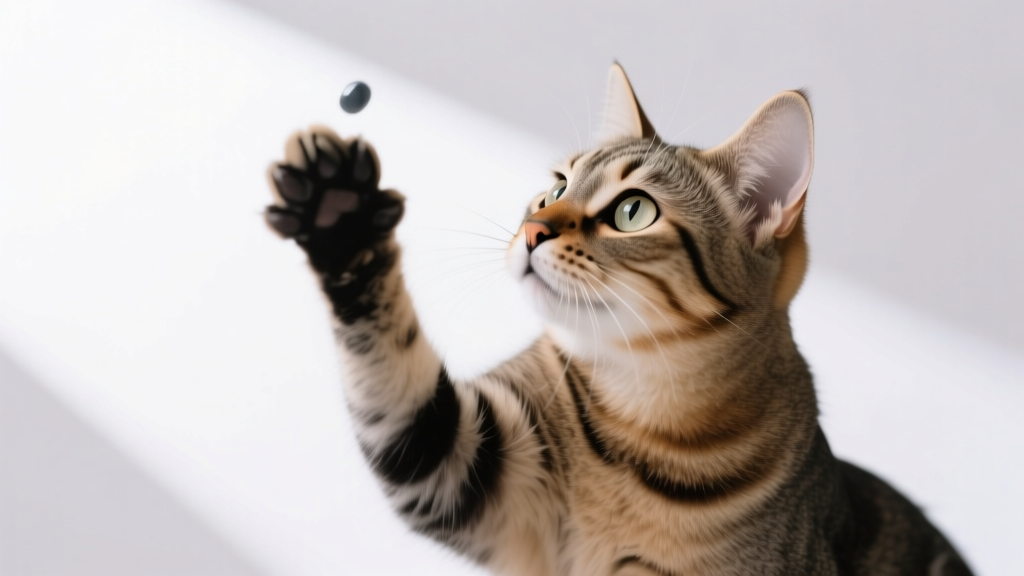
When your cat sees a squirrel, the “hunt mode” circuitry lights up. Their eyes lock, body goes still, and the brain starts running a familiar program: stalk → chase → capture. The problem is the window. Or the screen. Or the leash. They can’t complete the sequence.
That incomplete hunting loop creates a kind of motivational conflict: the cat is highly aroused and ready to act, but physically blocked. Many behaviorists believe chirping (often paired with jaw chattering) is a frustrated hunting vocalization—an emotional pressure valve for an animal that is intensely engaged but unable to follow through.
There’s also a second layer: cats are masters of micro-adjustments. Their brains are constantly calculating distance, timing, and movement. Chirping may occur when they’re tracking fast, unpredictable motion—like a squirrel zigzagging up a tree—while their body holds back.
What “chirping” can look and sound like (and why it varies)
Cat chirping isn’t one single sound. Owners often describe it as:
- Chattering: rapid clicking of the teeth or jaw, sometimes with a little squeak.
- Chirps: short, high-pitched “peep” sounds, like a cat trying to imitate a bird.
- Trills: a rolled “brrr?” sound—often more social, but can appear during intense watching.
The context matters. Here are common scenarios and what’s likely happening in your cat’s head:
1) The “window hunter” chirp (classic squirrel scenario)
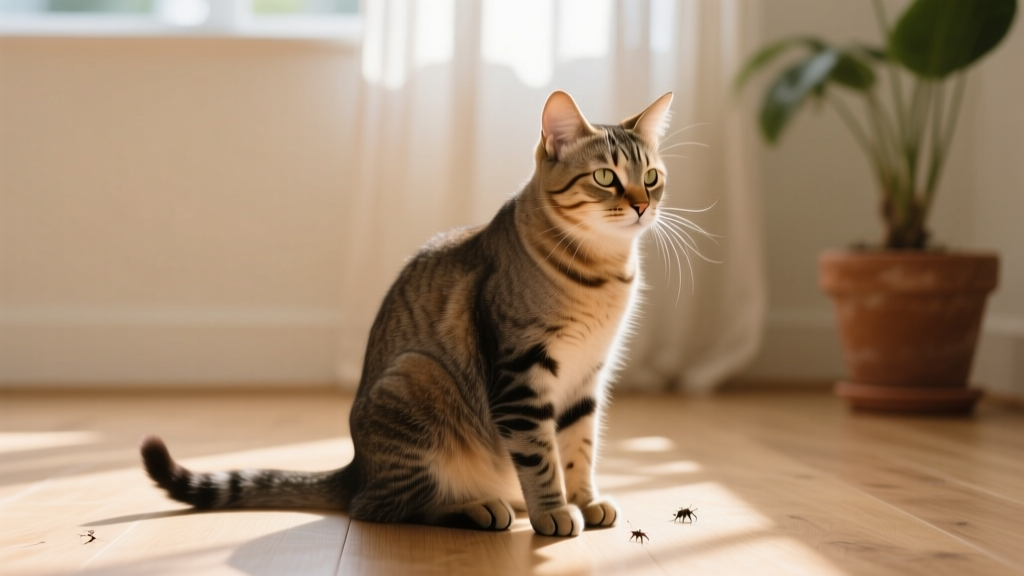
Your cat is pressed close to the glass. Ears forward. Pupils slightly enlarged. The tail tip twitches. The chirping bursts out in fast spurts as the squirrel pauses, moves, pauses again.
What it suggests: high prey drive + frustration. Your cat wants to pounce, but the window says “no.”
2) The “screen door” chatter (the almost-accessible prey)
Prey is close. The cat may crouch, butt wiggling, shoulders shifting as if about to launch. The chatter can get more intense because access feels possible.
What it suggests: elevated arousal. Your cat is closer to the “chase” phase mentally, even if they can’t physically get there.
3) The “cat TV” chirp (birds on YouTube or a toy)
Some cats chirp at feather wand toys or even wildlife videos—especially ones with fluttery, erratic movement.
What it suggests: predatory play mode. This is the same instinct, just triggered by a substitute.
4) The “social chirp” that looks similar but means something else
Don’t confuse hunting chirps with the cheerful chirp/trill some cats use to greet you (“Hi! Follow me!”). If your cat chirps at you while walking toward the kitchen, that’s usually social communication, not hunting frustration.
What chirping reveals about your cat’s mood and feelings
Chirping at squirrels often looks comical, but it’s emotionally meaningful. Depending on body language, it can indicate:
- Intense interest: Focused eyes, ears forward, still body. Your cat is fully engaged.
- Excitement: Tail flicking, shifting paws, tiny crouches. The “go” system is activated.
- Frustration: Repeated chirping/chattering with tension in the body, sometimes a sudden swat at the window or redirected zoomies after.
- Overstimulation: Dilated pupils, twitchy movements, rapid breathing. Not dangerous by itself, but a sign your cat may need an outlet.
Think of it like watching your favorite snack roll under the couch. You can see it, you want it, you can almost taste it… and you can’t reach it. Your brain gets loud about it. Cats do too—just in tiny chirps.
Related behaviors you might also notice
Chirping rarely arrives alone. You may see:
- Tail tip twitching: a classic “I’m targeting something” movement.
- Butt wiggle before a pounce: even when the pounce won’t happen (window = ultimate buzzkill).
- Teeth chattering/jaw quivering: often paired with staring and stillness.
- Silent “meow” at the glass: mouth opens with little or no sound—common when arousal is high.
- Post-window zoomies: your cat bolts through the house after watching prey, releasing pent-up energy.
- Redirected play biting or swatting: if another cat (or your ankle) walks by at the wrong moment.
When chirping is normal… and when it might be a concern
Normal: For most cats, chirping at squirrels is completely healthy. It’s enrichment. It’s instinct. It’s your indoor cat’s version of watching a nature documentary—except they’re emotionally involved.
Potentially concerning: Consider looking closer if you notice any of the following:
- Obsessive window guarding: your cat can’t disengage, skips meals, or seems unable to relax for long periods.
- Aggression after chirping: hissing, swatting family members, or attacking another cat immediately after intense watching (redirected aggression can happen when arousal spikes).
- Stress signs: excessive grooming, pacing, vocalizing, hiding, or changes in litter box habits.
- Dental pain cues: chattering can look similar to tooth discomfort. If you see drooling, pawing at the mouth, bad breath, reluctance to eat, or chattering outside of prey-watching contexts, schedule a vet check.
If it’s “cat chirps at squirrel and then naps,” that’s normal. If it’s “cat chirps, can’t settle, and starts acting unlike themselves,” it’s time to help them decompress—and possibly consult a veterinarian or qualified behavior professional.
How to respond (and how to use it to build a better relationship)
You don’t need to stop chirping. In many homes, it’s a positive sign: your cat is engaged with their environment. The goal is to support the instinct safely and prevent frustration from spilling over into stress.
1) Give your cat a “hunting outlet” after window time
When your cat chirps at a squirrel, their body is primed for action. Offer a short play session that mimics hunting:
- Use a wand toy and mimic prey: hide, dart, pause, then “escape.”
- End with a “capture” moment (let them catch the toy) so the hunting sequence feels complete.
- Follow with a small snack to satisfy the instinct loop: hunt → catch → eat → groom → sleep.
2) Create a premium viewing spot
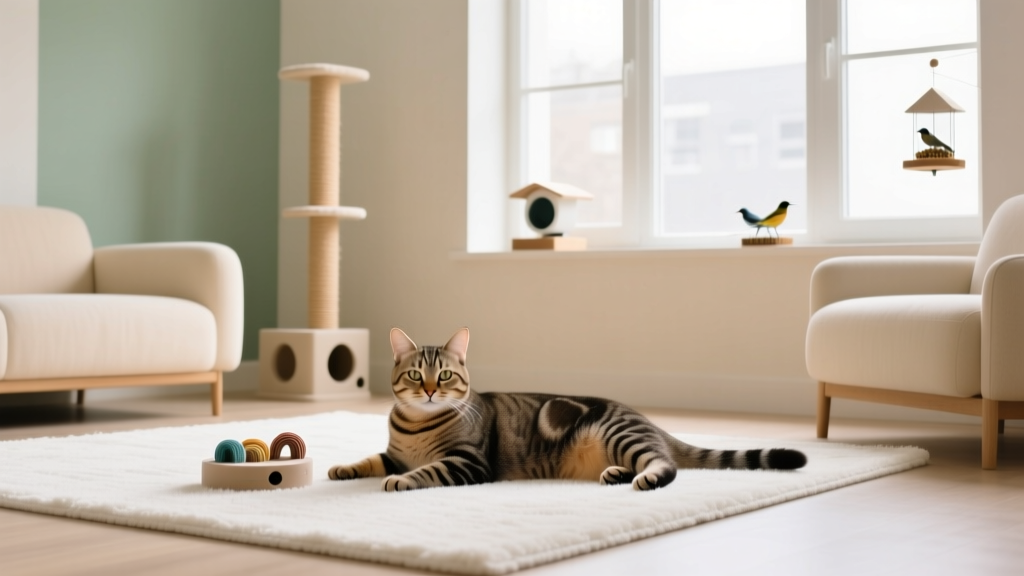
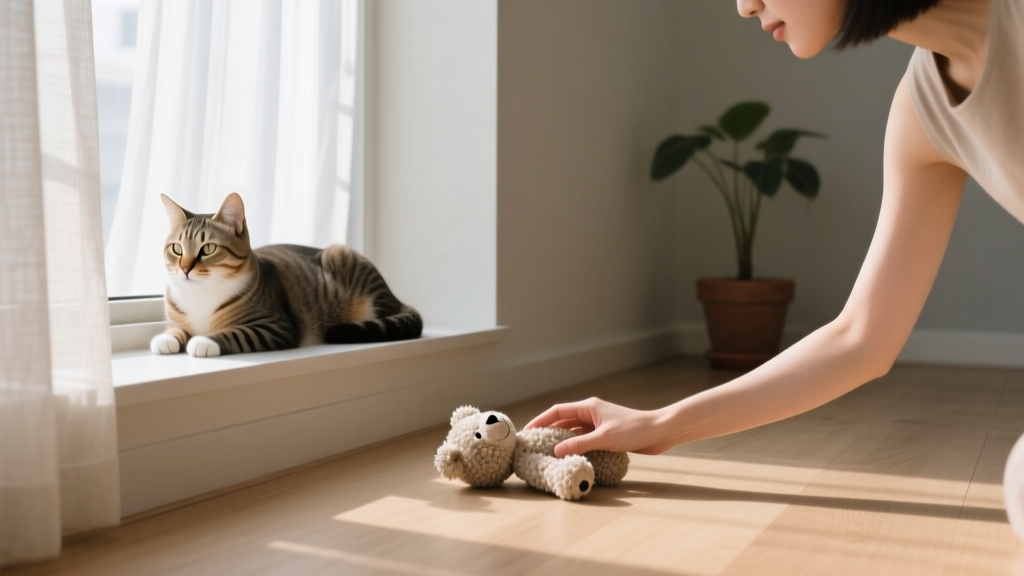
A stable cat tree or window perch turns “frustrated hunter” into “professional wildlife observer.” Bonus points for a bird feeder outside (placed safely away from window strikes and local hazards).
3) Reduce over-arousal in multi-cat homes
If chirping leads to one cat ambushing another, interrupt gently:
- Use a calm voice, toss a treat away from the window, or start a toy game in another area.
- Provide multiple perches so cats aren’t competing for the same “viewing station.”
4) Don’t punish the chirping
Scolding adds stress and can make your cat more edgy around triggers. Chirping is information: “I’m excited and blocked.” It’s an opportunity to offer enrichment, not discipline.
5) Consider supervised outdoor time if appropriate
For some cats, harness training or a secure catio can reduce frustration and increase wellbeing. Safety first: avoid free-roaming outdoors in most environments due to risks (traffic, predators, disease, conflict).
Fun facts and research-flavored tidbits
- Not all cats chirp. Some are silent hunters; others are chatty commentators. Personality and prey drive both play a role.
- Kittens may learn patterns, but instinct drives it. Even cats raised indoors with no hunting experience often chirp at prey-like movement.
- Chattering is commonly linked to prey frustration in behavior literature. While the exact mechanism is still debated, the consistent trigger—visible, unreachable prey—shows up again and again in owner reports and clinical behavior observations.
- Your cat is practicing. The staring, tracking, and micro-movements are real motor planning. It’s not “just watching”—it’s rehearsal.
FAQ: Cat chirping at squirrels
Why does my cat chirp specifically at squirrels but not birds?
Squirrels move in a jerky, unpredictable way that can ramp up your cat’s tracking system. Also, squirrels often get closer (fence lines, decks), which can increase the “I could totally catch that” feeling—and the frustration when they can’t.
Is chirping a sign my cat is happy?
It usually signals positive engagement (interest and excitement), but it can include frustration too. Look at the whole cat: relaxed body afterward and easy recovery suggests it’s enjoyable stimulation. If your cat seems wound up or irritable afterward, they may need a play outlet.
Should I let my cat outside to “fix” the frustration?
Not necessarily. Outdoor access can increase risk significantly. Safer options include a catio, harness walks, and structured play that satisfies hunting needs indoors.
My cat chatters their teeth—could it be a dental problem?
If it happens mainly when watching squirrels/birds, it’s likely normal chattering. If it happens randomly, or you notice drooling, bad breath, pawing at the mouth, or eating changes, schedule a vet exam to rule out dental pain.
Why does my cat get the zoomies after chirping at prey?
That’s adrenaline with nowhere to go. The body prepared for a chase, didn’t get one, and then releases energy in a sprint. A short play session can redirect that energy more constructively.
Can I encourage chirping?
You can encourage the healthy version of it by providing enrichment: window perches, safe wildlife viewing, puzzle feeders, and daily play. You don’t need to “train” chirping—it tends to appear naturally when a cat is engaged.
Does your cat chirp like a tiny laser gun? Or do they do the jaw-chatter-with-a-side-of-tail-twitch routine? Share your funniest (or most dramatic) squirrel-watching stories with the Cat Lovers Base community at catloversbase.com—we’d love to hear how your little hunter narrates the neighborhood.