Cat Ambush From Behind Furniture: Play Hunting Mode
You’re walking to the kitchen, minding your own business, when something furry explodes out from behind the couch like a tiny panther. There’s a quick tap-tap on your ankle, a dramatic sideways hop, and then—poof—your cat vanishes behind the chair again as if nothing happened. You look down at your “attacker,” and they’re sitting there with wide eyes and a twitchy tail tip, clearly pleased with themselves.
If your cat loves ambushing you (or another pet) from behind furniture, you’re not alone. This is one of the most common “quirky” cat behaviors—and one of the most misunderstood. Sometimes it’s pure play. Sometimes it’s practice for hunting. And sometimes it’s your cat trying to tell you something important about their energy level, their environment, or their stress.
The science-y (but fun) reason cats ambush: built-in predator software
Domestic cats may have soft beds and scheduled meals, but their brains are still running highly efficient predator programming. Cats are “stalk-and-pounce” hunters. In the wild, a cat’s success depends on three things:
- Stealth (approach without being seen)
- Cover (use the environment—grass, rocks, trees… or your ottoman)
- Explosive speed (short burst, quick grab)
Furniture creates the perfect “cover” inside your home. A couch is basically a boulder. A hallway corner is a mini canyon. Under a bed is a premium hunting blind. When your cat hides behind the coffee table and launches at your feet, they’re practicing a natural hunting sequence—just with you as the conveniently tall, snack-dispensing “prey.”
This ambush play is also strongly tied to what behaviorists call predatory play. Cats don’t play the way dogs often do (wrestle for social bonding). Cat play frequently looks like hunting because it’s how kittens learn to survive and adults keep their skills sharp. Even cats who have never missed a meal can feel deeply satisfied after a good stalk-pounce-chase routine.
What “ambush from behind furniture” looks like in real life (and what it can mean)
Not all ambushes are the same. The details matter: body posture, timing, who the target is, and what happens afterward.
1) The classic “ankle attack” ambush
Scenario: You walk past the hallway. Your cat crouches behind a chair, then darts out to swat your foot and sprint away.
Most likely meaning: Play-hunting plus a request for interaction. Your movement triggers the chase instinct. If your cat repeats this most evenings around the same time, it may be their version of: “Hello, it’s prime hunting hour. Let’s do something.”
2) The “peek-a-boo” ambush with bouncy energy
Scenario: Your cat hides behind the sofa, then pops their head out, eyes bright, body slightly wiggly. They may chatter, chirp, or do a little butt wiggle before launching.
Most likely meaning: High-arousal play. This is the cat equivalent of a kid revving up for a game of tag.
3) The silent, intense ambush with a stiff body
Scenario: Your cat hides and stares, very still. They ambush with a harder swat or a grab-and-hold. Their tail may swish in bigger, sharper movements rather than a twitchy tip.
Most likely meaning: Could still be play, but this version can slide toward frustration or overstimulation. Cats can get “stuck” in hunting mode when they’re under-enriched, stressed, or overly keyed up.
4) Ambushing another cat (or dog) from behind furniture
Scenario: One cat crouches behind the armchair and pounces on the other as they walk by. The “victim” may chase back… or may hiss and retreat.
Most likely meaning: Often play if both cats take turns and re-engage willingly. But if one cat is always the ambusher and the other is always the one hiding, it can be a sign of social tension or bullying.
5) The “you’re late with dinner” ambush
Scenario: You head toward the kitchen and—ambush! Your cat appears like an angry little trapdoor spider.
Most likely meaning: Your cat has learned that startling you gets attention, and attention sometimes leads to food. Cats are excellent at training humans. If ambushes happen most around meal times, the motivation may be partly strategic.
What this behavior says about your cat’s mood and feelings
Ambushing from behind furniture usually points to one of these emotional states:
- Playful confidence: Loose body, bouncy movements, brief contact, then a dash away. Your cat feels safe and energized.
- Excitement and anticipation: Often happens when you come home, before meals, or when the house gets lively.
- Boredom / under-stimulation: Repetitive ambushes, especially if your cat doesn’t have other outlets (interactive play, window watching, climbing spaces).
- Over-arousal: If the ambush escalates into hard biting, grabbing, or the cat seems unable to “come down” afterward.
- Stress or conflict: If ambushes are directed at another cat who appears anxious, avoids certain rooms, or hides more.
A helpful rule: play is mutual and flexible. Even if it looks dramatic, play has pauses, role-switching, and quick recovery. Tension looks rigid, one-sided, and sticky—like the mood doesn’t reset.
Related behaviors you might also notice
If your cat is an ambush enthusiast, you may also see:
- Butt wiggles right before they pounce (a pre-launch “aiming” behavior)
- Chasing feet under blankets (moving “prey” under cover is irresistible)
- Zoomies after a successful “hit” (a release of stored energy)
- Hide-and-seek around corners and doorways
- Stalking toys from behind objects rather than chasing in the open
- Window stalking (birds and squirrels provide free hunting TV)
Many cats are “environmental strategists.” They prefer to hunt from cover, and your furniture gives them endless opportunities to do it indoors.
When ambushing is normal… and when it might be a concern
Usually normal
- Your cat’s body language looks loose and playful (ears forward/neutral, quick bouncy movements)
- The ambush is brief and doesn’t leave scratches or bruises
- Your cat can be redirected to a toy and settles afterward
- In multi-cat homes, both cats re-engage and take turns
Potential concern
- Escalating aggression: hard bites that break skin, clamping and holding, pupils huge with a tense body
- Targeting only one household member: especially if that person is fearful or moves unpredictably
- Persistent ambushing of another cat who hisses, hides, or avoids resources (food, litter box, favorite rooms)
- Sudden change in behavior (a previously calm cat starts ambushing intensely)
- Ambushes paired with other stress signs: overgrooming, litter box issues, appetite changes, increased hiding
If the behavior changes suddenly or becomes difficult to interrupt, it’s worth checking for pain or medical issues (yes, even “play aggression” can be worsened by discomfort). A vet visit can rule out problems, and a qualified cat behavior professional can help with a plan if social tension is involved.
How to respond (and how to encourage the healthy version)
The goal isn’t to “stop” your cat from being a cat. The goal is to channel the ambush instinct into appropriate outlets so your ankles don’t have to suffer for feline enrichment.
1) Replace ankles with a better “prey”
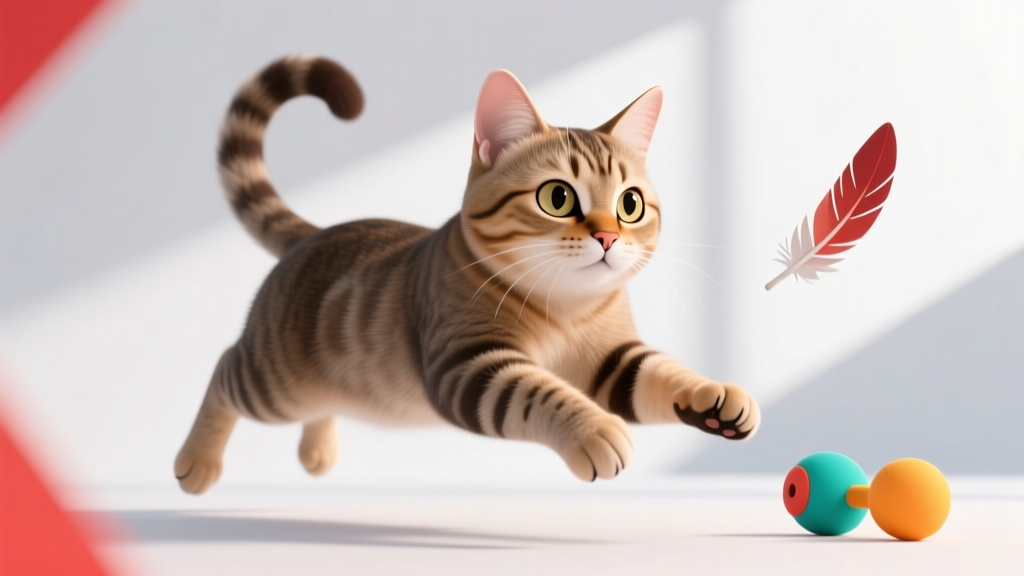
If your cat ambushes you, immediately switch to an interactive toy that mimics prey—like a wand toy with feathers or a fabric lure. Move it like something alive: hide it behind furniture, let it peek out, then dart away in short bursts.
Tip: Avoid using hands or feet as toys. Even “gentle” kitten attacks can become adult habits.
2) Schedule “hunt sessions” before peak ambush times
Many cats rev up in the morning and evening (classic crepuscular hunters). If your cat becomes a hallway ninja at 9 p.m., plan 10–15 minutes of interactive play at 8:30 p.m., then offer a small meal. That hunt-then-eat sequence can be deeply satisfying and often reduces surprise attacks.
3) Add legal ambush zones
Provide places where hiding and pouncing are allowed:
- Cat tunnels
- Cardboard boxes with cut “windows”
- A chair draped with a blanket to make a little cave
- Cat trees positioned near a hallway or window
This gives your cat the cover they crave without turning your living room into a daily ankle hazard.
4) Teach a simple redirect cue
Some cats learn quickly that a cue like “toy!” means the wand appears. You can also toss a kicker toy or a soft ball away from your body when you sense an ambush brewing (crouch + stare + tail twitch = impending launch).
5) In multi-cat homes, watch for consent
If one cat ambushes another, look for balanced play: role-switching, pauses, and both cats returning for more. If one cat runs and hides, blocks access to rooms, or seems on edge, add more vertical space, increase resources (multiple litter boxes, feeding stations, resting spots), and consider structured reintroduction if tension is high.
6) Don’t punish the ambush
Yelling, spraying water, or chasing your cat can increase arousal and make the behavior worse—or make your cat more anxious. Plus, from your cat’s perspective, big reactions can be very rewarding. Calmly disengage, redirect to a toy, and reinforce the behaviors you like (play with toys, pounce on tunnels, chase lures).
Fun facts (and a few research-flavored nuggets) about ambush play
- Cats are built for sprints, not marathons. That’s why the pounce is so dramatic and so brief. Ambush hunting is energy-efficient: hide, wait, explode, reset.
- Play is practice. Kittens who play-hunt develop coordination and timing. Adult cats keep doing it because it’s mentally and physically enriching—like a puzzle plus a workout.
- Movement is a powerful trigger. Fast feet, swishing robe hems, and rolling desk chairs can activate a cat’s chase circuitry instantly.
- The environment shapes the behavior. Homes with fewer climbing options and fewer interactive play opportunities tend to produce more “creative” hunting outlets—like stalking humans between the couch and the kitchen.
FAQ: Cat ambushes from behind furniture
Why does my cat ambush me when I walk by?
Most often it’s play-hunting triggered by your movement. Your cat is using the furniture as cover, practicing a natural stalk-and-pounce sequence, and inviting interaction—sometimes a bit rudely, but usually not with bad intentions.
Is my cat being aggressive or just playing?
Look at body language and intensity. Play tends to be bouncy, brief, and easy to interrupt with a toy. Aggression looks stiff, intense, and may include hard bites, growling, or a cat that can’t settle afterward. If you’re getting injured, treat it as a problem to address even if it started as play.
How do I stop my cat from attacking my ankles?
Don’t reward ankle attacks with exciting reactions. Redirect to an interactive toy, increase daily play (especially before peak times), and provide tunnels/boxes for “legal” ambushing. If the behavior is frequent, your cat likely needs more structured hunting-style play.
Why does my cat only ambush one person?
Cats often pick the person who moves fastest, startles easiest, or reacts the most. It can also be about routine—your cat may associate that person with playtime or mealtime. Have the targeted person become the source of appropriate play (wand toys) and calm rewards.
My cat ambushes my other cat—should I intervene?
If both cats take turns and re-engage willingly, it’s probably play. Intervene if one cat consistently runs away, hides, hisses, or seems afraid. Increase resources and space, add vertical options, and consider getting behavior help if the dynamic is one-sided or escalating.
Can boredom cause ambush behavior?
Absolutely. Ambushing is a self-invented enrichment activity. If your cat doesn’t have enough interactive play, climbing, puzzle feeders, or window entertainment, they may create their own “hunting games” using your household traffic patterns.
Does your cat have a signature ambush spot—behind the curtains, under the coffee table, or that one corner where they become a tiny jump-scare artist? Share your cat’s funniest “play hunting mode” stories with the Cat Lovers Base community at catloversbase.com.