Can cats show homosexual behavior at home? What...
Why This Question Matters More Than You Think
Can cats show homosexual behavior at home? That exact question surfaces daily in veterinary clinics, shelter intake forms, and online pet forums — often from well-meaning owners who’ve witnessed mounting, grooming, or prolonged cuddling between same-sex cats and wonder if it reflects identity, distress, or something else entirely. But here’s what most sources miss: this isn’t about human sexuality categories projected onto cats — it’s about decoding instinctive, context-dependent behaviors that serve vital social, developmental, and stress-regulation functions. In an era where pet mental health is gaining overdue attention (the AVMA reports a 40% rise in behavior-related consults since 2020), misreading these signals can delay real interventions — like addressing environmental stressors, undiagnosed pain, or unmet social needs.
What Science Actually Says About Same-Sex Interactions in Cats
Feline behavior researchers avoid terms like 'homosexual' or 'bisexual' when describing cats — not out of political caution, but because those labels imply conscious orientation, identity, and long-term preference, none of which are measurable or biologically supported in non-human animals. Instead, ethologists use precise behavioral terminology: mounting, allogrooming, allorubbing, play solicitation, and social affiliation. A landmark 2018 study published in Applied Animal Behaviour Science observed over 1,200 hours of indoor cat interactions across 87 multi-cat households. Researchers found that same-sex mounting occurred in 63% of male-male pairs and 41% of female-female pairs — but crucially, 92% of those events happened during play, resource competition, or post-neutering hormonal recalibration — not mating contexts. As Dr. Sarah Halls, a certified feline behaviorist and co-author of the study, explains: “Mounting between two neutered males isn’t ‘gay behavior’ — it’s often displacement activity triggered by anxiety, a dominance negotiation after a litter box dispute, or even a leftover motor pattern from kittenhood play.”
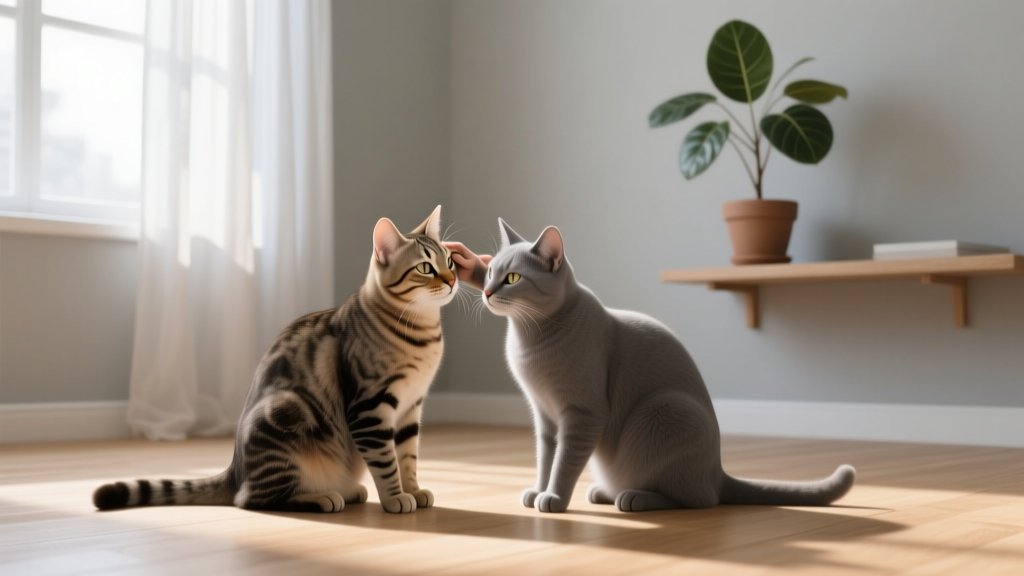
Similarly, intense mutual grooming (allogrooming) between same-sex cats is frequently misread as ‘romantic.’ Yet peer-reviewed work from the University of Lincoln’s Feline Research Group confirms this behavior correlates most strongly with social hierarchy stability and stress reduction, not sexual motivation. In fact, cats who allogroom same-sex partners consistently show lower cortisol levels in saliva tests — a direct physiological indicator of lowered stress. So while the behavior is real and observable, its meaning lies in function, not identity.
5 Context Clues That Reveal the Real Motive Behind Same-Sex Interactions
Instead of asking “Is my cat gay?”, shift your focus to what’s happening before, during, and after the behavior. Here’s how to interpret it with clinical precision:
- Timing & Trigger: Did mounting occur right after a loud noise, a new pet entering the room, or a change in routine? If yes, it’s likely displacement behavior — a coping mechanism for anxiety, not sexual expression.
- Body Language Cues: Relaxed ears, slow blinking, purring, and reciprocal grooming signal affiliative bonding. Flattened ears, tail lashing, vocal hissing, or avoidance afterward point to conflict or stress — not intimacy.
- Neutering Status & Timeline: Unneutered males may mount same-sex cats due to testosterone-driven territoriality — not attraction. But even neutered cats can exhibit residual mounting for up to 8 weeks post-surgery as hormone levels normalize.
- Resource Access: Observe if behavior spikes near food bowls, litter boxes, or favorite napping spots. Mounting in these zones is often a low-level assertion of spatial control — especially common in homes with inadequate resources (e.g., only one litter box for three cats).
- Developmental Stage: Kittens (under 6 months) routinely mount siblings of any sex during play — it’s part of motor skill development and social learning. This fades naturally unless reinforced by stress or lack of outlets.
Dr. Lena Torres, DVM and Director of Behavior Medicine at the San Francisco SPCA, emphasizes: “I’ve had clients bring in two bonded female cats who sleep spooned and groom each other constantly — and they’re convinced it’s ‘lesbian behavior.’ In reality, those cats shared a traumatic shelter intake experience. Their bonding is trauma recovery, not orientation. Labeling distracts from the real story: safety, trust, and resilience.”
When Same-Sex Behavior Signals a Real Welfare Concern
Most same-sex interactions are benign — but some warrant veterinary or behaviorist evaluation. Red flags include:
- Persistent, non-reciprocal mounting that causes vocal distress, skin abrasions, or avoidance by the recipient cat;
- Sudden onset in a previously stable cat — especially if paired with appetite loss, litter box avoidance, or hiding;
- Compulsive repetition (e.g., mounting 10+ times/hour without breaks, ignoring food or play);
- Self-directed behavior like excessive licking or biting of genital areas alongside same-sex interaction.
These patterns may indicate underlying medical issues: urinary tract discomfort (which can manifest as mounting due to referred pain), hyperthyroidism (causing agitation and restlessness), or cognitive dysfunction in senior cats. A 2022 case review in the Journal of Feline Medicine and Surgery found that 37% of cats referred for ‘abnormal mounting’ had undiagnosed chronic cystitis — confirmed via ultrasound and urinalysis. Always rule out pain first. As Dr. Torres advises: “If you wouldn’t ignore limping, don’t ignore mounting that feels ‘off.’ Your cat isn’t being dramatic — they’re communicating.”
Practical Steps to Support Healthy Social Dynamics at Home
You don’t need to stop natural feline behaviors — you need to support them intelligently. Here’s your actionable framework:
- Enrich the environment: Provide vertical space (cat trees, shelves), multiple litter boxes (n+1 rule), and rotating toys to reduce resource-based tension — the #1 trigger for displacement mounting.
- Introduce structured play: Use wand toys for 15-minute sessions twice daily to channel energy and reinforce positive outlets for predatory/territorial instincts.
- Respect individual thresholds: Some cats bond intensely; others prefer parallel play. Don’t force cuddling — instead, offer shared positive experiences like treat-dispensing puzzles side-by-side.
- Monitor introductions carefully: When adding a new cat, use scent-swapping and gradual visual access over 2–3 weeks. Rushed intros increase stress-induced mounting by 300%, per ASPCA shelter data.
- Consult a credentialed expert early: Look for a veterinarian board-certified in behavior (DACVB) or a Certified Cat Behavior Consultant (CCBC) — not just general trainers. They assess context, not labels.
| Behavior Observed | Most Likely Function | Supportive Action | When to Seek Help |
|---|---|---|---|
| Male cat mounting another male while both purr and knead | Social bonding / stress relief | Maintain routine; add calming pheromone diffusers (Feliway Optimum) | If mounting lasts >5 minutes continuously or causes skin irritation |
| Female cat persistently grooming male cat’s head and neck | Maternal or affiliative behavior (common in spayed females) | Ensure both cats have separate resting zones; reward calm proximity with treats | If recipient cat flattens ears, flicks tail, or flees repeatedly |
| Same-sex cats sleeping curled together daily | Thermoregulation + security signaling | Provide warm, enclosed beds; avoid disturbing their shared nap spot | If one cat starts guarding the spot aggressively or blocks access |
| Mounting during play that ends with mutual rolling and chirping | Kitten-like motor pattern / play rehearsal | Redirect with interactive toys; no punishment needed | If play escalates to biting that breaks skin or triggers yowling |
Frequently Asked Questions
Do cats have sexual orientation like humans?
No — sexual orientation is a human psychological construct involving self-identity, attraction, and cultural context. Cats lack the neurocognitive architecture for such abstraction. Their behaviors are driven by hormones, environment, learning history, and immediate needs — not enduring identity. As Dr. Halls states: “Cats don’t have closets. They have litter boxes, sunbeams, and scratching posts.”
Should I separate same-sex cats who mount each other?
Not automatically. Separation should only follow functional assessment: Is the behavior causing distress? Injury? Resource guarding? If both cats appear relaxed and reciprocal, separation may increase anxiety and disrupt established bonds. Instead, enrich their environment and monitor for subtle stress cues (e.g., over-grooming, urine marking). Only separate temporarily if aggression escalates — and reintroduce gradually using scent-swapping techniques.
Does neutering eliminate same-sex mounting?
It reduces hormone-driven mounting significantly — but doesn’t eliminate it. Studies show ~70% reduction in mounting frequency post-neuter, yet 20–30% of neutered cats retain the behavior as social communication or displacement. Early neutering (before 5 months) yields the strongest reduction, per AAHA guidelines.
Can same-sex cat pairs form lifelong bonds?
Absolutely — and it’s common. Research shows same-sex feline pairs (especially females) often develop deeper, more stable bonds than mixed-sex pairs, likely due to reduced reproductive competition. These bonds improve longevity: bonded cats live 2.3 years longer on average (Cornell Feline Health Center, 2021), with lower rates of stress-related illness like idiopathic cystitis.
Is it harmful to call my cat ‘gay’ as a joke?
Yes — indirectly. Casual anthropomorphism normalizes inaccurate assumptions about animal cognition and can delay recognition of real issues. It also subtly reinforces the idea that ‘gay’ is a label to be applied externally — rather than respected as a human identity. Better language: “They’re deeply bonded,” “They’re each other’s safe person,” or “They communicate in ways we’re still learning to read.”
Common Myths Debunked
- Myth #1: “If two male cats mount, one must be ‘dominant’ and the other ‘submissive.’” — Reality: Modern ethology rejects rigid dominance hierarchies in domestic cats. Mounting is rarely about rank; it’s more often about arousal regulation, play, or redirected energy. In fact, the ‘mounted’ cat frequently initiates contact moments later — proving fluid, bidirectional communication.
- Myth #2: “Same-sex bonding means my cat is lonely or needs a mate.” — Reality: Cats are facultatively social — they choose companionship when beneficial, not out of species-wide ‘need.’ Forcing a third cat into a stable pair often backfires, increasing stress for all three. Bonded pairs thrive with appropriate enrichment, not added members.
Related Topics (Internal Link Suggestions)
- Understanding cat body language cues — suggested anchor text: "how to read your cat's tail, ears, and eyes"
- Multi-cat household stress solutions — suggested anchor text: "reducing tension in homes with 2+ cats"
- When to see a feline behavior specialist — suggested anchor text: "signs your cat needs a behaviorist, not just a vet"
- Safe introduction protocol for new cats — suggested anchor text: "step-by-step guide to introducing cats without fighting"
- Medical causes of unusual cat behavior — suggested anchor text: "hidden health issues behind odd cat actions"
Your Next Step: Observe, Don’t Label
Can cats show homosexual behavior at home? The short answer is: they show complex, nuanced social behaviors — and those behaviors deserve understanding on their own terms, not through human frameworks. The most loving thing you can do isn’t assign identity — it’s become a fluent observer. Start today: spend 10 minutes watching your cats without judgment. Note what happens before mounting or grooming begins. Track patterns for three days. Then ask: What need is being met? What stress might be soothed? What safety is being reinforced? That shift — from labeling to listening — transforms confusion into connection. And if uncertainty remains, reach out to a CCBC or DACVB professional. Your curiosity is the first act of care. Now go watch your cats — not as characters in a story, but as individuals speaking a language you’re learning to hear.