Why Cats Prefer Food With Nutritional Yeast Topping
1. Why this nutrition topic matters for cat health
Many cat owners notice a pattern: a picky cat turns enthusiastic the moment a “sprinkle topping” goes on the food. Nutritional yeast is one of the most common toppers people reach for, especially in multi-pet homes where a cat seems attracted to the smell of whatever the humans are eating. The preference can feel mysterious, but it’s rooted in feline sensory biology and the way cats respond to certain aromas and savory compounds.
Preference matters because it affects calorie intake, hydration (if it encourages wet food), and overall nutrient balance. Used thoughtfully, nutritional yeast can help you improve palatability and maintain consistent eating in cats that are fussy, stressed, or recovering from illness. Used carelessly, it can contribute to unbalanced diets, excess sodium, gastrointestinal upset, or reliance on toppers to eat.
This guide explains why many cats like nutritional yeast, what it does (and doesn’t) offer nutritionally, and how to use it safely. For individual diet changes—especially for kittens, seniors, or cats with medical conditions—consult your veterinarian or a board-certified veterinary nutritionist.
2. Scientific background: feline nutritional needs and obligate carnivore biology
Cats are obligate carnivores. Their bodies evolved to thrive on animal prey, which is naturally high in protein and fat, moderate in moisture, and very low in carbohydrate. This biology drives several key nutrition facts:
- High protein requirement: Cats use protein as a primary energy source and have limited ability to downregulate protein metabolism.
- Essential nutrients from animal sources: Cats require taurine, preformed vitamin A, and arachidonic acid, which are naturally present in animal tissues.
- Unique taste preferences: Cats lack a sweet taste receptor and tend to favor savory/meaty aromas. They respond strongly to certain amino acids and compounds associated with meat.
- Moisture matters: Many cats have a low thirst drive compared with dogs. Wet foods can support hydration for some cats, particularly those prone to urinary issues.
Nutritional yeast is not “meat,” and it doesn’t replace animal-derived essential nutrients. Its relevance is mainly in aroma, palatability, and supplemental B vitamins (depending on the product). The best diet for most cats remains a complete and balanced commercial diet that meets AAFCO (or equivalent) standards for the cat’s life stage, with toppers used strategically.
3. Detailed analysis: why nutritional yeast is appealing to many cats
What nutritional yeast is (and what it is not)
Nutritional yeast is typically Saccharomyces cerevisiae grown on a nutrient medium, then harvested, washed, and heat-inactivated (so it’s not “active” like baking yeast). It’s sold as flakes or powder and often has a nutty, “cheesy,” umami-like aroma.
It is different from:
- Baker’s yeast: used for baking; can be active.
- Brewer’s yeast: a byproduct of brewing; composition can vary.
- Yeast dough: can expand in the stomach and is an emergency risk for pets.
Reason #1: Umami-rich aroma and flavor cues
Cats are driven more by smell than taste when deciding whether to eat. Nutritional yeast contains free amino acids and compounds that create an umami/savory profile. While cats don’t experience “cheesy” the way humans do, many are drawn to the same savory cues that signal protein-rich foods.
When a cat is nauseated, stressed, or bored with a diet, stronger aromas can overcome reluctance to start eating. Nutritional yeast’s strong scent can function as an appetite “starter,” especially on warm wet food.
Reason #2: Palatability enhancement without adding moisture or bulk
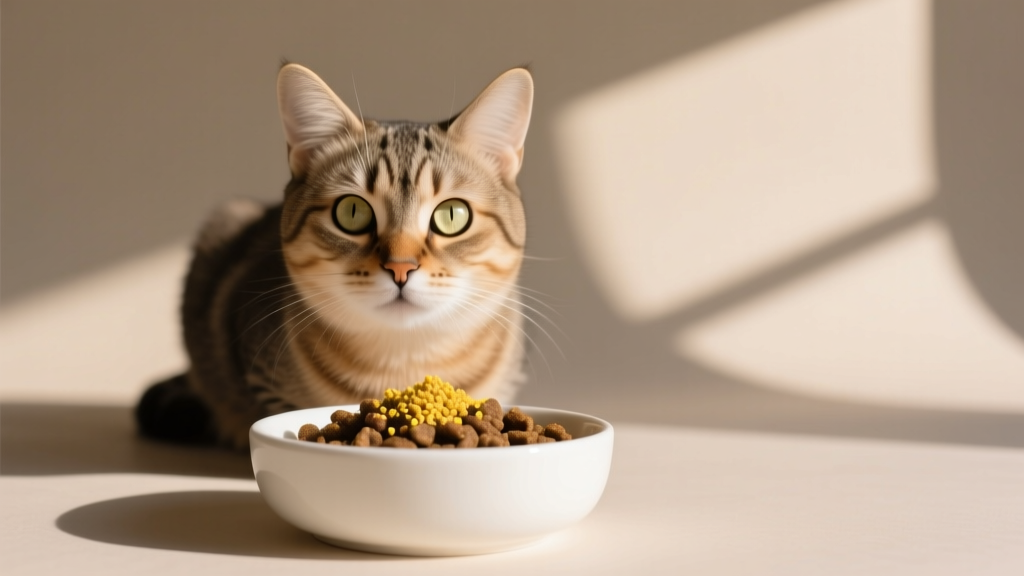
A small amount of yeast powder can change the aroma and surface texture of food quickly. This can be useful for cats who reject food after formulation changes or who show “food fatigue” on a long-term diet. Compared with many toppers (like tuna juice or broth), nutritional yeast adds minimal moisture and won’t dilute the food as much—though wet food and added water can still be excellent strategies for hydration.
Reason #3: B-vitamin content (often fortified) and learned preference
Nutritional yeast naturally contains B vitamins, and many products are fortified with additional B vitamins. B vitamins are involved in energy metabolism, skin health, and neurologic function, but most complete cat foods already provide adequate amounts.
If a cat has a history of mild deficiency due to poor intake (for example, during an illness), a palatable B-vitamin-rich topping may become associated with feeling better, reinforcing preference. That said, this is not a reason to use yeast as a “supplement plan” without veterinary guidance.
Reason #4: A safe “novel” topper for some cats (but not all)
Some cats with sensitivity to certain proteins (chicken, fish) may tolerate a tiny amount of nutritional yeast better than common meat-based toppers. However, yeast can still trigger GI upset in some individuals, and it should not be assumed hypoallergenic.
What the evidence supports—and what it doesn’t
- Supported by nutrition and behavior principles: aroma-driven palatability is a major determinant of feline intake; savory compounds can enhance acceptance.
- Not supported: nutritional yeast as a substitute for taurine, animal protein, or a complete diet; yeast as a cure for urinary disease, dental disease, or allergies.
Nutritional yeast benefits and limits at a glance
| Potential benefit | Why it may help | Main limitations/cautions |
|---|---|---|
| Improved appetite/palatability | Strong savory aroma encourages eating | Can create topper dependency if overused |
| Small amount adds flavor without many calories | Useful for picky cats or weight management plans | Still adds “extras”; keep treats/toppers <10% of calories when possible |
| Provides B vitamins (often fortified) | B vitamins support metabolism | Fortified products may oversupply certain nutrients if used heavily; not a balanced supplement plan |
| May reduce need for fishy toppers | Alternative to tuna juice for cats that love strong smells | Does not provide omega-3s like fish; not a nutrient equivalent |
4. Practical recommendations for cat owners
If you want to try nutritional yeast as a topper, treat it like a palatability tool, not a dietary foundation.
- Choose plain nutritional yeast with no garlic, onion, spices, “cheese” blends, or added salt.
- Start tiny: a pinch dusted over food is enough for most cats.
- Use it to support balanced food: sprinkle on a complete-and-balanced wet or dry cat food, not on an unbalanced homemade diet.
- Use intermittently: rotate topper-free meals to prevent refusal without the sprinkle.
- Watch stool quality and appetite: discontinue if vomiting, diarrhea, gassiness, or itching develops.
5. Comparing options: nutritional yeast vs other palatability strategies
| Approach | Pros | Cons | Best use |
|---|---|---|---|
| Nutritional yeast (plain) | Strong savory aroma; easy to control dose | Can cause GI upset in some; fortified versions vary | Picky cats needing a mild flavor boost |
| Freeze-dried meat toppers | Highly species-appropriate; high palatability | More calories; can unbalance diet if used heavily | Encouraging eating during transitions |
| Warm the wet food | Boosts aroma without adding ingredients | Must avoid overheating; some cats dislike texture changes | First-line option for mild pickiness |
| Water/unsalted broth added to food | Supports hydration; enhances smell | Broths can hide onion/garlic/salt; can dilute calories | Cats prone to low water intake (vet-guided for medical cases) |
| Tuna juice/fish toppers | Very enticing to many cats | Can create strong preference; sodium; not balanced; fish sensitivity possible | Short-term appetite encouragement only |
6. Common mistakes and misconceptions to avoid
- Myth: “Nutritional yeast is basically cheese for cats.”
Fact: The aroma may resemble cheese to humans, but it’s not dairy and doesn’t provide the nutrition of meat. It’s a flavor enhancer, not a primary food. - Mistake: Using seasoned “cheesy” shaker blends.
Many blends contain garlic or onion powder, which can damage red blood cells and cause serious illness in cats. Use plain nutritional yeast only. - Myth: “If my cat loves it, it must mean they need B vitamins.”
Preference doesn’t reliably indicate deficiency. Most commercial cat diets already supply adequate B vitamins. If you suspect deficiency, ask your vet for appropriate diagnostics and guidance. - Mistake: Over-relying on toppers to get a cat to eat.
A cat that won’t eat without a topper may be dealing with dental pain, nausea, stress, food aversion, or medical disease. Persistent pickiness deserves a veterinary check. - Myth: “Nutritional yeast can replace taurine or animal protein.”
Cats require nutrients that come from animal tissues. Yeast does not fulfill those obligate carnivore requirements.
7. How to implement changes safely (transition tips)
Any change in a cat’s food routine should prioritize gastrointestinal tolerance and consistent calorie intake. Sudden changes can trigger food refusal or GI upset.
- Start with a micro-dose: dust a tiny pinch on top once daily for 2–3 days.
- Increase only if needed: if your cat responds well and stools stay normal, you can use a slightly heavier dusting.
- Pair with a stable base diet: keep the main food constant while trialing the topper so you can identify what causes any reaction.
- Use “two-bowl testing” for picky cats: offer the same base food in two bowls—one with yeast and one without—to see whether it truly increases acceptance.
- Do not use to mask refusal: if your cat is eating significantly less, hiding it with toppers can delay diagnosis.
Safety red flags: If your cat eats very little or nothing for 24 hours (or a kitten goes 12 hours with minimal intake), contact a veterinarian promptly. Cats are vulnerable to hepatic lipidosis (fatty liver disease) with prolonged poor intake.
8. Special considerations: age, health conditions, and activity level
Kittens
Kittens need energy-dense, complete growth diets. Toppers should be minimal because they can displace balanced nutrition. If you use nutritional yeast, use only a tiny pinch and focus on feeding a high-quality kitten formula. Discuss any supplementation with your veterinarian.
Adult cats (healthy)
For healthy adults, nutritional yeast can be a helpful occasional topper to improve meal enthusiasm, especially if you’re transitioning from dry to wet food or rotating flavors. Keep toppers modest so the primary diet remains complete and balanced.
Seniors
Senior cats may have reduced smell sensitivity, dental issues, or chronic conditions that affect appetite. A stronger aroma can help, but appetite loss in seniors should never be assumed to be “just aging.” If nutritional yeast suddenly becomes necessary to get your cat to eat, schedule a vet visit and consider bloodwork, dental evaluation, and blood pressure assessment.
Chronic kidney disease (CKD)
Cats with CKD often have nausea and reduced appetite. Palatability strategies can be useful, but CKD diets are carefully formulated for phosphorus and protein balance. Adding toppers can unintentionally change that balance. Ask your veterinarian whether nutritional yeast is appropriate and what amount is safe for your cat’s current diet plan.
Urinary issues (FLUTD, crystals)
Hydration and urine dilution are common goals. Nutritional yeast does not replace wet food, added water, or veterinary therapeutic diets when indicated. If your cat has urinary disease, discuss safe palatability options that won’t increase sodium or disrupt prescribed nutrition.
Food allergies or sensitive stomachs
Some cats do fine with nutritional yeast; others may develop loose stool or vomiting. If your cat is on a veterinary elimination diet, do not add yeast (or any topper) unless your veterinarian approves, since it can invalidate the diet trial.
Overweight or very active cats
For weight loss, nutritional yeast can be a low-calorie way to make wet food more appealing, potentially supporting adherence to a calorie-controlled plan. For highly active cats, the priority remains adequate calories and protein from a balanced diet; yeast is not an energy source replacement.
FAQ
1) Is nutritional yeast safe for cats?
Plain nutritional yeast is generally considered safe in small amounts for many cats, but individuals can react with GI upset. Avoid any product with garlic/onion, added salt, spices, or flavor blends. If your cat has a medical condition or is on a prescription diet, ask your veterinarian before using it.
2) How much nutritional yeast can I sprinkle on my cat’s food?
Use the smallest amount that works—often just a pinch. There isn’t a universal dose proven for all cats because products vary and cats vary. If you find yourself needing more and more to get your cat to eat, stop and consult your vet to look for underlying causes.
3) Does nutritional yeast provide taurine?
No. Taurine is an essential nutrient for cats and is reliably supplied by animal tissues and properly formulated cat foods. Nutritional yeast should not be used to “boost taurine,” and it does not make a homemade diet complete.
4) My cat refuses food without yeast—what should I do?
First, rule out illness, dental pain, nausea, or stress with your veterinarian. Then work on reducing dependency by offering some meals without toppers, warming the food, rotating textures (pate vs shreds), and using yeast only intermittently. If appetite remains poor, seek veterinary guidance promptly.
5) Is fortified nutritional yeast better than unfortified for cats?
Not necessarily. Fortified products can add extra B vitamins, but cats eating complete-and-balanced food usually don’t need more. Fortification also makes nutrient levels less predictable when used frequently. If you want a topper mainly for aroma, a plain product without unnecessary additives is often the simpler choice—confirm with your vet for your cat’s situation.
6) Can I use nutritional yeast to transition my cat from dry to wet food?
Often, yes. Sprinkling a tiny amount on wet food (and warming it slightly) can increase acceptance. Transition gradually over 7–14 days, monitor stool quality, and ensure your cat continues eating adequate calories each day.
Practical takeaway
Cats often prefer food with nutritional yeast because it amplifies savory aromas that align with feline feeding instincts. As a topper, it can be a useful tool for picky eating and diet transitions, but it should remain a small, optional addition to a complete-and-balanced diet. If your cat’s appetite changes suddenly, if you’re managing a medical condition, or if you’re considering any significant diet change, consult your veterinarian for a plan tailored to your cat.
For more cat-feeding strategies, label-reading tips, wet vs dry comparisons, and life-stage nutrition guides, explore the latest articles on catloversbase.com.