Why Cats Prefer Food Scattered vs Piled in Bowl
1) Why this topic matters for cat health
Many cat owners notice a pattern: a cat walks up to a full bowl, sniffs, eats a few bites, then starts pawing food out onto the floor—or seems more interested once pieces are scattered. This isn’t “being difficult.” How food is presented can change how much a cat eats, how fast they eat, how stressed they feel at mealtimes, and even how well they maintain a healthy weight.
Food presentation affects:
- Calorie control (gobbling vs paced eating)
- Hydration and digestion (especially for cats prone to vomiting or hairballs)
- Stress and confidence in multi-cat homes
- Food safety and sanitation (scattered kibble can attract pests; wet food spoils fast)
- Long-term health by supporting natural feeding behaviors that reduce boredom and overfeeding
Understanding why cats may prefer scattered food helps you choose feeding methods that match feline biology, protect dental and gastrointestinal health, and support stable body condition. For any significant diet or feeding routine change—especially if your cat has a medical condition—check in with your veterinarian.
2) Scientific background: feline nutritional needs and obligate carnivore biology
Cats are obligate carnivores. Their metabolism and nutrient requirements evolved around hunting multiple small prey items daily rather than eating one large “meal” from a bowl.
| Feline biology trait | What it means nutritionally | How it relates to scattered vs bowl feeding |
|---|---|---|
| High protein requirement | Cats need ample animal-based protein to maintain lean mass and organ function | Frequent small feedings often match natural intake patterns better than one big bowl |
| Unique amino acid needs (e.g., taurine) | Must come from animal tissues or balanced diets | Feeding style doesn’t replace balanced nutrition; it can, however, improve appetite and consistency |
| Predatory feeding behavior | “Hunt-catch-eat” is hardwired and rewarding | Scattered food mimics searching and capturing, lowering boredom and stress |
| Smell-driven appetite | Olfaction is key; stress reduces intake | Food location and presentation can increase interest and reduce intimidation around a bowl |
| Small stomach, grazing tendencies | Many cats prefer several small meals | Scattering can naturally slow eating and portion feeding can be divided throughout the day |
Feeding behavior is not separate from nutrition. A perfectly balanced diet does less good if a cat eats too little due to stress, eats too fast and vomits, or overeats because the bowl is always full and easy to access.
3) Detailed analysis: why scattered food can be more appealing than a pile in a bowl
A) “Hunting mode” vs “bowl mode”
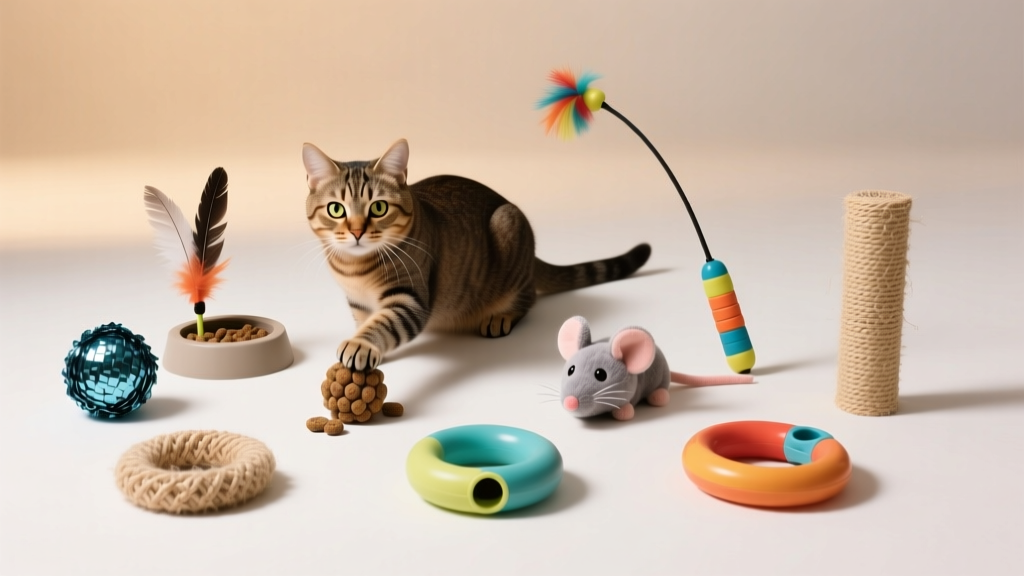
In nature, cats catch many small prey items. A bowl piled with food is a human convenience; it doesn’t resemble how cats evolved to eat. Scattering kibble or placing small portions in multiple spots taps into foraging behavior. Many cats find the act of searching rewarding, which can increase interest in food and decrease boredom-related behaviors (begging, knocking objects over, waking owners for attention).
B) Whisker stress and bowl shape sensitivity
Some cats dislike deep or narrow bowls. When whiskers repeatedly brush the sides, it can be uncomfortable for certain individuals (often called “whisker fatigue,” though it’s better understood as whisker stress/sensitivity). If the bowl is tight, a cat may pull food out to eat from the floor where whiskers aren’t pressed against the rim.
Signs bowl shape may be a problem:
- Eating only from the center, leaving a ring of food
- Scooping food out with a paw
- Sniffing and walking away despite being hungry
- Eating better from a plate or shallow dish
C) Scent distribution and palatability cues
Smell strongly influences feline appetite. A large pile in a bowl can trap odors, especially if oils have built up on the bowl surface or if the food is stale. Scattering increases surface area and may release aroma differently. For wet food, spreading it thinly on a plate can increase odor exposure and make it easier to lick.
D) Pace of eating: scarf-and-barf vs slow, steady intake
Some cats eat too quickly from a bowl, especially if they’re anxious, competing with other pets, or used to inconsistent feeding. Fast eating can contribute to regurgitation, vomiting, and poor satiety signaling. Scattering or using puzzle feeders can slow intake, giving the gut time to respond and reducing gulping.
E) Resource guarding and multi-cat stress
In multi-cat households, a bowl can become a “contested resource.” Even subtle intimidation—staring, blocking hallways, hovering near food—can make a cat avoid the bowl. Placing small portions in multiple safe locations (or using microchip feeders) helps reduce conflict. A cat may prefer scattered food because it feels safer to eat away from a single exposed spot.
F) Negative associations with the bowl area
If the bowl is near a loud appliance, a busy walkway, or next to the litter box, a cat may be reluctant to eat there. A cat that has felt nauseated after eating (from hairballs, diet intolerance, or medical issues) may also develop a learned aversion to a particular bowl or location. Scattered feeding inadvertently changes the context and can appear to “fix” the problem.
G) Dental discomfort and food mechanics
Cats with dental disease may approach a bowl and then hesitate. They may do better when food is presented in smaller, spread-out amounts because they can take tiny bites or lick more comfortably. Dental pain is common and often missed. If your cat suddenly starts pulling food out, dropping kibble, chewing on one side, or showing bad breath, schedule a veterinary exam.
4) Practical recommendations for cat owners
Step 1: Rule out medical causes
- Sudden behavior change, reduced appetite, weight loss, vomiting, or drooling warrants a vet visit.
- Dental pain, nausea, arthritis (difficulty bending to bowls), and gastrointestinal disease can all change feeding behavior.
Step 2: Optimize the “bowl” setup first
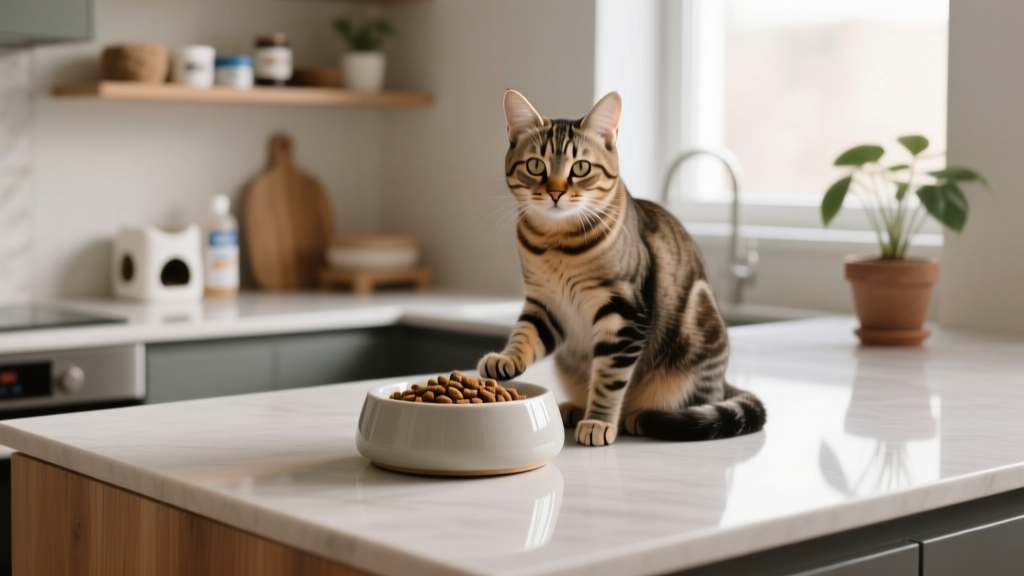
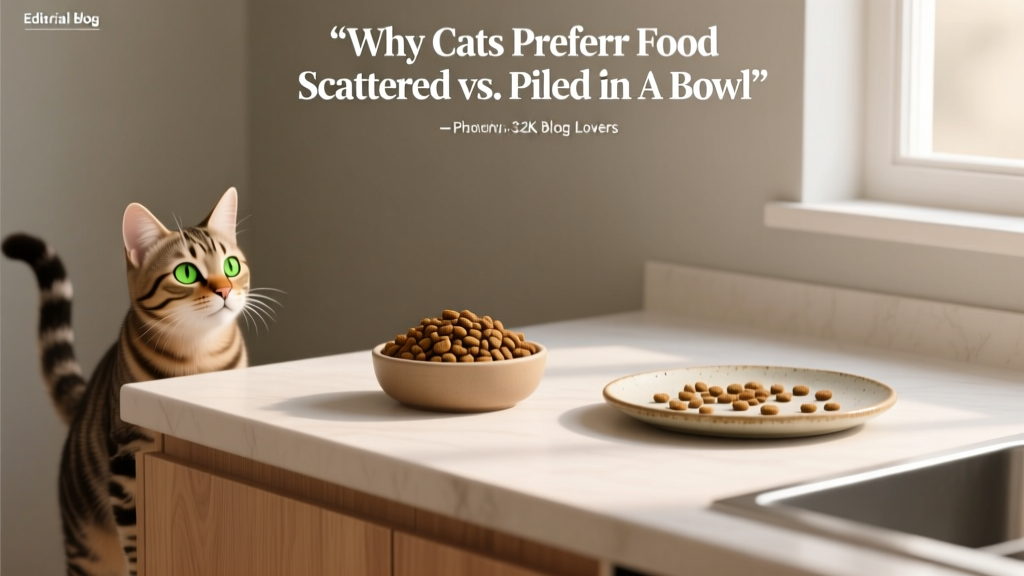
- Use a wide, shallow dish or a small plate.
- Choose stainless steel or ceramic (easy to clean, less odor retention than plastic).
- Wash bowls daily; oils can create off-odors.
- Place food in a quiet, low-traffic area, away from the litter box.
- For some cats, a raised dish helps comfort (especially arthritis).
Step 3: Add controlled “scatter” or foraging
If you want to scatter feed, do it strategically so nutrition stays measured and hygiene stays reasonable:
- Scatter only dry kibble or dry treats (avoid scattering wet food).
- Use a clean mat or washable tray area to contain crumbs.
- Measure the total daily portion first, then distribute it.
- Use multiple micro-locations: near a cat tree, a quiet corner, and a hallway edge (not near doors that open outside).
5) Comparison of options and approaches
| Approach | Best for | Pros | Cons / cautions |
|---|---|---|---|
| Wide shallow dish / plate | Cats that paw food out or avoid deep bowls | Reduces whisker stress; easy to clean | May not slow fast eaters |
| Scatter feeding (measured kibble) | Bored indoor cats; cats that gulp | Encourages movement and foraging; can slow eating | Can attract pests; harder to monitor intake in multi-cat homes |
| Puzzle feeder / foraging toy | Weight management; enrichment; anxious cats | Portion control + mental work; slows eating | Some cats frustrate easily; must be cleaned regularly |
| Slow feeder bowl (wide maze style) | Fast eaters | Easy routine; reduces gulping | May still bother whiskers if narrow; some cats dislike it |
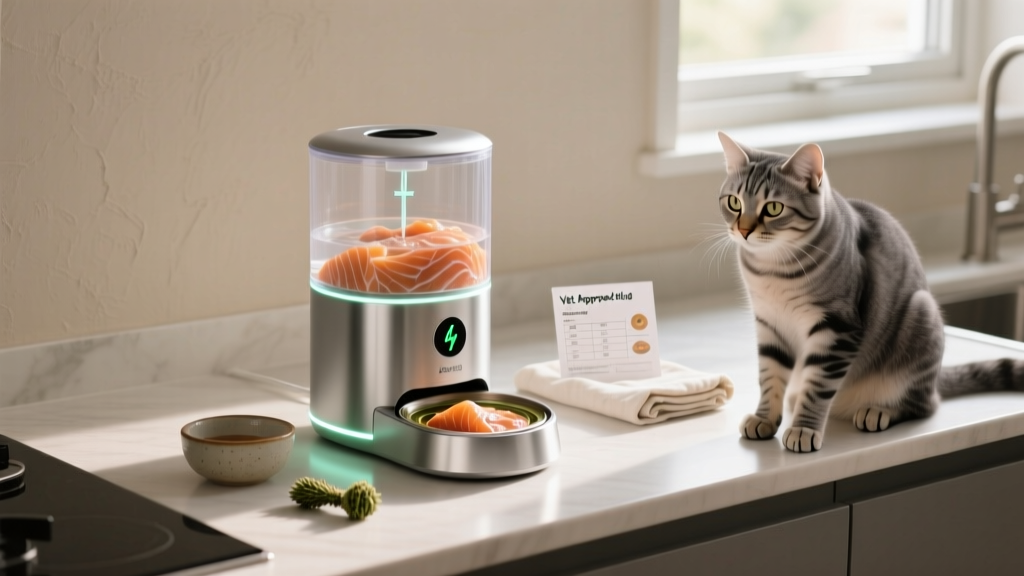
| Multiple small meals (scheduled) | Cats prone to vomiting; multi-cat homes | More natural meal rhythm; supports stable appetite | Requires time or automatic feeder |
| Microchip feeder / separate feeding stations | Multi-cat homes with diet conflicts | Accurate intake tracking; reduces bullying | Cost; training period |
6) Common mistakes and misconceptions to avoid
- Myth: “If my cat prefers scattered food, they’re just spoiled.”
Reality: Food presentation can trigger instinctive foraging, reduce whisker stress, and improve comfort—especially for sensitive cats. - Mistake: Free-feeding without measuring.
Even if food is scattered, calories still count. Unmeasured feeding is a common driver of feline weight gain. - Myth: “Kibble cleans teeth, so it’s automatically better.”
Some dental diets can help reduce tartar due to specific texture and structure, but typical kibble is not a toothbrush. Dental health still benefits from veterinary dental care and (when possible) tooth brushing. - Mistake: Scattering wet food.
Wet food spoils quickly and can create bacterial risk and odor. Use a plate or a lick mat that can be washed. - Myth: “If my cat plays with food, they’re not hungry.”
Many cats “play” as part of prey behavior. They may be hungry but prefer engaging feeding styles. - Mistake: Ignoring sudden changes in eating behavior.
A cat that suddenly refuses the bowl, eats less, or drops food may have pain or illness. Get a veterinary assessment.
7) How to implement changes safely (transition tips)
Cats thrive on predictability. Change feeding methods gradually to avoid stress and to ensure your cat still eats enough each day.
- Start with a small percentage shift: Move 10–20% of the daily kibble into a puzzle feeder or scatter area, keeping the rest in the usual dish.
- Keep total calories consistent: Measure the daily amount once, then divide it.
- Monitor intake and litter box output: Appetite, stool quality, and urine output can reveal whether the change is working.
- Make it easy at first: Scatter in a small, predictable zone or use beginner-level puzzles so your cat doesn’t get frustrated.
- Maintain hygiene: Sweep/vacuum daily; wash mats and feeders regularly to prevent rancid oils and bacteria.
- Use timed feeding if needed: If your cat becomes too fixated on hunting for every crumb, schedule foraging sessions and then remove leftovers after a set time.
If your cat eats markedly less for more than 24 hours, contact your veterinarian promptly. Cats are at risk for hepatic lipidosis (fatty liver disease) with prolonged appetite loss, especially if overweight.
8) Special considerations (age, health conditions, activity level)
Kittens
- Need higher calories per pound and frequent meals.
- Foraging is fine, but ensure kittens can reliably access enough food—avoid overly difficult puzzles.
Adult indoor cats
- Often benefit the most from foraging for weight maintenance and enrichment.
- Scatter feeding can increase daily movement in a low-stimulation environment.
Senior cats
- Arthritis is common; consider raised, wide dishes and easy-access feeding locations.
- Smell sensitivity may decline; gently warming wet food (not hot) can improve aroma.
- Dental disease is more likely; veterinary oral exams matter.
Overweight cats
- Puzzle feeders and measured scatter feeding can slow intake and improve satiety.
- Work with a veterinarian on a calorie target and weigh-ins; rapid weight loss is unsafe.
Diabetes or other medical diets
- Consistency matters. Meal timing and portion control may be tied to insulin dosing.
- Use controlled foraging (measured amounts in a feeder) rather than untracked scattering.
Urinary tract disease
- Many cats with urinary issues benefit from higher moisture intake. Wet food and added water may be recommended by your veterinarian.
- You can still use enrichment: spread wet food on a plate or use washable lick mats rather than scattering.
Multi-cat households
- Track who eats what. Scattering may complicate monitoring.
- Use separate rooms, microchip feeders, or supervised feeding sessions if diets differ.
9) FAQ
Why does my cat take kibble out of the bowl and eat it on the floor?
The most common reasons are bowl discomfort (especially deep/narrow bowls), preference for foraging behavior, or feeling exposed while eating. Try a wide shallow dish, move the feeding station to a quieter spot, and consider a puzzle feeder. If this behavior is new, rule out dental pain or nausea with your veterinarian.
Is scatter feeding healthy for cats?
It can be, when done with measured portions and good hygiene. Scatter feeding may slow eating and add enrichment, which supports weight management and reduces boredom. It’s less ideal if you can’t track intake (multi-cat homes) or if pests are a concern.
Does scattering food prevent vomiting?
It can help some cats that vomit due to fast eating by slowing intake. Vomiting can also be caused by hairballs, food intolerance, gastrointestinal disease, parasites, or other medical issues. Frequent vomiting should be evaluated by a veterinarian.
Should I switch from a bowl to a puzzle feeder for every meal?
Not necessarily. Many cats do well with a hybrid approach: part of the daily ration in a dish and part in a puzzle feeder. The best plan is one your cat can succeed with consistently while maintaining a healthy body condition and stable appetite.
Is a plate better than a bowl for cats?
For many cats, yes—wide, shallow dishes or plates reduce whisker contact and make it easier to access food. Choose ceramic or stainless steel and wash daily to prevent odor buildup.
My cat prefers scattered food—does that mean the diet is wrong?
Not automatically. Preference for scattered food is often about feeding mechanics and natural behavior, not nutrient balance. That said, if your cat is picky, loses weight, or seems uncomfortable, ask your veterinarian to review diet choice, calories, and any possible medical causes.
Veterinary guidance: Your veterinarian (or a board-certified veterinary nutritionist) can help you match feeding style, calorie needs, and diet type to your cat’s age, body condition, and health history.
If you want more practical, science-based feeding tips, explore additional cat nutrition guides on catloversbase.com and build a routine that supports a healthy weight, healthy digestion, and a happier mealtime experience.