Why Cats Prefer Food Offered by Hand vs Bowl Sometimes
1) Why this nutrition topic matters for cat health
When a cat refuses a bowl but happily eats from your hand, it’s easy to assume they’re being “picky” or trying to train you. Sometimes that’s partly true, but there are also real health and nutrition reasons behind the behavior. Hand-feeding preference can signal stress around the feeding setup, pain, nausea, poor appetite, dental disease, or a learned association with safety and attention.
From a nutrition standpoint, the biggest risk is that a bowl refusal can quickly turn into inadequate calorie and protein intake. Cats are metabolically sensitive to reduced food intake, and prolonged under-eating can contribute to hepatic lipidosis (fatty liver disease), especially in overweight cats. Understanding why your cat prefers hand-feeding helps you protect consistent nutrition while addressing underlying causes.
2) Scientific background: feline nutritional needs and obligate carnivore biology
Cats are obligate carnivores. Their bodies are designed to thrive on animal-based protein and fat, with limited ability to adapt to low-protein diets. Key biological points that shape feeding behavior and nutritional risk:
- High protein requirement: Cats use protein continuously for energy and can’t “downshift” protein metabolism as easily as omnivores.
- Essential nutrients from animal tissues: Taurine, arachidonic acid, preformed vitamin A, and certain B vitamins are dietary essentials most reliably supplied by animal ingredients.
- Strong scent-driven appetite: Smell plays a major role in food acceptance; anything that blunts smell (illness, stress, stale food, cold food) can reduce bowl eating.
- Small, frequent meal pattern: Many cats naturally prefer multiple small meals, aligning with a “hunt-eat” rhythm.
- Hydration strategy: Cats evolved from desert-adapted ancestors and often have low thirst drive. Wet food can be beneficial for total water intake, urinary health, and satiety, depending on the cat’s needs.
Because cats are nutritionally specialized, any feeding problem that reduces intake isn’t just a behavior issue—it can become a medical risk quickly. If your cat’s eating pattern changes suddenly or your cat stops eating for 24 hours (or less in a kitten), contact your veterinarian.
3) Detailed analysis: why hand-feeding may “work” when the bowl doesn’t
Reason 1: Bowl-related stress (location, noise, other pets)
Cats are sensitive to their environment. A bowl placed near a litter box, washing machine, busy hallway, or another pet’s “territory” can feel unsafe. Hand-feeding shifts the context: your presence may act as a security cue, and the cat can choose distance and posture more freely than when hovering over a bowl in a disliked spot.
Reason 2: Whisker fatigue and bowl shape
Some cats dislike deep or narrow bowls that brush the whiskers repeatedly. Whiskers are sensory organs; constant contact can be uncomfortable for certain cats. Hand-feeding often avoids whisker contact altogether, so the same food suddenly becomes acceptable.
Reason 3: Odor and freshness differences
Hand-feeding tends to involve smaller portions offered more frequently. That means the food is fresher, warmer, and more aromatic. Many cats reject food that has been sitting out, has dried edges, or has absorbed odors from the fridge. When you offer a bite by hand, you’re essentially presenting “peak aroma” food.
Reason 4: Temperature and palatability
Cold food has reduced odor. Slight warming (to roughly body temperature) increases aroma and can enhance acceptance. Cats may accept warmed bites from your fingers while ignoring the same food cold in a bowl.
Reason 5: Learned social reinforcement
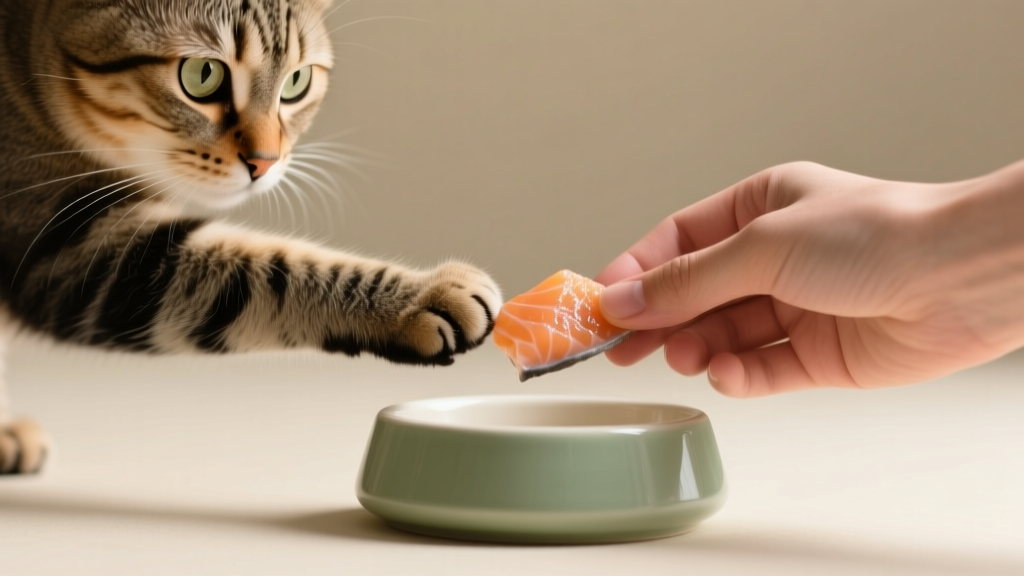
Hand-feeding provides attention, soothing voice, petting, and a sense of bonding. Over time, a cat can learn: “If I ignore the bowl, the human brings the best service.” This isn’t “manipulation” in a moral sense—it’s basic learning. If hand-feeding is the only time the cat receives focused interaction, it can become the preferred eating routine.
Reason 6: Pain or nausea that makes posture at the bowl unpleasant
Eating posture matters. Leaning down to a bowl can be uncomfortable for cats with:
- Dental disease (gingivitis, resorptive lesions, broken teeth)
- Neck or spinal pain/arthritis
- Nausea or acid reflux
- Upper respiratory infections (reduced smell + feeling unwell)
Hand-feeding lets the cat keep their head in a more comfortable position and take smaller bites with pauses. If your cat’s preference for hand-feeding is new, persistent, or paired with drooling, pawing at the mouth, bad breath, weight loss, vomiting, or hiding, schedule a veterinary exam.
Reason 7: Competition in multi-cat homes
Some cats won’t eat if another cat is nearby, even if the other cat is “friendly.” Hand-feeding often happens in a separate room or closer to you, which can act as a guard against competition. This can be especially relevant for shy cats, seniors, and cats with a history of food insecurity.
Reason 8: Early feeding history and trust
Kittens who were hand-fed, bottle-fed, or closely attended during meals may associate hand-delivered food with comfort. Rescue cats may also trust a human hand more than a stationary object if they learned to approach people for resources.
4) Practical recommendations for cat owners
Step-by-step checks (nutrition-first approach)
- Confirm intake: Measure daily food amounts. Track how much is actually eaten, not just offered.
- Weigh your cat: Weekly weigh-ins (baby scale works well) can catch problems early.
- Assess appetite vs. ability: Does your cat want to eat but struggles (drops food, chews one-sided)? That suggests dental or pain issues.
- Optimize aroma: Offer fresh portions; warm wet food slightly; add a teaspoon of warm water to boost scent.
- Adjust the feeding station: Quiet, safe, away from litter and heavy traffic.
Feeding setup upgrades that often reduce hand-feeding dependence
| Issue | What to try | Why it helps |
|---|---|---|
| Whisker discomfort | Wide, shallow plate or whisker-friendly bowl | Reduces whisker contact and stress |
| Neck/arthritis discomfort | Raised bowl/plate (low riser) with stable base | More comfortable posture; less strain |
| Food dries out / loses smell | Smaller portions more often; cover and refrigerate leftovers | Improves freshness and aroma |
| Multi-cat competition | Separate feeding rooms; microchip feeders if needed | Reduces guarding and intimidation |
| Environmental stress | Quiet corner, consistent schedule, predictable routine | Improves perceived safety at meals |
5) Comparison of approaches: hand-feeding vs bowl strategies
| Approach | Pros | Cons | Best used when |
|---|---|---|---|
| Hand-feeding | Boosts intake quickly; helpful for shy cats; can support appetite during recovery | May reinforce refusal of bowl; harder to measure intake; hygiene concerns | Short-term appetite support, transitions, post-illness (with vet guidance) |
| Whisker-friendly plate | Often solves “bowl aversion” cheaply; easy cleaning | May be messier; some cats prefer deeper dishes | Cats that sniff and walk away, or paw food out of bowls |
| Raised feeding station | Improves comfort; can reduce gulping for some cats | Too-high risers can be awkward; needs stability | Seniors, arthritis, neck discomfort |
| Puzzle feeder / lick mat | Slows eating; enrichment; can reduce stress | Not ideal if appetite is fragile; cleanup needed | Boredom, fast eaters, indoor cats needing enrichment |
| Microchip feeder | Prevents food stealing; supports diet accuracy | Cost; training required | Multi-cat homes with different diets or bullying |
6) Common mistakes and misconceptions to avoid
- Myth: “My cat is just stubborn.”
Reality: A sudden preference for hand-feeding can indicate dental pain, nausea, or stress. Behavior changes deserve investigation, especially if appetite or weight changes. - Mistake: Free-feeding all day to “make sure they eat.”
Free-feeding can hide appetite changes and promote overeating in some cats. Measured meals help you detect problems early and manage weight more precisely. - Mistake: Switching foods repeatedly within days.
Rapid changes can cause GI upset and can teach a cat to hold out for novelty. If a medical issue is ruled out, give changes time and transition gradually. - Myth: “Hand-feeding is always bad behavior to stop immediately.”
Reality: Hand-feeding can be a valuable short-term tool to maintain calorie intake, especially during recovery or transitions. The goal is to use it strategically, not as the only method forever. - Mistake: Ignoring oral health.
Dental disease is extremely common in adult cats. If your cat licks gravy but avoids chunks, drops kibble, or chews oddly, book an exam.
7) How to implement changes safely (transition tips)
If your cat is eating reliably from your hand, the priority is maintaining consistent nutrition while you guide them back toward independent eating. If your cat is eating poorly overall, consult a veterinarian promptly before attempting a “tough love” approach.
Gentle transition plan (often effective in 1–3 weeks)
- Start with a plate next to your hand: Offer a bite from your hand, then place the next bite on the plate immediately.
- Move the food source gradually: Over days, reduce hand bites and increase plate bites. Keep your body nearby at first.
- Use micro-portions: Present small, fresh amounts. Refresh frequently rather than leaving a large portion to dry out.
- Enhance aroma without unbalancing the diet: Warm the food slightly or add warm water. Avoid excessive toppers that dilute nutrients.
- Build a predictable routine: Same location, same mealtimes. Cats often eat better with consistency.
- Reinforce independence: Calm praise after they eat from the plate; avoid inadvertently rewarding refusal with extra special foods.
Safety notes
- Never force a cat to fast to “teach a lesson.” If your cat refuses food, contact your veterinarian for guidance.
- Hygiene: Wash hands before and after. Avoid hand-feeding if there’s risk of bites or if you’re handling raw diets (which carry pathogen risks for people and pets).
8) Special considerations: age, health conditions, activity level
Kittens
- Kittens have small energy reserves. A kitten that won’t eat is more urgent than an adult cat.
- Hand-feeding can help shy kittens, but consistent bowl habits are important for long-term routine.
Adult cats
- Monitor weight trends. A subtle drop may be the first sign of dental disease or chronic GI issues.
- Active cats may prefer multiple smaller meals; consider timed feeders for structure.
Senior cats
- Arthritis and dental disease are common. Raised plates and softer textures may help.
- Ask your vet about regular bloodwork and blood pressure checks; kidney disease and hyperthyroidism can affect appetite.
Cats with chronic conditions
- Kidney disease: Appetite can fluctuate. Vet-directed renal diets may be recommended; transitions should be slow and closely monitored.
- Diabetes/obesity: Measured meals and diet composition matter. Hand-feeding can make portions harder to track unless you pre-measure each meal.
- Dental disease: Cats may prefer softer foods, but many still eat kibble despite pain—don’t assume chewing is comfortable. Treatment may dramatically improve appetite.
- GI sensitivity: Frequent diet changes can worsen vomiting/diarrhea. A vet may recommend a controlled diet trial rather than constant brand switching.
Low-activity indoor cats
- Attention-seeking can look like food preference. Add play sessions and enrichment so meals aren’t the only “interaction currency.”
9) FAQ
Is it okay to hand-feed my cat every day?
It can be okay short-term, especially if it keeps your cat eating during stress, recovery, or transitions. Long-term, it’s usually better to work toward independent eating so you can measure intake accurately and reduce dependence. If your cat only eats when hand-fed, schedule a veterinary check to rule out pain or illness.
Does my cat prefer hand-feeding because they love me more?
Your presence can feel safe and comforting, and cats can form strong positive associations with the person who feeds them. That said, a hand-feeding preference can also reflect discomfort with the bowl setup, reduced smell, or medical problems. Treat it as useful information about your cat’s experience, not just affection.
Should I change the food if my cat won’t eat from a bowl?
Not automatically. First, adjust the feeding setup (plate shape, location, freshness, temperature) and confirm your cat is healthy. Frequent food switching can create GI upset and reinforce “waiting for something better.” If your cat’s appetite has changed suddenly, consult your veterinarian before making major diet changes.
What bowl is best for cats that avoid bowls?
Many cats do well with a wide, shallow dish or even a small plate, which reduces whisker contact. For seniors or cats with joint pain, a slightly raised, stable feeding surface can improve comfort.
My cat eats treats from my hand but not their regular food. What does that mean?
This can happen when treats are more aromatic, higher in fat/salt, or strongly preferred. It can also mean your cat feels unwell and is only willing to eat “high value” foods. Avoid replacing balanced meals with lots of treats; if regular food intake is dropping, contact your veterinarian.
When is hand-feeding preference a red flag?
Seek veterinary advice quickly if you see any of the following: reduced total intake, weight loss, drooling, bad breath, vomiting, diarrhea, hiding, changes in drinking/urination, coughing/gagging while eating, or refusal to eat for 24 hours (or any prolonged refusal in kittens).
Hand-feeding can be a helpful tool, but it should never hide a medical issue or replace a balanced, complete diet. For personalized nutrition planning—especially if your cat has health conditions—work with your veterinarian or a board-certified veterinary nutritionist.
For more practical feeding strategies, diet comparisons, and evidence-based nutrition tips, explore the cat nutrition guides on catloversbase.com.