Why Cats Need Dietary Glutamine for Gut Lining Health
1. Why this topic matters for cat health
Your cat’s digestive tract isn’t just a food tube. It’s a living barrier that must absorb nutrients while blocking bacteria, toxins, and inflammatory triggers from entering the bloodstream. When that barrier is strong, cats tend to have better stool quality, steadier appetites, more reliable nutrient absorption, and fewer digestive upsets during stress or diet changes. When the gut lining is compromised, you may see chronic soft stools, vomiting, gassiness, poor coat quality, or flare-ups of inflammatory bowel problems.
Glutamine is widely discussed in human and canine gut-health circles, and cat owners often wonder if it matters for felines too. The short, evidence-based answer: glutamine is a key fuel and building block for intestinal lining cells and immune tissues. In certain situations, a cat’s demand can rise enough that diet and the body’s own production may not comfortably meet needs, making dietary glutamine (or glutamine-rich animal proteins) relevant for gut lining support.
This article explains what glutamine does, why cats may benefit, how to choose food and supplements wisely, and when to involve your veterinarian—especially if your cat has chronic GI signs or underlying disease.
2. Scientific background: feline nutritional needs and obligate carnivore biology
Cats are obligate carnivores. Their metabolism and nutrient requirements evolved around animal tissues, not plant-based diets. This matters for gut health in several ways:
- High protein requirement: Cats have a higher baseline need for dietary protein and amino acids compared with omnivores, because they continuously use amino acids for energy and key metabolic pathways.
- Amino acids are central nutrients: Taurine is the famous example, but many amino acids are “conditionally essential” depending on life stage or illness. Glutamine can fall into this category.
- Shorter digestive transit and distinct microbiome patterns: Cats generally have a GI tract and microbiome shaped by animal-based diets. Sudden changes, low-digestibility ingredients, or excessive fermentable components can be harder on sensitive cats.
While cats can synthesize glutamine in the body (primarily from glutamate and ammonia, using the enzyme glutamine synthetase), production may not keep pace during physiologic stress, rapid growth, significant illness, intestinal inflammation, infection, trauma, or post-surgical recovery. Veterinary nutrition describes glutamine as a “conditionally essential” amino acid in these scenarios.
3. Detailed analysis: how glutamine supports gut lining health
What glutamine is
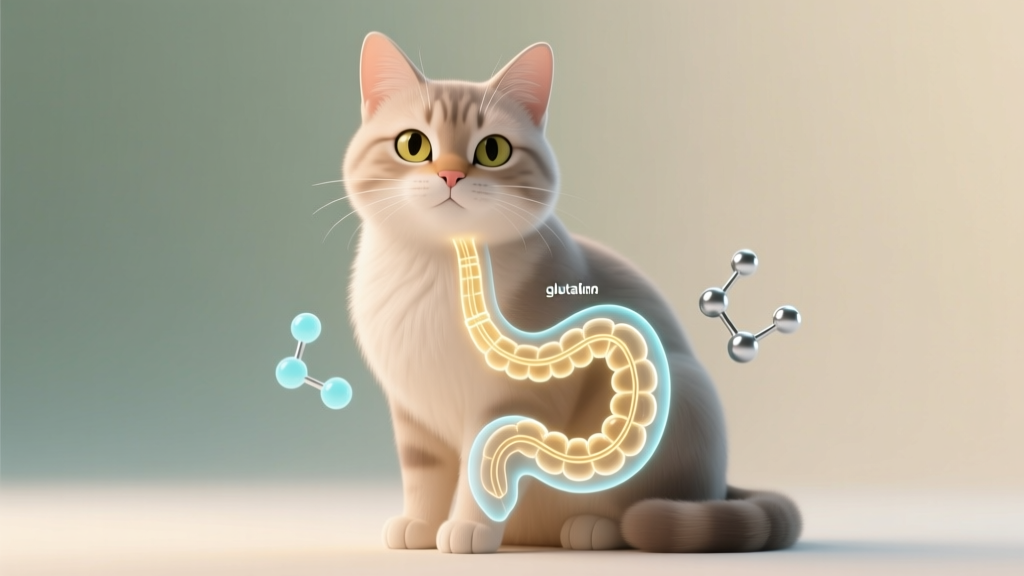
Glutamine is an amino acid abundant in animal tissues. In the body, it serves as a nitrogen carrier and as a building block for protein synthesis. For gut health, its most relevant roles involve intestinal cell energy, mucosal integrity, and immune function.
Glutamine as fuel for intestinal lining cells
The intestinal lining is made of rapidly dividing cells. Many of these cells (including enterocytes) use glutamine as a preferred energy source, especially during times of stress. When energy supply is limited, the gut lining may struggle to maintain tight junctions and normal turnover, potentially increasing intestinal permeability (“leaky gut” as a lay term). Increased permeability isn’t a diagnosis on its own, but it can be part of GI inflammation and food sensitivity patterns.
Support for the gut barrier and mucus layer
A healthy gut barrier depends on:
- Intact epithelial cells with normal renewal
- Tight junction proteins that regulate what passes between cells
- Mucus layer that protects the epithelium and supports healthy microbial balance
Research across species indicates glutamine supports these barrier functions. In cats specifically, the broad concept still applies: intestinal tissues have high nutrient demands, and amino acid adequacy influences repair and resilience.
Immune system connection (GALT)
A large portion of the immune system is associated with the gut (gut-associated lymphoid tissue, or GALT). Immune cells can use glutamine as a fuel source and for proliferation. When the gut is inflamed—whether from dietary intolerance, parasites, infection, stress colitis, or chronic enteropathy—nutrient demands shift toward repair and immune activity.
When demand for glutamine may rise
Dietary glutamine becomes more relevant when a cat’s gut is under strain. Common scenarios include:
- Chronic vomiting or diarrhea (especially if inflammatory bowel disease/chronic enteropathy is suspected)
- After GI surgery or during recovery from systemic illness
- Weaning and growth (kittens have rapidly dividing tissues)
- Stress events (boarding, moving, new pets, significant routine changes)
- Medication effects (some drugs can affect appetite, motility, or mucosal resilience)
Glutamine is not a cure for underlying disease, and it should not replace diagnostics for chronic GI signs. Persistent vomiting/diarrhea, blood in stool, weight loss, or appetite changes require veterinary evaluation.
Evidence-based perspective: food-first, targeted supplementation when appropriate
In veterinary nutrition, the strongest foundation for gut health remains a complete and balanced diet with highly digestible animal protein, appropriate fat levels, and a fiber strategy suited to the cat’s condition. Glutamine is best viewed as:
- A supportive nutrient that helps maintain/repair gut lining
- Most useful when demand is elevated (illness, stress, recovery, chronic GI disease under veterinary care)
- Not a substitute for a therapeutic diet (e.g., hydrolyzed protein diet) when medically indicated
4. Practical recommendations for cat owners
Prioritize glutamine-rich, highly digestible protein sources
Glutamine is naturally present in animal proteins. A cat eating a high-quality, meat-forward diet generally receives a steady supply of glutamine and glutamine precursors.
| Diet approach | How it supports gut lining | Best for | Potential downsides |
|---|---|---|---|
| Complete & balanced meat-forward wet food | High digestibility, hydration support, animal amino acids including glutamine | Most cats, especially those prone to constipation or low water intake | Cost, fewer dental abrasion benefits vs kibble (dental care should be separate) |
| Veterinary therapeutic GI diets | Formulated for digestibility and stool quality; may include prebiotics/fiber strategy | Chronic GI signs, recovery cases under vet guidance | Requires vet oversight; not one-size-fits-all |
| Novel protein or hydrolyzed protein diets | Reduces antigenic stimulation in suspected food-responsive enteropathy | Itchy skin + GI signs, suspected food sensitivity | Strict adherence required; treat “cheats” can derail progress |
| Targeted glutamine supplementation | May support mucosal repair when needs are increased | Selected cases (stress, illness, GI disease) with vet guidance | Dosing uncertainty, product quality variation, can mask need for diagnostics |
If considering a glutamine supplement, use veterinary guidance
Ask your veterinarian (or a board-certified veterinary nutritionist) whether glutamine fits your cat’s case. Supplement needs vary widely based on diagnosis, diet composition, kidney function, and concurrent medications. If your vet approves, choose a plain product without sweeteners or flavorings that could be unsafe for cats.
Support gut health as a “system,” not one nutrient
- Hydration: Wet food and multiple water stations help keep motility steady.
- Consistent feeding routine: Sudden schedule changes can trigger vomiting in sensitive cats.
- Parasite control and appropriate deworming: Intestinal parasites can mimic food intolerance.
- Probiotics/prebiotics: Only where appropriate; some cats do better with targeted strains and gentle dosing.
5. Comparison of options/products/approaches
Food-first vs supplementation: what to choose?
| Question to ask | If YES | If NO |
|---|---|---|
| Is your cat currently eating a complete & balanced diet with animal protein as the main ingredient? | Focus on consistency, digestibility, and appropriate fiber; supplementation may be unnecessary | Upgrade diet first; don’t rely on supplements to “fix” a poor base diet |
| Does your cat have chronic GI signs (vomiting/diarrhea) lasting >2–3 weeks, weight loss, or blood in stool? | Vet visit first; diagnostics and therapeutic diet trial may be needed; glutamine only as an adjunct | Food transition and gentle gut-support plan may be reasonable at home (still monitor closely) |
| Is your cat on a veterinary therapeutic diet? | Ask your vet before adding anything; additions can interfere with the diet trial | Consider whether a therapeutic diet is appropriate if signs persist |
Wet food vs dry food for gut lining support
- Wet food advantages: higher moisture (helps hydration), often higher animal protein content per calorie, may be easier on some sensitive GI tracts.
- Dry food advantages: convenience and cost, can work well for many cats if high-quality and well tolerated.
- Best practical approach: choose the form your cat thrives on, then optimize ingredient quality, digestibility, and transition speed.
6. Common mistakes and misconceptions to avoid
- Myth: “Glutamine will cure my cat’s chronic vomiting.”
Reality: chronic vomiting has many causes (hair ingestion, parasites, food intolerance, pancreatitis, hyperthyroidism, kidney disease, foreign body). Glutamine may support the gut lining but won’t fix the root cause. - Mistake: Adding multiple supplements at once.
When you change several variables (glutamine + probiotics + new food + new treats), it’s hard to tell what helped or harmed. Cats can also develop aversions after nausea episodes. - Myth: “Plant proteins are fine because amino acids are amino acids.”
Reality: cats are adapted to animal proteins for digestibility and amino acid balance. Some plant ingredients can fit into a complete formulation, but meat-forward diets generally align better with feline biology and GI tolerance. - Mistake: Using flavored powders, human drink mixes, or products with sweeteners.
Some additives are inappropriate for cats. Choose veterinary-approved products only. - Myth: “If a little helps, more is better.”
Reality: excessive supplementation can upset the GI tract, alter nutrient balance, or delay proper diagnosis.
7. How to implement changes safely (transition tips)
Cats often develop GI upset from abrupt diet changes, even when the new food is “better.” A slower transition protects appetite and reduces vomiting/diarrhea risk.
Gentle 10–14 day transition plan
- Days 1–3: 75% current food + 25% new food
- Days 4–6: 60% current + 40% new
- Days 7–10: 50% current + 50% new
- Days 11–14: 25% current + 75% new, then 100% new if stool stays normal
When to slow down or stop
- Repeated vomiting, watery diarrhea, lethargy, refusal to eat, or signs of abdominal pain
- Blood or black/tarry stool
- Any signs of dehydration (tacky gums, weakness)
If these occur, contact your veterinarian promptly. Cats can deteriorate quickly when they stop eating, and hepatic lipidosis is a serious risk.
8. Special considerations (age, health conditions, activity level)
Kittens
- Rapid growth increases nutrient demands and gut cell turnover.
- Choose a complete & balanced kitten formula with highly digestible animal protein.
- Supplements (including glutamine) should be used only with veterinary guidance due to dosing sensitivity.
Adult cats under stress
- Stress can change motility and appetite, and some cats develop stress-related diarrhea or vomiting.
- Food consistency, environmental enrichment, and slow transitions often help as much as any supplement.
Seniors
- Seniors may have concurrent kidney disease, hyperthyroidism, dental disease, or reduced digestive efficiency.
- Before adding amino acid supplements, ask your vet to evaluate kidney function and overall diet fit.
Chronic enteropathy/IBD, pancreatitis, or GI lymphoma workups
- These conditions require diagnosis and a structured treatment plan (diet trial, medications, possibly biopsies).
- Glutamine may be considered as an adjunct, but diet trials must be kept “clean” (no extra treats/supplements unless your vet approves).
Kidney disease (CKD)
- CKD cats often need carefully controlled phosphorus and tailored protein strategies.
- Do not add supplements casually; even “simple” amino acids can complicate management. Your vet can advise whether glutamine is appropriate.
9. FAQ: common questions cat owners ask
1) Is glutamine essential for cats?
In healthy adult cats, glutamine is usually considered non-essential because the body can synthesize it. During illness, stress, rapid growth, or intestinal inflammation, glutamine can become “conditionally essential,” meaning needs may exceed production and dietary intake becomes more relevant. Your veterinarian can help determine whether that applies to your cat.
2) Can I just feed more meat to increase glutamine?
Feeding a high-quality, complete & balanced, meat-forward diet is a practical way to provide glutamine and other amino acids. Avoid unbalanced “all meat” home feeding unless it’s formulated by a veterinary nutritionist, since calcium, taurine, essential fatty acids, and micronutrients must be correct.
3) Will glutamine help with diarrhea?
It may help support intestinal lining repair in some cases, but diarrhea has many causes. Parasites, dietary intolerance, bacterial overgrowth, inflammatory disease, and systemic illnesses require different solutions. If diarrhea lasts more than a couple of days, recurs, or comes with blood/weight loss, consult your veterinarian.
4) Is glutamine safe for cats?
Glutamine is generally well tolerated when used appropriately, but “safe” depends on the individual cat, dose, diet, and health status (especially kidney disease). Product quality and additives also matter. Always ask your veterinarian before supplementing.
5) Should I use probiotics instead of glutamine?
They do different things. Probiotics aim to influence the gut microbiome; glutamine primarily supports intestinal cells and barrier function. Some cats benefit from one, the other, both, or neither—depending on the underlying problem. Your veterinarian can help you choose a targeted plan rather than stacking products.
6) My cat eats a prescription GI diet—can I add glutamine?
Only with veterinary approval. Prescription diet trials and therapeutic formulas are designed to be complete on their own, and “extras” can interfere with the trial or change stool quality. If your vet believes glutamine is appropriate, they can recommend a product and dosing approach that won’t undermine the treatment plan.
Best next step: If your cat has ongoing digestive issues, schedule a veterinary visit and bring a stool photo/log and a list of all foods, treats, and supplements. Gut lining support works best when it’s part of a clear diagnosis and nutrition strategy.
For more practical, science-based feeding tips and ingredient deep-dives, explore the nutrition guides on catloversbase.com.