The Role of Green-Lipped Mussel in Cat Joint Nutrition
1) Why joint nutrition matters for cat health
Cats are masters at hiding discomfort. A cat with aching joints often won’t limp dramatically—many simply jump less, hesitate before climbing stairs, stop using tall perches, groom poorly, or become irritable when touched. Degenerative joint disease (including osteoarthritis) is common, especially as cats age, and it can quietly reduce activity, muscle mass, and quality of life. Nutrition can’t “cure” arthritis, but targeted nutrients can support joint comfort, mobility, and healthy inflammatory balance as part of a comprehensive plan that may include weight management, environmental changes, and veterinary care.
Green-lipped mussel (GLM; Perna canaliculus) has gained attention because it naturally contains omega-3 fatty acids and other bioactive compounds that may support joint function. For cat owners aiming to feed a high-quality diet and prevent avoidable mobility decline, GLM is one tool worth understanding—along with its realistic benefits, limitations, and how to use it safely.
2) Scientific background: feline nutrition basics (obligate carnivore biology)
Cats are obligate carnivores. Their metabolism is adapted for animal-based protein and fat, and they have limited ability to synthesize certain nutrients from plant precursors. Several nutrition principles directly affect joint health:
- High-quality animal protein supports muscle that stabilizes joints. When cats lose lean muscle (common in older cats), joint stress increases.
- Dietary fat matters because essential fatty acids influence inflammatory pathways. Cats need preformed long-chain omega-3s (EPA and DHA) more than plant-based omega-3 (ALA), which they convert inefficiently.
- Weight control is foundational. Excess body fat increases mechanical load on joints and produces inflammatory signaling molecules. Even small reductions in weight can improve mobility.
- Micronutrients support tissue repair (e.g., vitamin E as an antioxidant; minerals for connective tissue integrity). Over-supplementation, however, can be harmful—cats are sensitive to nutrient imbalances.
Because cats are obligate carnivores, a joint-support approach that relies on animal-based omega-3s (fish oil, marine sources like GLM) often fits feline biology better than plant oils or “herbal-only” solutions.
3) Detailed analysis: what green-lipped mussel provides and what the evidence suggests
What GLM is
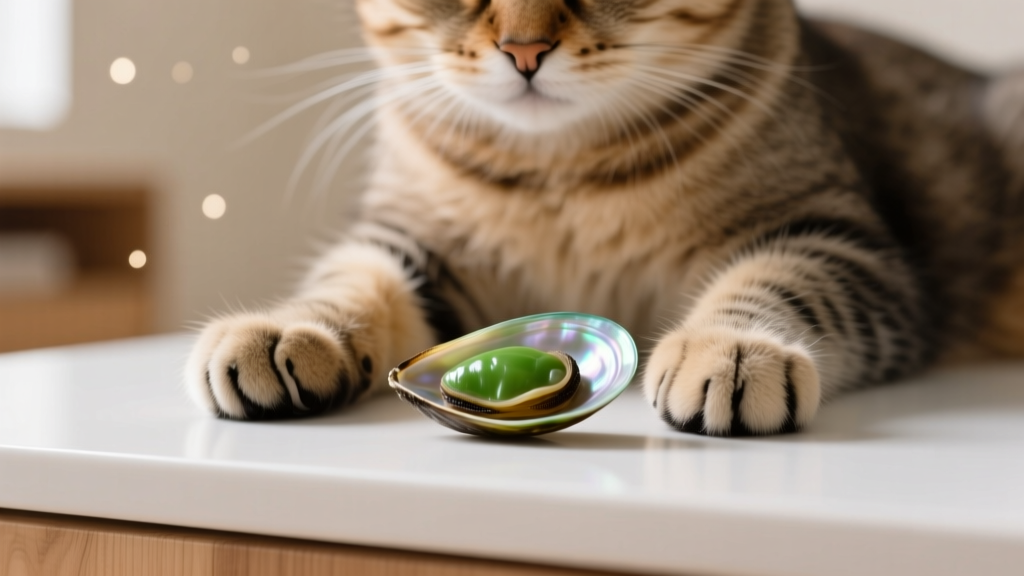
Green-lipped mussels are shellfish native to New Zealand. In supplements, GLM may appear as freeze-dried powder, lipid extract, or incorporated into treats and complete diets. Processing quality matters: heat and poor storage can damage delicate omega-3 fats.
Key nutrients and bioactive compounds
| Component | Why it may matter for joints | What to know for cats |
|---|---|---|
| Omega-3 fatty acids (EPA, DHA) | Help modulate inflammatory eicosanoids; may reduce joint discomfort and improve mobility in some pets | Marine omega-3s are typically more biologically useful than plant omega-3s for cats |
| ETA (eicosatetraenoic acid) | A unique fatty acid found in GLM; studied for anti-inflammatory effects | Research is stronger in dogs/humans; feline-specific data is limited but mechanistically relevant |
| Glycosaminoglycans (GAGs) and precursors | Building blocks associated with cartilage matrix support | Often included in joint formulas with glucosamine/chondroitin; benefit varies by individual |
| Antioxidants and marine peptides | May help counter oxidative stress linked with chronic inflammation | Quality and stability vary across products |
How GLM may support joint health
- Inflammatory balance: GLM’s marine omega-3s can shift the body toward less inflammatory signaling. This is similar in concept to fish oil, though GLM also offers other marine lipids.
- Cartilage support (indirect): No supplement “rebuilds” cartilage in a simple way. GLM may support the joint environment and comfort, potentially helping cats stay active, which preserves muscle and joint function.
- Whole-food synergy: GLM is a food-derived ingredient, and some cats tolerate it well when appropriately dosed.
What the evidence says (and what it doesn’t)
GLM has been studied more extensively in humans and dogs than in cats. In dogs, some controlled studies suggest improvements in mobility or comfort in osteoarthritis with GLM supplementation. In cats, evidence is emerging but still limited compared with fish oil and prescription joint diets. That doesn’t mean GLM is ineffective—it means expectations should be realistic and results should be monitored.
Veterinary nutrition science broadly supports omega-3 fatty acids (EPA/DHA) for osteoarthritis management. GLM can be considered a source of these fats plus additional compounds. If your cat has significant pain, supplements should not replace veterinary diagnosis or pain control; they are typically adjunctive support.
Safety overview
- Most common side effects: mild gastrointestinal upset (soft stool, vomiting), especially if introduced abruptly or at high amounts.
- Allergies/intolerances: possible with any shellfish-derived ingredient. Stop and contact your veterinarian if you see facial swelling, hives, severe vomiting, or breathing changes.
- Calorie awareness: GLM treats and chews can add calories; in overweight cats, this can undermine joint health.
- Drug/supplement interactions: omega-3s may affect bleeding tendency at very high doses; cats on anticoagulants or with bleeding disorders need veterinary guidance.
4) Practical recommendations for cat owners
Use GLM as part of a joint-support plan, not a standalone fix. The strongest nutrition “win” for most arthritic cats is weight management plus an omega-3 strategy.
Best candidates for GLM support
- Cats showing early mobility changes (jumping less, stiffness after rest)
- Senior cats as part of a proactive joint plan (with vet approval)
- Cats that can’t tolerate fish oil taste or texture (some do better with GLM powders)
What to look for in a GLM product
- Species identification: Perna canaliculus clearly listed
- Processing: freeze-dried powder or stabilized lipid extract; avoid vague “mussel” labels without sourcing
- Quality controls: third-party testing or clear manufacturer QA statements (heavy metals, microbial contamination)
- Cat-appropriate formulation: minimal flavorings, low sodium, no xylitol (never), and no excessive vitamin D or A
How to judge whether it’s working
Track outcomes over 4–8 weeks (or as advised by your veterinarian). Look for measurable changes:
- Jumping up/down more willingly
- More play or longer play sessions
- Improved grooming, less matting
- Less grumpiness when picked up or touched
- More consistent litter box posture (less hesitation)
5) Comparison of options: GLM vs other joint nutrition approaches
| Approach | Pros | Cons / cautions | Best use |
|---|---|---|---|
| Green-lipped mussel (GLM) | Food-derived; provides omega-3s + unique marine lipids (ETA); may help comfort/mobility | Feline research is limited; product quality varies; possible GI upset/shellfish sensitivity | Adjunct support for mild-to-moderate joint issues; picky cats that resist fish oil |
| Fish oil (EPA/DHA) | Strong evidence base in joint inflammation support; dosing can be precise when EPA/DHA content is listed | Oxidation risk; taste refusal; calorie addition; must avoid vitamin A/D-rich cod liver oils unless vet-directed | Core nutrition strategy for osteoarthritis alongside weight control |
| Prescription joint diets (often enriched with omega-3s + antioxidants) | Balanced nutrition; clinically formulated; can support weight control and joint health simultaneously | Cost; some cats resist diet change; must be fed consistently to see benefit | Great option for cats needing both joint and weight management support |
| Glucosamine/chondroitin | Commonly used; generally safe; may help some individuals | Mixed evidence; responses vary; quality differences across brands | Adjunct trial when omega-3 strategy alone isn’t enough |
| Weight loss + muscle maintenance | High impact; reduces joint load; improves mobility and comfort for many cats | Requires careful calorie control; rapid weight loss is dangerous in cats (hepatic lipidosis risk) | Essential for overweight/obese cats; pairs well with omega-3s/GLM |
6) Common mistakes and misconceptions to avoid
- Myth: “My cat isn’t limping, so joints are fine.”
Many cats compensate by reducing activity. Behavior changes often appear before obvious lameness. - Mistake: Using GLM to replace pain control.
If your veterinarian recommends pain medication (such as modern feline-appropriate options), nutrition is supportive—not a substitute. - Myth: “More is better.”
Overdoing supplements can cause GI issues, add unnecessary calories, and in some cases interfere with other treatments. Use veterinary guidance for dosing. - Mistake: Choosing low-quality products.
Marine ingredients can oxidize or vary in potency. Poor-quality supplements may be ineffective or contaminated. - Myth: “Joint supplements work instantly.”
Nutritional support usually takes weeks. Expect gradual changes, not overnight transformation. - Mistake: Forgetting weight and environment.
Even the best supplement can’t overcome obesity or a home setup that forces painful jumps. Nutrition + lifestyle works best.
7) How to implement changes safely (transition tips)
Cats can develop food aversion or GI upset when changes are abrupt. Make every adjustment slowly and deliberately.
- Introduce one change at a time: If you add GLM and switch foods simultaneously, you won’t know what helped—or what caused vomiting/diarrhea.
- Start low, go slow: Begin with a small fraction of the target amount for several days, then increase gradually as tolerated.
- Mix with a familiar favorite: A teaspoon of wet food topper can help carry powders. If your cat refuses, stop and try a different format rather than “waiting it out” and risking reduced intake.
- Protect appetite first: Cats should not go without eating. If your cat skips meals during a supplement trial, discontinue and call your veterinarian.
- Track stool and behavior: Note appetite, litter box habits, energy, grooming, and jumping ability.
8) Special considerations: age, health conditions, activity level
Kittens and young adult cats
Most young cats don’t need joint supplements unless there’s an orthopedic condition or veterinary recommendation. Focus on complete-and-balanced growth or adult nutrition, appropriate body condition, and safe play that builds muscle.
Senior cats
Senior cats are the most likely to benefit from joint nutrition strategies, but they also commonly have kidney disease, dental disease, or GI sensitivity. Work with your veterinarian to choose options that don’t compromise hydration, appetite, or necessary therapeutic diets.
Overweight cats
If your cat is overweight, weight management is the highest-impact joint intervention. Ask your veterinarian for a safe calorie target and a measured feeding plan. Use low-calorie supplement formats (powder/capsule over treats when possible).
Cats with kidney disease (CKD)
Many CKD cats do well with omega-3 support, but they may also require phosphorus control, appetite support, and careful diet selection. Do not add high-phosphorus treats or large amounts of seafood ingredients without veterinary approval. A veterinarian can help decide whether GLM fits within a kidney-friendly plan.
Cats with food allergies or sensitive stomachs
Shellfish could trigger reactions in sensitive individuals. If your cat is on a strict elimination diet or prescription hydrolyzed/novel protein diet, do not add GLM unless your veterinarian says it won’t interfere with diagnosis or control.
Highly active cats vs sedentary cats
Active cats may show performance changes earlier (hesitation to jump, shorter play bursts). Sedentary cats can lose muscle and gain weight more easily, accelerating joint decline. For both, pair nutrition with gentle, regular play and easy-access steps/ramps.
9) FAQ: Green-lipped mussel for cat joints
How long does green-lipped mussel take to work in cats?
Many joint nutrition trials are evaluated over 4–8 weeks. Some cats show earlier improvements, while others need longer or respond better to a different omega-3 approach. If there’s no change after a reasonable trial, discuss alternatives with your veterinarian.
Is green-lipped mussel better than fish oil?
Not universally. Fish oil has a larger evidence base for delivering specific EPA/DHA amounts. GLM can be a helpful option, especially for cats that dislike fish oil, but product potency and feline-specific research vary. Some plans use one or the other; combining them should be done with veterinary guidance to avoid excessive fat/calories.
Can I just feed my cat mussels from the grocery store?
Cooked mussels are not formulated as a balanced supplement, and portion size can quickly add calories and minerals. Seasonings, butter, garlic, onion, and excess salt are unsafe. If you want to use a food-based approach, ask your veterinarian for safe serving guidance and consider a standardized GLM product designed for pets.
Are there cats who shouldn’t take GLM?
Cats with suspected shellfish allergy, cats on strict prescription diets for allergies, and cats with complex medical conditions (including bleeding disorders or those taking anticoagulants) should only use GLM under veterinary direction.
What else should I do besides GLM for arthritis?
For most cats, the best results come from a combined plan: ideal body condition, omega-3 support (via diet or supplements), easy-access ramps/steps, comfortable bedding, regular gentle play, and veterinary pain management when indicated.
How do I choose a dose?
Follow the label for a cat-specific product and confirm with your veterinarian, especially if your cat is small, senior, on other supplements, or has kidney/GI disease. Because formulations differ (powder vs lipid extract), a “one-size” dose isn’t reliable across brands.
Practical takeaways for cat owners
- GLM is a marine-derived ingredient that can support joint comfort through omega-3s and other bioactives, but it works best as adjunct support.
- Weight management and EPA/DHA intake are central pillars of feline joint nutrition.
- Choose high-quality, clearly labeled GLM products and introduce them gradually.
- Monitor measurable improvements over several weeks, and coordinate changes with your veterinarian—especially for seniors and cats with chronic disease.
For more practical, vet-aligned feeding strategies—omega-3 guides, senior cat nutrition, weight management plans, and supplement safety checklists—explore the nutrition articles on catloversbase.com.