The Role of Astaxanthin in Feline Cellular Antioxidant Defense
1) Why this topic matters for cat health
Cats face oxidative stress every day. Normal metabolism, inflammation, pollutants, UV exposure, and even intense play all generate reactive oxygen species (ROS). When ROS production outpaces the body’s ability to neutralize them, oxidative stress can damage cell membranes, proteins, and DNA. Over time, that cellular wear-and-tear is associated with faster aging and may contribute to chronic disease processes.
Astaxanthin is a carotenoid antioxidant that has gained attention in pet nutrition because it can help support the body’s antioxidant network at the cellular level. Cat owners often see it marketed for “immune support,” “skin and coat,” “joint health,” and “eye health.” The real question is how it fits into feline biology, what the science actually supports, and how to use it safely without treating supplements as a shortcut around a balanced diet.
2) Scientific background: feline nutritional needs and obligate carnivore biology
Cats are obligate carnivores with nutrient requirements shaped by evolution as hunters of small prey. This matters for antioxidant strategy because cats don’t thrive on a “plant-forward” nutrition model the way omnivores do.
- High protein requirement: Cats use protein as a primary energy source and have higher baseline protein needs than dogs.
- Essential nutrients from animal tissues: Taurine, preformed vitamin A (retinol), arachidonic acid, and vitamin D must come from diet; cats don’t convert precursors efficiently.
- Different carotenoid handling: Cats can absorb some carotenoids, but conversion of certain carotenoids (like beta-carotene) into vitamin A is limited, and carotenoids are not “essential” nutrients for cats the way taurine is.
- Endogenous antioxidant systems: Like other mammals, cats rely on enzymes (superoxide dismutase, catalase, glutathione peroxidase) and nutrients (vitamin E, selenium, sulfur amino acids) to manage oxidative stress.
Astaxanthin should be viewed as a supportive, non-essential dietary component that may complement a cat’s natural antioxidant defenses—especially when used alongside a complete and balanced diet that already meets requirements for vitamin E, selenium, and high-quality protein.
3) Detailed analysis: how astaxanthin supports cellular antioxidant defense
What astaxanthin is
Astaxanthin is a red-orange pigment in the carotenoid family. In nature, it’s produced by microalgae (notably Haematococcus pluvialis), and it accumulates up the food chain in krill and salmon. In supplements, it’s commonly derived from microalgae (often considered the premium source) or from synthetic production in some markets.
How it works at the cellular level
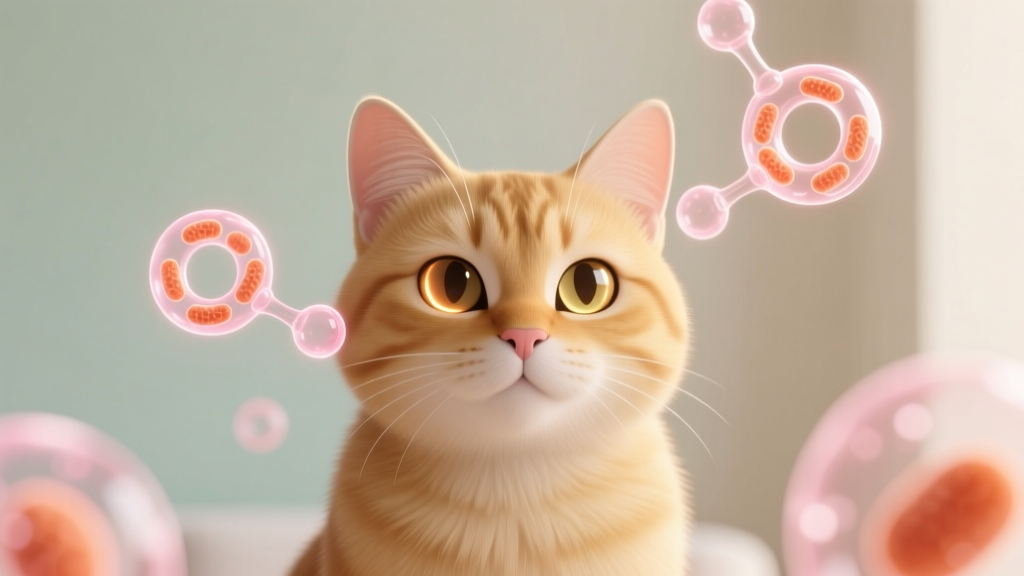
Oxidative stress often targets cell membranes because membranes are rich in lipids that can oxidize (lipid peroxidation). Astaxanthin is interesting because it is lipid-soluble and can associate with cell membranes, where it may help limit oxidative damage.
- Membrane protection: Astaxanthin’s structure allows it to interact with lipid bilayers, potentially stabilizing membranes against oxidative attack.
- Free radical scavenging: It can quench certain ROS and reduce chain reactions that damage fats and proteins.
- Supports antioxidant “teamwork”: Antioxidants operate as a network. Vitamin E, vitamin C (cats synthesize vitamin C in the liver), glutathione, selenium-dependent enzymes, and carotenoids can support overlapping protective pathways.
Evidence base: what we know and what we don’t
Astaxanthin has a broader research footprint in humans and laboratory animals than in cats specifically. Veterinary nutrition science generally supports antioxidant support in pets, but cat-specific clinical trials for astaxanthin are more limited compared with ingredients like omega-3s (EPA/DHA) or therapeutic diets.
What is reasonably evidence-aligned for cat owners:
- Antioxidants can help counter oxidative stress associated with aging, inflammation, and environmental exposures.
- Astaxanthin is a potent carotenoid antioxidant in laboratory measures and has biologic plausibility for membrane-level protection.
- Benefits are likely subtle and depend on baseline diet quality, health status, and dose consistency.
Where caution is appropriate:
- Not a treatment for disease: Astaxanthin should not replace veterinary therapies for conditions like arthritis, kidney disease, diabetes, heart disease, or inflammatory skin disease.
- Product quality varies: Label claims and concentrations can differ across supplements, and cats are sensitive to unnecessary additives.
- Over-supplementation risks: Excessive antioxidant dosing may interfere with normal signaling roles of ROS and can unbalance nutrition, especially if combined with multiple supplements.
Potential areas of practical benefit (supportive, not curative)
| Area | Why oxidative stress matters | How astaxanthin may help (supportive role) | Best paired with |
|---|---|---|---|
| Skin & coat | Skin barrier and coat lipids are prone to oxidation; inflammation can worsen oxidative load | May support antioxidant status in skin lipids and help maintain coat quality | Omega-3s (EPA/DHA), adequate protein, veterinary care for allergies/parasites |
| Healthy aging | Oxidative damage accumulates with age; mitochondrial efficiency may decline | May contribute to cellular antioxidant defense as part of a broader plan | Senior-appropriate diet, dental care, mobility support, regular labs |
| Eye health | Ocular tissues face oxidative exposure; aging can affect retinal support systems | Carotenoids are often studied for eye antioxidant support (cat data limited) | Taurine adequacy, blood pressure control, vet eye exams |
| Exercise/recovery | Activity increases metabolic ROS; inflammation after intense play/injury raises oxidative load | May support antioxidant balance during higher activity phases | Weight management, joint-friendly play, omega-3s when appropriate |
4) Practical recommendations for cat owners
Start by making sure the foundation is correct. Astaxanthin is a “nice-to-have” only after your cat’s core diet is solid.
- Choose a complete and balanced diet (AAFCO or equivalent feeding trial/formulation statement) appropriate for your cat’s life stage.
- Prioritize proven antioxidant nutrition basics: adequate vitamin E and selenium (already formulated correctly in reputable diets), high-quality protein, and appropriate fats.
- Use astaxanthin as targeted support for cats who may benefit from extra antioxidant buffering (older cats, cats under higher inflammatory load), after veterinary guidance.
- Keep supplements simple: if you add astaxanthin, avoid stacking multiple antioxidant products unless your veterinarian has a clear plan.
How much astaxanthin for cats?
There is no universally established, NRC-style requirement for astaxanthin in cats because it’s not an essential nutrient. Dosing in pet supplements is typically extrapolated from other species and based on safety margins. Because cats vary widely by size and health status, ask your veterinarian for a dose recommendation, especially if your cat has chronic disease or takes medications.
As a safety-minded approach:
- Pick a product specifically labeled for pets or that provides clear mg-per-serving information.
- Start low, monitor tolerance, and reassess after 3–6 weeks with your vet.
5) Comparison of options: food sources vs supplements vs “antioxidant blends”
| Approach | Pros | Cons | Best for |
|---|---|---|---|
| Complete diet with strong antioxidant formulation | Balanced vitamin E/selenium; controlled doses; safest foundation | May not include astaxanthin specifically | All cats; first step before supplements |
| Astaxanthin supplement (microalgae-derived) | Targeted astaxanthin dosing; usually consistent potency if reputable | Quality varies; risk of unnecessary fillers; dosing uncertainty for cats | Cats with vet-approved need for extra antioxidant support |
| Fish/krill-based products | May provide omega-3s plus naturally occurring carotenoids; palatable | Astaxanthin content often not standardized; risk of excess calories; oxidation/rancidity risk | Cats needing omega-3 support where a vet recommends it |
| “Antioxidant blends” (multi-ingredient powders/chews) | Convenient; may include multiple supportive nutrients | Harder to identify what helps; higher risk of overlap/excess; some contain botanicals cats don’t need | Only with vet oversight and transparent labeling |
Product selection checklist (quick filter):
- Clear astaxanthin amount in mg per serving
- Pet-appropriate excipients (avoid xylitol; minimize sweeteners and unnecessary flavoring)
- Batch testing/quality assurance (COA availability is a plus)
- Oil-based softgels or liquids packaged to reduce oxidation (dark bottle, expiration date, storage instructions)
- Reasonable calorie contribution (especially for overweight cats)
6) Common mistakes and misconceptions to avoid
- Myth: “If it’s natural, it’s automatically safe for cats.”
Reality: Cats have unique metabolism and sensitivity to certain compounds. Even “natural” supplements can be inappropriate or contaminated. Always use cat-safe products and consult your vet. - Myth: “More antioxidants are always better.”
Reality: Antioxidants work as a system. Excessive supplementation can create imbalances and may blunt normal physiologic signaling. Aim for targeted, moderate support. - Mistake: Using astaxanthin to ‘fix’ a poor diet.
A supplement can’t compensate for an unbalanced homemade recipe, a low-protein diet, or a diet not formulated for cats. - Mistake: Combining multiple oils and fat-soluble supplements.
Stacking fish oil, krill oil, vitamin E, and astaxanthin without a plan can increase calorie load and digestive upset and complicate dosing. - Myth: “Astaxanthin replaces omega-3s.”
Reality: Astaxanthin is an antioxidant; omega-3s (EPA/DHA) modulate inflammation and are structural fats. They’re not interchangeable.
7) How to implement changes safely (transition tips)
Cats are sensitive to sudden diet changes, and stress alone can affect appetite and gut health. Whether you’re upgrading the base diet or adding a supplement, go slowly.
- Change one variable at a time: If switching foods, complete the transition first, then introduce astaxanthin later. This helps you identify what caused any stomach upset.
- Gradual food transition (typical plan):
- Days 1–3: 75% old food / 25% new food
- Days 4–6: 50% old / 50% new
- Days 7–9: 25% old / 75% new
- Day 10+: 100% new food
- Introduce astaxanthin with food: Fat-soluble compounds are often better tolerated with a meal. Use the lowest effective amount recommended by your vet.
- Monitor for tolerance: Watch stool quality, appetite, vomiting, itchiness, and energy. Stop and call your veterinarian if symptoms persist beyond 24–48 hours or are severe.
8) Special considerations (age, health conditions, activity level)
| Cat type | Primary nutrition focus | Astaxanthin considerations |
|---|---|---|
| Kittens | Growth-formulated diet; DHA for brain/vision; adequate calcium/phosphorus | Usually unnecessary; focus on complete growth nutrition. Only use supplements if a veterinarian prescribes them. |
| Healthy adult cats | Maintain lean body mass; hydration strategy (wet food can help); dental plan | May be optional. If used, keep dosing conservative and avoid “kitchen sink” supplement stacks. |
| Seniors | Preserve muscle, manage mobility, monitor kidneys/thyroid, maintain appetite | May be more relevant as supportive antioxidant nutrition. Vet guidance is especially valuable due to concurrent disease risk. |
| Overweight/obese cats | Calorie control, high protein, measured feeding, activity enrichment | Choose low-calorie formulations (avoid oily treats). Weight loss plan comes first; supplements won’t override excess calories. |
| Kidney disease (CKD) | Therapeutic renal diet, phosphorus control, hydration, BP monitoring | Discuss with your vet before adding anything. Some supplements add extra ingredients or calories that don’t fit CKD goals. |
| Diabetes | Vet-directed diet plan, weight management, consistent feeding schedule | Avoid sweetened chews or flavored pastes with hidden carbs. Coordinate with your veterinarian. |
Medication and condition caution: If your cat takes prescription medications (especially for thyroid disease, diabetes, or heart conditions), or has pancreatitis history, inflammatory bowel disease, or recurrent vomiting, consult your veterinarian before introducing any oil-based or antioxidant supplement.
9) FAQ
Is astaxanthin safe for cats?
Astaxanthin is generally used as a nutritional supplement ingredient in pets, but “safe” depends on dose, product quality, and the individual cat’s health status. Cats with chronic disease or those on medication should only use it under veterinary guidance.
Can I give my cat astaxanthin by feeding salmon?
Salmon contains naturally occurring carotenoids and other nutrients, but it’s not a reliable or standardized astaxanthin “dose.” Also, fish should not become the main diet unless the food is complete and balanced for cats. If you offer fish, keep it as a small, occasional treat and avoid seasoning, bones, and raw fish risks.
Will astaxanthin help my cat’s allergies or itchy skin?
It may provide mild antioxidant support, but itchiness is commonly caused by fleas, food allergy, environmental allergy, infections, or poor skin barrier function. These require diagnosis and targeted treatment. Use astaxanthin only as a supportive addition after your vet addresses the root cause.
How long does it take to see results?
If a cat benefits, changes are usually subtle and may take several weeks (often 3–8 weeks) to assess. Track practical markers: coat shine, dandruff, scratching frequency, energy, and stool quality. If nothing changes, your vet may recommend stopping it.
Can astaxanthin replace vitamin E or a multivitamin?
No. Vitamin E is an essential nutrient with established requirements in complete diets. Astaxanthin does not replace essential vitamins or a properly formulated food. In fact, many cats do best with fewer supplements, not more.
What’s the best form: softgel, liquid, powder, or chews?
For cats, a small-dose oil or softgel (opened and mixed into food) is often easiest to measure and tends to match how fat-soluble nutrients are absorbed. Chews may include extra flavors and carbohydrates. Whatever you choose, prioritize transparent labeling and veterinary approval.
Bottom line for cat owners: Astaxanthin can be a useful supportive antioxidant for some cats, especially when paired with a high-quality, complete diet and a vet-guided plan. It’s not a cure, and it’s not a substitute for balanced nutrition or medical care. Before making dietary changes or adding supplements, consult your veterinarian—especially for seniors and cats with ongoing health conditions.
Want more practical, science-based feeding guidance? Explore the nutrition guides and supplement deep-dives on catloversbase.com to build a diet plan that supports your cat’s health for the long haul.