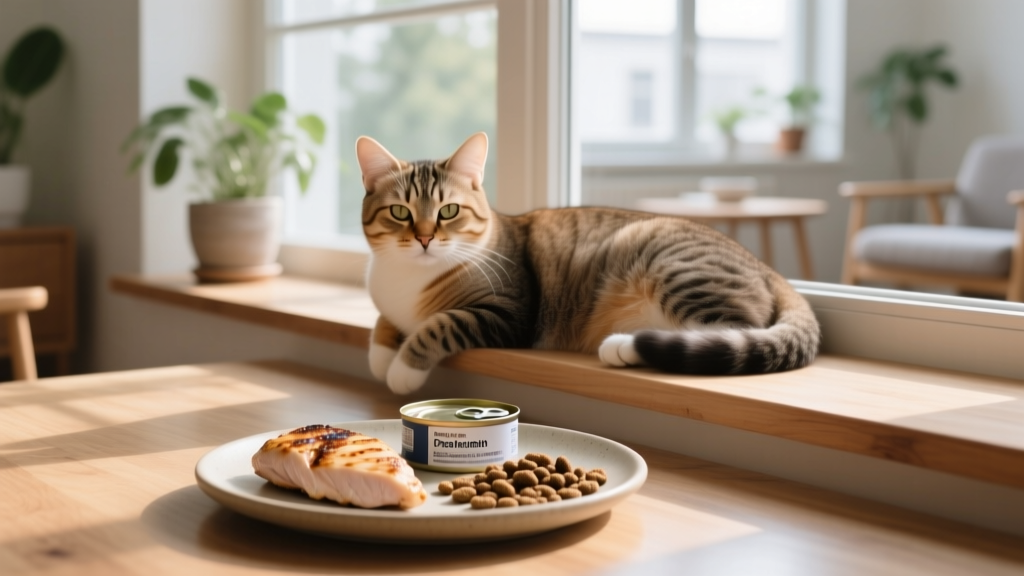
The Impact of Dietary Protein Source on Cat Allergen Load
Will feeding a different meat (like rabbit instead of chicken) reduce my family’s cat allergies?
Usually not by itself. Human cat allergy is mostly driven by Fel d 1 from saliva and skin glands. A different meat protein may improve coat quality in some cats, but a more direct approach is a diet formulated to reduce active Fel d 1 plus environmental controls. Speak with your veterinarian about realistic expectations and options.
Is “limited ingredient” the same as “hypoallergenic”?
No. “Limited ingredient” often means fewer listed ingredients, but it may still contain multiple animal proteins through flavorings, fats, or cross-contact during manufacturing. For diagnosing food allergy, veterinary hydrolyzed or strictly controlled novel protein diets are more reliable—your vet can guide the choice.
How long does it take to see changes in itching if food is the trigger?
Many elimination diet trials run 8–12 weeks, with some cats improving sooner and others taking longer. If itching is severe or there are ear infections, your vet may treat infections and inflammation alongside the diet trial to keep your cat comfortable.
Does raw feeding reduce allergens or help with food sensitivities?
Raw diets have no proven advantage for reducing Fel d 1. They also carry pathogen risks (to cats and humans) and can be nutritionally unbalanced if not formulated and handled correctly. If you’re considering raw for any reason, discuss it with a veterinarian (ideally one with nutrition training) to evaluate safety and nutrient completeness.
My cat eats fish-based food—why is the house still dusty and my allergies unchanged?
Fish protein doesn’t inherently reduce Fel d 1. Household allergen levels depend on grooming, dander, cleaning routines, and the cat’s individual Fel d 1 output. Consider a multi-step plan: allergen-targeting diet (if appropriate), HEPA filtration, frequent washing of fabrics, and targeted cleaning.
Can supplements help reduce cat allergens?
Omega-3 fatty acids may support skin and reduce inflammation in some cats, which can improve coat quality and possibly reduce dander. They do not “turn off” Fel d 1. Use supplements only with veterinary approval—incorrect dosing can add unwanted calories or interfere with medical conditions.
Bottom line: Protein source changes are most powerful for cats with true food allergies (using structured trials), while human allergy management typically benefits more from targeted Fel d 1–reducing diets plus environmental controls. For any persistent itching, GI signs, or major diet changes, involve your veterinarian so you don’t miss non-food causes and so your cat’s diet remains complete and balanced.
Explore more practical, vet-aligned nutrition guides at catloversbase.com to keep your cat thriving from bowl to tail.