Cat Food Kibble Coating: Palatability Spray Application Process
1) Why kibble coating matters for cat health
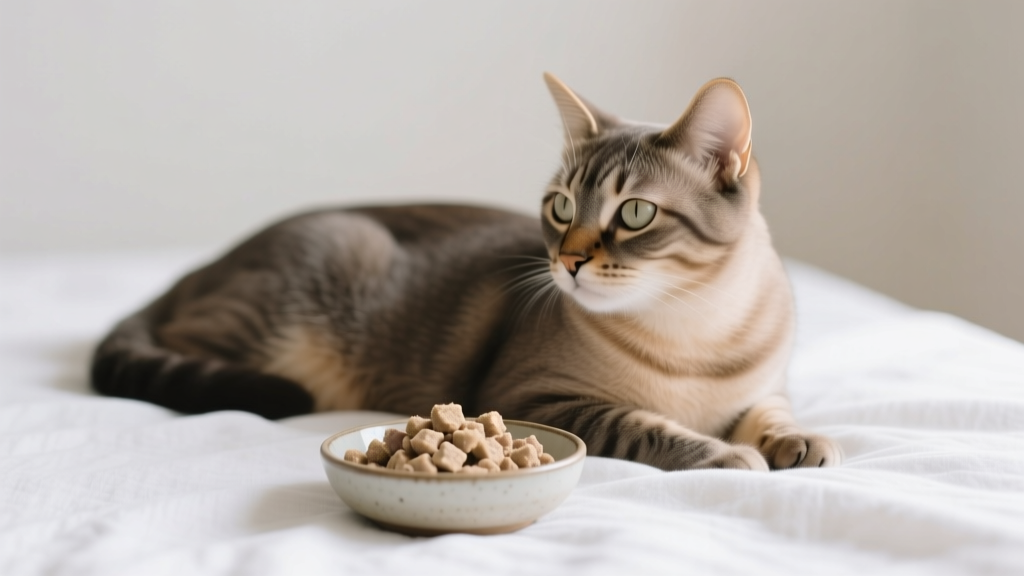
Many cat owners judge a food by whether their cat eats it enthusiastically. For cats, taste and smell aren’t just “preferences”—they can directly affect calorie intake, hydration habits, medication compliance (when pills are hidden in food), and overall nutritional status. Kibble coating, often applied as a palatability spray, is one of the most influential factors in whether a dry food is eagerly eaten or ignored.
That matters because cats are biologically inclined to eat multiple small meals, and many are sensitive to changes in texture, aroma, and fat oxidation. A cat that refuses food for even 24–48 hours can be at risk for hepatic lipidosis (fatty liver disease), especially if overweight. Understanding what kibble coating is, how it’s applied, and what it means nutritionally helps you choose foods that are both appealing and appropriate for long-term health.
Key point: Palatability coatings can improve acceptance, but they also affect calorie density, fat quality, allergen exposure, and in some cases urinary or skin health. Food choice should balance “will my cat eat it?” with “does it meet my cat’s medical and nutritional needs?” Always involve your veterinarian when making major diet changes, especially for cats with health conditions.
2) Scientific background: feline nutritional needs and obligate carnivore biology
Cats are obligate carnivores. Their physiology is adapted for diets rich in animal protein and fat, with limited reliance on carbohydrates. Several traits explain why palatability technology is so commonly used in cat kibble:
- High protein requirement: Cats have a higher baseline protein requirement than many omnivores because they continuously use amino acids for energy and have limited ability to downregulate protein breakdown.
- Essential nutrients tied to animal tissues: Taurine, arachidonic acid, vitamin A (preformed), and vitamin D are nutrients cats must receive through diet. Commercial complete diets add them, but animal-based ingredients remain central.
- Strong reliance on smell: A cat’s food acceptance is heavily driven by aroma, which is why surface coatings—where volatile aroma compounds are most available—can make or break a kibble’s appeal.
- Hydration physiology: Cats naturally have a lower thirst drive compared with some species. Dry diets can still be complete and balanced, but moisture intake matters for many cats, especially those prone to urinary issues.
- Texture sensitivity: Many cats imprint on texture and shape early in life. Coatings influence mouthfeel and the “first bite” experience.
Palatability coatings are formulated to align with these biological drivers—primarily aroma, fat content, and savory (“umami”) cues that mimic prey tissues.
3) Detailed analysis: what kibble coating is and how the palatability spray process works
What is kibble coating?
Kibble coating is a layer applied to the surface of finished kibble to enhance palatability, control dust, improve appearance, and sometimes deliver functional nutrients. The coating is typically fat-based and may include:
- Animal fats (chicken fat, pork fat, beef tallow, fish oil blends)
- Digest or hydrolysates (enzymatically broken-down animal proteins that boost aroma and flavor)
- Yeast extracts and other natural flavor compounds
- Functional additions (omega-3s, probiotics—though many probiotics are added earlier and must survive processing)
- Antioxidants (mixed tocopherols, rosemary extract, or other preservatives to slow fat oxidation)
Where coating fits in kibble production
Most dry cat foods are made via extrusion. The basic workflow looks like this:
| Stage | What happens | Why it matters for palatability |
|---|---|---|
| Mixing & preconditioning | Ingredients are ground, mixed, moistened, and heated with steam. | Sets the base nutrient composition and affects texture. |
| Extrusion | Cooked dough is forced through a die; kibble expands as it exits. | High heat can reduce volatile aromas; coating later restores aroma. |
| Drying | Moisture is reduced to improve shelf stability. | Drying can further reduce aroma; coating provides fresh surface flavors. |
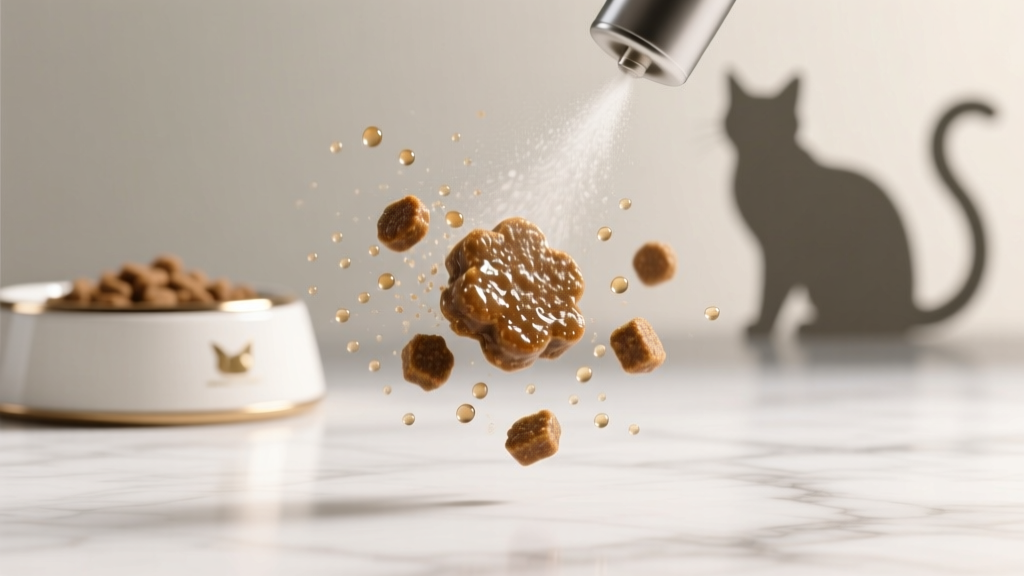
| Coating (palatability spray) | Fats and palatants are applied to the kibble surface, often in a rotating drum. | Major driver of “first smell” and “first bite” acceptance. |
| Cooling & packaging | Kibble cools and is packaged, often with oxygen barriers. | Reduces rancidity risk and helps preserve coating integrity. |
The palatability spray application process (step-by-step)
Manufacturers use different equipment, but the core process is consistent:
- Post-dry, pre-cool placement: Kibble is typically coated after drying and before final cooling to help adherence without trapping excess moisture.
- Tumbling/rotation: Kibble moves through a coating drum or conveyor system that continually turns it for even coverage.
- Fat application: Warmed fats are sprayed or drizzled in controlled amounts. Fats improve mouthfeel, carry aroma compounds, and increase caloric density.
- Palatant addition: Liquid digest, hydrolysates, or powdered palatants may be sprayed or dusted on. These intensify aroma and savory flavor.
- Vacuum coating (in some premium lines): A vacuum may be applied so coating penetrates pores in the kibble, improving distribution and reducing “greasy” residue. This can also protect sensitive oils by reducing oxygen exposure during application.
- Antioxidant/preservative management: Antioxidants are incorporated into fats or added during coating to slow oxidation and maintain flavor stability.
- Quality checks: Manufacturers monitor coating percentage, uniformity, and palatability trials, along with nutrient targets (e.g., fat levels) to ensure the final diet meets AAFCO or FEDIAF profiles.
What coating means for your cat nutritionally
| Potential benefit | How coating contributes | Trade-off to consider |
|---|---|---|
| Improved appetite | Higher aroma impact; savory compounds on the surface | May encourage overeating in food-motivated cats |
| Calorie support for picky or underweight cats | Added fats increase energy density | Harder to portion control; weight gain risk |
| Better acceptance during diet transitions | Coating masks base ingredient differences | Some cats become “coating dependent” and reject less palatable therapeutic diets |
| Vehicle for omega-3 oils | Fish oil coatings can boost EPA/DHA | Higher oxidation risk if packaging/storage is poor |
| Texture and dust control | Fat reduces fines; improves mouthfeel | Greasy residue may bother some cats or owners; can go rancid if stored improperly |
4) Practical recommendations for cat owners
- Read the calorie statement and portion precisely: Coated kibbles can be energy-dense. Use a gram scale for accuracy, especially for indoor or overweight cats.
- Prefer brands with strong quality control: Look for companies that perform feeding trials (not only formulation), publish nutrient profiles, and have veterinary nutrition expertise.
- Assess fat quality and freshness: Check “best by” dates and buy bag sizes your cat can finish within 4–6 weeks after opening (often faster in warm climates).
- Store correctly: Keep kibble in its original bag (for barrier protection and lot tracking), place that bag inside an airtight container, and store in a cool, dark place.
- Use palatability strategically: If your cat is healthy but very picky, a more palatable kibble can help. If your cat needs weight loss or has pancreatitis history, “extra tasty” high-fat coatings may be counterproductive—ask your vet.
- Monitor stool, coat, and body condition: Changes in coat shine, dandruff, stool softness, or itchiness can suggest fat intolerance, ingredient sensitivity, or a mismatch in nutrient balance.
5) Comparing approaches and options
| Approach | What it typically uses | Best for | Watch-outs |
|---|---|---|---|
| Standard fat + digest coating | Chicken fat/pork fat plus animal digest | Most cats; routine feeding | Can be higher calorie; digest source may matter for allergies |
| High-palatable “picky eater” formulas | Higher coating percentage; stronger palatants | Fussy cats, multi-cat households | Overeating, faster weight gain; may reduce acceptance of therapeutic diets later |
| Omega-3 boosted coatings | Fish oil blends on surface | Some cats with dry skin/dull coat (vet-guided) | Oxidation/rancidity risk; not a replacement for medical therapy |
| Hydrolyzed/limited ingredient veterinary diets | Controlled protein sources; palatability still often enhanced | Food allergy trials, GI disease (vet-prescribed) | Don’t add toppers or flavored sprays—can invalidate allergy trials |
6) Common mistakes and misconceptions to avoid
- Myth: “If my cat loves it, it must be healthy.”
Reality: Palatability is not the same as nutritional quality. Coatings can make nutritionally mediocre foods highly appealing. Evaluate completeness (AAFCO/FEDIAF), manufacturer expertise, and how your cat does clinically. - Mistake: Free-feeding a highly coated kibble.
Highly palatable foods can encourage grazing beyond calorie needs, especially in indoor cats. Measured meals help prevent gradual weight gain. - Myth: “Greasy kibble means higher protein.”
Reality: Greasiness usually reflects surface fat, not protein level. Protein adequacy depends on the full formulation, not coating feel. - Mistake: Adding fish oil or toppers on top of an already coated kibble without guidance.
Extra fats can unbalance calories, worsen diarrhea in sensitive cats, and increase oxidation risk. Ask your veterinarian about safe doses. - Myth: “Kibble cleans teeth, so coating is bad for dental health.”
Reality: Most standard kibble does not provide meaningful dental cleaning. Dental-specific diets use designed textures and validated testing. Coating alone is not the deciding factor—overall kibble structure is.
7) How to implement changes safely (transition tips)
Cats often reject sudden diet changes, and abrupt switches can trigger vomiting or diarrhea. Use a gradual transition unless your veterinarian advises otherwise.
| Days | Old food | New food |
|---|---|---|
| 1–3 | 75% | 25% |
| 4–6 | 50% | 50% |
| 7–9 | 25% | 75% |
| 10+ | 0% | 100% |
- For very picky cats: Extend each step to 4–7 days. Keep feeding location, bowl type, and meal schedule consistent.
- For cats with GI disease: Transition only under veterinary guidance; some conditions require slower changes or prescription diets.
- Never “wait out” a cat that isn’t eating: If your cat refuses food for more than 24 hours (or less if diabetic or ill), contact your veterinarian promptly.
8) Special considerations (age, health conditions, activity level)
Kittens
- Need higher calories, protein, and specific nutrients for growth.
- Palatability coatings can help ensure adequate intake, but choose a food labeled for growth or “all life stages.”
- Avoid frequent food swapping; kittens can become texture-locked or overly selective.
Adult indoor cats
- Most are prone to gradual weight gain; highly coated, energy-dense kibble requires careful portioning.
- Consider measured meals, food puzzles, and combining with wet food for moisture and satiety (vet-approved for your cat).
Senior cats
- May have reduced smell sensitivity, dental disease, or chronic conditions that reduce appetite.
- A palatable coating can help seniors maintain intake, but seniors also benefit from veterinary screening (kidney function, thyroid, dental pain) if appetite changes.
Overweight cats
- Highly palatable coatings can make portion control harder.
- Weight-loss diets are designed to maintain nutrient intake while reducing calories; don’t assume “less food of regular kibble” is equivalent.
- Work with your veterinarian to set a safe calorie target and rate of loss.
Urinary tract concerns (FLUTD, crystals)
- Water intake and urine dilution are central. Many cats do better with wet food or a veterinary urinary diet.
- Coated kibble may increase eating enthusiasm but doesn’t necessarily address urine concentration or mineral balance.
- Consult your veterinarian before changing diets; urinary diets are carefully formulated for pH and mineral control.
Food allergies or suspected sensitivity
- Coatings can contain animal digests that may not match the “main” protein listed on the front label.
- For elimination trials, use only the veterinarian-prescribed diet and avoid flavored toppers or treats.
9) FAQ: common questions about kibble coatings and palatability sprays
1) Is kibble coating “bad” for cats?
Not inherently. Coatings are common in complete and balanced diets and can help cats eat consistently. The health impact depends on the overall formulation, calorie density, fat quality, and whether the food fits your cat’s medical needs. If your cat is overweight or has fat-sensitive GI issues, a heavily coated, high-fat kibble may be a poor match—ask your veterinarian.
2) Why does my cat lick the kibble and leave the pieces behind?
Many cats are drawn to the surface coating (fat and palatants). Licking can mean the coating is more appealing than the kibble base, or your cat has dental pain and prefers not to crunch. If this behavior is new or worsening, schedule a veterinary dental check.
3) Can I add my own “palatability spray” at home?
You can increase aroma with safe, vet-approved tactics (such as warming food slightly or adding a small amount of water to release aromas). Regularly adding fats (fish oil, broth, gravy) can unbalance calories and may cause GI upset. If your cat needs appetite support, talk with your veterinarian about appropriate toppers, appetite stimulants, or switching to a more suitable diet.
4) Does a stronger-smelling kibble mean it has more meat?
Not necessarily. Smell strength often reflects coating type and amount (digests, fats), not the meat percentage in the recipe. Use the nutritional adequacy statement (AAFCO/FEDIAF), the manufacturer’s transparency, and your cat’s body condition and health markers as your guides.
5) How can I tell if the coating has gone rancid?
Rancid fats may smell like paint, crayons, or stale oil. Some owners notice their cat suddenly refusing a previously liked food. If you suspect rancidity, stop using the bag, contact the manufacturer with the lot number, and switch to a fresh bag or alternative food. Store kibble cool and sealed to slow oxidation.
6) If my cat is picky, should I always choose the most palatable kibble?
Choose the most palatable option that still fits your cat’s health needs. For picky cats with normal weight and no medical issues, a palatable diet can be helpful. For cats needing weight control, urinary management, kidney support, or allergy trials, the “tastiest” option may conflict with the therapeutic goal. Your veterinarian can help you prioritize.
Medical reminder: Any significant diet change—especially for kittens, seniors, cats with chronic disease, or cats on prescription diets—should be planned with your veterinarian or a board-certified veterinary nutritionist.
If you want to keep optimizing your cat’s diet with practical, science-based guidance, explore more feline nutrition articles and feeding guides on catloversbase.com.