Cat Food Freeze-Thaw Stability: Frozen Raw Handling
1) Why freeze-thaw stability matters for cat health
Frozen raw cat food is popular with owners aiming for minimally processed, meat-forward diets. Freezing can be a useful preservation step, but it does not “sanitize” food. Once raw diets are thawed, the same food safety rules apply as with raw meat in your kitchen—except the stakes may be higher. Cats are obligate carnivores with unique nutritional requirements, and many live in close contact with people who may be more vulnerable to foodborne illness (children, older adults, immunocompromised family members). Poor freeze-thaw handling can lead to:
- Bacterial growth (e.g., Salmonella, Listeria, Campylobacter, pathogenic E. coli) after improper thawing, prolonged fridge storage, or temperature abuse.
- Nutrient losses from repeated freeze-thaw cycles, excess purge (drip loss), and oxidation of fats and fat-soluble vitamins.
- GI upset from spoiled food or abrupt changes in diet texture/temperature.
- Household exposure via contaminated surfaces, bowls, litter paws, and cat saliva.
Handled correctly, frozen raw can be kept safer and more nutritionally consistent. Handled poorly, it can become a high-risk feeding approach. For any major diet change—especially raw—consult your veterinarian, and consider a board-certified veterinary nutritionist for recipe evaluation.
2) Scientific background: feline nutrition and obligate carnivore biology
Cats evolved as strict carnivores. Their metabolism is geared toward using protein and fat as primary energy sources, and they have limited capacity for some pathways that omnivores use. Key feline nutrition points that intersect with raw and freeze-thaw practices include:
| Nutrient/Need | Why cats require it | Raw + freeze-thaw relevance |
|---|---|---|
| High-quality animal protein | Cats have high baseline protein requirements and use amino acids continuously. | Protein itself is generally stable when frozen, but spoilage can occur after thawing if mishandled. |
| Taurine | Essential amino sulfonic acid for heart, eyes, reproduction. | Taurine can be lost in meat juices (“purge”) during thawing; repeated thawing/refreezing may increase losses. |
| Arachidonic acid | Essential fatty acid; cats cannot synthesize enough from linoleic acid. | Fats are prone to oxidation over time even in frozen storage; packaging and freezer conditions matter. |
| Vitamin A (preformed) | Cats require preformed vitamin A from animal tissues. | Fat-soluble vitamins can degrade with oxidation and extended storage; balance is critical in homemade raw. |
| Thiamine (B1) | Essential; deficiency can cause neurologic signs. | Thiamine is sensitive to processing and storage conditions; some raw fish contains thiaminase (risk factor). |
| Calcium-to-phosphorus balance | Bone health, neuromuscular function; imbalance can harm growing kittens. | Homemade raw is prone to mineral imbalance; freezing doesn’t fix formulation errors. |
Freezing preserves food by slowing microbial growth and enzyme activity, but it does not eliminate pathogens reliably. Some organisms survive freezing well. When thawed, surviving bacteria can multiply quickly if the food sits in the temperature “danger zone” (roughly 40–140°F / 4–60°C). Nutritional adequacy is a separate issue: a diet can be handled safely and still be nutritionally incomplete if it isn’t formulated to meet recognized standards (AAFCO or FEDIAF).
3) Freeze-thaw stability: what changes in frozen raw food (evidence-based)
Microbial safety: freezing slows growth, thawing controls risk
- Freezing is bacteriostatic, not bactericidal. Many pathogens can survive freezing. They may be injured but can recover during thawing.
- Thawing method is a major risk point. Countertop thawing warms the outer layers while the center stays frozen, creating a window for bacterial multiplication.
- Repeated freeze-thaw cycles raise risk. Each thaw exposes the food to warmer temperatures, moisture, oxygen, and handling—all of which increase microbial and oxidative changes.
Nutrient and quality changes: what “stability” really means
Freeze-thaw stability describes how well a food maintains its texture, palatability, and nutrient integrity when frozen and thawed. In raw diets, the main quality concerns include:
- Drip loss (purge): Ice crystals can disrupt muscle cell structure. When thawed, fluid leaks out. This liquid contains water-soluble nutrients (some B vitamins, amino acids like taurine) and can change the nutrient density of what’s left if the liquid is discarded.
- Fat oxidation: Unsaturated fats can oxidize over time, leading to rancid odors/flavors and potential loss of fat-soluble vitamins. Oxidation is accelerated by oxygen exposure, light, and fluctuating freezer temperatures.
- Texture changes: Thawed raw may become mushy or watery. Some cats reject texture changes, increasing the chance of meal skipping (a risk for hepatic lipidosis in overweight cats).
- Enzymatic activity: Freezing slows enzymes but does not stop them completely. Quality can still decline over long storage.
Packaging, freezer performance, and shelf life
Two households can treat the same product very differently depending on freezer temperature stability and packaging habits. Frequent door opening, frost buildup, or a freezer set too warm increases temperature cycling, which can worsen ice crystal damage and oxidation.
| Factor | Best practice | Why it improves freeze-thaw stability |
|---|---|---|
| Freezer temp | 0°F / -18°C or colder | Reduces temperature swings and slows oxidation and enzymatic change. |
| Packaging | Airtight, minimal headspace; keep original sealed packs closed until needed | Limits oxygen exposure (oxidation) and freezer burn. |
| Portioning | Freeze in meal-sized portions | Avoids repeated thaw/refreeze and reduces handling time. |
| Storage time | Use within manufacturer guidance; rotate stock (first in, first out) | Quality and palatability decline with longer storage even if “safe.” |
Commercial frozen raw vs homemade raw: stability and safety differences
Commercial frozen raw products vary widely. Some use pathogen-reduction steps (such as high-pressure processing, HPP) or test lots for pathogens. Homemade raw relies entirely on your ingredient sourcing, sanitation, and formulation accuracy. Freezing does not correct a calcium deficit, a vitamin imbalance, or contamination introduced during preparation.
4) Practical recommendations for cat owners
Safe thawing methods
- Refrigerator thawing: Place a sealed portion in the fridge on a plate or in a container to catch drips.
- Cold-water thawing (faster): Keep food sealed in a leak-proof bag; submerge in cold water and change water every 30 minutes. Feed immediately after thawing.
- Never thaw at room temperature for hours on the counter.
Feeding window and bowl hygiene
- Time limit: Offer raw for a short period (often 20–30 minutes is a practical cap). Discard leftovers rather than refrigerating food that sat out.
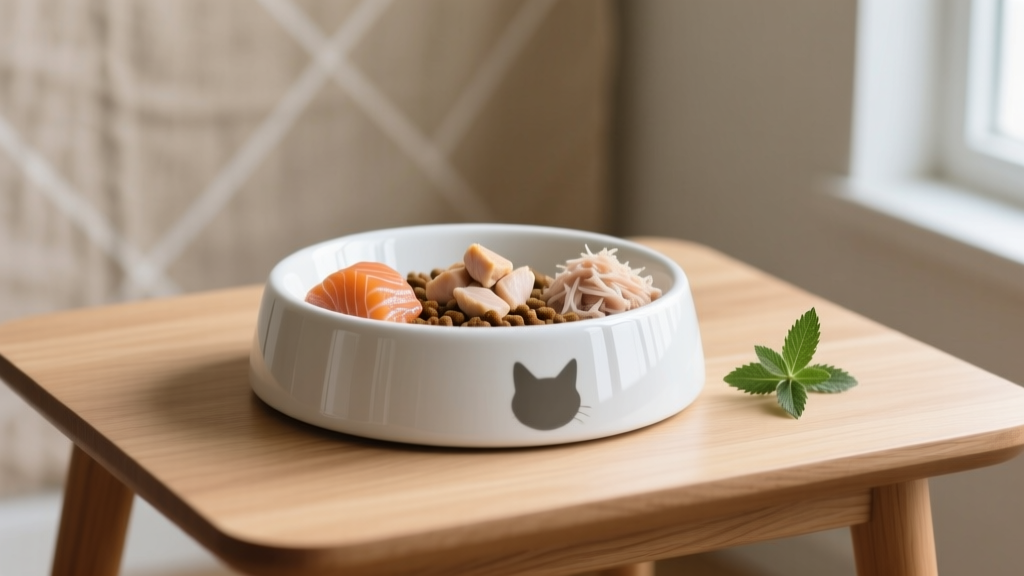
- Clean bowls immediately with hot soapy water (or dishwasher). Consider stainless steel or ceramic (less prone to scratching than plastic).
- Sanitize high-touch surfaces: counters, sinks, fridge handles, scoops, and your cat’s feeding area.
Portioning to reduce freeze-thaw damage
- Freeze in single-meal portions using silicone molds, small containers, or freezer-safe bags laid flat for quick thawing.
- Label with date and protein type to help rotation and identify sensitivity triggers.
- Avoid partially thawing a large package repeatedly.
Don’t discard the thaw liquid automatically
The liquid released during thawing may contain taurine and other water-soluble nutrients. If you’re feeding a commercial complete-and-balanced frozen raw product, follow the label directions. In general, mixing the liquid back into the meal helps maintain intended nutrient distribution and palatability (unless the product is spoiled or you suspect contamination from leaks/handling).
5) Comparing approaches: frozen raw handling options
| Approach | Pros | Cons / Risks | Best for |
|---|---|---|---|
| Commercial frozen raw (no HPP claim) | Convenient; may be formulated to AAFCO/FEDIAF | Pathogens may still be present; handling must be strict | Owners committed to strong hygiene and careful thawing |
| Commercial frozen raw with pathogen-reduction step (e.g., HPP) | Lower pathogen risk vs untreated raw (not sterile); often complete and balanced | Still requires safe handling; may cost more | Households wanting raw-like format with extra safety margin |
| Freeze-dried raw | Shelf-stable; easy portioning; less freezer dependence | Still can carry pathogens; must rehydrate safely; cost | Travel, small kitchens, owners needing storage flexibility |
| Cooked complete diet (commercial or vet-formulated homemade) | Lower pathogen risk; stable; easier for immunocompromised households | Less “raw-like”; some cats prefer raw texture | Multi-person households, higher-risk homes, cats with health issues |
If your household includes an immunocompromised person, a very young child, or someone undergoing chemotherapy, many veterinarians recommend avoiding raw feeding due to zoonotic risk. Discuss the safest diet format with your vet.
6) Common mistakes and misconceptions (myth-busting)
- Myth: “Freezing kills bacteria, so it’s safe.”
Fact: Freezing mainly stops growth; many pathogens survive and can multiply after thawing. - Myth: “Cats’ stomach acid makes raw food risk-free.”
Fact: Cats can still get sick, shed pathogens, or experience GI upset. Even without symptoms, cats may spread bacteria in the home. - Myth: “Refreezing thawed raw is fine if it still smells okay.”
Fact: Smell is not a reliable indicator of pathogen presence. Refreezing increases temperature abuse opportunities and quality loss. - Myth: “Homemade raw is automatically more natural and therefore balanced.”
Fact: Many homemade raw recipes found online are nutritionally incomplete (calcium, taurine, iodine, vitamin D, etc.). Balance requires formulation to established standards. - Myth: “Adding supplements later fixes any deficiencies.”
Fact: Some nutrients must be in the correct ratio (calcium/phosphorus), and over-supplementation can be harmful.
7) Implementing changes safely (transition tips)
Cats can develop food aversion if they feel nauseated after trying a new diet. Transition slowly and monitor stool quality, appetite, and energy.
- Start with a small substitution: 10–20% new food mixed with the current diet for 2–3 days.
- Increase gradually: Move to 25%, 50%, 75% over 7–14 days, adjusting based on stool and appetite.
- Warm gently for palatability: Place the sealed portion in warm water for a few minutes after fridge thawing. Avoid microwaving raw (uneven heating can create hot spots and partial cooking).
- Track tolerance: Keep a simple log of protein type, amount, stool consistency, vomiting, itchiness, and enthusiasm.
- Have a fallback plan: Keep your cat’s prior diet available in case appetite drops. Cats should not go without food; prolonged anorexia can be dangerous.
If you see repeated vomiting, diarrhea, lethargy, or refusal to eat, stop the new diet and contact your veterinarian promptly.
8) Special considerations (age, health conditions, activity level)
| Cat group | Key concerns | Handling/diet guidance |
|---|---|---|
| Kittens | Higher needs for energy, calcium/phosphorus, DHA; sensitive to imbalances | Use diets labeled complete and balanced for growth. Avoid unverified homemade raw recipes. Discuss with your vet. |
| Seniors | Dental issues, lower thirst drive, possible kidney/thyroid disease | Choose highly digestible, moisture-rich diets; consider cooked complete diets if immunity is reduced. Vet monitoring recommended. |
| CKD (kidney disease) | Phosphorus control often needed; protein type and amount must be individualized | Do not switch to raw without veterinary guidance. Therapeutic renal diets may be safer and more appropriate. |
| Diabetes/obesity | Calorie control, consistent intake, high-protein goals often used | Portion precisely; avoid free-feeding raw left out for long periods. Work with a vet on weight-loss rates and insulin adjustments. |
| Food allergies/suspected IBD | Need controlled ingredients; risk of symptom flare | Novel protein or hydrolyzed therapeutic diets may be needed for diagnosis. Raw is rarely ideal for an elimination trial unless vet-directed. |
| Immunocompromised cats (or households) | Higher infection risk | Many vets advise avoiding raw; consider cooked complete diets for safety. |
9) FAQ: Frozen raw handling and freeze-thaw stability
How long can thawed raw cat food stay in the fridge?
Follow the manufacturer’s label first. As a cautious general rule, keep thawed raw refrigerated and use within 24 hours, minimizing temperature swings and handling. If it smells “off,” looks slimy, or your cat refuses it, discard it and clean the bowl and surfaces. When in doubt, ask your veterinarian or the product manufacturer for product-specific guidance.
Can I refreeze thawed raw cat food?
It’s best avoided. Refreezing increases quality loss (more drip, texture breakdown, oxidation) and raises food safety risk if the food spent time above refrigerator temperature. The safer strategy is freezing in meal-sized portions so you only thaw what you’ll use.
Is freezer burn dangerous for cats?
Freezer burn is mainly a quality issue from dehydration and oxidation. It can reduce palatability and may reflect increased fat oxidation over time. While it’s not automatically “toxic,” it’s a sign the food hasn’t been well-protected. Discard severely freezer-burned food, and improve packaging and freezer temperature stability.
Does high-pressure processing (HPP) make raw food safe?
HPP can reduce bacterial loads, but it does not guarantee sterility, and post-processing contamination is still possible. You should still treat HPP raw as a raw product: thaw safely, limit time at room temperature, and sanitize bowls and surfaces.
Should I rinse raw meat to reduce bacteria before feeding?
No. Rinsing can spread bacteria via splashes and does not reliably remove pathogens. Safer handling (sealed thawing, clean prep surfaces, prompt refrigeration, short feeding window) is more effective.
What’s the safest alternative if I want “fresh” but not raw?
A commercially prepared complete-and-balanced cooked diet, or a properly formulated home-cooked diet designed by a veterinarian or board-certified veterinary nutritionist, usually offers a better safety profile than raw while still being meat-forward and highly palatable.
Veterinary guidance matters: Raw feeding and diet changes can affect your cat’s nutrient intake, GI health, and disease management. Talk with your veterinarian before switching foods, especially for kittens, seniors, or cats with medical conditions.
For more practical cat nutrition guides—hydration, protein quality, life-stage feeding, and safe food handling—browse the growing library at catloversbase.com.