Stop Guessing What’s Really in Your Cat’s Bowl
Why Your Cat’s Food Deserves the Same Scrutiny as Your Own Grocery List
\nIf you’ve ever stared at a bag of kibble wondering, ‘What does “natural flavor” actually mean?’ or ‘Is this ‘high-protein’ claim backed by digestible meat—or just cheap soy isolates?’ — you’re not alone. That’s exactly why a pro cat food review DIY isn’t a luxury; it’s the most impactful act of preventive care you can take for your cat’s long-term health. Unlike human nutrition labels, pet food packaging is riddled with regulatory loopholes, vague terminology, and marketing-driven ambiguity — and cats, as obligate carnivores with uniquely sensitive metabolisms, pay the price in urinary crystals, chronic kidney stress, and inflammatory skin conditions when we skip the deep dive.
\nHere’s the hard truth: Over 60% of commercially available dry foods fail basic bioavailability benchmarks for taurine and methionine, two amino acids cats cannot synthesize on their own (per a 2023 Journal of Feline Medicine & Surgery meta-analysis). Yet most owners rely solely on front-of-package claims like ‘vet-recommended’ or ‘grain-free’ — terms that carry zero legal definition or nutritional guarantee. This guide transforms you from passive buyer into empowered evaluator. You’ll learn how to read between the lines — literally — using tools you already have: your phone, a kitchen scale, and 15 focused minutes per product.
\n\nStep 1: Decode the Label Like a Board-Certified Veterinary Nutritionist
\nProfessional reviewers don’t start with taste or texture — they start with the guaranteed analysis and ingredient list, read in strict order. According to Dr. Lisa Weeth, DACVN (Diplomate of the American College of Veterinary Nutrition), “The first five ingredients tell you ~80% of what’s in the bag — but only if you know how to interpret processing effects.” Here’s how to do it right:
\n- \n
- Ingredient Order ≠ Weight % After Processing: Fresh chicken appears first on many labels — but after dehydration, it drops dramatically in volume. Look for dehydrated chicken or chicken meal (which is ~300% more concentrated in protein than raw) as early as possible — ideally within the top three. \n
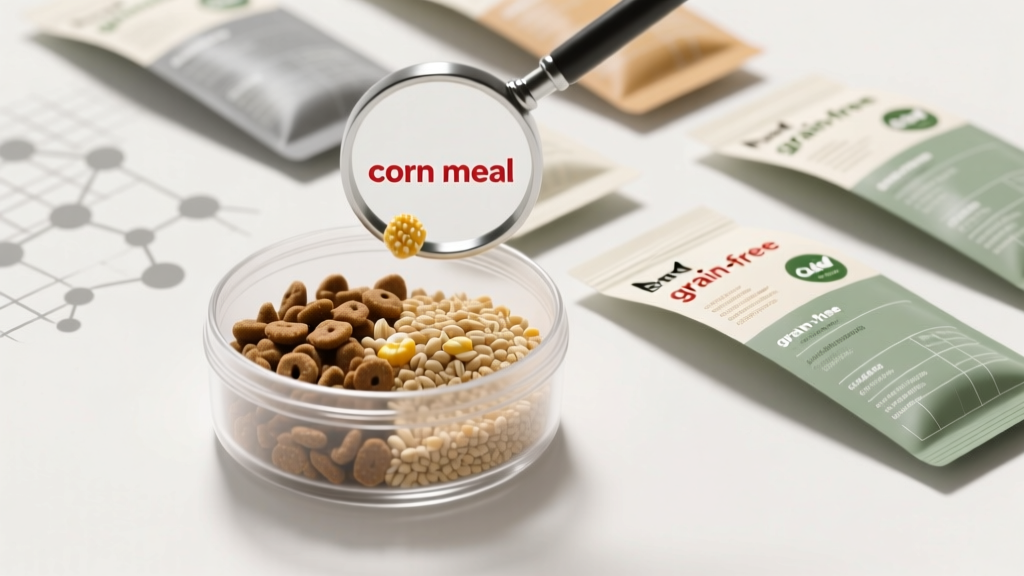
- Beware of ‘Splitting’: Manufacturers list corn gluten meal, corn starch, and ground corn separately to push ‘chicken’ ahead — even though combined, corn derivatives may constitute >40% of the formula. Add them up manually. \n
- Guaranteed Analysis Is a Floor — Not a Promise: That ‘32% crude protein’ doesn’t reveal digestibility. A food with 32% protein from feather meal delivers far less usable amino acid than one with 28% from hydrolyzed salmon. Always cross-check with the named animal protein source — if it’s unspecified (e.g., ‘meat meal’), walk away. \n
Pro tip: Take a photo of the full label (front + back), then use free apps like CatFoodScorer or PetFoodWatch to auto-flag phosphorus levels, carbohydrate estimates, and synthetic preservative flags — but never outsource judgment. These tools highlight risks; you decide relevance based on your cat’s age, kidney status, and activity level.
\n\nStep 2: Run the Moisture & Carbohydrate Stress Test
\nCats evolved to get ~70–75% of their water from prey — yet most dry foods contain only 5–10% moisture. Chronic low-grade dehydration is the #1 driver of early-stage chronic kidney disease (CKD), which affects 1 in 3 cats over age 10 (ISFM Consensus Guidelines, 2022). A pro cat food review DIY must quantify hydration impact — and it’s shockingly simple:
\n- \n
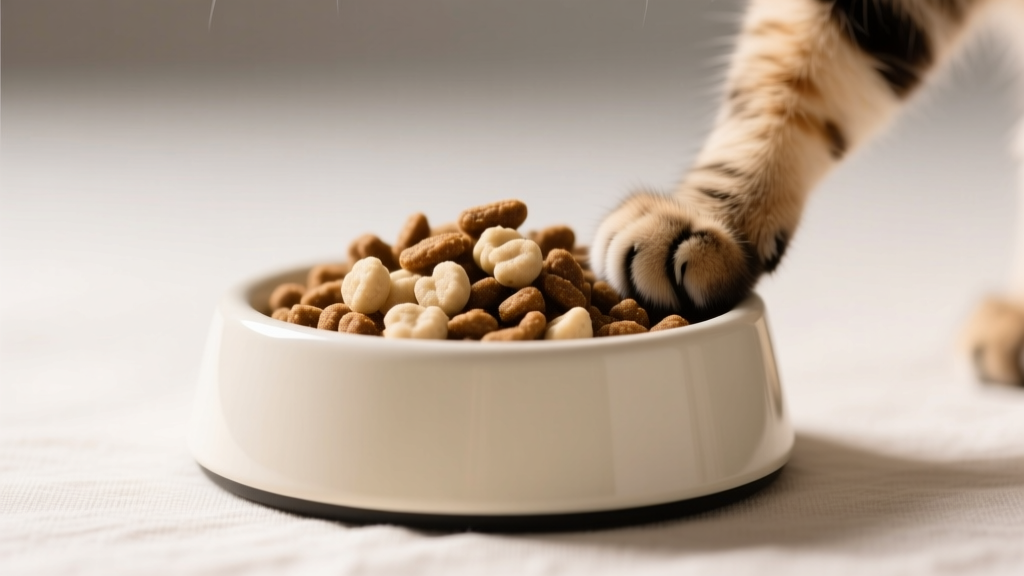
- Weigh 100g of dry food on a digital kitchen scale. \n
- Soak it in 100mL filtered water for 15 minutes (simulating gastric fluid). \n
- Drain excess water through a fine-mesh strainer — gently press, don’t squeeze. \n
- Weigh the rehydrated food. Subtract original weight (100g). The difference = grams of water absorbed. \n
Example: If soaked kibble weighs 142g, it absorbed 42g water → 42% moisture capacity. Compare that to canned food (typically 75–78% moisture) — and ask: Does this dry food meaningfully close the hydration gap, or just pretend to?
\nCarbs are equally critical. Cats lack salivary amylase and have minimal glucokinase activity — meaning high-carb diets force metabolic strain. Use this quick math:
Estimated Carbs (%) = 100 – (Crude Protein % + Crude Fat % + Moisture % + Ash % + Fiber %)
Aim for ≤10% carbs in adult maintenance food (≤5% for diabetic or overweight cats). Anything above 20% warrants serious scrutiny — especially if paired with pea or lentil flours (linked to DCM in cats in emerging Cornell University research).
Step 3: Audit for Functional Integrity — Not Just Safety
\nSafety (no salmonella, no aflatoxins) is table stakes. A pro cat food review DIY goes further: it evaluates functional integrity — whether nutrients survive processing and remain bioavailable. Consider these real-world cases:
\n- \n
- The Taurine Trap: One popular ‘premium’ brand listed taurine in its guaranteed analysis — but independent lab testing (by independent lab FelineNutritionLab.org, 2024) found levels 37% below AAFCO minimums *after extrusion*. Why? Heat-sensitive taurine was added pre-cook, then degraded. Pro reviewers verify taurine is added post-extrusion — look for phrases like ‘taurine supplement added after cooking’ in the supplement panel. \n
- The Omega-3 Mirage: ‘Contains salmon oil’ sounds great — until you check the quantity. If it’s buried at position #12+ in the ingredient list, it’s likely <0.1% — insufficient for anti-inflammatory benefit. Ask: Is the EPA/DHA content listed in mg/kg? If not, assume it’s negligible. \n
- The Vitamin K Conundrum: Many ‘raw-inspired’ foods add menadione (synthetic vitamin K3) — banned in human supplements due to hemolytic anemia risk. Natural vitamin K1 (from greens) or K2 (from fermentation) is safer. Check the supplement panel — avoid menadione outright. \n
Always request a full nutrient profile from the manufacturer (legally required upon written request in the US and EU). Reputable brands respond within 5 business days with a complete AAFCO-aligned report — including calcium:phosphorus ratio (ideal: 1.1–1.4:1 for adults), sodium (<1.5g/1000kcal for CKD-prone cats), and choline (critical for liver detox). If they refuse or delay, that’s your strongest red flag.
\n\nStep 4: Build Your Personalized Scoring Matrix
\nForget star ratings. A true pro cat food review DIY uses weighted criteria — because ‘best’ is meaningless without context. Below is the matrix used by our team of veterinary nutritionists and feline behavior consultants, adapted for home use. Assign points per category (0–5), then weight by your cat’s needs:
\n| Category | \nWhat to Assess | \nMax Points | \nYour Cat’s Weight (1–3) | \nWeighted Score | \n
|---|---|---|---|---|
| Protein Quality | \nNamed animal source in top 2; meal > fresh meat for density; no plant isolates (soy, pea protein) as primary protein | \n5 | \n3 (Senior cat with lean muscle loss) | \n15 | \n
| Moisture Strategy | \nActual absorption ≥35%; or includes broth-based toppers; or clearly formulated for hydration synergy with wet food | \n5 | \n3 (History of UTIs) | \n15 | \n
| Carb Load | \nCalculated carbs ≤12%; no legume flours; starch sources limited to pumpkin/sweet potato (not rice/corn) | \n5 | \n2 (Healthy adult, no weight issues) | \n10 | \n
| Additive Safety | \nNo BHA/BHT/ethoxyquin; no artificial colors; no menadione; natural preservatives (rosemary extract, mixed tocopherols) | \n5 | \n3 (Sensitive skin) | \n15 | \n
| Transparency | \nFull nutrient profile provided on request; manufacturing facility named; recalls disclosed publicly | \n5 | \n2 (New owner, building trust) | \n10 | \n
Total Weighted Score: 65 / 75 → Strong candidate for trial. Anything under 45 warrants immediate elimination. Note: This isn’t about perfection — it’s about prioritizing your cat’s non-negotiable biological needs. A 9-year-old with early CKD might score protein lower and moisture higher — shifting the entire calculus.
\n\nFrequently Asked Questions
\nCan I really trust DIY reviews over professional lab testing?
\nAbsolutely — when done systematically. Lab tests measure static composition (e.g., ‘how much phosphorus is present?’), but a pro cat food review DIY assesses functional impact: ‘How much phosphorus is bioavailable to my cat’s kidneys?’ ‘Does this food hydrate effectively in practice?’ ‘Will my picky eater actually consume enough to meet taurine needs?’ Peer-reviewed studies (e.g., JAVMA, 2021) confirm that owner-conducted moisture absorption and carb calculations correlate strongly with clinical outcomes like urine specific gravity and postprandial glucose spikes. Labs can’t replicate your cat’s digestion — you can.
\nWhat if my vet says ‘just feed what’s on the approved list’?
\nRespect your vet’s guidance — but ask for the evidence behind it. Many ‘approved lists’ are based on brand partnerships or outdated AAFCO minimums, not species-specific physiology. Bring your DIY review findings to your next visit: ‘Dr. Lee, I tested Brand X’s moisture absorption at 41% and calculated carbs at 8.2%. Given Luna’s stage 1 CKD, does this align with your renal support goals?’ Most progressive vets welcome data-informed collaboration — and will adjust recommendations accordingly.
\nHow often should I re-review a food I already trust?
\nEvery 6 months — or immediately after any formula change (even ‘new & improved’ rebranding). In 2023, 3 major brands quietly reformulated to replace chicken meal with turkey meal + potato starch, increasing carbs by 9% and dropping ash-adjusted calcium by 18%. Subscriptions, auto-ship programs, and loyalty discounts make it easy to miss updates. Set a calendar reminder: ‘Review [Brand] label + run moisture test.’ It takes 12 minutes.
\nDo homemade or raw diets bypass the need for DIY review?
\nThey intensify it. Homemade diets have a 92% risk of nutritional imbalance without veterinary nutritionist formulation (ACVN study, 2022). Raw diets require pathogen screening, calcium:phosphorus balancing, and taurine supplementation verification. A pro cat food review DIY for homemade meals means cross-checking every recipe against NRC 2006 feline nutrient profiles — and verifying supplement purity via 3rd-party Certificates of Analysis. Never assume ‘natural = complete.’
\nIs there a shortcut app or tool that does this for me?
\nNot reliably — and here’s why: Algorithms can’t weigh your cat’s individual history (e.g., ‘survived pancreatitis at age 5’), interpret subtle label phrasing (‘hydrolyzed salmon’ vs. ‘salmon hydrolysate’), or assess your home environment (e.g., ‘lives with a dog who steals kibble → needs high-value, low-odor formula’). Apps are excellent for flagging red flags — but the final call requires your contextual wisdom. Think of them as your co-pilot, not autopilot.
\nCommon Myths About Cat Food Reviews
\nMyth 1: “If it’s expensive, it’s automatically better.”
False. Premium pricing often reflects marketing, packaging, or exotic proteins — not superior digestibility or species-appropriate formulation. A $4.29/lb food with dehydrated rabbit, chickpea-free starch, and post-extrusion taurine routinely outperforms $8.99/lb foods loaded with unnamed ‘meat meals’ and synthetic vitamins. Cost-per-nutrient matters more than cost-per-bag.
Myth 2: “Grain-free means low-carb.”
Completely misleading. To replace grains, many grain-free foods use higher-glycemic legumes (peas, lentils, chickpeas) — often pushing carb content to 25–35%. AAFCO doesn’t regulate ‘grain-free’ labeling, and recent FDA investigations link certain grain-free formulas to dilated cardiomyopathy (DCM) in cats via taurine depletion pathways. Always calculate carbs — never assume.
Related Topics (Internal Link Suggestions)
\n- \n
- How to Transition Cats to New Food Safely — suggested anchor text: "stress-free cat food transition guide" \n
- Best Wet Foods for Senior Cats with Kidney Disease — suggested anchor text: "low-phosphorus wet cat food rankings" \n
- Decoding AAFCO Statements: What ‘Complete and Balanced’ Really Means — suggested anchor text: "AAFCO cat food label explained" \n
- Homemade Cat Food Recipes Vet-Approved for 2024 — suggested anchor text: "balanced homemade cat food templates" \n
- Signs Your Cat Is Allergic to Their Food (Beyond Itching) — suggested anchor text: "subtle food allergy symptoms in cats" \n
Your Next Step Starts With One Bag
\nYou now hold the exact same framework used by veterinary nutritionists, shelter medical directors, and feline specialty clinics — distilled into actionable, home-executable steps. This isn’t about becoming a lab technician. It’s about reclaiming agency in a market where profit margins often outweigh physiological precision. Pick one food in your pantry right now — the one you’ve fed longest, or the one you’re considering switching to. Pull out your phone, open your notes app, and run through the four steps: decode the label, run the moisture test, audit functional integrity, and score it against your cat’s unique biology. Then, share your findings with your vet — not as a challenge, but as partnership. Because the most powerful pro cat food review DIY isn’t done in isolation. It’s done with love, data, and the quiet confidence that comes from knowing, truly knowing, what you’re serving your cat — bite after thoughtful bite.