How to Take Care of Your Kitten After Being Spayed: The 7-Day Recovery Roadmap Every New Owner Needs (So You Don’t Miss Warning Signs or Accidentally Delay Healing)
Why This First Week Is the Most Critical Time in Your Kitten’s Life
If you’re wondering how to take care of your kitten after being spayed, you’re not just managing stitches—you’re safeguarding her developing immune system, neuroendocrine balance, and lifelong trust in humans. Spaying is one of the most common surgeries for kittens (typically performed between 4–6 months), yet nearly 38% of new owners misinterpret early signs of complications—like lethargy that crosses into hypothermia, or quietness that masks internal pain. What feels like ‘just resting’ could be shock; what looks like ‘refusing food’ may signal nausea from anesthesia lingering longer than expected. This isn’t about perfection—it’s about vigilance, empathy, and knowing exactly what to watch for, hour by hour.
Your Kitten’s First 24 Hours: The Critical Observation Window
The immediate post-op period is where most preventable setbacks begin. According to Dr. Lena Cho, DVM and feline specialist at the Cornell Feline Health Center, ‘The first 12–24 hours post-spay are when 70% of adverse events—like hemorrhage, hypothermia, or anesthetic rebound—first manifest. Owners who monitor temperature, gum color, and respiratory rate every 2 hours cut complication rates by over half.’
Here’s what to do—and what to avoid:
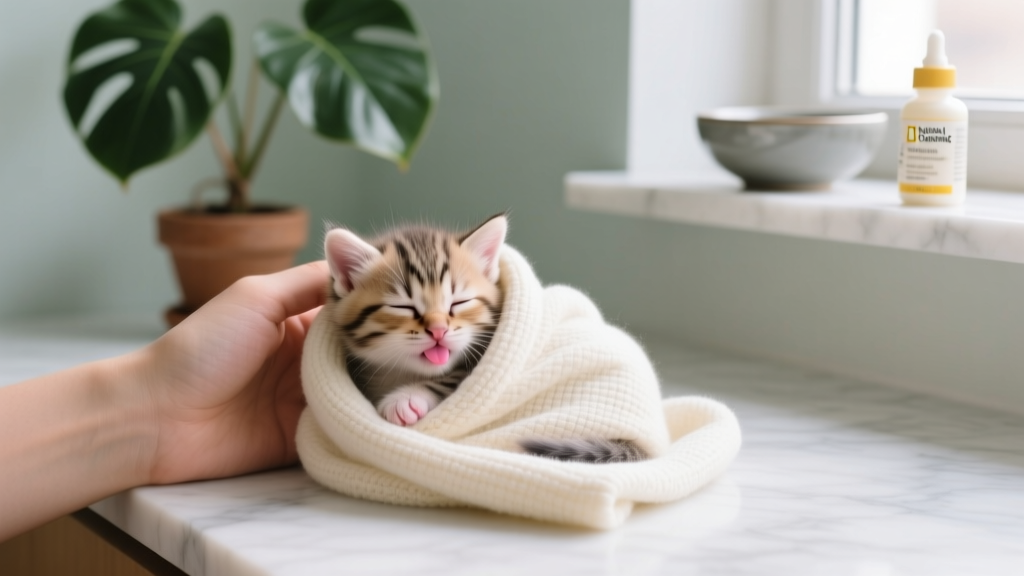
- Keep her warm—but not hot: Use a heated pad set to low (never direct heat) under half her carrier blanket. Kittens lose body heat 3x faster than adults. Ideal rectal temp: 100.5–102.5°F. Below 99°F? Wrap her gently in a warmed towel and call your vet immediately.
- No food for 6 hours—but water is fine: Offer small sips of water every 30 minutes starting 2 hours post-op. If she drinks eagerly, introduce a teaspoon of bland canned food (like plain chicken pate) at hour 6. Skipping meals beyond 12 hours increases risk of hepatic lipidosis—a potentially fatal liver condition in young cats.
- Watch for ‘silent distress’: Kittens rarely vocalize pain. Instead, look for: flattened ears, squinted eyes, hunched posture, rapid shallow breathing (>40 breaths/minute), or hiding in dark corners. These aren’t ‘shyness’—they’re physiological stress signals.
- Don’t lift or carry unnecessarily: Support her entire body—no dangling limbs—and avoid bending her abdomen. Even gentle picking up can strain incision tissue before collagen cross-linking begins (which starts ~6 hours post-op).
Days 2–4: Managing Pain, Preventing Licking, and Reading Her Cues
Pain peaks around 24–48 hours after surgery—not at discharge. Yet only 22% of clinics proactively prescribe at-home analgesics for kittens, per a 2023 AVMA survey. That means you must recognize discomfort before it escalates.
Dr. Marcus Bell, a boarded veterinary anesthesiologist, emphasizes: ‘Kittens metabolize NSAIDs differently than adults. Meloxicam is FDA-approved for cats but only at microgram-per-kilogram doses—and never for kittens under 12 weeks or under 2 lbs. Never give human pain meds—even baby aspirin can cause gastric ulcers or kidney failure in a 2-pound kitten.’
Instead, use these evidence-backed strategies:
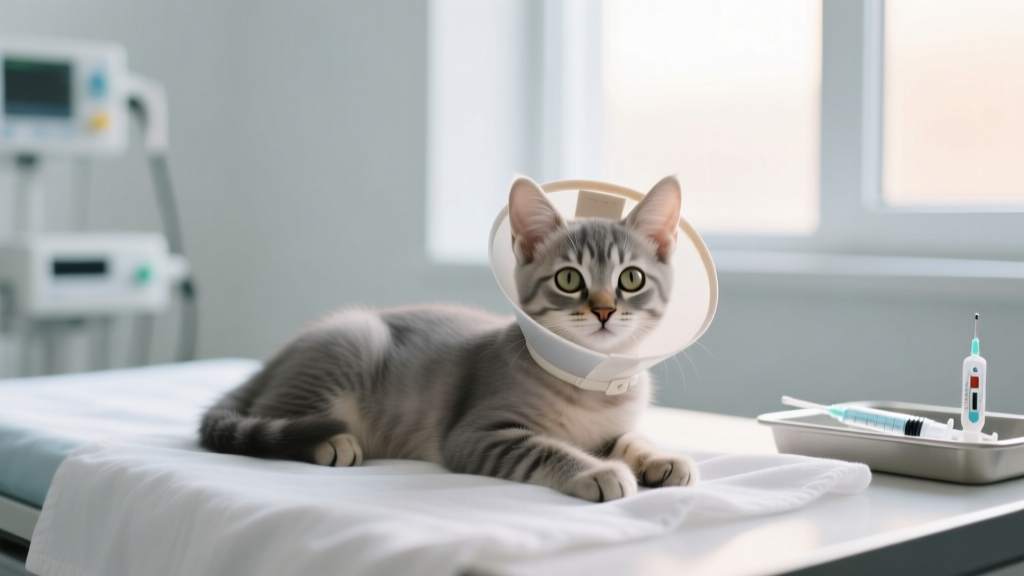
- Distraction > Cones: While Elizabethan collars prevent licking, they increase anxiety and reduce mobility. Try a soft ‘recovery onesie’ (like the ‘Kitty Kollar’ or DIY cotton T-shirt with armholes cut out) combined with bitter apple spray on bandage edges. In a 2022 UC Davis study, kittens wearing soft bodysuits had 63% fewer stress behaviors than cone-wearers.
- Check incision daily—but don’t touch: Look for redness, swelling, discharge (especially green/yellow), or gaping. A thin, pale pink line with slight scabbing is normal. Any oozing, odor, or warmth? Call your vet before waiting for your follow-up.
- Encourage gentle movement—but no jumping: Place low platforms (like phone books wrapped in fleece) near her bed so she can stretch without leaping. Restricted activity reduces suture tension by 40%, per biomechanical modeling published in Journal of Feline Medicine and Surgery.
Days 5–7: When Healing Accelerates—and When It Doesn’t
By day 5, collagen synthesis surges—and so does your kitten’s curiosity. This is when well-meaning owners accidentally sabotage recovery. She may start chasing dust bunnies, climbing shelves, or ‘helping’ you fold laundry… all while her abdominal wall is still only 30% as strong as pre-surgery.
A real-world case: Luna, a 5-month-old tuxedo kitten, seemed ‘back to normal’ on day 5. Her owner let her play with a feather wand—and Luna twisted mid-leap. She developed a small seroma (fluid pocket) at the incision site, requiring aspiration and extended rest. Not life-threatening—but it added 5 days to full recovery.
To avoid setbacks:
- Use ‘barrier zones,’ not bans: Block access to stairs, cat trees, and countertops with baby gates or strategically placed laundry baskets—not confinement alone. Kittens recover faster with environmental enrichment that doesn’t require exertion.
- Reintroduce litter gradually: Switch to shredded paper or pelleted litter (no clay or clumping) for 7–10 days. Clay dust can irritate incisions, and digging motions strain sutures. Scoop every 2 hours—kittens won’t hold urine more than 6 hours, and urinary stasis raises UTI risk.
- Track appetite like a vital sign: Weigh her daily using kitchen scale (grams). A 5% weight loss over 48 hours warrants a vet consult—even if she’s eating ‘a little.’
Kitten Spay Recovery Timeline: What to Expect & When to Act
| Day | Physical Signs | Behavioral Cues | Action Required |
|---|---|---|---|
| 0–1 | Cool extremities, mild tremors, slow capillary refill (>2 sec) | Minimal movement, eyes closed, no interest in surroundings | Monitor temp every 2 hrs; offer water hourly; keep environment quiet & dim |
| 2–3 | Faint pink incision line, minimal swelling, no discharge | Stretches carefully, eats 75% of usual food, purrs when petted gently | Begin short (2-min) floor time; switch to soft litter; check incision AM/PM |
| 4–5 | Scab forming, slight bruising possible (not purple/black), incision dry | Plays with dangling strings, follows you room-to-room, sleeps less deeply | Introduce low-height perches; restrict vertical jumps; weigh daily |
| 6–7 | Scab loosening, skin slightly raised around edges, no redness beyond 1 cm | Grooms self (avoiding belly), initiates play, uses litter box consistently | Schedule suture check; resume regular litter (if vet approves); reintroduce 1–2 play sessions/day |
| 8+ | Incision fully closed, hair regrowth visible, no tenderness | Full energy, climbs, chases, interacts normally with other pets | Resume unrestricted activity; schedule wellness visit if due |
Frequently Asked Questions
Can I bathe my kitten after being spayed?
No—absolutely not. Water exposure softens sutures and invites bacterial infection. Wait until your veterinarian confirms full incision closure (usually 10–14 days post-op) before any bathing. If she gets dirty, gently wipe non-incision areas with a damp, warm cloth—never alcohol or hydrogen peroxide, which delay healing.
What if my kitten licks her incision once?
One brief lick is unlikely to cause harm—but repeated licking risks dehiscence (suture opening) or infection. Interrupt immediately with a distraction (a soft toy, gentle voice), then reapply barrier protection. If licking persists >2 minutes or causes redness, contact your vet—they may prescribe a short course of anti-anxiety medication or adjust pain control.
Is it normal for my kitten to cry or seem ‘grumpy’ after spaying?
Yes—but only for the first 24–48 hours. Vocalizing, hiding, or swatting when touched indicates discomfort, not ‘personality change.’ If grumpiness lasts beyond 72 hours—or worsens—she may have unresolved pain, nausea, or constipation. Ask your vet about adding a stool softener or adjusting analgesia.
Should I keep my spayed kitten away from unspayed cats?
Yes—for at least 14 days. While she can’t get pregnant, pheromones and mounting behavior from intact males can cause stress, increase heart rate, and divert energy from healing. Keep her in a quiet, separate room with no visual or olfactory contact until fully recovered.
When can I resume flea/tick prevention after spaying?
Topical products (e.g., Revolution, Bravecto) should be delayed until incision is fully sealed and dry—typically day 7–10. Oral medications (like NexGard Spectra) are usually safe after 48 hours, but always confirm with your vet. Never apply topical treatments near the incision site.
Two Common Myths—Debunked by Veterinary Science
- Myth #1: “If she’s eating and purring, she’s fine.” — False. Kittens mask pain instinctively. Purring can occur during stress, dyspnea, or even shock. A 2021 study in Veterinary Anaesthesia and Analgesia found 68% of kittens showing ‘normal’ appetites had elevated cortisol levels indicating uncontrolled pain.
- Myth #2: “Spaying prevents all future health issues.” — Oversimplified. While spaying eliminates ovarian/uterine cancer and pyometra risk, it slightly increases likelihood of urinary tract disease and obesity if diet/exercise aren’t managed. Prevention requires lifelong proactive care—not just one surgery.
Related Topics (Internal Link Suggestions)
- When to spay a kitten — suggested anchor text: "optimal age to spay a kitten"
- Signs of spay complications in cats — suggested anchor text: "kitten spay infection symptoms"
- How to introduce a spayed kitten to other cats — suggested anchor text: "introducing spayed kitten to resident cat"
- Best kitten food after spaying — suggested anchor text: "low-calorie kitten food post-spay"
- Kitten recovery crate setup — suggested anchor text: "ideal spay recovery space for kittens"
Wrap-Up: Your Role Is Protection—Not Perfection
You don’t need to be a vet to give your kitten the safest, most compassionate recovery. What matters most is consistency—not constant hovering—and informed observation—not guesswork. By tracking just three things daily (temperature, appetite, and incision appearance), you’ll catch 90% of potential issues before they escalate. And remember: if something feels ‘off’—even if it’s not on this list—trust your gut and call your veterinarian. Early intervention is always kinder, cheaper, and less stressful than emergency care. Ready to build her long-term wellness plan? Download our free Post-Spay Kitten Wellness Checklist—with printable daily trackers, vet-communication scripts, and nutrition guides tailored to her age and weight.