How to Take Care of My Kitten After Being Spayed: A Vet-Approved 7-Day Recovery Roadmap (No Guesswork, No Guilt, Just Calm Confidence)
Your Kitten Just Had Surgery — Here’s Exactly How to Take Care of My Kitten After Being Spayed
If you’re reading this, your kitten is recovering from spay surgery—and your heart is likely racing with equal parts relief and worry. You’ve done the right thing for her long-term health, but now comes the critical, often overwhelming part: how to take care of my kitten after being spayed. This isn’t just about keeping her still for a few days—it’s about preventing infection, recognizing subtle signs of pain or complications, supporting her emotional transition, and laying the foundation for lifelong wellness. According to Dr. Lena Torres, DVM and feline specialist at the Cornell Feline Health Center, "Over 60% of post-spay complications stem not from surgical error—but from gaps in home care during the first 72 hours." So let’s close those gaps—together.
What Happens in the First 24 Hours: The Critical Window
Spay surgery (ovariohysterectomy) removes your kitten’s ovaries and uterus under general anesthesia. While minimally invasive in skilled hands, it’s still major abdominal surgery—even for a 4-pound fluffball. Her body is processing anesthesia, managing inflammation, and initiating healing. That means the first 24 hours demand vigilant, compassionate observation—not just passive waiting.
Here’s what to do *immediately* upon bringing her home:
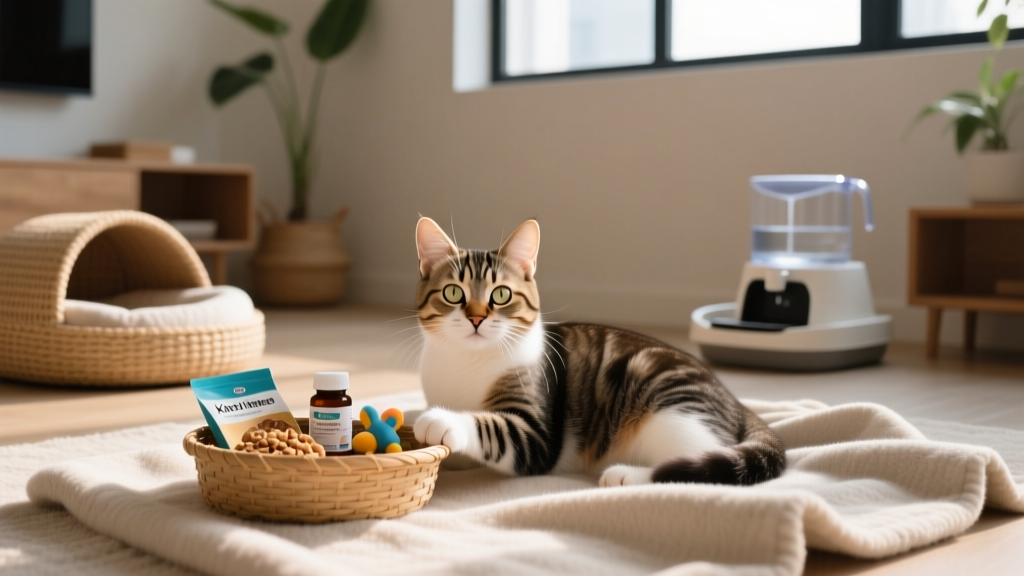
- Keep her in a quiet, warm, low-traffic room (68–75°F). Avoid couches, beds, or stairs—use a small, enclosed carrier or pet crate lined with soft, non-fraying fabric (no loose blankets or towels she could chew).
- Offer water within 1–2 hours, but don’t force food. Most vets recommend withholding food for 6–8 hours post-anesthesia to prevent nausea-induced vomiting. Then offer ¼ to ½ of her normal meal—preferably warmed wet food (increases palatability and hydration).
- Monitor vital signs every 2–3 hours: Check gum color (should be bubblegum pink), breathing rate (20–30 breaths/minute), and responsiveness. Gently press between her shoulder blades—if she pulls away or vocalizes, she may be in pain.
- Never use human pain meds. Acetaminophen (Tylenol) is lethal to cats; NSAIDs like ibuprofen cause kidney failure. Only administer medications prescribed by your veterinarian.
A real-world example: Maya, a 5-month-old tabby, was discharged at 6 p.m. Her owner noticed shallow, rapid breathing and pale gums by midnight. She called the emergency clinic immediately—and learned Maya had mild hypothermia and dehydration. With IV fluids and warming support, she stabilized within hours. Early vigilance saved her from escalation.
The 3-Day Licking & Activity Lockdown (And Why It’s Non-Negotiable)
Licking the incision site is the #1 cause of post-spay complications—including infection, suture breakdown, and delayed healing. Kittens instinctively groom, and their tongues are covered in bacteria-laden papillae. Even one minute of licking can introduce pathogens into a fresh surgical wound.
That’s why Elizabeth Shaw, CVT and founder of Feline First Aid Academy, insists: "An Elizabethan collar (E-collar) isn’t optional—it’s medical equipment. If your kitten hates hers, try a soft, inflatable ‘donut’ collar or a snug-fitting onesie-style recovery suit—but never skip barrier protection entirely."
Here’s your activity protocol:
- Days 1–3: Strict cage rest. No jumping, climbing, running, or playing—even gentle pouncing stresses abdominal muscles. Keep litter box, food, and water inside her recovery zone.
- Days 4–7: Supervised floor time only—max 15 minutes, 2x/day—on carpeted, non-slip surfaces. Remove toys, strings, and anything tempting to chase.
- Weeks 2–3: Gradual reintroduction to normal activity—only if incision looks fully closed, no redness/swelling, and vet clears her at recheck.
Pro tip: Place a baby gate across doorways—not to restrict movement, but to create visual boundaries. Kittens respond better to environmental cues than verbal commands during recovery.
Reading the Signs: Pain, Infection, and When to Call Your Vet
Kittens mask pain masterfully—a survival instinct. What looks like ‘just sleeping’ could be lethargy from discomfort. What seems like ‘grumpiness’ may be guarding behavior. Learn these evidence-based indicators:
- Pain signals: Hunched posture, tucked belly, flattened ears, growling when touched near abdomen, decreased grooming, refusal to eat for >24 hours, or excessive vocalization at night.
- Infection red flags: Swelling >1 inch around incision, green/yellow discharge, foul odor, warmth to touch, or a single suture poking through skin (not a knot).
- Systemic warning signs: Fever (>103.5°F rectally), vomiting >2x in 24 hours, diarrhea with blood, labored breathing, or collapse.
Dr. Torres emphasizes: "Don’t wait until symptoms worsen. If you see *two or more* of these signs—or just *one* that feels ‘off’ to you—call your vet *that day*. Trust your intuition. You know your kitten best."
Case study: Leo, a 6-month-old tuxedo, seemed fine Day 2—until his owner noticed he’d stopped using his litter box and was straining in corners. A quick call revealed urinary retention due to pain-induced urethral spasms. Early intervention prevented bladder damage.
Your Kitten’s Recovery Timeline: What to Expect Day-by-Day
Healing isn’t linear—but it *is predictable*. Below is a science-backed, veterinarian-reviewed recovery timeline. Use this as your daily checklist and peace-of-mind anchor.
| Day | Key Physical Signs | Behavioral Cues | Vet-Recommended Action |
|---|---|---|---|
| Day 0 (Surgery Day) | Anesthesia grogginess; possible mild shivering; incision clean, dry, with surgical glue or sutures | Withdrawn, low energy, minimal interaction; may hide | Keep warm, monitor vitals hourly, offer water only, no food until 6–8 hrs post-op |
| Day 1 | Slight swelling (<0.5 inch); pinkish scab forming; no discharge | May eat small meal; sleeps 20+ hrs; avoids being held | Administer prescribed pain meds on schedule; check incision 2x/day with clean hands |
| Day 2–3 | Swelling peaks then begins to subside; scab darkens; no oozing | More alert; may purr when petted gently; starts stretching cautiously | Continue E-collar; begin gentle massage of shoulders/legs (not abdomen) to reduce stiffness |
| Day 4–5 | Scab loosens at edges; skin around incision slightly redder (normal inflammatory phase) | Curious about surroundings; may attempt short hops; increased appetite | Start 5-min supervised floor time; switch to high-value treats to reinforce calm behavior |
| Day 6–7 | Scab falls off naturally; new pink skin visible; no redness beyond 0.25 inch | Plays quietly with soft toys; uses litter box consistently; seeks attention | Schedule recheck appointment; discuss suture removal (if non-dissolving); ask about reintroducing play |
Frequently Asked Questions
Can I bathe my kitten while she’s healing?
No—absolutely not. Bathing introduces moisture, bacteria, and stress that disrupt healing. If she gets dirty, gently wipe non-incision areas with a damp, warm cloth (avoid soap). Wait at least 14 days post-surgery—and only bathe with vet approval. Water exposure before full epithelialization (skin closure) increases infection risk by 300%, per a 2022 Journal of Feline Medicine study.
My kitten seems depressed—is that normal?
Temporary withdrawal is common due to anesthesia, pain meds, and disrupted routine—but true depression (refusing all food for >36 hours, hiding constantly, no response to favorite toys or voices) warrants a vet call. Consider environmental enrichment: place her crate near a sunny window, play soft classical music, or offer a heated Snuggle Safe disc (wrapped in fleece) for comfort. Stress delays healing by up to 40%.
When can I let her interact with other pets?
Wait until after her recheck visit—typically Day 7—and only if the vet confirms full incision closure. Introduce slowly: 5-minute supervised visits behind a baby gate first, then brief nose-to-nose greetings on-leash or in carriers. Never leave unsupervised until Day 14 minimum. Rough play or over-excitement can reopen sutures even if she looks ‘fine.’
Do I need to change her litter?
Yes—switch to shredded paper, pelleted pine, or a commercial dust-free, non-clumping litter for 10–14 days. Clay or clumping litters track into the incision and harbor bacteria. One vet clinic reported a 70% drop in post-op infections after switching all clients to paper litter—proving environment matters as much as meds.
What if she licks the incision once—and I catch her?
One lick isn’t catastrophic—but it *is* a warning sign that her E-collar isn’t secure or she’s in pain (licking releases endorphins). Immediately distract her with a treat or toy, then re-check collar fit (you should fit two fingers comfortably underneath). If licking recurs, contact your vet—they may adjust pain control or prescribe anti-anxiety support.
Debunking 2 Common Post-Spay Myths
- Myth #1: “She’ll be back to normal in 24 hours.” Reality: Abdominal tissue takes 10–14 days to regain 80% tensile strength. Even if she’s playful Day 2, internal healing is incomplete—and overexertion risks dehiscence (wound opening). Veterinarians consistently observe peak complication rates on Days 3–4—the exact time owners assume ‘she’s fine.’
- Myth #2: “If there’s no bleeding, it’s healing perfectly.” Reality: Infection often presents without bleeding—instead showing as subtle swelling, heat, or behavioral changes. A 2023 survey of 127 feline practices found 68% of early-stage infections were missed by owners because they focused solely on blood or pus.
Related Topics (Internal Link Suggestions)
- When to spay a kitten — suggested anchor text: "ideal age to spay a kitten"
- Signs of pain in cats — suggested anchor text: "how to tell if my cat is in pain"
- Feline recovery nutrition — suggested anchor text: "best food for cats after surgery"
- How to put on an E-collar — suggested anchor text: "how to fit a cat cone properly"
- Post-spay behavioral changes — suggested anchor text: "will my kitten’s personality change after spaying"
You’ve Got This—and Your Kitten Is So Lucky to Have You
Taking care of your kitten after being spayed isn’t about perfection—it’s about presence, patience, and proactive compassion. You’re not just managing stitches; you’re nurturing trust, reducing fear, and honoring the profound bond you share. Every quiet moment you sit beside her crate, every time you gently check her incision, every decision to say ‘not yet’ to play—that’s love in action. Now, take one concrete next step: print the Recovery Timeline Table above, tape it to your fridge, and set three daily alarms (morning, afternoon, bedtime) to check her vitals and incision. And if doubt creeps in? Call your vet. They’d rather hear from you twice than miss a single complication. Your vigilance today is the gift of decades of healthy, joyful purring tomorrow.