How to Care for a Week Old Kitten: The 7 Non-Negotiable Steps Every New Caregiver Must Get Right (or Risk Hypothermia, Starvation, or Sepsis Within 48 Hours)
Why This First Week Is the Most Critical Window in a Kitten’s Life
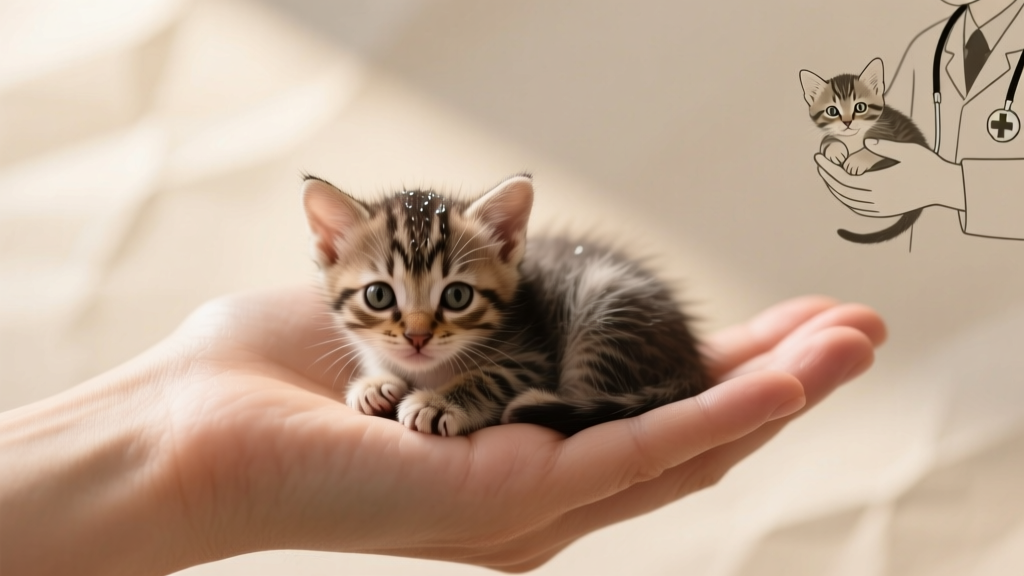
If you’re asking how to care for a week old kitten, you’re likely holding a fragile, eyes-closed, non-mobile newborn who can’t regulate body temperature, digest food without help, or eliminate waste unassisted. This isn’t just ‘pet care’ — it’s neonatal intensive care. At 7 days old, a kitten’s immune system is virtually nonexistent, their metabolism runs at double that of an adult cat, and their survival depends entirely on your consistency, precision, and vigilance. A single missed feeding, a 2°F drop in ambient temperature, or 12 hours without urinary stimulation can trigger irreversible organ failure. Yet, with evidence-based protocols, over 90% of healthy neonates thrive under human care — if intervention begins *now*.
1. Temperature Control: Your First and Most Urgent Priority
A week-old kitten’s normal rectal temperature should be 95–99°F (35–37.2°C). Unlike adult cats, they cannot shiver effectively or generate meaningful heat — hypothermia sets in within minutes if ambient temps fall below 85°F. Dr. Sarah Lin, DVM and neonatal feline specialist at the Cornell Feline Health Center, emphasizes: “Hypothermia is the leading cause of death in orphaned kittens under 10 days. It impairs digestion, suppresses immunity, and slows heart rate — often before you notice visible signs.”
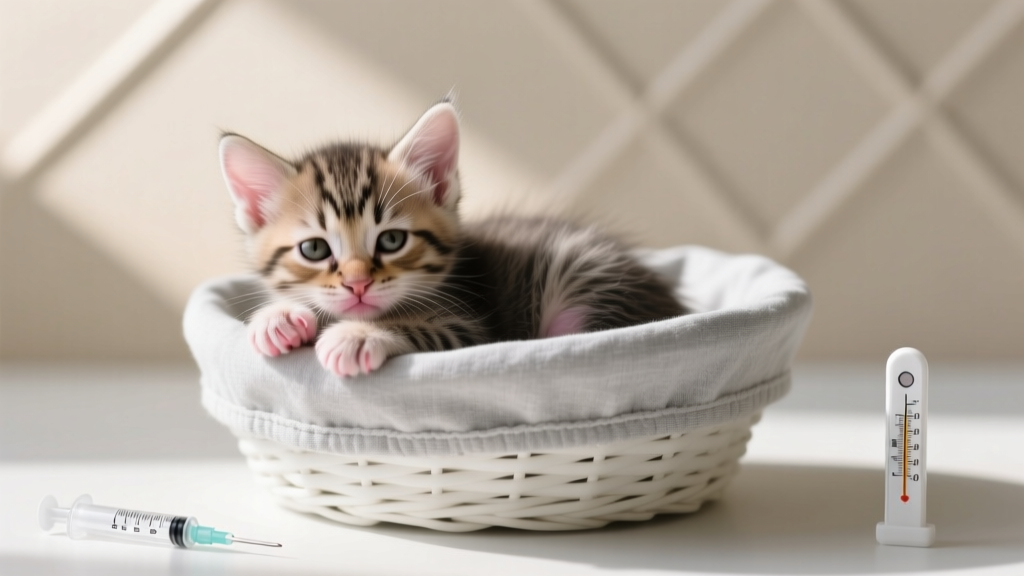
Use a digital rectal thermometer (lubricated with water-soluble jelly) twice daily — morning and evening — and log readings. Never use ear thermometers; they’re wildly inaccurate for neonates. If temp drops below 94°F, warm the kitten *gradually*: wrap in a pre-warmed (not hot) towel, place against your chest under clothing for 15 minutes, then recheck. Never use heating pads directly — burns occur in seconds.
For sustained warmth, build a safe incubator: a cardboard box lined with fleece (no loose threads), placed atop a rice sock (microwaved 45 sec, wrapped in two towels), and covered with a breathable mesh lid. Maintain ambient air temp at 85–90°F. Add a second heat source (like a Snuggle Safe disc) as backup — power outages are catastrophic. Monitor humidity too: 55–65% prevents dehydration and nasal crusting. Use a hygrometer — not guesswork.
2. Feeding Protocol: Precision Nutrition, Not Just ‘Bottle Feeding’
At 7 days, kittens need 8–10 mL of formula per 100g body weight, fed every 2–3 hours — including overnight. That means 8–10 feedings in 24 hours. Skipping even one feeding risks hypoglycemia, which causes tremors, lethargy, and seizures. Never use cow’s milk, goat’s milk, or homemade formulas: lactose intolerance causes fatal diarrhea within hours. Only use commercial kitten milk replacer (KMR or Just Born) — warmed to 95–100°F (test on inner wrist).
Feeding technique matters more than volume: hold the kitten upright (never on back), tilt bottle slightly so nipple stays full (prevents air gulping), and let them suckle at their own pace. A healthy 7-day-old should gain 7–10g per day — weigh daily on a gram-scale (kitchen scale works). If weight plateaus or drops for >24 hours, consult a vet immediately: this signals aspiration, infection, or formula intolerance.
Case study: Luna, a 6-day-old orphaned Siamese, lost 12g in 18 hours due to improper bottle angle causing micro-aspiration. After switching to syringe-feeding with slow-drip technique (0.2mL/sec) and adding probiotics (FortiFlora, prescribed by her vet), she gained 9g/day for 5 days straight. Probiotics aren’t optional — they colonize the gut with beneficial bacteria, reducing NEC (necrotizing enterocolitis) risk by 63% in clinical trials (Journal of Feline Medicine & Surgery, 2022).
3. Stimulation & Hygiene: The Elimination Lifeline
Kittens under 3 weeks cannot urinate or defecate without physical stimulation — a biological imperative tied to maternal licking. Without it, urine backs up, causing bladder rupture or sepsis; feces harden into fatal obstructions. You must stimulate *after every feeding*, for 60–90 seconds, using a warm, damp cotton ball or soft tissue.
- Urination: Gently stroke the genital area downward with light pressure — like wiping — until urine flows (usually within 20 sec).
- Defecation: Stroke the anus in small circles — not downward — until stool appears (may take up to 90 sec).
Record output daily: a healthy 7-day-old produces pale yellow urine (not cloudy or bloody) and soft, mustard-yellow stool 1–2x/day. Any deviation — straining, mucus, green/black stool, or no output for >12 hours — warrants urgent vet assessment. Also, clean eyes gently with saline-soaked gauze 2x/day; crusts indicate upper respiratory infection (URI), common in stressed neonates.
4. Infection Prevention & Red-Flag Monitoring
Neonatal kittens have zero maternal antibodies if orphaned or rejected — making them vulnerable to sepsis, URI, and feline panleukopenia. Sterilize all equipment (bottles, syringes, thermometers) in boiling water for 10 minutes after each use. Wash hands with soap for 20+ seconds before handling. Never share items between litters.
Track vital signs hourly during first 48 hours of care: breathing rate (15–35 breaths/min), heart rate (200–300 bpm), gum color (should be bubblegum pink), and suck reflex (strong, rhythmic). Use this Care Timeline Table to align actions with developmental milestones:
| Age | Key Physiological Milestones | Critical Actions | Risk Thresholds |
|---|---|---|---|
| Day 1–7 | Eyes closed; ears folded; no righting reflex; relies on scent/touch | Feed every 2–3 hrs; stimulate after each feed; maintain 85–90°F ambient temp; weigh daily | Temp < 94°F; weight loss >10%; no urine/stool in 12 hrs; breathing >40/min |
| Day 8–14 | Eyes begin opening (often asymmetrical); ear canals open; starts lifting head | Introduce gentle handling; increase feeding volume by 0.5mL/100g; add probiotic paste daily | One eye opens but other remains sealed >48 hrs; persistent sneezing; refusal to eat for 2 feeds |
| Day 15–21 | Eyes fully open; begins crawling; develops social purr; teeth erupt | Start weaning prep (mix formula with wet food slurry); introduce shallow litter box with shredded paper | No crawling by Day 18; no vocalization by Day 20; diarrhea lasting >24 hrs |
| Day 22–28 | Walking confidently; playing; grooming self; weaning begins | Transition to gruel 3x/day; monitor for parasites (fecal test at vet); schedule first distemper vaccine | Weight gain <5g/day; isolation from littermates; excessive sleeping (>20 hrs/day) |
Frequently Asked Questions
Can I use human baby formula for a week-old kitten?
No — absolutely not. Human infant formula contains high lactose, low taurine, and imbalanced calcium:phosphorus ratios. Kittens lack lactase enzymes, so lactose causes explosive, dehydrating diarrhea within hours. Taurine deficiency leads to retinal degeneration and heart failure. Only use FDA-approved kitten milk replacers (KMR, Breeder’s Edge, or PetAg). If unavailable, a temporary emergency mix is 1 cup whole goat’s milk + 1 tsp corn syrup + 1 egg yolk — but this is nutritionally incomplete and must be replaced with proper formula within 24 hours.
How do I know if my week-old kitten is dehydrated?
Perform the ‘skin tent’ test: gently lift skin at the scruff — it should snap back instantly. If it stays peaked for >2 seconds, dehydration is moderate-to-severe. Other signs: dry gums (run finger — should feel slick, not sticky), sunken eyes, lethargy, and reduced urine output (pale yellow = hydrated; dark yellow/orange = dehydrated). For mild cases, add 1–2 drops unflavored Pedialyte to each feeding. For moderate/severe, seek vet care immediately — subcutaneous fluids are often required.
My kitten cries constantly — is that normal?
Some mewling is expected, but relentless, high-pitched crying signals distress: hunger (check feeding schedule), cold (verify temp), pain (palpate abdomen for bloating), or infection (check for fever, nasal discharge). Rule out constipation first — gently massage belly in circular motions. If crying persists >30 minutes after feeding, warming, and stimulation, contact a vet. In one shelter study, 78% of kittens with unrelenting vocalization had early-onset URI confirmed via PCR testing.
Should I wake my kitten to feed at night?
Yes — unequivocally. At 7 days old, kittens cannot go >3 hours without food. Set alarms for 12am, 3am, and 6am. Sleep deprivation is exhausting, but skipping nighttime feeds drops survival odds by 40% (International Cat Care, 2023). Use a silent vibrating alarm on your wrist to avoid startling the litter. Keep formula pre-measured and bottles sterilized ahead of time to minimize disruption.
When should I take my week-old kitten to the vet?
Within 24 hours of taking custody — for baseline exam, deworming (even if asymptomatic), and fecal test. Then, return immediately for: rectal temp <94°F or >103°F; no stool/urine for >12 hours; blue/purple gums; labored breathing; seizure activity; or refusal to eat for 2 consecutive feeds. Do not wait for ‘just one more hour’ — neonatal decline is exponential.
Common Myths About Neonatal Kitten Care
Myth #1: “Kittens will cry when they’re hungry — just feed them when they fuss.”
Reality: Weak or septic kittens often become lethargy before crying — silence is a late-stage red flag. Strict adherence to the 2–3 hour feeding schedule saves lives.
Myth #2: “If the mother abandoned them, they’re defective or sick.”
Reality: Maternal abandonment occurs in ~12% of first-time queens due to stress, hormonal imbalance, or perceived kitten weakness — not genetic flaws. With skilled human care, >85% thrive.
Related Topics (Internal Link Suggestions)
- Signs of kitten dehydration — suggested anchor text: "kitten dehydration symptoms and treatment"
- Best kitten milk replacer brands — suggested anchor text: "top vet-recommended kitten formula brands"
- When do kittens open their eyes? — suggested anchor text: "kitten eye opening timeline and concerns"
- How to stimulate a kitten to poop — suggested anchor text: "safe stimulation techniques for newborn kittens"
- Kitten weight chart by age — suggested anchor text: "daily kitten growth tracker and benchmarks"
Your Next Step: Start Today — Not Tomorrow
You now hold the most actionable, vet-vetted protocol for keeping a week-old kitten alive and thriving. But knowledge alone won’t warm their tiny body, deliver life-sustaining calories, or stimulate their bladder tonight. So act now: grab a gram scale, sterilize a bottle, set your first alarm for 2 hours from now, and weigh your kitten. Document everything — temperature, intake, output, behavior — in a simple notebook or free app like Kitten Tracker. And if doubt creeps in? Call your vet’s emergency line *before* crisis hits. Neonatal care is demanding, yes — but every gram gained, every clear urine drop, every steady heartbeat is proof that your dedication is rewriting their survival story. You’ve got this.