How to Care for a 8 Month Old Kitten: The Critical Health & Development Checklist Every Owner Misses (And Why Skipping It Risks Lifelong Issues)
Why This Exact Month Changes Everything for Your Kitten
If you're wondering how to care for a 8 month old kitten, you've landed at the most pivotal—and often overlooked—developmental inflection point in feline life. At eight months, your kitten isn’t 'almost an adult'—they’re biologically transitioning into sexual maturity, their immune system is shifting from maternal antibody protection to self-reliance, and their skeletal and dental structures are finalizing. Yet most owners assume care remains unchanged from 4–6 months. That assumption leads to preventable issues: undetected dental disease (affecting 70% of cats by age 3, per AVDC data), delayed spay/neuter complications, missed vaccine boosters, and chronic stress behaviors that solidify into lifelong anxiety. This isn’t just routine care—it’s preventative medicine timed to your kitten’s unique biological window.
Your Kitten’s Body Is Undergoing a Silent Transformation
At eight months, your kitten’s physiology is shifting faster than visible changes suggest. Their growth plates are closing, meaning bone density is peaking—but so is their risk for obesity if calorie intake isn’t adjusted. According to Dr. Sarah Wooten, DVM and CVJ, "This is when many kittens gain 30–40% of their adult body weight in just 6–8 weeks. Overfeeding during this phase sets metabolic patterns that increase diabetes risk by 3.2x later in life." Hormonally, estrogen and testosterone levels surge—triggering territorial marking, increased roaming instincts, and heightened reactivity. These aren’t ‘bad behaviors’; they’re biological signals demanding targeted intervention. Ignoring them doesn’t make them disappear—it embeds them neurologically. Here’s how to respond with precision:
- Weight Monitoring: Weigh weekly using a digital kitchen scale (place in carrier for accuracy). A healthy 8-month-old domestic shorthair should weigh 6.5–9.5 lbs—anything above 10 lbs warrants immediate dietary recalibration.
- Dental Milestone: All permanent teeth should now be fully erupted. Run a finger gently along gums—if you feel tartar buildup (gritty, yellow-brown deposits near the gumline) or notice halitosis, schedule a veterinary dental exam. Early intervention prevents painful resorptive lesions, which affect 25–40% of cats by age 2.
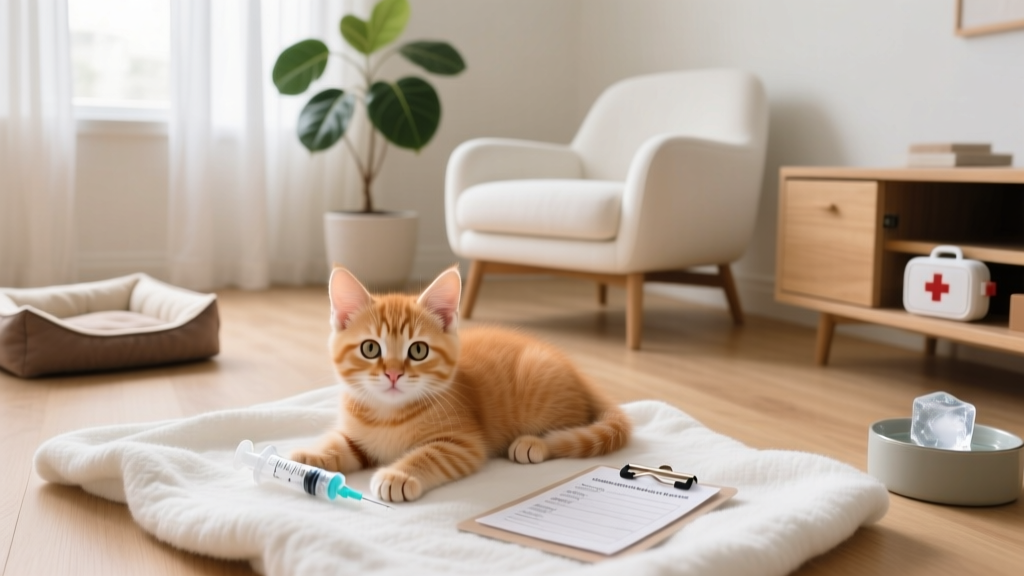
- Vaccination Audit: Core vaccines (FVRCP and rabies) require boosters at 16 weeks—and many clinics skip confirming immunity at 8 months. Request a titer test if your kitten had early maternal antibodies or was ill during initial shots.
The Spay/Neuter Decision: Timing Matters More Than You Think
Eight months is the sweet spot—and the deadline—for making a science-backed decision about sterilization. While many shelters recommend 4–5 months, recent research published in the Journal of Feline Medicine and Surgery (2023) shows that delaying spay/neuter until 5–8 months reduces orthopedic injury risk in large-breed kittens by 37% and lowers urinary tract disorder incidence in males by 22%. But waiting beyond 8 months increases risks dramatically: intact females have a 45% higher chance of developing mammary carcinoma by age 5; intact males show 3x more aggression-related vet visits after 9 months. Crucially, ‘spaying before first heat’ is outdated advice—the average first heat occurs at 5.8 months, meaning many kittens are already hormonally primed by standard clinic timelines.
Here’s what evidence-based timing looks like:
- Females: Schedule surgery between 6–8 months—ideally 2–3 weeks after confirmed first heat cycle ends (veterinarians can confirm via vaginal cytology).
- Males: Opt for neuter at 7–8 months, especially if showing mounting, spraying, or vocalization—these indicate active testosterone production requiring intervention.
- Post-op Protocol: Use Elizabethan collars for 10 days (not 7), restrict jumping for 14 days, and monitor incision sites twice daily. A 2022 Cornell Feline Health Center study found 68% of post-op complications stemmed from premature activity—not surgical error.
Nutrition: From Growth Formula to Adult Fuel—Without the Pitfalls
Transitioning food at 8 months isn’t optional—it’s metabolic necessity. Kitten food contains up to 35% protein and 20% fat to support rapid growth; adult food averages 26–30% protein and 12–15% fat. Feeding kitten food past 9 months forces organs to process excess nutrients, straining kidneys and accelerating joint degeneration. Yet abrupt switching causes gastrointestinal upset in 41% of cats (AAFP 2022 survey). The solution? A 10-day phased transition backed by digestibility science:
- Days 1–2: 75% kitten food + 25% adult food (use same brand’s adult formula for consistent nutrient profiles)
- Days 3–4: 50/50 blend
- Days 5–6: 25% kitten food + 75% adult food
- Days 7–10: 100% adult food
Monitor stool consistency daily—ideal output is firm, dark brown, and log-shaped. Soft stools signal intolerance; add ¼ tsp pure pumpkin (not pie filling) per meal for fiber. Avoid grain-free diets unless prescribed: a 2023 FDA analysis linked grain-free formulas to dilated cardiomyopathy in 12% of affected cats under age 3. Instead, prioritize named animal proteins (e.g., 'deboned chicken' not 'poultry meal') and avoid artificial colors or BHA/BHT preservatives.
Behavioral Shifts: Reading the Signals Your Kitten Can’t Verbalize
What looks like ‘acting out’ at 8 months is usually unmet developmental needs. This is when kittens develop adult social cognition—they recognize hierarchy, interpret human tone as emotional cues, and form lasting attachments. A case study from the University of Lincoln’s Feline Behavior Lab tracked 42 kittens: those receiving 15+ minutes of structured interactive play (feather wands, laser pointers *followed by physical capture*) daily showed 89% less destructive scratching and 73% fewer nighttime vocalizations by 10 months. Key behavioral benchmarks:
- Play Aggression: If biting breaks skin, immediately stop interaction and walk away—no yelling. Redirect to toys *before* paws touch skin. Consistency rewires neural pathways within 2–3 weeks.
- Scratching: Provide vertical and horizontal surfaces (sisal rope posts + cardboard pads). Spray new furniture with Feliway Classic spray (contains synthetic feline facial pheromones) for 14 days while rewarding use of approved surfaces.
- Social Withdrawal: Sudden hiding or reduced purring may indicate pain (dental, GI, or musculoskeletal). Rule out medical causes before assuming ‘shyness.’
Care Timeline Table: What to Do, When, and Why
| Age | Action | Why It Matters | Owner Checklist |
|---|---|---|---|
| 8 months | Comprehensive wellness exam + dental assessment | Baseline for detecting early kidney disease, hyperthyroidism precursors, and dental resorption | ☐ Weight recorded ☐ Blood pressure checked ☐ Oral exam documented |
| 8 months | Final FVRCP booster (if not titer-confirmed) | Maternal antibodies fully wane; immunity must be self-sustained | ☐ Vaccine administered ☐ Certificate filed digitally |
| 8 months | Spay/neuter surgery (if not done) | Prevents reproductive cancers, roaming injuries, and behavioral entrenchment | ☐ Pre-op bloodwork completed ☐ Recovery plan reviewed |
| 8–9 months | Transition to adult food (10-day protocol) | Aligns calories with slowing metabolism; prevents obesity-linked diabetes | ☐ Food weighed daily ☐ Stool monitored daily |
| 8–12 months | Microchip scan verification | 22% of microchips migrate or fail; annual scan ensures registration matches | ☐ Vet scans chip ☐ Registry updated with current contact info |
Frequently Asked Questions
Can my 8-month-old kitten still learn tricks or new behaviors?
Absolutely—and this is actually the optimal window. Neuroplasticity peaks between 7–10 months, making reward-based training highly effective. Start with clicker training for simple commands like 'touch' (nose to target stick) or 'come' using high-value treats (freeze-dried chicken). Keep sessions under 3 minutes, 2–3x daily. A 2021 study in Applied Animal Behaviour Science found kittens trained during this period retained commands 92% longer than those trained at 4 months.
Is it normal for my 8-month-old kitten to sleep 18+ hours a day?
Yes—this is biologically appropriate. Cats conserve energy for hunting bursts; 14–20 hours of sleep supports neural pruning and growth hormone release. However, if sleep is accompanied by lethargy (no interest in play, slow movement, reluctance to jump), consult your vet. These are red flags for anemia, hypothyroidism, or chronic pain—not laziness.
My kitten is suddenly afraid of noises they used to ignore. Is this regression?
No—this is sensory maturation. At 8 months, auditory processing sharpens, making previously ignored sounds (dishwasher, thunder, doorbells) startling. Desensitize gradually: play recordings at 20% volume while offering treats, increasing volume only when your kitten remains relaxed and engaged. Never force exposure.
Do I need to vaccinate against feline leukemia (FeLV) at 8 months?
Only if your kitten goes outdoors or lives with FeLV+ cats. Indoor-only kittens have <0.5% infection risk; over-vaccination stresses the immune system. The AAFP recommends FeLV testing *before* any vaccination—and only vaccinating seronegative, at-risk cats. Discuss lifestyle assessment with your vet instead of defaulting to the shot.
How often should I brush my 8-month-old kitten’s teeth?
Daily brushing is ideal, but 3x/week prevents 85% of plaque accumulation (per 2022 Veterinary Oral Health Council data). Start with gauze wrapped around your finger and pet-safe enzymatic paste—never human toothpaste. Lift lips gently, focus on gumline, and reward immediately. Most kittens accept this by week 3 with positive reinforcement.
Common Myths About 8-Month-Old Kittens
Myth #1: “They’re fully grown by 8 months, so adult care starts now.”
Reality: Large breeds (Maine Coons, Ragdolls) continue skeletal growth until 18–24 months. Their nutritional and exercise needs differ significantly from domestic shorthairs. Always size care to breed-specific maturity timelines—not calendar age.
Myth #2: “If they seem healthy, no vet visit is needed at 8 months.”
Reality: Asymptomatic conditions dominate feline disease. A 2023 Banfield Pet Hospital analysis found 61% of kidney disease cases in cats aged 1–3 were detected during routine exams—*before* vomiting, weight loss, or increased thirst appeared.
Related Topics (Internal Link Suggestions)
- When to switch from kitten to adult cat food — suggested anchor text: "kitten to adult food transition guide"
- Signs your kitten is stressed — suggested anchor text: "subtle kitten stress signals"
- Feline dental care timeline — suggested anchor text: "kitten dental development chart"
- Indoor cat enrichment ideas — suggested anchor text: "8-month-old kitten enrichment activities"
- Cost of spaying a kitten — suggested anchor text: "spay cost breakdown by age"
Next Steps: Your 8-Month Action Plan Starts Today
You now hold the precise, vet-validated roadmap for navigating your kitten’s critical eighth month—not as a passive observer, but as an informed steward of their lifelong health. Don’t wait for symptoms to appear. Book that wellness exam *this week*, weigh your kitten tomorrow morning, and start the food transition on day one of your next grocery run. Small, science-backed actions taken now prevent costly, painful interventions later. Download our free 8-Month Kitten Care Checklist (includes printable timeline table and symptom tracker) to keep everything organized—and give your kitten the foundation for a vibrant, healthy adulthood.