York Chocolate: American Farm-Bred Longhair
If you’ve ever wished for a cat that looks like a silky chocolate truffle on four paws—warm-eyed, plush-coated, and affectionate enough to “help” with everything you do—meet the York Chocolate. This rare American longhair has a cozy, homegrown story and a look that turns heads: a rich brown or lavender coat, often with a soft shimmer, paired with a sweet, people-focused personality.
The York Chocolate cat breed isn’t a mass-produced, ultra-glam show creation. It’s more like a charming local legend that grew into a real breed: a farm-bred longhair that won hearts because it was simply wonderful to live with. For cat enthusiasts and breed researchers, it’s a fascinating piece of North American cat history. For potential owners, it’s a chance to share your home with a friendly, velvety companion that tends to bond deeply with its humans.
Let’s get to know what makes the York Chocolate such a beloved (and still uncommon) breed—its origin story, appearance, temperament, care needs, and whether it’s the right match for your household.
Breed History and Origin
The York Chocolate originated in the United States, in New York State—hence the “York.” The breed’s story begins in the 1980s on a farm, where a longhaired black-and-white household cat produced a brown longhaired kitten. That kitten, named Brownie, displayed a striking chocolate coat that stood out from typical farm-cat colors. As the farm cats continued to reproduce, more kittens appeared with the same rich brown (and later lavender) coloring and a consistent semi-longhair coat.
What made the York Chocolate especially interesting to early fanciers was that this wasn’t a single lucky “one-off.” The color and coat type appeared reliably over generations, suggesting a stable genetic combination within the farm cat population (likely influenced by domestic longhair ancestry and the recessive chocolate color gene).
Enthusiasts worked to establish the York Chocolate as a recognized breed, and it has been accepted by some cat registries in the past as a rare breed. Recognition and availability can vary widely by region and over time, and York Chocolates remain uncommon—part of their mystique, and also something to consider if you’re hoping to adopt or purchase one.
Physical Characteristics
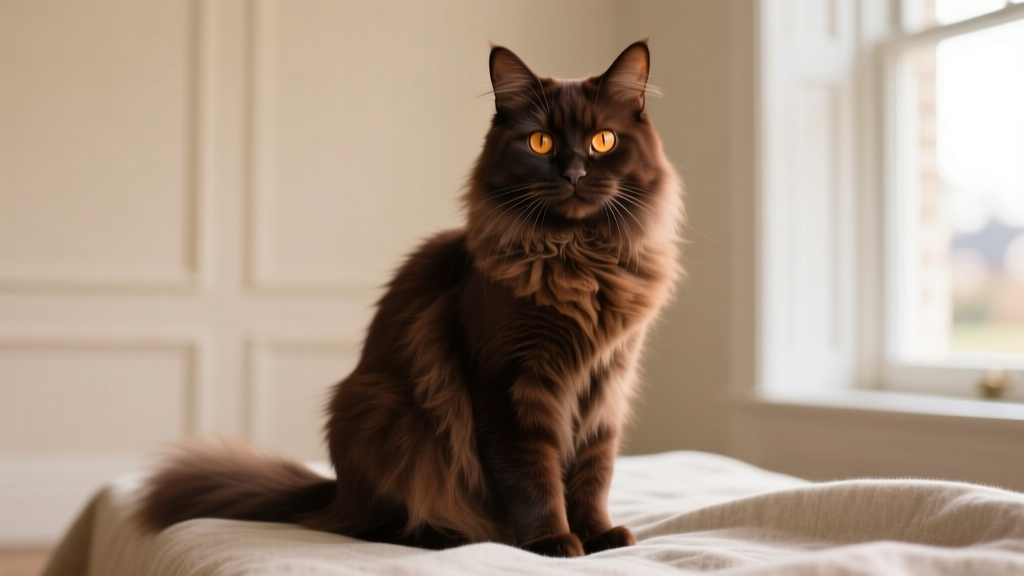
The York Chocolate is best known for its lush, semi-long coat and its signature colors: chocolate and lavender. Overall, this is a medium to large cat with a balanced, slightly elongated body—athletic without being extreme.
| Feature | York Chocolate Breed Traits |
|---|---|
| Size | Medium to large |
| Typical Weight | About 8–16 lb (females often smaller; males often larger) |
| Coat Length | Semi-longhair to longhair; plush and silky |
| Coat Texture | Soft, fine, usually not as heavily coated as some longhair breeds |
| Colors | Chocolate (rich brown) and lavender (dilute chocolate); sometimes with white markings |
| Eyes | Often gold to green tones; warm, expressive look |
| Build | Sturdy, well-muscled, gently athletic |
Coat, Colors, and Markings
- Chocolate: A deep brown that can range from milk-chocolate warmth to a darker, richer tone.
- Lavender: A soft, muted grayish-lilac shade (the dilute form of chocolate).
- White spotting: Some York Chocolates appear as bicolors (chocolate-and-white or lavender-and-white), reflecting their farm-cat roots.
Distinctive Features
- Plumed tail: Many have a full, fluffy tail that adds to the “cuddly” silhouette.
- Soft ruff and britches: A little extra fluff around the neck and hind legs is common.
- Natural, non-extreme look: The York Chocolate isn’t about exaggeration; it’s a balanced, pleasing cat with a classic longhair outline.
Personality and Temperament Traits
York Chocolate cats have a reputation for being affectionate, social, and people-oriented. They often behave like the kind of cat that wants to be near you—not necessarily on you every second, but close enough to supervise your day. Many owners describe them as friendly greeters who will happily follow you from room to room.
Common York Chocolate temperament traits include:
- Gentle affection: They tend to enjoy cuddles and being petted, often without being demanding.
- Playful curiosity: A farm-bred background often means a practical, alert nature—interested in what’s going on and ready to investigate.
- People-focused bonding: Many form strong attachments and prefer not to be left alone for long stretches every day.
- Adaptability: Typically settles into home life well when given routines and attention.
- Moderate talkativeness: Not usually a “constant commentator,” but may chirp or meow to interact.
This combination—sweet, bright, and companionable—makes the York Chocolate a particularly appealing choice for cat lovers who want a longhaired cat with a warm, family-cat vibe.
Health Considerations and Common Issues
Because the York Chocolate developed from domestic cats rather than a tightly bottlenecked show line, it’s often thought of as a generally robust breed. That said, any cat can develop health problems, and rare breeds can have limited data available. The best approach is always individual-focused: choose reputable sources, prioritize good husbandry, and keep up with veterinary care.
Health considerations to keep in mind:
- Dental disease: Common in many cats; regular dental care and vet checks help.
- Weight gain: A friendly, food-motivated cat can become overweight without portion control and play.
- Hairballs: Longhair coats can mean more hair ingestion; routine brushing reduces this.
- General longhair coat issues: Matting can lead to skin irritation if grooming is neglected.
Ask breeders or rescues about any known family history and request veterinary records when available. For any York Chocolate kitten or adult, schedule an initial vet visit soon after bringing them home to set baselines for weight, dental health, and parasite prevention.
Care Requirements (Grooming, Exercise, Diet)
Grooming
The York Chocolate’s coat is luxurious, but it’s usually more manageable than extremely dense longhair breeds. Still, regular grooming keeps it glossy and tangle-free.
- Brushing: 2–3 times per week is a great baseline; daily during seasonal shedding can be helpful.
- Tools: A soft slicker brush plus a wide-tooth comb for the “britches” and underarm areas.
- Mat check zones: Behind ears, under the collar area, armpits, and along the belly.
- Nail trims: Every 2–4 weeks.
- Hairball support: Brushing plus veterinarian-approved diet strategies if hairballs become frequent.
Exercise and Enrichment
York Chocolates tend to enjoy interactive play and household involvement. They’re not usually hyperactive, but they do best when their brains and bodies get daily outlets.
- Play sessions: 10–15 minutes, 1–2 times daily (wand toys, feather teasers, chase games).
- Climbing: A cat tree or wall shelves let them perch and observe like the farm cats they descended from.
- Puzzle feeders: Great for mental stimulation and weight management.
- Window time: A secure perch near a window can be pure joy.
Diet
A York Chocolate cat will thrive on a high-quality, complete-and-balanced diet appropriate for their age (kitten, adult, senior) and lifestyle.
- Protein-forward nutrition: Cats are obligate carnivores; prioritize animal-based protein.
- Portion control: Use measured meals rather than free-feeding if weight gain is a concern.
- Hydration: Many cats drink more with a fountain; wet food can also support hydration.
- Treats: Keep treats to a small percentage of daily calories.
Compatibility with Families, Children, and Other Pets
The York Chocolate’s friendly, even-tempered nature often makes it a strong candidate for family life—especially in homes that enjoy interacting with their pets. As with any breed, individual personality and early socialization matter, but many York Chocolates are known for being approachable and tolerant.
- With children: Often does well with respectful kids who know how to handle cats gently and give them space.
- With other cats: Typically sociable when introductions are slow and structured.
- With dogs: Many can adapt well to cat-savvy dogs; use gradual introductions and safe retreat zones.
Because York Chocolates can be people-attached, they may do best in households where someone is home often, or where they have another friendly pet companion.
Pros and Cons of Owning This Breed
| Pros | Cons |
|---|---|
| Affectionate, companionable “shadow cat” energy | Can be hard to find due to rarity |
| Beautiful chocolate or lavender longhair coat | Needs regular brushing to prevent mats and hairballs |
| Generally adaptable and family-friendly | May dislike long periods of solitude |
| Moderate activity level—playful but not usually frantic | Longhair grooming needs may be a mismatch for low-maintenance households |
| Natural, farm-bred background appeals to many cat lovers | Breed recognition and standards may vary by registry/region |
FAQ: York Chocolate Cats
Are York Chocolate cats rare?
Yes. The York Chocolate is considered a rare cat breed, and availability can be limited depending on your location. You may need patience and careful research to find a reputable breeder or a rescue placement.
Do York Chocolate cats shed a lot?
They can shed seasonally like many longhaired cats. Regular brushing (a few times per week) helps manage loose hair and reduces hairballs.
Is the York Chocolate hypoallergenic?
No cat breed is truly hypoallergenic, and York Chocolates are not known to be hypoallergenic. If allergies are a concern, spend time around the specific cat before committing, and talk with your allergist.
What colors do York Chocolate cats come in?
The signature colors are chocolate (rich brown) and lavender (dilute chocolate). Some may also have white markings, reflecting the breed’s domestic longhair origins.
Are York Chocolate cats good with kids and other pets?
Often, yes—especially when socialized well and introduced properly. Their friendly temperament tends to suit families, and many do well with other cats and cat-friendly dogs.
How much grooming does a York Chocolate need?
Plan on brushing 2–3 times per week (more during heavy shedding). Pay special attention to tangle-prone areas like behind the ears and under the arms.
Warm Signoff
The York Chocolate is one of those breeds that feels like a secret shared among devoted cat people: a plush American longhair with an affectionate heart, a practical farm-cat foundation, and that unforgettable chocolate (or lavender) coat. If you’re drawn to rare breeds and you want a cat that’s truly part of the household—present, loving, and happily involved—this sweet Yorkie might be your perfect match.
If you enjoyed learning about the York Chocolate cat breed, you’ll find plenty more whisker-worthy deep dives waiting for you. Explore more breed profiles and cat-loving guides at catloversbase.com.