Xolo Cat: Mexican Hairless Breed Development
If you’ve ever wished for a cat with the mythical vibe of an ancient companion and the sleek, modern look of a living sculpture, the Xolo Cat probably caught your eye. The name alone sparks curiosity—“Xolo” instantly brings to mind Mexico’s famous Xoloitzcuintli (the hairless dog tied to Aztec history). So it’s no surprise that cat lovers have started asking: Is there a Mexican hairless cat breed, and what exactly is the “Xolo Cat”?
Here’s the cat-loving truth: the “Xolo Cat” isn’t a universally recognized, standardized cat breed in the way the Sphynx is. Instead, the term is often used online to describe hairless or near-hairless cats associated with Mexico, regional breeding efforts, or a “Mexican hairless cat” concept inspired by the Xolo dog’s heritage. That doesn’t make the story any less fascinating—because hairless cats do exist, hairless traits can appear naturally, and modern breeders have explored hairless lines across the world.
This article breaks down what people mean by the Xolo Cat, how hairless cat lines develop, what to expect from a Mexican hairless-type cat, and how it compares to established hairless breeds like the Sphynx and Donskoy. If you’re researching, dreaming, or seriously considering a hairless companion, you’re in the right place.
Breed History and Origin
The “Xolo Cat” as a named breed doesn’t have consistent registry recognition (TICA, CFA, FIFe, GCCF) the way the Sphynx does. Instead, the term is most commonly used in one of these ways:
- A nickname for a hairless cat (often a Sphynx-type) living in or marketed from Mexico.
- A concept breed—a proposed or developing “Mexican hairless cat” line inspired by cultural ties to the Xoloitzcuintli.
- A regional breeding project involving hairless or sparse-coated cats that hasn’t achieved widespread standardization.
Hairlessness in cats has appeared in different places through history, usually as a rare mutation. Most modern hairless cats trace back to a few key foundations:
- Sphynx: Developed from naturally occurring hairless kittens in Canada (notably the 1960s) and refined through careful breeding programs.
- Donskoy (Don Sphynx): Originated in Russia in the late 1980s; genetically distinct from the Sphynx.
- Peterbald: Developed in Russia from Donskoy outcrosses, producing hairless to velour-coated cats with a refined, elegant body.
When people talk about Mexican hairless breed development for cats, they’re typically imagining an origin story similar to the Xoloitzcuintli’s—rooted in Mexico, tied to heritage, and shaped into a consistent type over time. The reality is that creating a stable, healthy breed takes generations, documented pedigrees, and registry involvement—plus a big focus on genetics and welfare.
| Term You May See | What It Usually Means | Recognition Status |
|---|---|---|
| Xolo Cat | Informal label for a Mexican hairless-type cat or hairless cat associated with Mexico | Not widely recognized as a standardized breed |
| Mexican Hairless Cat | Descriptive phrase; may refer to Sphynx-type cats in Mexico or developing local lines | Varies; typically not recognized as its own breed |
| Sphynx | Established hairless breed with defined standard | Recognized by major registries (varies by organization) |
Physical Characteristics
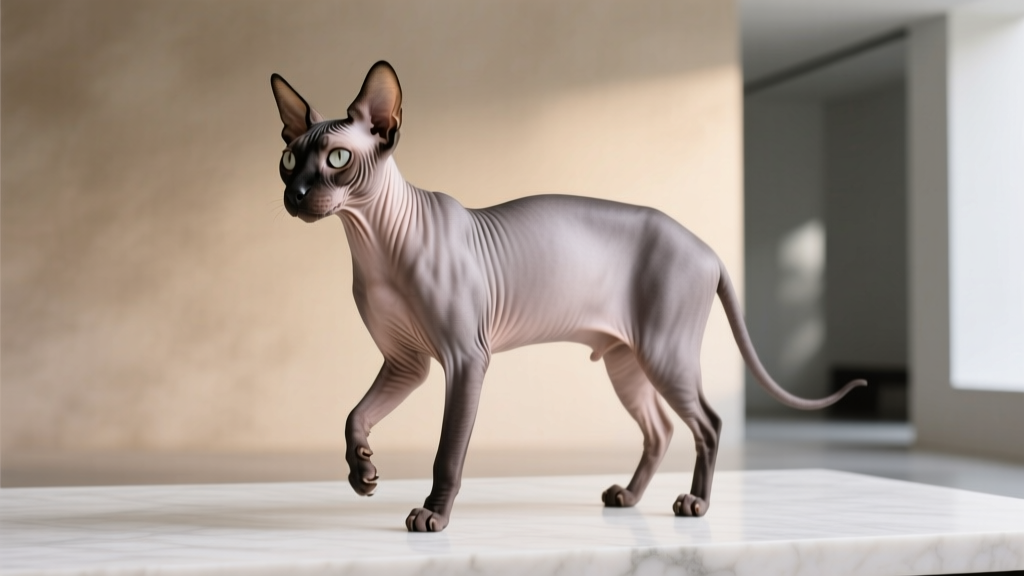
Because “Xolo Cat” is most often a descriptor rather than a standardized breed, physical traits can vary—especially if the cat is a Sphynx mix, a Donskoy-type, or a naturally sparse-coated domestic line. That said, hairless cats tend to share a few consistent qualities that make them instantly recognizable.
Size and Weight
- Size: Typically small-to-medium
- Adult weight: Often 6–12 lb (2.7–5.4 kg), with males commonly larger
- Build: Athletic and surprisingly muscular—hairlessness makes the body shape more visible
Coat (or Lack of It)
Hairless cats aren’t always fully “naked.” Many have a soft peach-fuzz feel (often called suede or chamois), and some have slightly more hair on:
- the nose bridge
- ears
- tail tip
- feet
- scrotum area in males
You may also see different coat expressions in hairless lines, including:
- Completely hairless (rare and often variable with seasons/hormones)
- Velour/peach fuzz (common)
- Brush coat (thin, sparse coat that can feel wiry)
Colors and Patterns
Even without fur, hairless cats show color through skin pigmentation. Many patterns you’d see in coated cats can appear as skin patterning:
- solid colors (black, blue/gray, cream, red)
- tabby striping
- bicolor and harlequin
- pointed patterns (darker extremities)
Distinctive Features
- Warm-to-the-touch feel: Their skin often feels like a heated blanket (their body heat isn’t trapped by fur).
- Wrinkles: Common around the forehead, neck, and shoulders—especially in kittens.
- Large ears: Many hairless cats have prominent, open ears that add to their “elfin” look.
- Prominent whisker pads: Whiskers may be short, broken, or absent depending on lineage.
Personality and Temperament Traits
If you’re drawn to the “Xolo Cat” idea, chances are you’re drawn to the hairless cat personality too: affectionate, curious, people-focused, and delightfully bold. While individuals vary (and genetics + socialization matter), hairless cats commonly share these traits:
- Velcro affection: They love laps, shoulders, and following you from room to room.
- Playful intelligence: Many enjoy puzzle feeders, interactive toys, and learning routines.
- Social confidence: They often greet visitors and investigate anything new.
- Heat-seeking behavior: Expect them under blankets, on sunny windowsills, and glued to your warmest hoodie.
They’re usually not “hands-off” cats. If you want a quiet roommate who asks for nothing, a hairless cat may feel like a full-time relationship—in the best way.
Health Considerations and Common Issues
Hairless cats can be healthy, long-lived companions, but they have a few special vulnerabilities. If you’re considering a Mexican hairless-type cat or any hairless line, you’ll want a vet you trust and a breeder (or rescue) who prioritizes health testing and ethical practices.
- Skin issues: Oil buildup can lead to blackheads, clogged pores, or yeast/bacterial infections if hygiene is neglected.
- Sun sensitivity: Hairless skin can burn. Direct sunbathing without protection is risky.
- Temperature sensitivity: They can chill easily in cold homes and overheat in intense heat.
- Dental concerns: Some hairless lines have higher rates of dental disease—regular cleanings help.
- Heart disease (notably in Sphynx lines): Hypertrophic cardiomyopathy (HCM) is a known concern in some hairless breed populations. Responsible breeders screen breeding cats with echocardiograms.
Typical lifespan: Often 12–16 years, sometimes longer with excellent care and genetics.
Care Requirements (Grooming, Exercise, Diet)
Hairless cats are often marketed as “easy” because there’s no shedding. The truth: less vacuuming, yes—but more hands-on skin care.
Grooming and Skin Care
- Bathing: Many need a gentle bath every 1–2 weeks, depending on oiliness. Use a cat-safe, fragrance-free cleanser.
- Wipe-downs: Between baths, warm damp cloth wipe-downs help remove oil and dirt.
- Ear cleaning: Wax can build up quickly in large ears—check weekly and clean as your vet recommends.
- Nail care: Oils can collect around nail beds; trim nails every 2–4 weeks and gently clean the surrounding area.
- Sun protection: Avoid strong direct sun. Ask your vet before using any pet-safe sunscreen (many human sunscreens are dangerous if licked).
Exercise and Enrichment
These cats are usually energetic and playful. A bored hairless cat can become clingy, vocal, or mischievous.
- 15–20 minutes of interactive play daily (wand toys, chasing games)
- cat trees and shelves for climbing
- puzzle feeders to engage their brain
- cozy heated beds or warm blankets (always supervised and safe)
Diet
Many hairless cats seem to have robust appetites, partly because they burn energy staying warm. Feed for body condition, not the “always hungry” expression (which can be very convincing).
- High-quality protein as the foundation
- Omega-3 fatty acids may support skin health (vet-approved sources)
- monitor treats—hairless cats can gain weight if overfed
- fresh water access and wet food can support hydration
Compatibility with Families, Children, and Other Pets
A well-socialized Xolo Cat–type (hairless cat) often thrives in a busy home—especially one that enjoys interactive pets.
- Families: Great for households where someone is around often; they love attention.
- Children: Usually good with respectful kids. Teach gentle handling—hairless skin can be more easily scratched.
- Dogs: Often compatible with calm, cat-savvy dogs. Slow introductions are key.
- Other cats: Many do well with feline companions, especially if introduced properly.
One practical note: hairless cats often prefer warm cuddly piles—so multi-pet homes can be perfect if everyone gets along.
Pros and Cons of Owning This Breed
| Pros | Cons |
|---|---|
| Affectionate, people-oriented companion | Regular bathing and ear cleaning needed |
| Minimal shedding (great for tidier homes) | Not truly “hypoallergenic” (allergies often react to dander/saliva) |
| Unique look: elegant, warm, velvety skin | Temperature and sun sensitivity require management |
| Playful, interactive, often easy to train | Can be needy if left alone too much |
| Often great in multi-pet, social homes | Potential breed-line health risks (e.g., HCM in some populations) |
FAQ: Xolo Cat (Mexican Hairless Cat) Questions
Is the Xolo Cat a real, recognized cat breed?
“Xolo Cat” is most often an informal label, not a widely recognized breed with a formal registry standard. Many cats called Xolo Cats are Sphynx-type hairless cats or hairless mixes associated with Mexico or marketed with the Xolo-inspired name.
Are Xolo Cats hypoallergenic?
No cat is truly hypoallergenic. Hairless cats may shed less fur, but allergens are mainly found in saliva and skin oils (dander). Some allergy sufferers do better with hairless cats, while others don’t—testing with time around the cat is best.
Do hairless cats like clothes?
Many do—especially in cooler homes. Choose breathable, non-restrictive clothing and check for rubbing or irritation. Some cats prefer blankets and heated beds instead.
How often do hairless cats need baths?
Often every 1–2 weeks, though it varies by individual skin oil production, diet, and environment. Over-bathing can dry the skin, so aim for a routine your cat’s skin tolerates well.
Are hairless cats expensive or hard to find?
Established hairless breeds like the Sphynx can be costly due to specialized breeding and healthcare. If you see a “Xolo Cat” advertised, verify health screening, living conditions, and transparency—especially if the line isn’t registry-recognized.
What should I ask a breeder if they call a cat a Xolo Cat?
- What is the cat’s actual breed or lineage (Sphynx, Donskoy, mix)?
- Do you screen for HCM (echocardiograms) and provide documentation?
- What is the kitten’s skin/ear care routine?
- What vaccinations, deworming, and vet checks are included?
- What socialization have the kittens received?
Warm Final Thoughts
The idea behind the Xolo Cat—a Mexican hairless cat with bold presence and ancient soul—has undeniable charm. Whether you’re drawn to the cultural inspiration, the striking hairless look, or the famously affectionate “velcro cat” personality, the best next step is focusing on health, ethics, and realistic care. A hairless companion can be an absolute treasure: warm, interactive, and intensely devoted—just bring the blankets, the gentle shampoo, and a lot of love.
Want to meet more amazing felines and find the breed that truly fits your home? Explore more breed profiles on catloversbase.com and keep the cat curiosity going.