Sokoke: Kenya's Rare Forest Cat Breed
If you love cats with a story you can feel in their bones—cats that seem like they stepped straight out of wild, sun-dappled woodland—meet the Sokoke. This rare, naturally occurring breed hails from Kenya’s coastal forests and wears its heritage proudly: a sleek, athletic body, a striking “wood-grain” tabby pattern, and a bright, curious mind that’s always reading the room.
The Sokoke isn’t the sort of cat you see in every neighborhood. That rarity is part of the magic, but it’s not the whole picture. Sokokes are affectionate without being clingy, active without being frantic, and clever in a way that keeps life interesting. If you’re researching unusual breeds or looking for a companion with a truly unique look and personality, the Sokoke cat deserves a spot at the top of your list.
Let’s explore what makes this Kenyan forest cat so special—from origin and appearance to temperament, care, and what it’s like sharing a home with one.
Breed History and Origin
The Sokoke’s roots trace to the Arabuko Sokoke Forest, a coastal forest region in Kenya. Unlike many modern breeds developed through selective crossbreeding, the Sokoke is best described as a natural landrace—a domestic cat population shaped largely by its environment over time. That “naturally refined” background is a big reason Sokokes tend to look and move differently than more common domestic shorthairs.
Modern breed development began in the late 1970s when cats with this distinctive patterned coat were noticed and later introduced into breeding programs. In the 1990s, the breed gained broader international attention, especially through efforts that helped establish the Sokoke in Europe. Today, the Sokoke remains rare worldwide, prized by breed enthusiasts for its authentic history and unmistakable appearance.
- Origin: Kenya (Arabuko Sokoke Forest region)
- Breed type: Natural landrace, later standardized
- Rarity: Uncommon globally; relatively small gene pool compared to mainstream breeds
Physical Characteristics
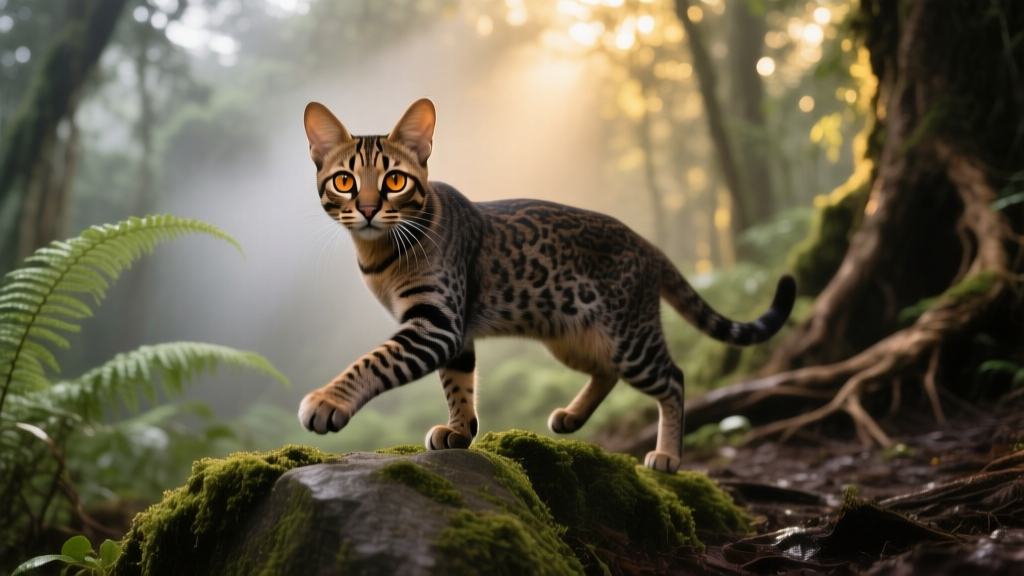
At first glance, the Sokoke’s coat steals the show—an organic, flowing tabby pattern that many people describe as “wood grain” or “bark-like.” Look closer and you’ll see the full package: a lean, muscular build, long legs, and an alert posture that makes them look ready to sprint, climb, or investigate at a moment’s notice.
| Feature | Typical Sokoke Traits |
|---|---|
| Size | Medium |
| Weight | Approximately 6–10 lb (2.7–4.5 kg); males often larger |
| Body | Lean, athletic, long-legged; graceful but strong |
| Coat length | Short, close-lying |
| Coat texture | Silky to slightly coarse; generally low undercoat |
| Colors/patterns | Primarily tabby with a distinctive “wood-grain” (blotched/marbled) look; commonly brown-based |
| Eyes | Often amber to green-toned; bright and expressive |
| Ears | Medium to large, upright, alert |
Distinctive Features
- “Wood-grain” tabby pattern: A flowing, organic marbling that looks like ripples in timber.
- Athletic silhouette: Long legs and a light-footed stance; built for speed and climbing.
- Alert expression: Sokokes often look like they’re actively observing and evaluating everything (because they are).
Personality and Temperament Traits
If you want a cat who participates in your life rather than sleeping through it, the Sokoke has serious appeal. This breed is known for being active, curious, and socially aware. They often form strong bonds with their favorite humans and like to be near the action—watching, supervising, and occasionally offering a paw to help (or “help”).
Sokokes tend to be intelligent cats with a streak of independence. Many enjoy affection on their terms and may follow you from room to room without necessarily demanding constant cuddles. They can be quite communicative as well—some are chatty, while others use softer chirps and body language to get their point across.
- Energy level: High to moderately high; thrives with daily play
- Affection: Loyal and people-focused; often bonds strongly
- Intelligence: Quick learner; enjoys puzzle toys and training
- Confidence: Typically bold and curious in a stable environment
- Independence: Can entertain themselves, but prefer enrichment and company
Health Considerations and Common Issues
Because the Sokoke is a rare breed with a relatively limited population, responsible breeding and veterinary oversight matter a lot. Overall, Sokokes are often described as robust and naturally athletic, but any cat—purebred or not—can face health challenges.
Rather than associating the Sokoke with a long list of breed-specific disorders, think in terms of smart prevention: maintaining a healthy weight, supporting dental health, minimizing stress, and working with reputable breeders who prioritize genetic diversity and wellness.
- Weight management: Athletic cats can still gain weight indoors without exercise and portion control.
- Dental health: Like many cats, they can be prone to tartar buildup without routine care.
- Stress sensitivity: Highly alert cats may react to chaotic environments; stability helps.
- General wellness: Keep up with vaccines, parasite prevention, and annual exams.
Tip for researchers and potential owners: Ask breeders for veterinary records, health screening practices, and transparency about lineage. With rare breeds, ethical breeding practices are especially valuable.
Care Requirements (Grooming, Exercise, Diet)
Grooming
The Sokoke’s short coat is pleasantly low-maintenance. A weekly brush or gentle grooming glove session is usually plenty to remove loose hair and keep that glossy tabby pattern looking sharp.
- Brushing: 1x per week (more during seasonal shedding)
- Nails: Trim every 2–4 weeks
- Ears: Check weekly; clean only if needed and as advised by your vet
- Teeth: Brush regularly if possible; dental treats and vet cleanings as recommended
Exercise and Enrichment
This is not a “decorative couch cat.” Sokokes thrive with climbing, chasing, and problem-solving. If they’re bored, they’ll invent their own entertainment—and you may not love their choices.
- Daily interactive play: 15–30 minutes (wand toys, fetch-style games, chase toys)
- Vertical space: Cat trees, wall shelves, window perches
- Puzzle feeders: Great for mental stimulation and slowing fast eaters
- Training: Many enjoy clicker training, target training, and learning tricks
Diet
Feed the Sokoke like the athlete they are: a balanced, high-quality diet with appropriate protein, controlled portions, and access to fresh water. Some Sokokes are enthusiastic eaters, so measured meals can work better than endless free-feeding.
- Food type: Complete and balanced wet, dry, or mixed diet (vet-guided)
- Portion control: Adjust for age, activity level, and body condition
- Hydration: Water fountains often encourage drinking
- Treats: Keep under 10% of daily calories
Compatibility with Families, Children, and Other Pets
Sokokes can make wonderful companions for the right household—especially homes that enjoy an interactive, engaged cat. They often do well with respectful children who understand boundaries and can participate in play. With their high energy and curiosity, they may be happiest in a home that provides structure: playtime, routine, and plenty of climbing space.
When it comes to other pets, the Sokoke’s confidence and intelligence can help, but introductions should be slow and thoughtful. Many Sokokes can live peacefully with other cats and cat-friendly dogs, particularly when they have enough space and resources (multiple litter boxes, resting spots, and escape routes).
- Good match for: Active households, families with cat-savvy kids, homes that enjoy play and training
- May struggle with: Very noisy, unpredictable environments; minimal enrichment; long days alone without stimulation
- Other pets: Often compatible with proper introductions and enough territory
Pros and Cons of Owning This Breed
| Pros | Cons |
|---|---|
| Rare and distinctive “wood-grain” tabby coat | Hard to find; limited availability of Sokoke kittens |
| Active, playful, and engaging companion | Needs daily enrichment; boredom can lead to mischief |
| Smart and trainable; enjoys puzzle toys | May be too energetic for people seeking a low-activity lap cat |
| Short coat with relatively easy grooming | Can be sensitive to chaotic environments or inconsistent routines |
| Strong bonds with humans; loyal personality | Rare-breed responsibility: choose ethical breeders carefully |
FAQ: Sokoke Cats
Are Sokoke cats good pets for first-time cat owners?
They can be, as long as you’re excited about an active, interactive cat. A Sokoke will want play, vertical space, and mental stimulation. If you’re prepared for that daily engagement, they can be wonderfully rewarding.
Do Sokoke cats like to cuddle?
Many Sokokes are affectionate and people-oriented, but they’re not always “lap cats” 24/7. Expect a companion who likes being near you, following you around, and checking in for affection—often on their schedule.
How rare is the Sokoke cat breed?
The Sokoke is considered rare worldwide. You may need to join breeder waitlists, travel, or coordinate specialty transport to find a Sokoke kitten or adult cat.
What does a Sokoke cat look like?
Sokokes are medium-sized, lean, and long-legged with a short coat. Their signature feature is a tabby pattern that often looks like wood grain—flowing, natural marbling that’s instantly recognizable once you’ve seen it.
Do Sokoke cats get along with other cats and dogs?
They often can, especially with slow introductions and enough space. Because Sokokes are active and confident, they typically do best with pets that respect feline boundaries and enjoy a bit of play.
How much grooming does a Sokoke need?
Not much. A weekly brushing is usually enough, plus routine nail trims, dental care, and occasional ear checks—standard maintenance for a healthy, happy cat.
A Warm Sendoff for Sokoke Fans
The Sokoke is a love letter to natural feline elegance: a rare Kenyan forest cat with a mesmerizing tabby coat, an athletic build, and a bright, engaged personality that makes every day more fun. If you’re drawn to unusual cat breeds and want a companion who’s equal parts beauty and brains, the Sokoke might feel like finding a secret trail in the forest—one you’ll want to follow all the way home.
Curious about more rare and wonderful felines? Explore more breed profiles on catloversbase.com and find the cat that matches your heart and home.