Serengeti: Domestic Bengal-Look Breed
If you’ve ever admired the wild, spotted look of a serval or the glittery drama of a Bengal—but you’re really after an affectionate, fully domestic companion—the Serengeti cat is going to steal your heart. This breed was developed to capture that long-legged, big-eared, “mini wildcat” style while keeping the personality friendly, social, and easy to live with.
Serengetis are athletic, confident, and wonderfully interactive. They’re the kind of cats who want to be where the action is—supervising dinner, narrating your workday, and turning a simple hallway into a personal racetrack. If you love active, people-focused cats with striking spots, the Serengeti is a breed worth getting to know.
This guide covers Serengeti cat history, temperament, health, care, and what it’s really like to share your home with a Bengal-look domestic cat that’s built for movement and connection.
Breed History and Origin
The Serengeti is a relatively modern breed, created in the United States in the 1990s. The goal was clear: develop a domestic cat that resembled a serval—tall, spotted, elegant, and long-limbed—without using any serval blood. That “no wild hybrid” approach is one reason many cat lovers find the Serengeti so appealing.
To achieve the look, breeders combined the Bengal (for bold spotting and coat presence) with the Oriental Shorthair (for long legs, long neck, large ears, and a sleek silhouette). Over time, selective breeding refined the distinct Serengeti type: a spotted, athletic, highly social cat with a confident, curious nature.
- Developed: 1990s (United States)
- Foundation breeds: Bengal and Oriental Shorthair
- Breed aim: Serval-like appearance with an entirely domestic temperament and ancestry
- Recognition: Varies by registry; the breed is still considered uncommon
Physical Characteristics
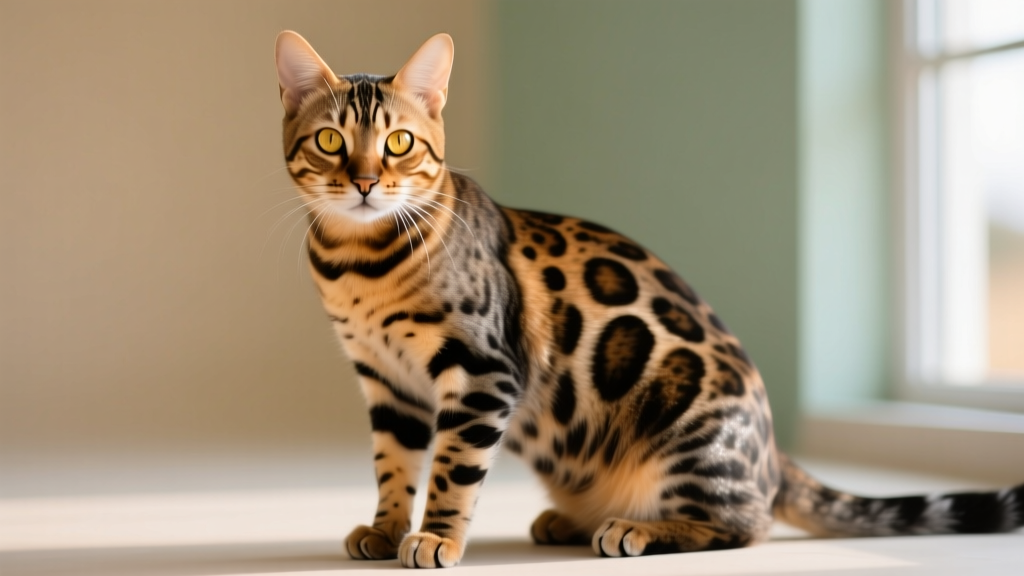
The Serengeti cat is all about sleek power and visual impact. They’re medium to large in overall impression—not necessarily heavy, but long, leggy, and athletic. Many Serengetis look taller than you’d expect when they’re standing at full stretch.
| Trait | Typical Serengeti Description |
|---|---|
| Size | Medium to large; long-bodied and long-legged |
| Weight | Often around 8–15 lb (3.6–6.8 kg), with males typically larger |
| Build | Athletic, lean, muscular; not cobby or stocky |
| Coat | Short, close-lying, sleek; low to moderate shedding |
| Pattern | Spotted is the hallmark; spots should be bold and noticeable |
| Colors | Commonly brown spotted tabby; black and other tabby-based colors may be seen depending on lines and registry standards |
| Ears | Large, upright, alert; a signature “wild” feature |
| Eyes | Often expressive; color varies |
| Tail | Medium length; typically carried confidently |
Distinctive Features
- Big ears + long legs: The Serengeti’s silhouette is instantly recognizable.
- High-energy posture: Even at rest, many Serengetis look ready to spring.
- Bold spotting: Spots may be solid or slightly rosetted-looking, giving that “Bengal-look” drama.
Personality and Temperament Traits
If you want a quiet, ornamental cat who politely decorates the sofa, the Serengeti is probably not your match. Serengetis are interactive, confident, and highly engaged with their people. They’re known for being social and often quite chatty—thank their Oriental ancestry for that expressive voice and need for connection.
Many Serengeti cats form strong bonds and like to follow you around, supervise chores, and “help” with everything. They’re smart, too—quick to learn routines, quick to open doors that aren’t fully latched, and quick to invent games if you’re not fast enough.
- Affection level: High; often people-oriented and attached
- Energy level: High; thrives with daily play and vertical space
- Intelligence: High; benefits from puzzle toys and training
- Vocal tendency: Moderate to high; may chirp, talk, and announce opinions
- Confidence: Typically bold and curious, not shy
A well-socialized Serengeti is usually friendly with visitors and interested in what’s happening in the home. They do best when they’re included—this is a breed that genuinely enjoys interaction rather than tolerating it.
Health Considerations and Common Issues
Because the Serengeti is a newer and relatively uncommon breed, long-term breed-wide health data is still developing. That said, they’re generally considered robust when responsibly bred, with the typical needs of an athletic, active domestic cat.
Since the Serengeti’s foundation includes Bengals and Oriental Shorthairs, reputable breeders often screen lines for known heritable conditions seen in those populations. The best “health plan” for a Serengeti starts with choosing a conscientious breeder (or rescue) who prioritizes sound structure and transparent health practices.
Potential Concerns to Discuss with a Breeder or Vet
- Heart health screening: Ask what cardiac evaluations are used in their breeding program.
- General genetic wellness: Inquire about any recurring issues in their lines and what testing is performed.
- Dental health: Like many cats, Serengetis benefit from proactive dental care.
- Weight and joint strain: They’re athletic, but any cat can develop issues if overweight or under-exercised.
Routine veterinary care is essential: annual or semiannual exams, vaccination tailored to lifestyle, parasite prevention, and early evaluation of any changes in appetite, activity, or litter box habits.
Care Requirements (Grooming, Exercise, Diet)
Grooming
Serengeti cats have a short, sleek coat that’s fairly low-maintenance. A quick weekly brushing (or even a gentle grooming glove session) helps remove loose hair and keeps the coat glossy.
- Brushing: Once a week is usually plenty
- Nails: Trim every 2–4 weeks
- Ears: Check weekly; clean only if needed and vet-approved
- Teeth: Brush regularly if your cat will allow; dental treats and vet cleanings as recommended
Exercise and Enrichment
This breed is built to move. A bored Serengeti will create their own entertainment—and you may not love the activities they choose. Daily interactive play is non-negotiable for most Serengetis, and they thrive in homes that embrace cat furniture and climbing opportunities.
- Interactive play: 2–3 short sessions per day (wand toys, chase games, fetch)
- Vertical territory: Tall cat trees, shelves, window perches
- Puzzle feeders: Great for mental stimulation and slowing fast eaters
- Training: Clicker training, “sit,” “high five,” leash and harness work (many take to it well)
Diet
Feed your Serengeti like the athlete they are: a balanced, high-quality diet with appropriate protein and calories for their age and activity level. Many do best on a measured feeding plan rather than free-feeding, especially in indoor homes.
- Choose: Complete and balanced food (wet, dry, or a combination) from reputable brands
- Portion control: Use a kitchen scale or measuring cup; adjust based on body condition
- Hydration: Wet food and water fountains can help encourage drinking
- Treats: Keep under 10% of daily calories; use as training rewards
Compatibility with Families, Children, and Other Pets
Serengetis are often excellent family cats for active households. They tend to enjoy engagement, games, and being part of the daily routine. With respectful children who understand gentle handling, a Serengeti can be a fun-loving, interactive companion.
Kids
- Best with children who can read cat body language and play appropriately
- Supervise young kids; teach “hands are not toys” to avoid nipping during overstimulation
Other Cats
- Often social, especially when introduced properly
- Many enjoy having a feline playmate with similar energy
Dogs
- Can do well with cat-friendly dogs
- Slow introductions and safe escape routes (vertical space) are key
Small Pets
Like most cats, Serengetis have a strong prey drive. Homes with birds, rodents, or reptiles should use secure enclosures and careful management.
Pros and Cons of Owning a Serengeti
| Pros | Cons |
|---|---|
| Wild, serval-inspired look in a fully domestic cat | High energy; can become mischievous without daily enrichment |
| Smart, trainable, engaging personality | Can be talkative—great if you love chatty cats, less so if you prefer quiet |
| Typically social and people-oriented | May not thrive if left alone for long hours every day |
| Low-maintenance short coat | Needs vertical space and an environment designed for climbing |
| Great fit for active cat lovers and playful families | Rare breed; finding reputable breeders or rescues can take time |
FAQ: Serengeti Cats
Are Serengeti cats related to servals?
No. The Serengeti breed was developed to resemble a serval, but it is bred from domestic cats—primarily Bengals and Oriental Shorthairs—without serval ancestry.
Do Serengeti cats act like Bengals?
They can share some similarities—high energy, curiosity, love of play—because Bengals helped shape the breed. Many Serengetis also show an Oriental-style sociability and vocal nature, so they can be even more people-focused and chatty.
How big does a Serengeti cat get?
Most are medium to large in overall presence, often around 8–15 lb (3.6–6.8 kg). They tend to look taller than their weight suggests due to long legs and a lean build.
Are Serengeti cats good for first-time cat owners?
They can be, if you’re excited about an active, interactive cat and you’re ready to provide daily play, climbing space, and mental stimulation. If you want a low-energy, independent cat, a Serengeti may feel like “too much cat.”
Do Serengeti cats shed a lot?
They typically have low to moderate shedding. Weekly brushing is usually enough to keep the coat sleek and reduce loose hair around the home.
Can a Serengeti be an indoor-only cat?
Yes—many Serengetis do great indoors as long as their environment is enriched with climbing structures, interactive play, and puzzle toys. Some also enjoy harness training for safe outdoor adventures.
Warm Final Thoughts
The Serengeti is a standout choice for cat lovers who crave that spotted, leggy, “mini wildcat” look but want a sweet, social, fully domestic companion. With the right mix of playtime, vertical territory, and everyday interaction, Serengetis are funny, athletic, loyal little shadows who turn ordinary life into a shared adventure.
If you’re falling for this Bengal-look breed and want to compare personalities, care needs, and energy levels across other stunning cats, explore more breed profiles right here on catloversbase.com.