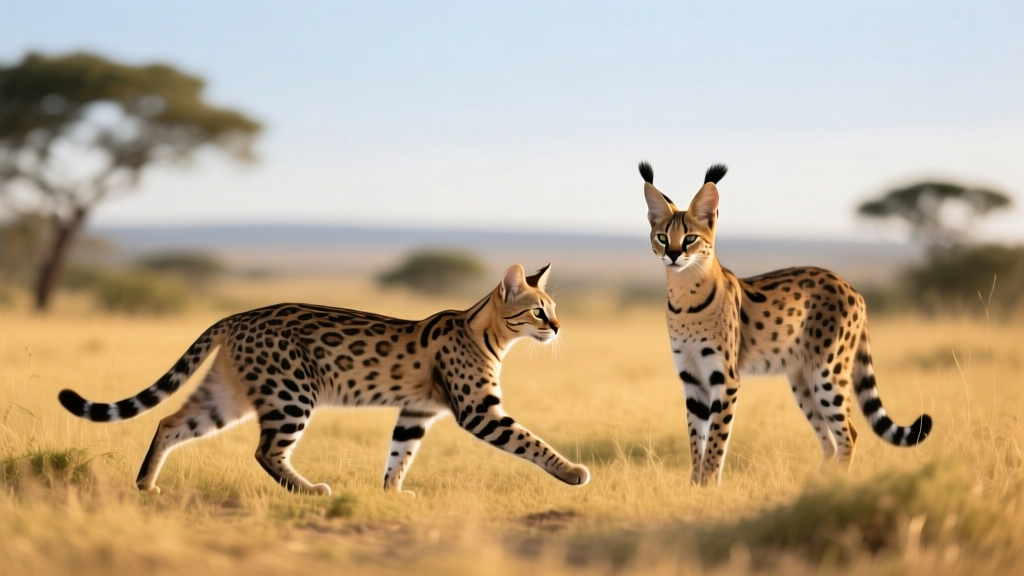
Savannah Cat: Domestic Meets Wild Serval
If you’ve ever wished your house cat looked like it just stepped out of a nature documentary—but still wanted a companion who bonds deeply with you—the Savannah cat may stop you in your tracks. With its tall, athletic build, dramatic spotting, and those unmistakably bold ears, the Savannah is a striking blend of domestic charm and wild-inspired elegance.
But this breed is far more than a “pretty face.” Savannah cats are famously interactive: they follow you from room to room, learn routines quickly, and often greet you at the door like a dog. They’re curious, energetic, and endlessly entertaining—especially for cat lovers who enjoy an engaged, high-drive feline roommate rather than a quiet lap ornament.
Because the Savannah cat is a hybrid breed (derived from the African serval and domestic cats), it also comes with unique considerations—like generation “F” levels, larger-than-average space needs, and legal restrictions in some areas. If you’re researching Savannah cats as a potential owner—or simply want to understand what makes them so special—this guide has you covered.
Breed History and Origin
The Savannah cat breed began with a single, groundbreaking cross: in 1986, a domestic cat was bred with an African serval (a medium-sized wild cat known for its long legs, huge ears, and spotted coat). The result was the first known “Savannah” kitten, and the breed’s name was inspired by the serval’s natural habitat.
In the years that followed, dedicated breeders worked to develop a consistent breed type and temperament by crossing servals with select domestic breeds. Early breeding programs often used cats like the Egyptian Mau, Ocicat, Oriental Shorthair, and other spotted or athletic domestic lines to preserve the Savannah’s sleek body and dramatic pattern while supporting a more predictable companion-animal temperament.
The International Cat Association (TICA) later recognized the Savannah as an established breed (breed recognition and show status have evolved over time within various organizations). Today, Savannah cats are popular worldwide, but they’re still considered a specialty breed—one that requires informed ownership and responsible breeding.
Understanding “F” Generations (F1, F2, F3…)
Savannah cats are often described by filial generation, which indicates how many generations away they are from the serval ancestor:
| Generation | What it means | Typical vibe |
|---|---|---|
| F1 | One serval parent | Most wild-leaning; very large, intense, and specialized needs |
| F2 | One serval grandparent | Still very high energy; more predictable than F1 but not “average cat” |
| F3 | One serval great-grandparent | Often more adaptable in homes; still very active and smart |
| F4–F6+ | Further removed from serval | Generally most “domestic” in behavior while keeping the signature look |
Exact behavior varies by individual, upbringing, and breeder lines—but the generation can help set realistic expectations for size, intensity, and ease of living.
Physical Characteristics
The Savannah cat is known for a tall, lean, long-legged silhouette that looks bigger than it may weigh. Many Savannahs appear “all legs and ears,” with a graceful, springy gait and a confident posture that screams athleticism.
Size and Weight
- Overall size: Medium to very large (especially early generations)
- Weight range: Commonly 8–20+ pounds depending on generation, sex, and lineage
- Height: Often notably tall compared to typical domestic cats due to long legs
F1 and F2 Savannah cats are typically the largest. Later-generation Savannahs can still be substantial, but many fall closer to the upper end of a normal domestic cat range.
Coat Texture and Pattern
- Coat length: Short to medium-short
- Texture: Dense, plush, and smooth
- Pattern: Bold spots are the hallmark—clear, high-contrast spotting is highly prized
Colors
Savannah cats come in several recognized color varieties, often described with both color and pattern. Common Savannah cat colors include:
- Brown spotted tabby (classic “serval-like” look)
- Silver spotted tabby
- Black
- Black smoke
Distinctive Features
- Large, upright ears set high on the head (a defining serval-like trait)
- Long neck and long legs with an athletic, lean body
- Expressive eyes (often slightly hooded, giving an alert, focused look)
- Spotted coat with strong contrast and well-defined markings
Personality and Temperament Traits
If one word gets repeated by Savannah cat owners, it’s interactive. Savannahs tend to be deeply involved in household life. They’re smart, curious, and very people-focused—often forming strong attachments to their favorite humans.
Many Savannah cats also have a “dog-like” reputation. Not every individual will fetch a toy or walk on a harness, but the breed commonly enjoys training, games, and active engagement.
Common Savannah Cat Traits
- Highly intelligent: Quick learners, problem solvers, and sometimes expert cabinet-openers
- Energetic and athletic: They love climbing, jumping, and sprinting around the house
- Confident: Often bold in new environments—especially with good early socialization
- Social (with their people): Many do best with daily interaction and enrichment
- Curious: Expect them to investigate everything you do
Because Savannah cats are so bright and active, boredom can lead to mischief. A Savannah with nothing to do may invent their own entertainment—and you might not love their choices. Enrichment isn’t optional with this breed; it’s part of the relationship.
Health Considerations and Common Issues
Responsible breeding and good veterinary care go a long way toward keeping Savannah cats healthy. Many Savannahs are robust, athletic cats, but like any breed—especially a hybrid breed—there are health considerations to keep on your radar.
Potential Health Concerns
- Heart disease (including hypertrophic cardiomyopathy, HCM): Screening in breeding lines is valuable
- Dental issues: Some cats benefit from regular dental care and home tooth brushing
- Gastrointestinal sensitivities: Certain individuals may have sensitive stomachs or food intolerances
- Injury risk from jumping: Their athletic leaps are impressive—make sure your home setup is safe
Early-generation Savannah cats may present additional challenges simply due to their intensity and size. No matter the generation, schedule regular veterinary visits, keep vaccines current, and discuss diet and parasite prevention with a vet who’s comfortable working with active, high-drive cats.
How Long Do Savannah Cats Live?
With solid care, Savannah cats often live around 12–20 years, though lifespan varies by genetics, lifestyle, diet, and veterinary support.
Care Requirements (Grooming, Exercise, Diet)
Savannah cats are not high-maintenance in the “fluffy coat” sense, but they are absolutely high-maintenance in the enrichment and activity department. Think “sleek athlete,” not “decorative pillow.”
Grooming
- Brushing: Usually once a week is enough to remove loose hair and keep the coat glossy
- Nail trims: Every 2–4 weeks (more often if they’re an indoor climber)
- Dental care: Tooth brushing a few times a week is ideal; dental treats can help
- Ear checks: Those big ears can collect debris—check weekly and clean gently if needed
Exercise and Enrichment
This is where Savannah ownership truly shines—or falls apart. Plan daily, structured activity. Great options include:
- Tall cat trees and sturdy climbing shelves
- Interactive wand toys and chase games
- Puzzle feeders to work their brain
- Clicker training (many Savannahs love it)
- Harness training for safe outdoor adventures (only with supervision)
Because Savannah cats can jump high and move fast, “cat-proofing” matters—secure screens, remove breakables from launch zones, and provide legal places to climb.
Diet
Most Savannah cats do well on a high-quality, meat-forward diet appropriate for their life stage (kitten, adult, senior). Some owners prefer wet food, some use a mixed wet/dry approach, and some explore raw-style diets—but any raw feeding should be discussed with a veterinarian to ensure nutritional balance and safe handling.
- Prioritize protein: Active bodies need quality fuel
- Watch portions: Even athletic cats can gain weight if overfed
- Hydration matters: Wet food and water fountains can encourage better water intake
Compatibility with Families, Children, and Other Pets
Savannah cats can be wonderful family companions in the right home—one that understands their energy level and gives them appropriate outlets. They often thrive with people who want a cat that truly participates in daily life.
With Children
- Best match: Respectful, cat-savvy kids who enjoy play and can follow boundaries
- Supervision: Recommended, especially with younger children—Savannahs can play intensely
A Savannah cat isn’t typically the best fit for a chaotic household where the cat can’t retreat to quiet spaces. Provide vertical escapes, safe rooms, and teach children gentle handling.
With Other Cats
Many Savannahs do fine with other cats, especially when introduced properly. Keep in mind that a Savannah may have a strong play drive and could overwhelm a timid or elderly cat. Matching energy levels helps.
With Dogs
Savannah cats often do well with cat-friendly dogs. Confident, social Savannahs may even become play buddies with the right canine companion. Slow introductions and safe separation spaces are key.
With Small Pets
Use caution with birds, rodents, and reptiles. Even the sweetest Savannah cat is still a highly driven predator by nature. Secure enclosures and strict supervision are a must—and in many homes, separation is the safest choice.
Pros and Cons of Owning a Savannah Cat
Savannah cats are unforgettable companions, but they’re not a casual commitment. Here’s a realistic look at what you’ll love—and what you’ll need to be ready for.
| Pros | Cons |
|---|---|
| Wildly beautiful spotted coat and tall, elegant build | High energy needs—boredom can lead to destruction |
| Highly intelligent and trainable (often enjoys games and routines) | Can be too intense for low-activity homes or timid pets |
| People-oriented and interactive—often very bonded to owners | May be wary of strangers without early socialization |
| Short coat is relatively easy to groom | Breed can be expensive; reputable breeding is specialized |
| Fun “dog-like” traits in many individuals | Legal restrictions may apply depending on location and generation |
Tip for researchers and potential owners: Always check local laws and regulations regarding Savannah cats (some places restrict ownership of early generations like F1–F3). If you’re working with a breeder, ask about generation, size expectations, temperament trends, and health screening.
FAQ: Savannah Cats
Are Savannah cats legal everywhere?
No. Savannah cat legality varies by country, state, province, and even city. Restrictions are often stricter for early generations (F1–F3). Always verify local regulations before committing.
Do Savannah cats like to be held and cuddled?
Many Savannah cats are affectionate, but they often prefer interaction on their terms. Some enjoy cuddling; others are more “near you” than “on you.” They commonly show affection by following you, supervising your activities, and seeking play and attention.
How big does a Savannah cat get?
Size depends heavily on generation and sex. Many are 8–20+ pounds, with early-generation Savannahs often larger and taller. Their long legs make them look especially big.
Are Savannah cats good for first-time cat owners?
Usually not. A Savannah cat’s intelligence and energy can be challenging if you’re new to cats or want a low-maintenance companion. Cat-experienced owners who enjoy training, enrichment, and active play are typically a better match.
Do Savannah cats get along with other pets?
They can, especially with proper introductions and compatible energy levels. Many do well with confident cats and cat-friendly dogs. Use extra caution around small pets due to strong prey drive.
Do Savannah cats need special food?
They don’t necessarily need “special” food, but they do best with a high-quality, protein-rich diet. Some individuals have sensitive stomachs, so consistency and vet-guided nutrition choices help.
A Warm Final Word for Future Savannah Cat Parents
The Savannah cat is a breathtaking mix of domestic companionship and serval-inspired style—tall, spotted, curious, and brimming with personality. In the right home, a Savannah becomes more than a pet; they’re a clever, active partner who keeps life interesting every single day.
If you’re considering adding a Savannah cat to your family, choose a reputable breeder or rescue resource, ask lots of questions about generation and temperament, and set your home up for climbing, play, and enrichment. Your reward is a truly remarkable feline friend—one who turns ordinary afternoons into adventures.
Want to keep exploring amazing cats? Check out more breed profiles and cat-lover guides on catloversbase.com.