Maine Coon Size: Understanding the Dimensions of America's Largest Domestic Cat
When Thor, a 4-year-old male Maine Coon, walked into my veterinary clinic for his annual checkup, the first thing that happened was the scale alarm went off. Our digital pet scale maxes out at 25 pounds. Thor weighed 23.7 pounds ? under the limit, but barely ? and his body measured 42 inches from nose to tail tip. The technician who lifted him onto the scale later told me it was like hoisting a small terrier. Thor took the whole thing in stride, curled up on the exam table like a rug, and purred through his entire examination. The scale, however, will never be the same. There's a permanent dent in the platform.
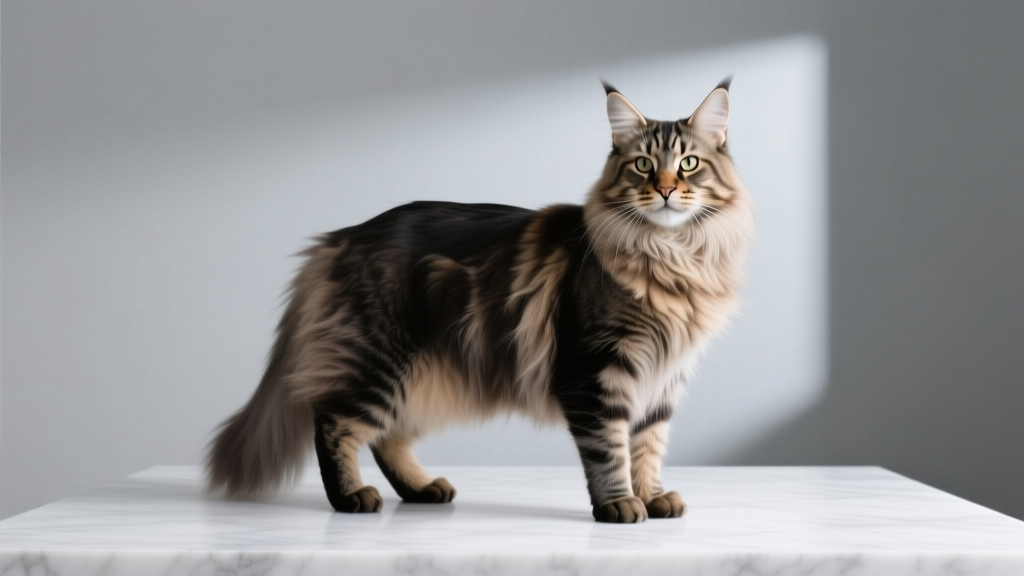
Maine Coons are widely recognized as the largest domesticated cat breed, but the numbers behind that reputation deserve careful examination. The Cat Fanciers' Association reports that the average adult male Maine Coon weighs between 13 and 18 pounds, with females ranging from 8 to 12 pounds. But "average" is a misleading figure for this breed. Males routinely reach 20-25 pounds, and the longest verified Maine Coon on record ? a cat named Barivel from Italy ? measured 47.2 inches (120 cm) from nose to tail tip and weighed 24 pounds, as certified by Guinness World Records in 2018.
Breaking Down the Maine Coon Measurements
Size in Maine Coons is not a single number. It's a combination of weight, body length, bone structure, and coat volume ? and each dimension tells a different story about the breed.
Weight Ranges: What's Normal and What Isn't
The weight distribution of Maine Coons follows a bimodal pattern rather than a standard bell curve, according to data collected by the Maine Coon Breeders and Fanciers Association from over 4,000 registered cats between 2019 and 2024. This means there are two distinct weight peaks in the population ? one around 12-14 pounds (typically females and smaller males) and another around 18-22 pounds (large males). Cats weighing over 25 pounds exist but represent less than 3% of the registered population.
- Females (8-12 lbs average): Most females fall in this range. A female over 15 pounds is on the large end and should be evaluated for body condition to distinguish between healthy size and excess weight.
- Males (13-18 lbs average): The typical range, but 20% of males exceed 20 pounds by age four. Growth continues until age 4-5, significantly longer than the 12-18 month growth period of most domestic breeds.
- Exceptional individuals (22+ lbs): These cats are outliers, not the standard. While impressive, breeding specifically for oversized cats carries health risks including joint stress and cardiac strain.
Growth rate matters enormously. A Maine Coon kitten that weighs 2 pounds at 8 weeks (which is normal ? about double a typical domestic kitten) should gain approximately 0.5-0.75 pounds per week for the first six months, then slow to 0.25-0.5 pounds per week through the second year. Rapid weight gain exceeding these rates, especially after 12 months of age, warrants a veterinary assessment for obesity rather than assuming it's just "a big Maine Coon."
Body Length and Height: The Full Picture
Body length is where Maine Coons truly separate themselves from other large breeds. The average adult male measures 30-40 inches from nose to tail tip. Females average 28-36 inches. Tail length alone accounts for approximately one-third of total body length ? typically 12-18 inches of bushy, tapered tail carried proudly behind the cat like a feather duster designed by nature.
Shoulder height ranges from 10 to 16 inches, making Maine Coons notably tall as well as long. For comparison, the average domestic cat stands about 9-10 inches at the shoulder. A large male Maine Coon is essentially twice the height and four times the mass of an average house cat.
| Dimension | Maine Coon | Norwegian Forest Cat | Ragdoll | Siberian |
|---|---|---|---|---|
| Male weight range (lbs) | 13-25 | 12-16 | 12-20 | 12-17 |
| Female weight range (lbs) | 8-15 | 8-12 | 8-15 | 8-12 |
| Body length (inches) | 30-40 | 24-32 | 24-36 | 24-32 |
| Shoulder height (inches) | 10-16 | 9-12 | 9-11 | 9-12 |
| Time to full size (months) | 48-60 | 36-48 | 36-48 | 36-48 |
The Genetics Behind the Size
Maine Coon size is polygenic ? controlled by multiple genes working together rather than a single dominant factor. The breed's origins in the cold climate of northeastern North America shaped its physical dimensions through natural selection. Large body size provides better heat retention (the surface-area-to-volume ratio favors larger animals in cold climates), while the long, thick, water-resistant double coat provides insulation against temperatures that regularly drop below -20�F (-29�C) in the breed's region of origin.
A 2023 genome-wide association study published in Genetics Selection Evolution by researchers at the University of Bern, Switzerland, identified 14 genetic loci significantly associated with body size in Maine Coons. The strongest association was with variants near the LCORL gene, which is also linked to body size in horses, cattle, and humans ? suggesting that the genetic architecture of large body size shares common pathways across mammals.
"The Maine Coon's size is the product of hundreds of years of natural selection in a harsh climate, followed by approximately 150 years of selective breeding that reinforced those traits. The genetic signatures we see are consistent with strong directional selection for body mass and skeletal dimensions." ? Dr. Tosso Leeb, University of Bern Veterinary Genetics Laboratory, 2023
Growth Timeline: When Does a Maine Coon Stop Growing?
This is perhaps the most common question Maine Coon owners ask, and the answer is more complex than most people expect. Unlike most domestic cat breeds that reach adult size by 12-18 months, Maine Coons continue growing for 3-5 years. The growth pattern follows three distinct phases:
Phase One: Rapid Growth (Birth to 12 Months)
During the first year, Maine Coon kittens grow at approximately 1.5-2 times the rate of average domestic kittens. At birth, Maine Coon kittens weigh 3-5 ounces compared to 2-4 ounces for most breeds. By 12 weeks, they typically weigh 4-7 pounds. By six months, 8-12 pounds. By one year, males average 11-15 pounds and females 7-10 pounds. At this point, they look like adult cats but are only about 60-70% of their eventual full size.
Phase Two: Filling Out (12 to 36 Months)
Between ages one and three, growth slows but continues steadily. The skeletal frame elongates, muscle mass increases, and the coat reaches full density. This is when most of the breed's distinctive physical features become apparent ? the ruff around the neck, the tufted ears (lynx tips), the bushy tail, and the substantial bone structure. Weight gain during this phase averages 1-2 pounds per year.
Phase Three: Maturation (36 to 60 Months)
The final phase involves minimal skeletal growth but continued muscle development and coat thickening. The chest broadens, the jaw becomes more pronounced in males, and the overall appearance shifts from "large adolescent" to "fully mature adult." Most Maine Coons reach their final weight and dimensions between ages four and five. A small percentage ? approximately 8% ? continue subtle changes through age six.
Space and Equipment Requirements for a Large Cat
Living with a Maine Coon means living with a cat that doesn't fit standard cat equipment. This isn't a minor inconvenience ? it's a practical consideration that affects your purchasing decisions from day one.
Cat trees need to support 20+ pounds with a base diameter of at least 24 inches to prevent tipping. Standard cat trees with 16-inch bases are inadequate and represent a genuine tipping hazard. The platforms themselves should be at least 18 inches wide to accommodate a cat that may be 16+ inches long (not counting the tail).
Litter boxes must be oversized. The minimum recommended interior dimensions are 24 x 18 inches ? roughly 50% larger than standard boxes. Covered boxes are generally not suitable because a Maine Coon's shoulder height makes turning around inside a covered box difficult. Open-top, high-sided boxes work best.
Carriers are another challenge. Standard carriers rated for cats up to 15 pounds are too small for most adult Maine Coons. You'll need an XXL carrier with interior dimensions of at least 26 x 16 x 16 inches, rated for 25+ pounds. These cost $80-$150 versus $25-$40 for standard carriers, but they're essential for safe transport.
Health Implications of Large Body Size
Size is not without consequences. Maine Coons carry several health risks directly related to their large body mass and rapid growth rate.
Hip dysplasia affects approximately 18-22% of Maine Coons, based on radiographic screening data from the Orthopedic Foundation for Animals (2024). This is dramatically higher than the 2-3% rate in the general cat population. The condition involves abnormal development of the hip joint, leading to arthritis and reduced mobility. Symptoms include reluctance to jump, difficulty climbing stairs, and a "bunny-hopping" gait when running. Early screening with hip radiographs at age two is recommended, especially for cats from lines with known dysplasia history.
Hypertrophic cardiomyopathy (HCM) ? thickening of the heart muscle ? affects an estimated 30-35% of Maine Coons, the highest prevalence of any domestic cat breed. A specific genetic mutation in the MYBPC3 gene is responsible for approximately 40% of HCM cases in the breed. A DNA test for this mutation is available and should be performed on any Maine Coon kitten before purchase. Cats that test positive for the mutation can still live normal lives but require annual cardiac screening with echocardiography starting at age one.
Spinal muscular atrophy (SMA) is a recessive genetic condition affecting approximately 5-8% of Maine Coons. It causes degeneration of spinal cord neurons that control skeletal muscles, leading to muscle weakness and abnormal gait. A DNA test is available, and responsible breeders test both parents before breeding.
The Practical Reality of Maine Coon Size
Owning a Maine Coon means accepting that your cat will occupy more space, eat more food, require larger equipment, and cost more to maintain than the average cat. Here's a realistic monthly budget breakdown:
- Food: $40-$65 for quality dry food, plus $15-$25 for wet food supplements (compared to $25-$40 total for average cats).
- Litter: $20-$30 for premium clumping litter ? Maine Coons produce more waste, so you'll go through litter 30-40% faster than with a smaller cat.
- Veterinary reserve: $30-$50 per month set aside for routine care, with breed-specific health screening (echocardiograms, hip radiographs) adding $200-$600 annually.
- Equipment replacement: Budget $100-$200 annually for oversized carriers, reinforced cat trees, and extra-large litter boxes that need periodic replacement.
But the size also brings advantages. Maine Coons are sturdy, resilient cats that handle cold weather exceptionally well. Their large paws ? often described as "snowshoes" ? distribute weight effectively on soft surfaces. Their thick coats require less frequent bathing than shorter-haired breeds because the water-resistant outer layer repels dirt naturally. And their size, combined with their famously gentle temperament, makes them one of the most manageable large breeds in terms of handling and veterinary care.
The Maine Coon's size is not a gimmick or a breed exaggeration. It's a functional, genetically grounded physical reality that reflects the breed's history and continues to shape its care requirements, health profile, and the day-to-day experience of sharing your home with a cat that, quite simply, takes up space in the best possible way.