Korat Cat: Thailand's Lucky Blue Cat
If you’ve ever wished a cat could feel like a good-luck charm with whiskers, the Korat might be your perfect match. This rare, shimmering “blue” (gray) beauty from Thailand has a reputation for bringing prosperity and happiness—so much so that Korats have traditionally been given as treasured gifts rather than sold. And once you meet one, you’ll understand why: the Korat cat combines a striking silver-tipped coat with a bright, people-focused personality that’s hard not to adore.
Korats aren’t just pretty faces. They’re intelligent, emotionally tuned-in companions who tend to bond deeply with their humans. They’re playful without being frantic, affectionate without being clingy (though they’ll certainly volunteer to supervise your day), and they often prefer being in the center of family life. If you’re researching cat breeds and want a loyal, low-shedding shorthaired cat with a rich cultural history, the Korat cat deserves a spot at the top of your list.
This guide covers Korat history, personality, grooming, health concerns, and what it’s like to share your home with Thailand’s lucky blue cat.
Breed History and Origin
The Korat is one of the oldest naturally occurring cat breeds in the world, originating in Thailand (formerly Siam). In Thai tradition, the breed is associated with good fortune and is known as Si-Sawat. Korats are famously referenced in an ancient Thai manuscript of cat poems and legends called the Tamra Maew (often dated centuries back). Within Thai culture, Korats were historically presented in pairs as wedding gifts—a symbol of luck, fertility, and a prosperous life.
The breed takes its English name from the Nakhon Ratchasima region, commonly called “Korat,” in northeastern Thailand. Korats are considered a “natural breed,” meaning their signature look developed through generations of natural selection rather than human-directed crossbreeding.
Korats began appearing outside Thailand in the mid-20th century, with early imports to the United States in the late 1950s. Western breed fanciers worked to preserve the Korat’s distinctive features—especially the heart-shaped face, luminous green eyes, and the unique silver-tipped blue coat—while keeping the breed true to its Thai roots.
Physical Characteristics
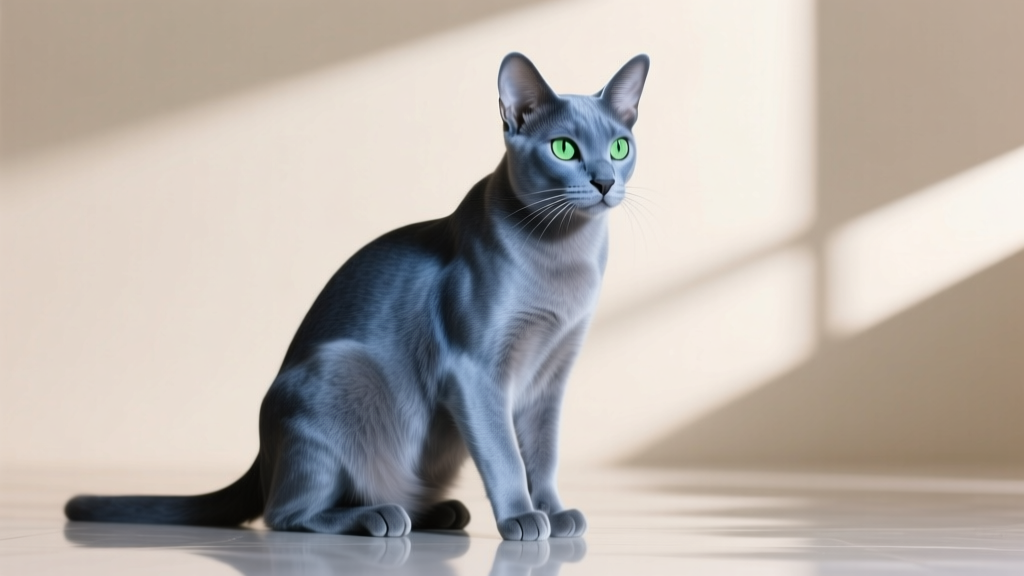
The Korat cat is a medium-sized, muscular, surprisingly heavy cat for its appearance. Many owners describe Korats as “big cats in a compact package.” They’re sleek, athletic, and smooth-coated, with an elegant outline and a powerful build.
| Feature | Typical Korat Traits |
|---|---|
| Size | Medium |
| Weight | Usually 6–10 lb (2.7–4.5 kg); some males may be slightly larger |
| Body Type | Muscular, compact, athletic; “heavier than they look” |
| Coat | Short, single coat (typically minimal undercoat), glossy and close-lying |
| Color | Blue (gray) only, with silver tipping (often called “silver blue”) |
| Eyes | Large, round, luminous; vivid green in adults (kittens may shift from amber/yellow to green as they mature) |
| Head | Distinctive heart shape when viewed from the front |
| Ears | Large, alert, set high; open at the base |
Coat and Color: That Famous “Lucky Blue”
When cat lovers talk about the Korat’s coat, they’re usually talking about its sparkle. Each hair is blue at the base with a silver tip, creating a halo-like sheen—especially noticeable along the back, face, and ears under natural light. Unlike many plush-coated breeds, the Korat’s coat is short, fine, and typically lies close to the body, which also makes grooming refreshingly simple.
Distinctive Features
- Heart-shaped face: A hallmark of the breed, often emphasized by the brow and muzzle shape.
- Green “glowing” eyes: The bright green eye color is a signature trait in mature Korats.
- Silver-tipped blue coat: Only one accepted color: blue with silver tipping.
- Compact strength: A solid, muscular cat that feels weighty when picked up.
Personality and Temperament Traits
The Korat personality is often described as devoted, intelligent, and emotionally intuitive. These cats tend to choose “their person,” then stick close—following from room to room, supervising chores, and offering gentle companionship. They’re affectionate and social, but they’re not always thrilled about chaos. A Korat usually prefers a calm, predictable home where they can be involved without being overwhelmed.
What many owners love most is the Korat’s combination of playfulness and sensitivity. They’re curious and bright, often learning routines quickly and responding well to interactive toys, puzzle feeders, and clicker training. At the same time, Korats can be a bit particular: some are easily startled by loud noises, and many dislike being ignored.
- Human-oriented: Bonds tightly and often prefers company over solitude.
- Smart and trainable: Enjoys games, learning tricks, and interactive play.
- Gentle but opinionated: Can be vocal (usually in a soft, persuasive way) when they want attention or routine.
- Playful into adulthood: Many remain kittenish for years.
- Not a fan of upheaval: Often does best with consistent schedules and low drama.
Health Considerations and Common Issues
Korat cats are generally healthy and long-lived when responsibly bred and cared for. Because the breed is relatively rare and has a smaller gene pool than some more common breeds, careful breeding practices matter. Working with an ethical breeder who health-tests and maintains genetic diversity is key.
Common Health Concerns
- Gangliosidosis (GM1 and GM2): Inherited metabolic disorders historically seen in Korats. Responsible breeders use DNA testing to avoid producing affected kittens. Ask for proof of parental testing.
- General genetic stewardship: As with any rarer breed, screening and thoughtful pairing helps reduce inherited issues.
- Dental health: Like many cats, Korats can develop dental disease without routine dental care.
Routine veterinary visits, maintaining a lean body condition, and proactive dental care go a long way toward supporting a Korat’s longevity.
Quick Health Snapshot
| Category | What to Expect |
|---|---|
| Lifespan | Often 12–15+ years; many live longer with excellent care |
| Key genetic tests to ask about | GM1 and GM2 gangliosidosis DNA testing |
| Weight management | Important; muscular cats can still gain excess fat if overfed |
Care Requirements (Grooming, Exercise, Diet)
The Korat is a shorthaired cat with a coat that’s typically low-maintenance—great news for anyone who wants a tidy, glossy cat without endless brushing. Still, they thrive with daily engagement, and their intelligence means boredom can lead to mischief.
Grooming
- Brushing: Once a week is usually plenty. A soft brush or grooming mitt keeps the coat shiny and reduces loose hair.
- Bathing: Rarely needed unless they get into something messy.
- Nails: Trim every 2–4 weeks (and provide sturdy scratching posts).
- Ears and eyes: Check weekly; wipe gently if debris appears.
- Dental care: Brush teeth if possible; dental treats and vet cleanings help.
Exercise and Enrichment
Korat cats love interactive play and “together time.” Expect them to be active in short bursts, then curl up nearby. They often enjoy vertical space and being able to observe their kingdom from above.
- Best toys: Wand toys, feather teasers, kickers, puzzle toys, balls they can chase.
- Cat furniture: Cat trees, wall shelves, window perches.
- Training: Many Korats do well with clicker training and can learn sit, high-five, or leash walking.
Diet
A Korat’s muscular build benefits from a high-quality, protein-forward diet appropriate for their age and activity level. Portion control matters: because Korats can feel “solid” naturally, it’s easy to miss creeping weight gain under that sleek coat.
- Choose: Balanced commercial cat food with animal-based protein as a primary ingredient.
- Consider: Wet food for hydration support, especially if your cat drinks little water.
- Measure meals: Use a measuring cup or kitchen scale rather than free-feeding.
- Fresh water: Many cats love a pet fountain.
Compatibility with Families, Children, and Other Pets
Korats can be wonderful family cats in the right environment. They tend to form strong attachments and may prefer to be included in everyday life—movie nights, homework sessions, and bedtime routines included. With respectful handling, many Korats do well with children, especially older kids who understand gentle boundaries.
With Children
- Best with calm, cat-savvy children who won’t chase or grab.
- Teach kids to let the cat approach and to avoid loud, sudden handling.
- Korats often enjoy interactive play sessions with kids using wand toys.
With Other Cats and Dogs
Korats can live peacefully with other pets, but introductions should be slow and thoughtful. Many Korats prefer not to share their favorite person with too many competitors, and some can be possessive of attention.
- Other cats: Often fine with a compatible feline companion, especially one that respects personal space.
- Dogs: Can coexist well with calm, cat-friendly dogs. Provide vertical escape routes and safe zones.
- Small pets: Use caution; their prey drive means birds and rodents should be securely housed.
Pros and Cons of Owning a Korat Cat
Every breed has its quirks. The Korat is deeply rewarding for the right person—especially someone who wants a loyal, interactive companion. Here’s a clear look at what you’ll likely love (and what you’ll want to be prepared for).
| Pros | Cons |
|---|---|
| Stunning silver-blue coat and vivid green eyes | Can be sensitive to noise and household chaos |
| Affectionate, people-focused, loyal | May become unhappy if left alone too often |
| Low-maintenance grooming (short coat) | Not always thrilled about frequent changes or unfamiliar visitors |
| Smart, playful, enjoys training and enrichment | Rarity can mean waitlists and higher purchase price from ethical breeders |
| Generally healthy with responsible breeding and testing | Requires breeder transparency (GM1/GM2 testing) to avoid inherited disorders |
FAQ: Korat Cat
Are Korat cats hypoallergenic?
No cat is truly hypoallergenic, and Korats are no exception. That said, Korats have short coats and often shed less than some heavier-coated breeds. If you have allergies, spend time with a Korat before committing and talk with your allergist.
Do Korat cats shed a lot?
Compared with many breeds, Korat cats are moderate to lower shedders. Weekly brushing usually keeps loose hair under control and helps maintain that glossy silver-blue shine.
Why are Korat cats considered lucky?
In Thailand, the Korat (Si-Sawat) has long been associated with prosperity and good fortune. Historically they were given as gifts—often in pairs—especially for weddings and important life milestones, to symbolize a happy and abundant future.
Are Korat cats cuddly?
Many Korats are affectionate and enjoy being close to their people. They may not always want to be held for long periods, but they often love lap time, snuggling nearby, and sleeping close to their favorite human.
How much does a Korat cat cost?
Prices vary by region and breeder, but Korats are a rare breed and can be more expensive than more common cats. Expect higher costs from ethical breeders who provide health testing (especially GM1/GM2) and strong early socialization. Adoption is less common but worth watching for through breed rescues and reputable shelters.
Do Korats get along with other pets?
Often yes, especially with slow introductions and a calm household. Many Korats do best with respectful pets and may prefer not to compete for attention in a very busy multi-pet home.
A Warm Wrap-Up for Future Korat Parents
The Korat cat is the kind of companion that feels like a secret shared between you and your cat—devoted, bright, and quietly enchanting. From their heart-shaped face and shimmering silver-blue coat to their loyal, people-centered temperament, Korats have a way of turning everyday routines into something a little more special.
If you’re considering adding Thailand’s lucky blue cat to your home, prioritize responsible breeders or reputable rescue channels, ask about genetic testing for gangliosidosis, and be ready to offer plenty of together time. A Korat will repay you with years of affection, play, and that unmistakable silver glow.
Want to meet more amazing felines? Explore more breed profiles on catloversbase.com and find the cat that fits your life like a perfectly placed pawprint.