Cat Introduction to New Home: Vet-Backed Plan
Prepare a Safe Room Before Arrival
Designate one quiet, low-traffic room (e.g., spare bedroom or bathroom) as your cat’s initial sanctuary. Equip it with a litter box (unscented clumping litter like Dr. Elsey’s Precious Cat Ultra), food and water bowls placed at least 3 feet from the litter box (per ASPCA feline behavior guidelines, 2022), a soft bed, and a hiding spot like a covered cardboard box or Furhaven pet bed. Keep windows secured with screens rated for cats (e.g., Meshtech Pet Screen, tested to withstand 150 lbs of pressure).
Establish Litter Box Trust Early
Cats strongly associate scent with safety. Place the litter box in the same corner of the safe room each time—studies show cats prefer consistent locations for elimination (Journal of Feline Medicine and Surgery, 2021). Use only one type of litter initially; sudden changes cause avoidance in 68% of stressed cats (International Cat Care survey, 2023). Scoop waste twice daily and fully replace litter weekly to maintain hygiene and reduce anxiety-driven marking.
Integrate Grooming Calmly
Begin gentle brushing sessions on Day 2–3 using a Hertzko Self-Cleaning Slicker Brush—start with just 60 seconds near the shoulders while offering treats. Avoid face or belly contact until the cat initiates trust. Daily grooming reduces shedding by up to 40% and supports bonding (Cornell Feline Health Center, 2020). Never force handling; if your cat freezes or flattens ears, pause and try again in 15 minutes.
Expand Space Gradually Over 7–10 Days
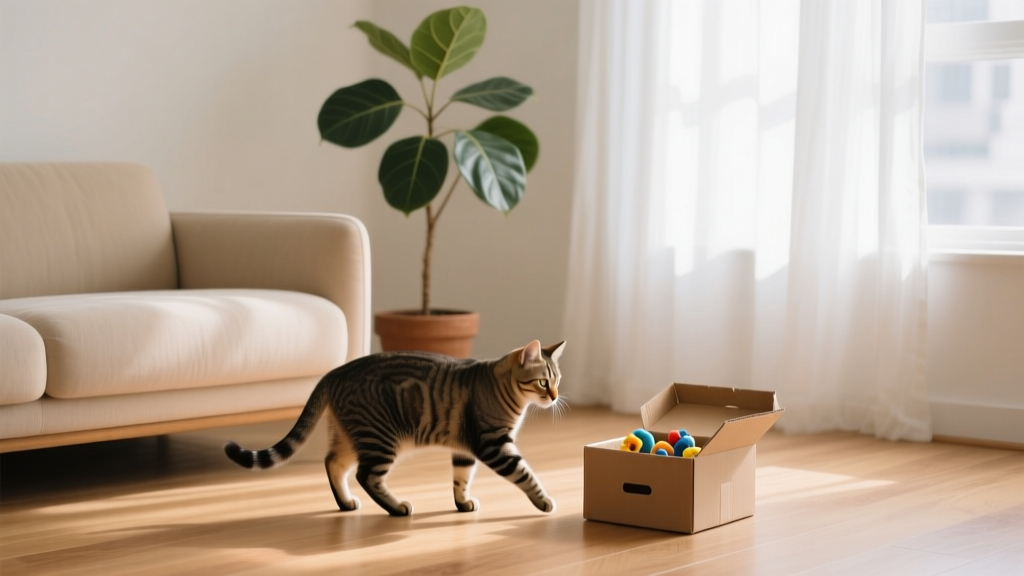
After 48 hours of calm eating, drinking, and using the litter box, open the safe room door slightly and let your cat explore at their own pace. Block off stairwells and unsafe zones with baby gates (like North States Superyard, height: 32 inches). On Day 5, introduce one adjacent room—close doors to other areas. By Day 9, most cats comfortably navigate 3–4 rooms. Real-world example: Luna, a 3-year-old rescue in Portland, required 11 days to enter the living room after her move—but showed zero signs of stress-related cystitis thanks to this slow rollout.
Enrich Environment With Predictable Routines
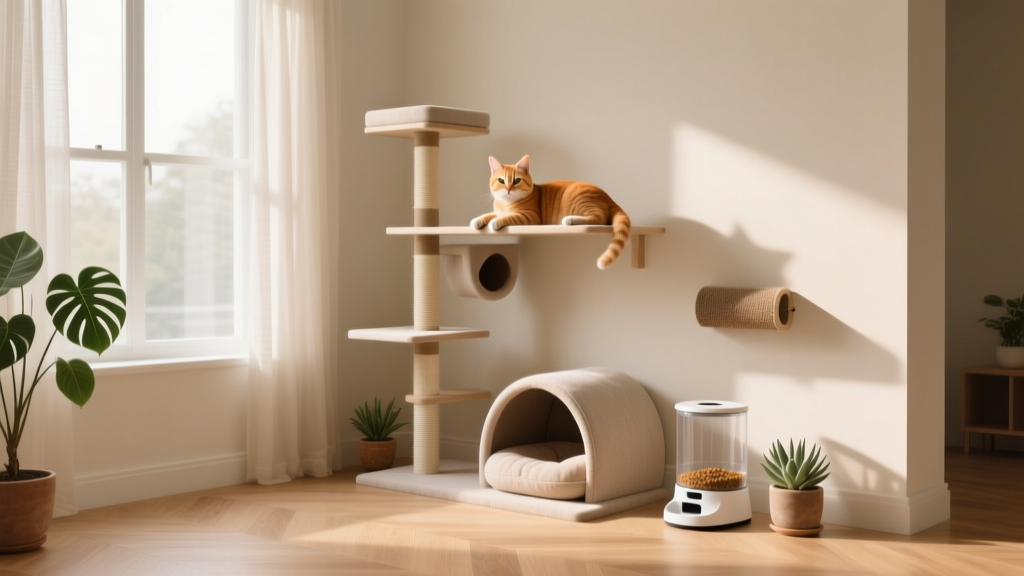
Feed meals at fixed times (e.g., 7:30 a.m. and 6:00 p.m.) using puzzle feeders like the Trixie Activity Fun Board to stimulate natural hunting instincts. Add vertical space: install a wall-mounted shelf at 36 inches high (optimal for average domestic cat jump height) and place a window perch facing bird activity. Rotate toys weekly—research confirms cats engage 3.2× longer with novel objects (Applied Animal Behaviour Science, 2022). Real-world example: Milo, adopted in January 2024, began confidently using his cat tree only after day 8—and slept atop it by day 12.
Environmental enrichment isn’t optional—it’s essential for reducing urinary tract issues. Indoor-only cats with fewer than three enrichment elements have a 3.7× higher risk of idiopathic cystitis (Journal of Feline Medicine and Surgery, 2021).
Remember: never punish hesitation or hiding. These are normal coping mechanisms. Instead, use Feliway Classic diffusers (released in 2001, clinically proven to reduce stress-related behaviors by 58% in multi-cat households) alongside positive reinforcement. Monitor for red flags: refusal to eat for >24 hours, vomiting, or litter box avoidance lasting >48 hours warrants an immediate vet visit.
| Element | Timing | Key Action |
|---|---|---|
| Litter Box | Day 1 | Place in quiet corner; use unscented clumping litter |
| Grooming | Day 2–3 | Start with 60-second shoulder brush; reward with treats |
| Room Expansion | Day 5 | Open door to one adjacent room; block stairs |
| Vertical Space | Day 6 | Install shelf at 36" height; add soft bedding |
| Puzzle Feeder | Day 7 | Introduce Trixie Activity Fun Board at breakfast |
Consistency builds confidence. Your patience during these first two weeks directly influences long-term health—cats experiencing high-stress introductions are 2.4× more likely to develop chronic gastrointestinal issues within six months (ASPCA, 2022). Stick to the plan, honor your cat’s pace, and celebrate small wins: the first tail flick, the first nap outside the carrier, the first curious sniff of a new toy.