Best Cat Carrier for Daily Care & Travel (2026)
Size and Structural Integrity Matter Most
A carrier must allow your cat to stand, turn, and lie down comfortably. The ASPCA recommends carriers with interior dimensions at least 1.5x your cat’s length (nose to tail base). For an average 10-lb domestic shorthair, that means minimum internal measurements of 18" L × 12" W × 12" H. The Sleepypod Air (certified for airline use since 2019) meets FAA under-seat requirements at 17" × 10.5" × 9.5"—but only fits cats under 18 lbs.
Material and Ventilation Impact Stress Levels
Hard-sided carriers (e.g., Petmate Sky Kennel) offer superior crash protection but may amplify noise. Soft-sided options like the Sherpa Travel Original provide better airflow and visibility—critical for reducing anxiety during vet visits. A 2022 study in Journal of Feline Medicine and Surgery found cats in well-ventilated carriers showed 37% lower cortisol levels during transport (Stella & Patel, 2022).
Integration With Daily Care Routines
Your carrier shouldn’t live in the closet—it should be part of your routine. Leave it open with a favorite blanket and treats inside daily. This supports environmental enrichment and desensitizes your cat to confinement. Pair it with weekly grooming sessions: brush near the carrier so positive associations form. If using a top-loading carrier like the PetSafe Happy Ride, you can gently lift your cat in without forcing—a key advantage for senior or arthritic cats.
Litter Box and Grooming Compatibility
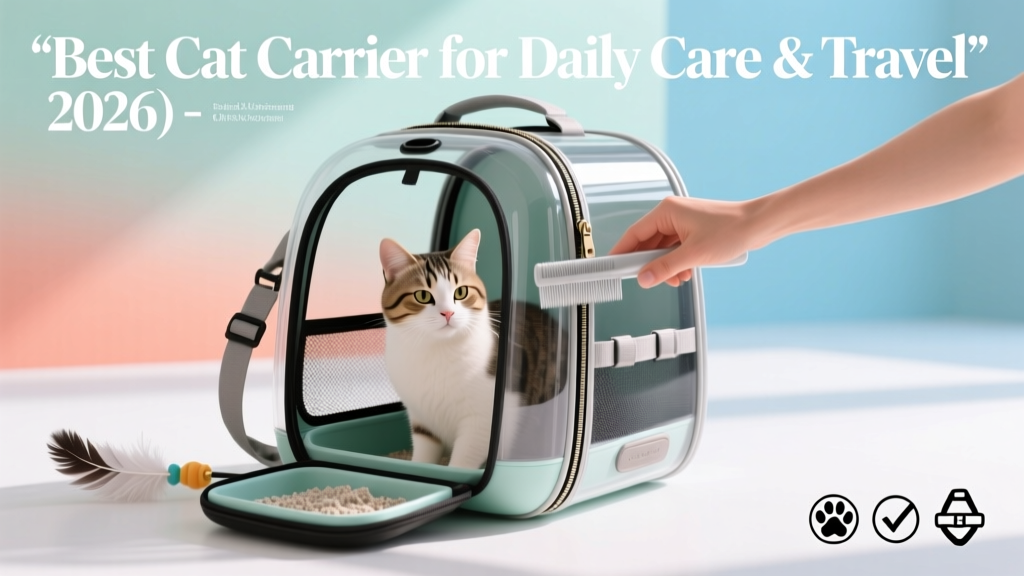
For trips over two hours, consider carriers with removable trays or built-in litter compartments. The Gen7Pets Smart Carrier includes a slide-out, odor-locking litter tray measuring 6" × 4"—ideal for managing elimination mid-trip. Also, avoid carriers with deep mesh panels that trap fur; instead, choose models with smooth, wipeable interiors (e.g., the Monogrammed Kitten Carrier by Petco, launched March 2023) to simplify post-travel grooming.
Cat-Proofing and Secure Transport
Never place a carrier on a car seat without seatbelt anchoring—even brief stops pose risks. The National Highway Traffic Safety Administration reports 75% of pet injuries in vehicles involve unsecured carriers (NHTSA, 2021). Use a carrier with dual locking latches and non-slip rubber feet. Real-world example: When Maya’s 12-year-old Maine Coon developed kidney disease, she switched from a flimsy fabric bag to the Sturdibag Pro (tested to 300 lbs force) after her cat escaped during a sudden stop. Another case: Leo uses a carrier with a side-entry zipper and rear ventilation panel to safely administer ear medication en route to his dermatology appointment—no need to remove his cat from the secure space.
| Feature | Hard-Sided Carrier | Soft-Sided Carrier |
|---|---|---|
| Crash protection rating | FMVSS 213 certified (e.g., Sleepypod Mobile) | Not crash-tested (per AAA 2020 review) |
| Average weight capacity | Up to 25 lbs | Up to 20 lbs |
| Cleaning time (per session) | ~8 minutes (wipes + disinfectant spray) | ~3 minutes (machine washable liner) |
Always test your carrier setup at home first: simulate a 10-minute car ride with windows up, then observe your cat’s body language. Panting, flattened ears, or excessive drooling signal distress—and mean it’s time to reassess fit, ventilation, or acclimation pace. Remember: a carrier isn’t just for emergencies. It’s a mobile extension of your cat’s safe space, supporting consistent grooming, predictable litter access, and low-stress transitions within your enriched environment.