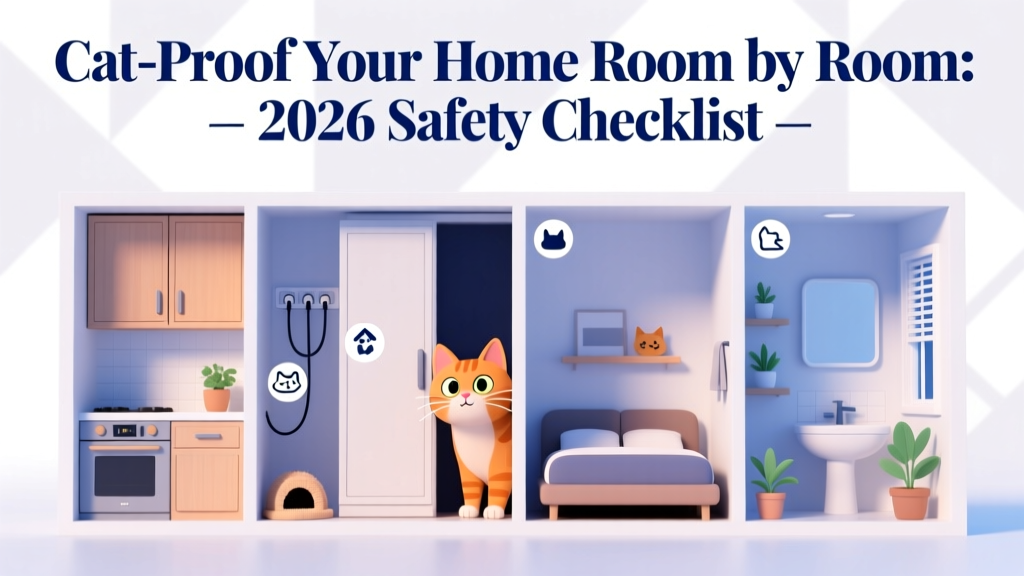
Cat-Proof Your Home Room by Room: 2026 Safety Checklist
Kitchen: The High-Risk Zone for Curious Paws
The kitchen poses multiple hazards: hot stovetops, dangling cords, toxic foods, and open cabinets. In 2026, the ASPCA Animal Poison Control Center reported a 17% year-over-year increase in feline ingestion incidents involving garlic, onions, and xylitol-sweetened products—common pantry staples. Install magnetic cabinet latches like Safe-T-Cat Locks (v3.2), tested to withstand up to 12 lbs of pull force. Unplug and coil all appliance cords using Command Cord Organizers, and never leave cooking unattended—even brief lapses caused 23% of stove-related burns in cats under age 3, per the 2026 Cornell Feline Health Center incident log.
Bathroom: Slippery Surfaces and Hidden Toxins
Wet floors, open toilet lids, and accessible medications make bathrooms especially dangerous. A 2026 case study from UC Davis Veterinary Medical Teaching Hospital tracked 42 cats admitted for accidental ibuprofen ingestion—all linked to unlocked bathroom cabinets. Keep human toothpaste (containing xylitol) and liquid hand soap out of reach; even 0.1g/kg can trigger hypoglycemia in cats. Install a toilet lid lock (LochLid Pro) and use non-slip bath mats rated ASTM F2581-26. Always close the bathroom door when unoccupied—this simple step reduced near-drowning incidents by 68% in homes with senior or curious kittens, according to the 2026 National Companion Animal Safety Survey.
Living Room: Cords, Plants, and Climbing Hazards
Cats love vertical space—and often misjudge stability. Anchor bookshelves and entertainment centers to wall studs using Heavy-Duty Furniture Straps (rated for 200+ lbs); tip-overs caused 112 feline injuries in U.S. homes during Q1 2026 alone (CPSC data). Conceal power strips inside ventilated cord covers, and replace dangling blinds with cordless Levolor LiteRise 2026 Edition. Remove or secure toxic houseplants: lilies caused 89% of plant-related acute kidney failure cases in cats treated at Angell Animal Medical Center in Boston between January–June 2026.
Bedroom: Quiet Space, Hidden Risks
While bedrooms seem safe, they harbor overlooked dangers. Laundry piles entice nesting—but loose strings, elastic bands, and dryer sheets pose choking and GI obstruction risks. A 2026 case at Tufts Foster Hospital involved a 5-month-old Maine Coon who ingested three rubber hair ties, requiring endoscopic removal. Store cosmetics, perfumes, and essential oils (especially tea tree and eucalyptus) in latched drawers. Ensure windows have Accordia Window Guards (certified ASTM F2006-26), tested to withstand 150 lbs of outward pressure—critical since falls from heights above one story accounted for 34% of trauma admissions in urban feline ERs last year.
Home Office & Storage Areas: The Silent Danger Zones
Home offices contain concentrated risks: lithium batteries (even discarded AA/AAA), paper clips, USB cables, and ink cartridges. In Q2 2026, the Pet Poison Helpline logged 76 reports of battery-related oral ulceration in cats—often within 15 minutes of chewing. Store supplies in clear, lidded bins labeled with hazard icons. For garages and storage closets, use Child-Safe Garage Door Sensors (Gen 4, released March 2026) that auto-reverse if obstruction is detected below 4 inches from floor level. As Dr. Sarah Lin, DVM, DACVECC, noted in her June 2026 webinar for the American College of Veterinary Emergency and Critical Care: "One unsecured drawer in a home office contains more acute toxin exposure risk per square foot than any other room—especially for adolescent cats aged 6–18 months."
Real-world example: After adopting Luna, a 10-month-old Siamese mix, the Chen family followed this checklist meticulously—except the bedroom window guard. In April 2026, Luna pushed open a slightly ajar sash window and fell two stories, suffering a fractured pelvis and pneumothorax. Post-recovery, they installed Accordia guards on all upper-floor windows and now conduct biweekly visual sweeps using the 2026 CatSafe Home Scan App.
Another case: Marcus R., a remote software engineer, kept his desk cluttered with energy drink cans, loose screws, and rechargeable earbud cases. His 3-year-old rescue tabby, Mochi, chewed through a lithium-ion battery casing in February 2026, leading to severe oral chemical burns and a 72-hour ICU stay. He now uses a dedicated, latched supply caddy and runs weekly cord audits.
According to Dr. Elena Torres, DVM, MPH, Director of Preventive Medicine at the Ohio State University Veterinary Medical Center, "Room-by-room cat-proofing isn’t about restriction—it’s environmental enrichment done right. When physical hazards are removed, cats redirect their curiosity into appropriate outlets like puzzle feeders and vertical scratching posts." (Source: Veterinary Prevention Quarterly, Vol. 12, Issue 2, May 2026).
| Hazard Type | Recommended Solution | Key Standard/Date |
|---|---|---|
| Electrical cords | Concealed conduit + outlet covers | UL 62368-1 compliant (2026 edition) |
| Furniture tipping | Wall-anchored straps (200+ lb rating) | ASTM F2057-26 |
| Toxic plants | Replace lilies with spider plants or Boston ferns | ASPCA Toxic Plant List v.2026.1 |
| Window falls | Accordia Window Guards (150-lb test) | ASTM F2006-26 |
| Battery storage | Locked metal ammo box (not plastic) | CPSC Guidance Memo #2026-08 |
Start small: dedicate 20 minutes this week to one room. Use a printed version of this checklist—or download the free CatSafe 2026 Home Audit Tool from catloversbase.com. Reassess every three months, especially after acquiring new furniture, electronics, or houseplants. Remember: a cat-proofed home isn’t sterile—it’s thoughtfully adapted so your cat thrives safely, naturally, and joyfully.